
Revised on: March 12, 2025
This article explains the causes of DNA mutation and how mutation affects the accuracy of DNA testing. It details how examining multiple loci makes it possible to achieve a paternity probability of 99.9999999% or higher.
- ・The Accuracy of DNA Testing ― Why Accurate Results Are Possible Even With Mutation
- ・Causes and Mechanisms of DNA Mutation
- └ Main Factors That Cause Mutation
- ・The Mechanism Behind Achieving a Paternity Probability of 99.9999999% or Higher
- └ Why Multiple Loci Testing Matters
- ・An Actual Case Where Mutation Affected DNA Test Results
- ・The Standard for Paternity Probability in Paternity Testing
- ・Reliable DNA Testing With seeDNA's Triple-Check System
The Accuracy of DNA Testing ― Why Accurate Results Are Possible Even With Mutation
 DNA testing technology has reached a precision level capable of distinguishing roughly 21 quintillion (21,000 trillion) individuals, compared to the Earth's population of about 6.5 billion. Because of this extraordinary discriminating power, DNA testing is widely used as a reliable means of proving biological relationships, including in legal settings such as court proceedings [ref:1].
However, even modern DNA testing cannot be declared 100% accurate in every case. This is because the possibility of "DNA mutation" can never be completely ruled out. Mutation is a phenomenon that can occur spontaneously in any living organism, and it can sometimes have a certain effect on DNA testing as well.
In this article, we will explain in detail the mechanisms behind DNA mutation, discuss whether mutation can affect test results, and describe—from an expert perspective—how examining multiple loci makes it possible to obtain highly accurate results.
Causes and Mechanisms of DNA Mutation
 When a cell divides, it copies (replicates) the same DNA. Mutation refers to a change in the base sequence that occurs when DNA fails to be copied correctly. The human genome consists of approximately 3 billion base pairs, and this enormous amount of information must be accurately replicated every time a cell divides. However, even with the proofreading function of DNA polymerase (the enzyme that replicates DNA), copying errors occur on rare occasions [ref:2].
Mutation can also occur when genes are passed from parent to child, resulting in different DNA being inherited. This is called a "germline mutation," a new variation that arises during the formation of sperm or eggs. Research indicates that, in humans, an average of about 40 to 80 new mutations are passed on to a child per generation [ref:3].
If a mutation has occurred in some of the cells collected for testing, a discrepancy in DNA information between the individuals being compared can arise, potentially affecting the test result.
Main Factors That Cause Mutation
The following external and internal factors are considered to cause DNA mutation.
- Radiation: Ionizing radiation such as X-rays and gamma rays can directly break DNA strands or generate reactive oxygen species that indirectly damage DNA
- Ultraviolet light: UV-B in particular forms "thymine dimers" by bonding adjacent thymine bases together, inducing errors during DNA replication
- Chemical substances: Chemical mutagens such as benzopyrene found in tobacco smoke and aflatoxin bind directly to bases and alter the DNA sequence
- Endogenous damage: Reactive oxygen species (ROS) generated during normal cellular metabolism cause tens of thousands of instances of DNA damage per cell per day
- DNA replication errors: Base incorporation errors by DNA replication enzymes can sometimes slip past the proofreading function and become fixed in the sequence
However, our bodies are equipped with mechanisms to repair DNA even when it is damaged, which makes DNA mutation less likely to occur. Well-known DNA repair mechanisms include base excision repair (BER), nucleotide excision repair (NER), and mismatch repair (MMR). When these repair systems function normally, the vast majority of DNA damage is promptly repaired.
For example, in the STR (Short Tandem Repeat) method, a DNA sequence analysis technique commonly used in DNA testing, the probability of mutation occurring is on average about 1% [ref:4]. The STR method compares, for each individual, the number of repetitions in a section of DNA where a short base sequence (typically 2 to 6 bases) is repeated (a microsatellite), and it is currently the most widely adopted technique in DNA testing.
The Mechanism Behind Achieving a Paternity Probability of 99.9999999% or Higher
 Even if a mutation is observed, examining multiple locations makes it possible to produce an extremely accurate test result. Rather than making a determination based on a single locus (the specific position of a gene within the DNA base sequence), examining 13 to 24 loci yields a high level of discriminating accuracy.
Why Multiple Loci Testing Matters
Because each locus is an independent region of DNA, even if a mutation happens to occur at one locus, the probability that a mutation also occurs simultaneously at other loci is extremely low. Statistically speaking, the more loci that are examined, the more effectively coincidental matches or the effects of mutation can be ruled out, and the reliability of the test improves dramatically.
- Sample collection: DNA is extracted from oral swabs, blood, hair, or other samples
- PCR amplification: The target STR loci regions are amplified using PCR
- Electrophoresis and analysis: A capillary electrophoresis instrument is used to determine the alleles (allelic genotypes) at each locus
- Statistical evaluation: The results from all loci are combined to calculate the paternity probability and the CPI (Combined Paternity Index)
- Triple-check by multiple personnel: To prevent human error, different examiners independently verify the results
Furthermore, even in cases where the conventional STR method could not produce a conclusive result, seeDNA's ultra-high-precision testing has confirmed a paternity probability of 99.9999999% or higher in numerous cases [ref:5]. seeDNA examines a larger number of loci and also combines this with SNP (single nucleotide polymorphism) analysis, enabling it to handle cases that are difficult to resolve using the conventional STR method alone.
An Actual Case Where Mutation Affected DNA Test Results
Next, we introduce an actual case in which mutation was involved in DNA testing.
In a trial of a man charged with public indecency for exposing himself, when the bodily fluid left at the scene was compared with the man's DNA, the test result matched at 14 loci, with a different type detected at the remaining 1 locus. Because not all loci matched, the second-instance court handed down a verdict of not guilty.
However, in the Supreme Court's judgment, the section where a different type was detected was determined to be a mutation (somatic mutation), ruling out the possibility that a third party's DNA had been mixed in, and the one-year prison sentence was upheld. This precedent established an important legal principle: a mismatch at a single locus in DNA testing does not necessarily mean the DNA belongs to a different person.
As shown here, when DNA mutation occurs it can affect DNA test results, but as mentioned above, examining multiple loci makes it possible to confirm the result with an extremely high degree of accuracy. Even when a mismatch is observed at one or two loci, testing institutions combine the matching pattern of the remaining loci with statistical analysis to determine, with high accuracy, whether the mismatch is due to mutation or truly indicates a different individual's DNA.
The Standard for Paternity Probability in Paternity Testing
In paternity testing, if a paternity probability of 99.99% or higher is obtained, the biological parent-child relationship is considered irrefutable [ref:6]. In fact, Japanese courts have established precedents recognizing a parent-child relationship based on a paternity probability of 99.99% or higher.
However, bearing in mind that the possibility of an error occurring in a DNA test result is never 0%, testing institutions are always required to thoroughly implement various preventive measures that address not only test accuracy but also human error. Specific measures include preventing sample mix-ups, guarding against contamination, regularly calibrating analytical equipment, and having multiple independent examiners verify results.
Reliable DNA Testing With seeDNA's Triple-Check System
At seeDNA, we conduct DNA testing under a triple-check system that allows for no margin of error. Specifically, we maintain the following multi-layered check system.
- Stage 1: Initial analysis by the examiner in charge ― A specialized examiner performs everything from DNA extraction from the sample to genotype determination
- Stage 2: Independent re-analysis by a different examiner ― A separate re-verification of the same sample is conducted independently of the initial analysis to confirm that the results match
- Stage 3: Final confirmation by a senior examiner (physician) ― All data and statistical analysis results are comprehensively evaluated, and a final test report is issued
Through this triple-check system, we thoroughly eliminate not only mismatches caused by STR mutation but also human errors such as sample mix-ups and data entry mistakes. In the unlikely event that any doubt arises regarding a test result, we provide additional locus testing or SNP analysis free of charge, ensuring maximum peace of mind for our customers.
If you have any questions about DNA testing, please feel free to contact us.
Ultra-High-Precision Paternity DNA Testing
Contact Us
Frequently Asked Questions
Q1. How often does DNA mutation occur?
A. In the STR method, commonly used in DNA testing, the mutation rate per locus averages about 1%. This is a very low probability, but since it is not zero, examining multiple loci simultaneously eliminates the effect of mutation and produces highly accurate results.
Q2. If a mutation occurs, does it make the DNA test result unreliable?
A. No. Even if a mutation is observed at one locus, the overall reliability of the test result is rarely compromised, since 13 to 24 loci are evaluated comprehensively. seeDNA's ultra-high-precision testing has confirmed a paternity probability of 99.9999999% or higher in numerous cases.
Q3. What kind of testing method is the STR method?
A. The STR (Short Tandem Repeat) method is a technique that compares, for each individual, the number of repetitions in a section of DNA where a short base sequence (2 to 6 bases) is repeated. It is currently the most widely adopted method in DNA testing, offering high discriminating accuracy and reliability.
Q4. In paternity testing, what does "a paternity probability of 99.99% or higher" mean?
A. A paternity probability of 99.99% or higher means that the probability the man being tested is the child's biological father is 99.99% or higher. When this figure is obtained, it is widely accepted by Japanese courts as the standard for recognizing a parent-child relationship.
Q5. What specifically is seeDNA's triple-check system?
A. seeDNA employs a three-stage verification system: (1) initial analysis by a specialized examiner, (2) independent re-analysis by a different examiner, and (3) final confirmation by a senior examiner (physician). This multi-layered check thoroughly prevents overlooked mutations and human error.
Q6. What causes DNA mutation?
A. The main causes include radiation (X-rays and gamma rays), ultraviolet light, chemical substances such as tobacco smoke, reactive oxygen species generated during cellular metabolism, and copying errors by enzymes during DNA replication. However, the human body is equipped with DNA repair mechanisms, and most damage is promptly repaired.
Reliable Support From seeDNA Genetic Medicine Research Institute
seeDNA Genetic Medicine Research Institute is a trusted specialist institution for DNA testing and genetic testing that has obtained the international quality standard ISO9001 and the Privacy Mark for privacy protection.
If you are concerned about biological relationships within your family, between parent and child, or about a partner's infidelity, our DNA testing experts are here to provide you with reassuring support, so please feel free to contact us.
[Free Consultation With Specialized Staff]

If you have any questions,
please feel free to contact our toll-free number.
/Open every day, including weekends/
Business hours: Monday–Sunday 9:00 AM–6:00 PM
(excluding holidays)
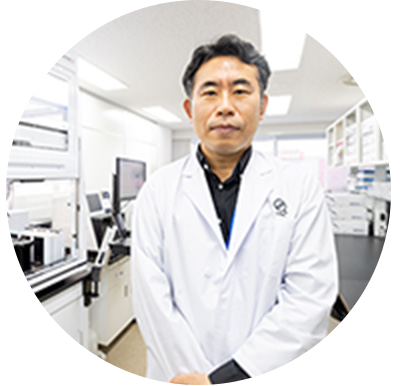 Author
Dr. Kihan Tomikane, M.D.
Graduated from the master's/doctoral program in Biosystems and Molecular Information Medicine at the University of Tsukuba Graduate School
In 2017, developed Japan's first prenatal DNA testing(Patent 7331325) using trace DNA analysis technology(Patent 7121440)