
Rewritten on: February 22, 2025
NIPT is a prenatal test performed after pregnancy to check for chromosomal abnormalities in the fetus and carries ethical debate, whereas seeDNA's "DNA Matching" is a new genetic testing service that lets you check genetic compatibility with your partner and hereditary disease risk before pregnancy.
- ・What Is NIPT, Which Is Drawing Attention
- └ NIPT's Testing Accuracy and Limitations
- └ The Ethical Challenges NIPT Faces
- ・seeDNA's "DNA Matching" Is a Genetic Testing Service You Can Use "Before You Get Pregnant"
- └ The Fundamental Difference Between DNA Matching and NIPT
- └ The Significance of Autosomal Recessive Inheritance and Carrier Screening
- └ Comparing NIPT and DNA Matching
- └ The Importance of Family Planning Starting Before Pregnancy
- └ The Need for Genetic Counseling and Expert Support
What Is NIPT, Which Is Drawing Attention
 In recent years, Japan has seen a rapid trend toward later marriage and later childbirth. According to vital statistics from the Ministry of Health, Labour and Welfare, both the average age at first marriage and the average age at first childbirth have continued to rise [ref:1]. It is scientifically established that as maternal age increases, the risk of chromosomal nondisjunction during egg meiosis rises as well, which in turn increases the probability of congenital chromosomal abnormalities in the fetus. Against this social and medical backdrop, "Non-Invasive Prenatal Testing" (hereafter, NIPT) has drawn considerable attention.
NIPT is a test in which a small blood sample is drawn from the pregnant woman in early pregnancy (generally from around week 9-10 onward), and the fetal-derived cell-free DNA (cfDNA) contained in that blood is analyzed using advanced technology such as next-generation sequencing (NGS) to screen for chromosomal abnormalities [ref:2]. Specifically, it is said to detect with high sensitivity numerical abnormalities of the autosomes, mainly Trisomy 21 (Down syndrome), Trisomy 18 (Edwards syndrome), and Trisomy 13 (Patau syndrome).
Amniocentesis and chorionic villus sampling, which have traditionally been widely used as prenatal tests, are "invasive tests" that involve inserting a needle into the uterus to collect a sample, and have been reported to carry an approximately 0.1-0.3% risk of causing miscarriage [ref:4]. In contrast, NIPT is a "non-invasive test" that can be performed using only a blood draw from the mother's peripheral blood, so its greatest advantage is that it places extremely little physical burden on the mother and fetus. Because of this high level of safety, the number of pregnant women wishing to undergo NIPT has been increasing year by year both in Japan and abroad, and in Japan, the number of people being tested has expanded rapidly since clinical research began in 2013.
NIPT's Testing Accuracy and Limitations
NIPT has very high sensitivity and specificity as a screening test, but it is important to correctly understand that it is, after all, a "non-definitive test." For example, sensitivity for Down syndrome (Trisomy 21) is reported to be over approximately 99%, and sensitivity for Edwards syndrome (Trisomy 18) and Patau syndrome (Trisomy 13) is reported to exceed 90% as well [ref:5]. However, these figures represent sensitivity alone (the probability of testing positive when the condition is actually present), and even if a test result comes back "positive," a definitive test such as amniocentesis or chorionic villus sampling is needed to determine whether it is a true positive or a false positive.
In addition, what NIPT can detect is mainly limited to numerical chromosomal abnormalities (aneuploidy), and in most cases genetic disorders caused by minor chromosomal deletions or duplications, or single-gene mutations (such as point mutations), fall outside the scope of what it can detect. NIPT is thus not an all-purpose test, and it is extremely important to fully understand its testing accuracy and limitations in order to make an appropriate decision about whether to be tested.
The Ethical Challenges NIPT Faces
Because NIPT is performed during pregnancy, there is constant and serious ethical debate over whether a positive result might encourage termination of the pregnancy on the grounds of a fetal condition. In fact, according to information from the NIPT awareness promotion office's website, data has been reported showing that among people who received a definitive diagnosis of a chromosomal abnormality after NIPT (including confirmation via amniocentesis, etc.) between April 2013 and September 2017, approximately 97% chose to terminate the pregnancy. This figure raises an important point that society as a whole should seriously consider regarding how prenatal testing ought to be approached.
Against the backdrop of relentless advances in medical technology, a complex mix of ethical, social, and religious perspectives is intertwined, and no easy consensus has emerged. The Japan Society of Obstetrics and Gynecology is also discussing revisions to its NIPT guidelines and the expansion of accredited testing facilities, and there is an urgent need to build an appropriate genetic counseling framework. In particular, there are calls for thorough informed consent before testing and a robust follow-up system afterward, and it is important to create an environment in which pregnant women and their partners can make autonomous decisions based on scientifically accurate information.
- NIPT is a non-invasive prenatal test that can be performed with just a blood draw from week 9-10 of pregnancy onward
- It primarily screens for numerical chromosomal abnormalities such as Down syndrome (Trisomy 21)
- Compared with conventional amniocentesis, it carries an extremely low physical risk to the mother and fetus
- Because it is a screening test, a positive result requires a separate definitive test
- Because it is performed during pregnancy, the results can raise ethical debate around termination of pregnancy
- Building an appropriate genetic counseling framework remains a social challenge
seeDNA's "DNA Matching" Is a Genetic Testing Service You Can Use "Before You Get Pregnant"
 On the other hand, "DNA Matching," a new service offered by seeDNA Co., Ltd., is a genetic test with a completely different approach from NIPT [ref:3]. With DNA Matching, partners can scientifically examine their genetic compatibility, and it also provides a comprehensive assessment of the likelihood of passing on favorable genetic traits to a child, as well as the risk of hereditary disease arising from the couple's particular combination of genes.
Its greatest feature is that it lets partners check their genetic compatibility and the hereditary disease risk for a future child "before becoming pregnant". This concept fundamentally overturns the conventional framework of prenatal testing, and can truly be called a new type of "pre-pregnancy" test. Whereas NIPT is a test for "learning about the fetus's condition after pregnancy," DNA Matching is a test for "understanding a couple's genetic combination before pregnancy," and the two serve fundamentally different purposes and hold fundamentally different significance.
The Fundamental Difference Between DNA Matching and NIPT
Because DNA Matching is a genetic test performed before pregnancy, it is fundamentally different in nature from a test like NIPT that clearly determines whether a specific chromosomal abnormality is "positive" or "negative." Rather than detecting a condition that already exists in a fetus, it is a service for understanding the tendency of future risk in advance, and so it is considered extremely unlikely to encourage termination of pregnancy. This positions DNA Matching fundamentally differently from the ethical challenges that NIPT faces, and is one of its major social benefits.
Specifically, by comparing and analyzing the genomic information of both partners, it comprehensively assesses the risks that could arise from the couple's particular combination of genes. This allows couples, at the pre-pregnancy stage, to obtain sufficient information and make proactive, level-headed decisions about their future family planning.
The Significance of Autosomal Recessive Inheritance and Carrier Screening
Many hereditary disorders follow an "autosomal recessive" inheritance pattern. This is a mechanism of inheritance in which the risk of a child developing the disorder arises only when both parents are "carriers" of the same gene mutation. Carriers themselves typically show no symptoms of the disorder, so in most cases people are unaware that they carry a particular gene mutation.
For example, hereditary disorders such as cystic fibrosis, phenylketonuria, and sickle cell disease all follow an autosomal recessive inheritance pattern. When both parents are carriers of the same gene mutation, the theoretical probability that their child will develop the disorder is 25%. With DNA Matching, by comparing and analyzing the genetic information of both members of a couple, it becomes possible to assess in advance the risk arising from such combinations of carrier status [ref:3].
Overseas, tests known as "Expanded Carrier Screening" (ECS), which examine the carrier status of both partners before pregnancy, are becoming more widespread, and the American College of Obstetricians and Gynecologists (ACOG) also published its position on carrier screening in 2017 [ref:5]. seeDNA's DNA Matching can be positioned as an advanced service that reflects this international trend.
- Both partners submit DNA samples (such as saliva) to seeDNA
- seeDNA's ISO 9001-certified specialist laboratory analyzes the genomic information with high precision
- The couple's genetic compatibility, hereditary disease risk, and genetic traits that may be passed on to the next generation are comprehensively assessed
- A detailed results report is prepared and delivered along with an easy-to-understand explanation from specialist staff
- Based on the results report, future family planning is considered with the advice of experts
Comparing NIPT and DNA Matching
| Comparison item | NIPT | DNA Matching |
|---|---|---|
| Timing of testing | From week 9-10 of pregnancy onward | Before pregnancy (any time) |
| Who is tested | The pregnant woman | Both partners |
| Main purpose | Screening the fetus for chromosomal abnormalities | Understanding genetic compatibility and disease risk |
As you can see, although our DNA Matching service and NIPT both fall under the same "genetic testing" category, they are entirely different in terms of timing, purpose, target audience, and ethical positioning. NIPT is a "diagnosis-oriented" test targeting the fetus after pregnancy, while DNA Matching is a "prevention- and planning-oriented" test targeting the couple before pregnancy. Both make use of genetic information, but their approach and social significance differ greatly.
The Importance of Family Planning Starting Before Pregnancy
A child's future is something to think about proactively with your partner before pregnancy, not only after conception. The World Health Organization (WHO) and obstetrics and gynecology societies in various countries have repeatedly emphasized the importance of "Preconception Care" - health management and genetic risk assessment before pregnancy. Preconception care includes improving nutritional status, starting folic acid intake, managing chronic conditions, and quitting smoking and drinking, along with reviewing other lifestyle habits, and genetic risk assessment is positioned as an important component of it as well.
As part of this preconception care, DNA Matching is a service that supports family planning grounded in scientific evidence. By understanding a couple's genetic combination before pregnancy, it becomes possible to understand in advance the health risks for a future child and, as needed, to consider the best options while consulting with medical experts.
In Japan too, from the standpoint of countering the declining birthrate and maternal and child health, the importance of comprehensive health management starting before pregnancy is increasingly recognized. The Ministry of Health, Labour and Welfare has included the promotion of health-building before pregnancy in its "Healthy Parent and Child 21 (Second Phase)" initiative, and the concept of preconception care is also taking root in Japan's maternal and child health policy [ref:1].
The Need for Genetic Counseling and Expert Support
Genetic testing technology is advancing every day, but making proper use of it requires a correct understanding on the part of those being tested and appropriate support from experts. Whether it is NIPT or DNA Matching, the results of a genetic test involve probabilistic information, and interpreting them requires specialized knowledge. The importance of genetic counseling will only continue to grow, so that people do not carry unnecessary anxiety or make mistaken decisions from misunderstanding their test results.
At seeDNA, we have a system in place where, beyond simply reporting results, staff with specialized knowledge carefully explain the meaning of the results and the options going forward. Even after receiving a DNA Matching results report, you are welcome to consult with us as many times as you like if you have questions or concerns. If you are worried about your future child's health, or if you would like to scientifically understand your genetic compatibility with your partner, please feel free to reach out to seeDNA first.
seeDNA's Quality Assurance
The seeDNA Genetic Medicine Research Institute holds the international quality standard ISO 9001 certification and the Privacy Mark for personal information protection, ensuring high reliability in both testing accuracy and privacy protection. Every testing process is carried out under strict quality control, so your important genetic information is handled safely.
Frequently Asked Questions
Q1. What is the biggest difference between NIPT and DNA Matching?
A. The biggest difference is "when the test is performed." NIPT is a test performed from week 9-10 of pregnancy onward, and it screens for chromosomal abnormalities already present in the fetus. DNA Matching, on the other hand, analyzes the genetic information of both partners before pregnancy to assess in advance their genetic compatibility and the hereditary disease risk for a future child. In other words, NIPT targets "the fetus after pregnancy," while DNA Matching targets "the couple before pregnancy."
Q2. Could taking DNA Matching lead to termination of pregnancy?
A. Since DNA Matching is a test performed before pregnancy and is not aimed at an existing fetus, it is considered extremely unlikely that its results would directly encourage termination of pregnancy. It is strictly an information service meant to help a couple plan for the future, and is positioned fundamentally differently from the ethical challenges that NIPT faces.
Q3. If NIPT comes back positive, does that mean it's a definitive diagnosis?
A. NIPT is strictly a screening test (a non-definitive test), so even if the result is positive, a separate invasive test such as amniocentesis or chorionic villus sampling is needed to reach a definitive diagnosis. A final diagnosis cannot be made from the NIPT result alone. Because false positives are possible, if you receive a positive result it is important to be sure to consult a medical professional before deciding on next steps.
Q4. What kinds of hereditary disease risk can DNA Matching check for?
A. DNA Matching comprehensively assesses risks arising from a couple's genetic combination, focusing mainly on autosomal recessive hereditary disorders in which a child's risk of developing the condition arises when both partners are carriers of the same gene mutation. Because carriers themselves are usually asymptomatic, it is common for people not to notice the risk unless they are tested. Please contact seeDNA for details on the specific test items.
Q5. What is preconception care, and how does it relate to DNA Matching?
A. Preconception care refers to efforts to manage health and assess genetic risk before pregnancy, in preparation for future pregnancy and childbirth. The WHO and obstetrics and gynecology societies around the world advocate for its importance, and in addition to nutritional management, folic acid intake, and lifestyle improvements, genetic risk assessment is also an important component. DNA Matching is a genetic testing service that can be used as part of this preconception care, and it supports family planning based on scientific data.
Q6. How is the DNA Matching test carried out?
A. Both partners submit DNA samples (such as saliva) to seeDNA. The samples are analyzed with high precision at an ISO 9001-certified specialist laboratory, and a results report is prepared that comprehensively assesses the couple's genetic compatibility and hereditary disease risk. When the results are delivered, staff with specialized knowledge explain the content in an easy-to-understand way, so even those with no background in genetics can use the service with confidence.
Reliable Support from the seeDNA Genetic Medicine Research Institute
The seeDNA Genetic Medicine Research Institute is a trusted, reliable specialist institution for DNA testing and genetic testing, holding the international quality standard ISO 9001 certification and the Privacy Mark for personal information protection.
If you have concerns about family or parent-child blood relationships, or about a partner's infidelity, our DNA testing experts are here to provide the support you need with peace of mind, so please feel free to contact us.
[Free Consultation with Specialist Staff]

If you have any questions,
please feel free to contact our toll-free number.
/Open every day, including weekends/
Business hours: Monday-Sunday 9:00-18:00
(excluding public holidays)
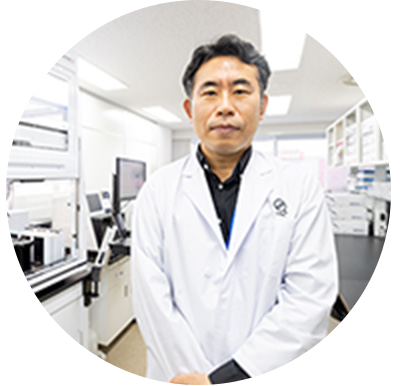 Author
Dr. Kihan Tomikane, M.D., Ph.D.
Graduate of the Master's/Doctoral program in Life Sciences and Bioengineering, University of Tsukuba Graduate School
In 2017, developed Japan's first prenatal DNA testing(Patent 7331325) using trace DNA analysis technology(Patent 7121440)