
Rewritten on: January 3, 2026
A baby can undergo a DNA parent-child test from day 0 of life. Since the sample is collected with a swab from the inside of the cheek, there is zero pain. Experts give a detailed explanation of tips to avoid interference from breast milk and amniotic fluid, advance preparation, and the difference between private and legal testing.
— Experts explain pain, safety, and precautions —
"Can a DNA test be done the day a baby is born?" "Is there any burden on the newborn?" — these are among the most common questions we receive from people who are expecting a baby or who have already given birth.
For those who want to establish parentage clearly, "when can the test be done" is an extremely urgent matter. Alongside the joy of a new life being born, there are people who, for various reasons, need to confirm a parent-child relationship.
seeDNA Genetic Medicine Research Institute, a specialized DNA testing organization, thoroughly explains testing methods available from day 0 of life, tips for avoiding interference from breast milk and amniotic fluid, and how to prepare in advance so testing can be completed during the hospital stay — along with key points for safety and accurate results.
- └ — Experts explain pain, safety, and precautions —
- ・Conclusion: Testing is possible from the very day of birth (0 years, 0 days)
- ・No "blood" is used. Zero pain for the baby
- ・Why oral mucosa allows for accurate DNA testing
- ・For accurate testing: two points to watch
- ・We recommend preparing a test kit "before delivery"
- ・[Important] The procedure differs depending on whether it is for "personal confirmation" or "legal proceedings"
- ・The testing process and how long it takes to get results
- ・Summary: Resolve your worries and move forward into your new life
Conclusion: Testing is possible from the very day of birth (0 years, 0 days)
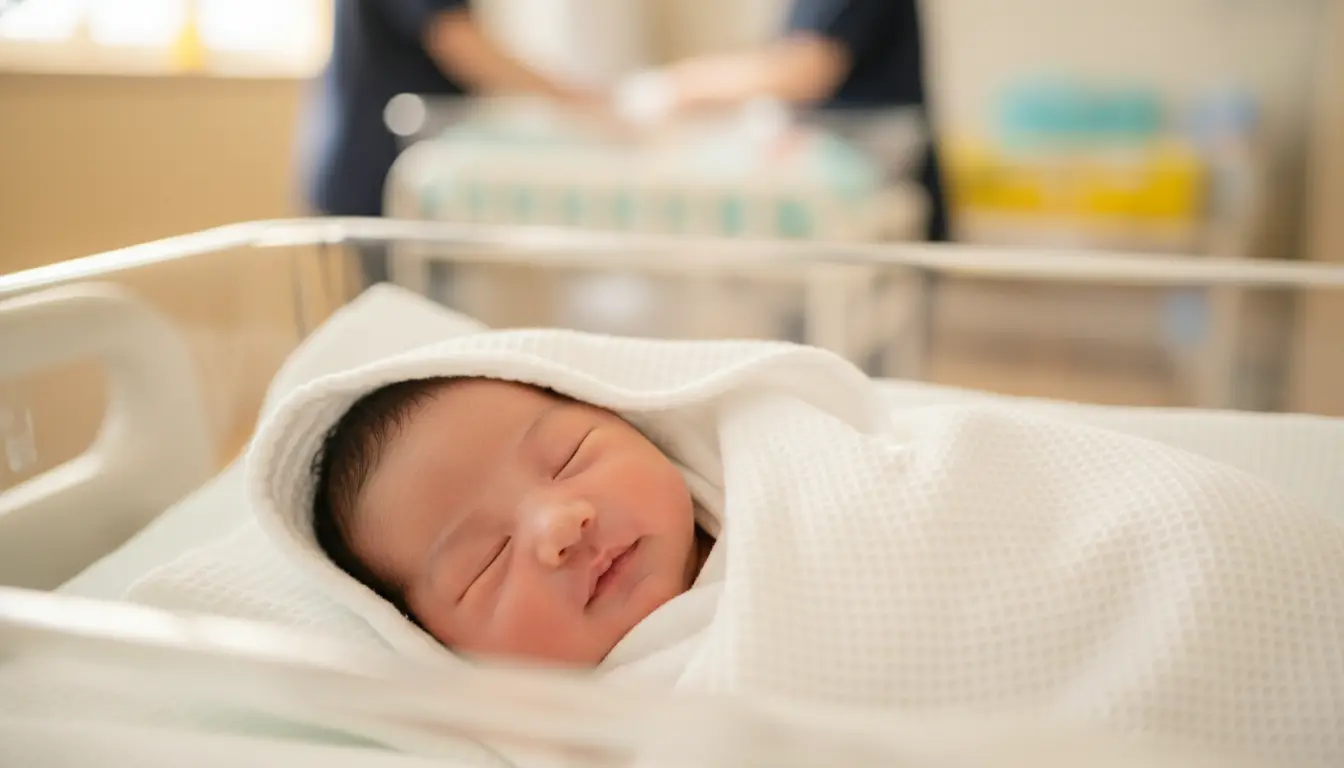
To state the conclusion up front, it is possible to perform a DNA test on the very day a baby is born. DNA (deoxyribonucleic acid) has its sequence fixed the moment sperm and egg fuse, and it never changes for the rest of one's life. At the moment of fertilization, 23 chromosomes from the father and 23 chromosomes from the mother combine to complete that person's unique genetic information. [ref:1]
Because this genetic information does not change with growth or aging, the number of days since birth has absolutely no effect on the test result. There is no need to wait several months after birth — even a newborn just moments after its first cry can be tested with exactly the same accuracy as an adult. Current parent-child DNA testing analyzes multiple regions of DNA called STRs (Short Tandem Repeats) and compares the DNA patterns of the father and child. With this method, parentage can be determined with over 99.99% accuracy even for a newborn. [ref:1] [ref:5]
No "blood" is used. Zero pain for the baby
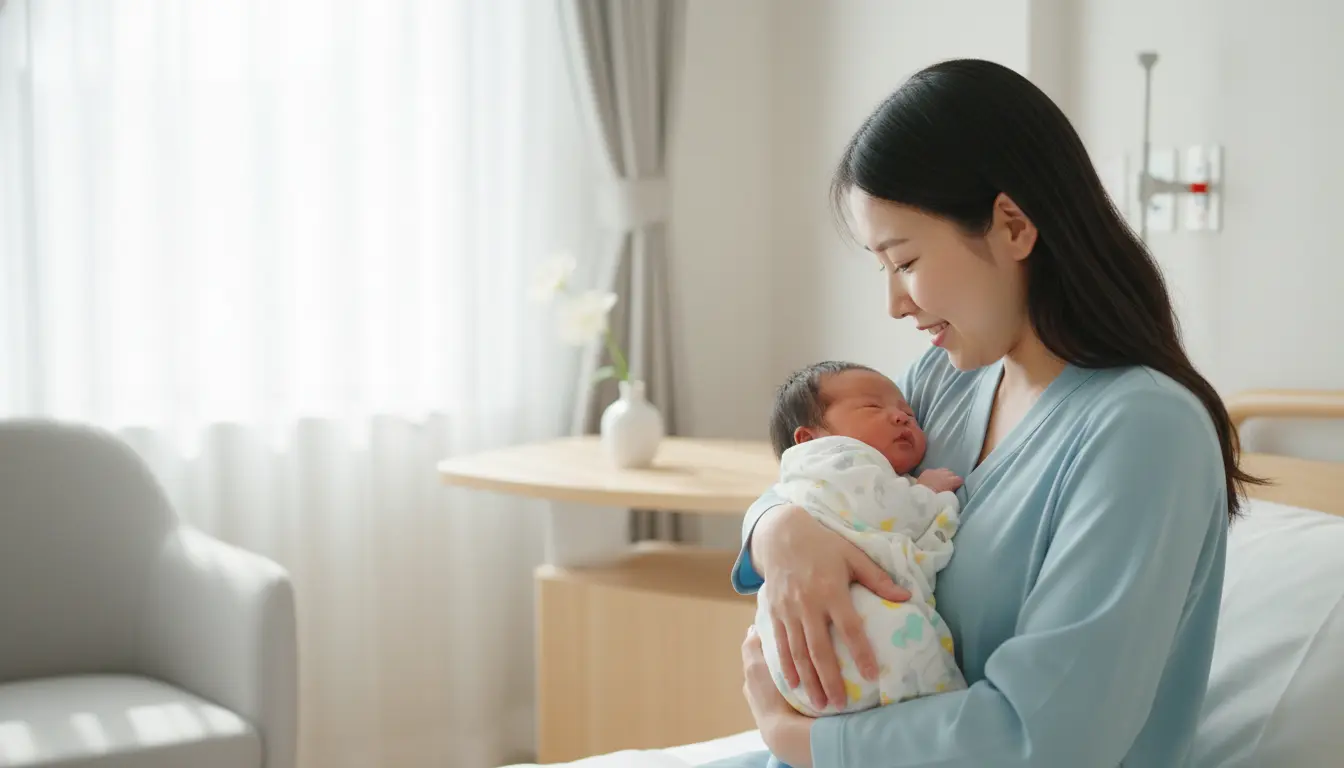
The biggest concern with testing a newborn is, "Won't it hurt?" "Won't it put a strain on the body?" In seeDNA Genetic Medicine Research Institute's postnatal parent-child DNA testing, there is never any drawing of blood with a syringe. Instead, cells are collected from the inside of the cheek — the "oral mucosa" — for testing. [ref:2]
The method is very simple. Using a dedicated cotton swab, you gently rub the inside of the baby's cheek a few times. There is no pain and no wound. Even a soundly sleeping baby can be sampled without waking, and it takes only a few dozen seconds. Compared to tests that involve drawing blood, there is no risk of infection, making this one of the safest sample collection methods for newborns. This oral swab method is a reliable technique used as a standard by forensic science institutions and medical facilities around the world. [ref:2] [ref:6]
Why oral mucosa allows for accurate DNA testing
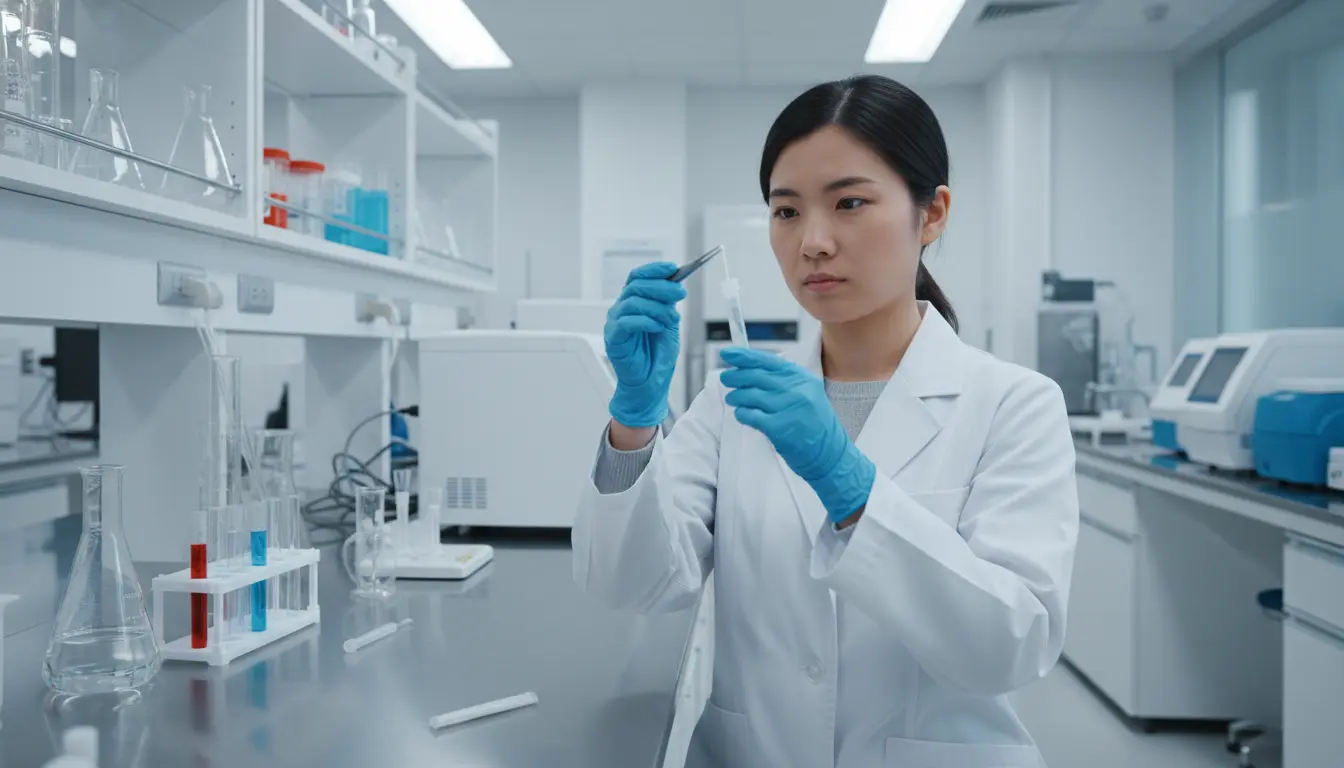 Some people may wonder, "Can you really get an accurate result just by swabbing the inside of the cheek instead of using blood?" The conclusion is that DNA extracted from oral mucosa cells carries exactly the same genetic information as DNA extracted from blood. [ref:6]
The human body is made up of about 37 trillion cells, but in principle the DNA sequence contained in every one of those cells is identical. This is because a single fertilized egg repeatedly divides to become all the cells of the body. Oral mucosa is the mucous tissue covering the inner surface of the cheek, and since new cells are constantly being generated there, a sufficient quantity of cells can be collected just by gently rubbing with a swab. [ref:1] [ref:2]
- Advantage of oral mucosa ①: Non-invasive — No blood draw is needed and there is no pain, so it can be safely used even on newborns.
- Advantage of oral mucosa ②: Sufficient DNA yield — Because cell turnover inside the cheek is active, even a light swab yields enough DNA for analysis.
- Advantage of oral mucosa ③: Good storage stability — When placed in the dedicated storage container, it can be mailed at room temperature, with no need for refrigeration as blood would require.
- Advantage of oral mucosa ④: A globally standard method — This is a standard collection method widely adopted by forensic science institutions internationally. [ref:6]
For accurate testing: two points to watch
Newborns, unlike adults, tend to have a mouth that gets dirty easily. Please pay attention to the following two points to ensure accurate results. [ref:3]
- Effects of breast milk or formula
Right after nursing, components of breast milk or formula (proteins and fats) remain in the mouth and can interfere with DNA extraction. Breast milk may also contain trace amounts of the mother's own somatic cells, raising the risk that the baby's DNA sample becomes contaminated with the mother's DNA.
Countermeasure: Please wait about 30 minutes to 1 hour after nursing before collecting the sample. [ref:3] - Effects of amniotic fluid (right after birth)
On the day of birth, amniotic fluid may remain in the baby's mouth. Amniotic fluid can contain cells derived from the mother's body, which may affect the purity of the sample.
Countermeasure: Before collecting the sample, gently wipe the inside of the mouth with gauze moistened with a small amount of lukewarm water — this allows for a purer sample to be collected.
Simply observing these two points allows even a sample from a newborn to yield a highly accurate result on par with an adult's. In the rare case that a sample turns out to be insufficient, seeDNA Genetic Medicine Research Institute will send a free re-collection kit.
We recommend preparing a test kit "before delivery"
For those who think, "I want to know the result as soon as possible" or "I want to finish collecting the sample while still in the hospital," we strongly recommend ordering the test kit before your due date and packing it in your hospital bag.
If you order the kit only after the baby is born, it will take one to two days to arrive. The postpartum period is busy with physical recovery, nursing, and various procedures, so ordering tends to get put off. If you already have the kit on hand, you can quickly collect the sample in your hospital room on the day of birth and drop it in the mailbox without waiting to be discharged.
seeDNA Genetic Medicine Research Institute's test kit is a compact, envelope-sized package that takes up little space even tucked into a hospital bag. It is ideal to place your order one to two weeks before your due date.
[Important] The procedure differs depending on whether it is for "personal confirmation" or "legal proceedings"
The collection method and procedure for a DNA test differ significantly depending on the purpose for which the result will be used.
| Comparison item | Private testing | Legal testing |
|---|---|---|
| Purpose | Personal confirmation / peace of mind | Court proceedings, legal acknowledgment of paternity, visa applications, etc. |
| Who collects the sample | Can be collected by yourself | Requires a professional to be present |
| Evidentiary value | Not valid as legal evidence | Can be used as an official document |
- Private testing
If you or your family simply want personal confirmation and peace of mind, there is no problem collecting the sample yourself. Following the instructions included with the test kit, you can easily collect the sample at home or in your hospital room. For those who simply want to "confirm things for myself first," private testing is the most convenient and cost-effective option. - Legal testing (for submission to a court or immigration authority)
If the result will be used for mediation, legal acknowledgment of paternity, a visa application, or similar purposes, the sample must be collected in the presence of a third-party professional, with identity verification and photographs taken, following a strict chain of custody for the sample. Following this procedure allows the resulting report to be accepted as official evidence by courts, immigration authorities, and similar bodies. [ref:7]
A sample collected for private testing cannot later be switched over for use in legal testing, so it is important to choose the correct method from the very beginning. If you anticipate the possibility of future use in court proceedings, please consult with us first.
The testing process and how long it takes to get results
For those undergoing DNA testing for the first time, here is a summary of the general process for private testing.
- Order the test kit
You can place an order through the seeDNA Genetic Medicine Research Institute website or by phone. After ordering, the kit typically arrives as soon as the next day. - Collect the sample
Following the enclosed instructions, use the dedicated swabs to collect oral mucosa samples from the baby and the father (or the person being tested). Please collect the sample at least 30 minutes to 1 hour after nursing. - Return the sample
Simply place the samples in the enclosed return envelope and drop it in your nearest mailbox. No special refrigeration is required. - Laboratory analysis
After the samples arrive, we perform DNA extraction, PCR amplification, and STR analysis to determine the parent-child relationship. [ref:5] - Delivery of results
Results are delivered as soon as 3 business days after the samples arrive. An expedited plan is also available for those in a hurry.
If you prepare the kit before delivery, you can collect the sample on the day the baby is born and drop it in the mail the very next day, making it possible to proceed on the most efficient schedule.
Summary: Resolve your worries and move forward into your new life
"A DNA test can be done the day the baby is born" means "you can start resolving your worries from that very day." Let's review the key points of this article once more.
- Since DNA is fixed at fertilization and never changes, testing is possible from day 0 of life with the same accuracy as an adult
- Sample collection is just swabbing the oral mucosa (inside of the cheek). Zero pain, zero bleeding
- Wait 30 minutes to 1 hour after breast milk or formula. Gently wipe away amniotic fluid with gauze
- It is best to prepare the kit before delivery and pack it in your hospital bag
- Since private and legal testing follow different procedures, choosing according to your purpose is important
For both the baby and the mother, being able to spend this important postpartum period with peace of mind matters more than anything. Rather than continuing to worry about "what should I do," please use DNA testing as a first step toward obtaining scientific proof and facing childcare with a clear mind.
At seeDNA Genetic Medicine Research Institute, our specialized staff carefully answer any concerns or questions you may have about testing. Please feel free to contact us at any time.
 Apply / Purchase a kit
Frequently Asked Questions
Q1. From how many days after birth can a DNA test be done?
A. Testing is possible from day 0 of life (the very day of birth). Because DNA is fixed at the moment of fertilization and never changes, a parent-child test can be performed on a newborn with exactly the same accuracy as on an adult. [ref:1]
Q2. Is there any pain or burden for the baby?
A. None whatsoever. The test uses cells from the oral mucosa (inside of the cheek), which are collected simply by gently rubbing with a dedicated swab. No blood draw is needed, and the method involves so little burden that even a sleeping baby can be sampled without waking. [ref:2]
Q3. Is it okay to collect the sample right after nursing?
A. Please avoid collecting the sample right after nursing. If breast milk or formula components remain in the mouth, they can interfere with DNA extraction and may make the result inconclusive. It is best to wait about 30 minutes to 1 hour after nursing before collecting the sample. [ref:3]
Q4. Is it still possible if I order the test kit after the baby is born?
A. Ordering after the birth is fine — the test itself can still be performed without issue. However, since it takes one to two days for the kit to arrive, we recommend ordering one to two weeks before your due date and packing it in your hospital bag. That way, you can collect the sample in your hospital room on the day of birth and send it back right away.
Q5. Can the result of a private test later be used in court?
A. In principle, the result of a private test cannot be used as-is as legal evidence. If it will be submitted to a court, used for a visa application, or used for legal acknowledgment of paternity, you need "legal testing," in which the sample is collected in the presence of a third party. If there is any possibility of future legal use, please consult seeDNA Genetic Medicine Research Institute in advance.
Q6. Can a prenatal (during-pregnancy) parent-child DNA test also be done?
A. Yes, it is possible. Because fragments of fetal-derived DNA are present in the mother's blood during pregnancy, a prenatal parent-child test (NIPPT) can be performed using only a blood sample from the mother. Testing is available from the 9th week of pregnancy onward, and there is no invasive risk to the fetus. Please contact seeDNA Genetic Medicine Research Institute for details. [ref:4]
Q7. Is there any difference in accuracy between oral mucosa and blood?
A. There is no difference. In principle, every cell that makes up the human body contains the same DNA sequence. DNA extracted from oral mucosa cells and DNA extracted from white blood cells both carry exactly the same genetic information, so there is no difference in testing accuracy. [ref:6]
Reliable support from seeDNA Genetic Medicine Research Institute
seeDNA Genetic Medicine Research Institute is a trusted DNA testing and genetic testing organization certified under the international quality standard ISO 9001 and holder of the Privacy Mark for personal information protection.
If you are troubled by questions of family or parent-child blood relationships, or a partner's infidelity, our DNA testing experts are here to support you so you can feel at ease — please feel free to contact us.
[Free consultation with specialized staff]
If you have any questions,
please feel free to contact our toll-free line.
/Open every day, including weekends/
Business hours: Monday–Sunday 9:00 AM–6:00 PM
(excluding holidays)
 Author
Ph.D. in Agriculture / Researcher: L. J.
After earning a Ph.D. at the Graduate School of Tokyo University of Agriculture and Technology, worked as a researcher at the University of Tokyo.
Currently specializing in biological information science, engaged in data analysis and the development of analytical technology for genetic testing at seeDNA.
[References]
(2) J Magn Reson, November 2001
(3) seeDNA Genetic Testing & DNA Paternity Testing, December 2025
(4) Semin Fetal Neonatal Med, December 2007
(5) From What Age Can a Child's DNA Test Be Done? Answering Age-Related Questions – DNARC Shizuoka
(6) The Sankei Shimbun: Sankei News, January 2014