
Revised: August 27, 2025
1p36 deletion syndrome is a congenital disorder caused by a deletion at the terminal end of the short arm of chromosome 1, occurring in about 1 in 5,000 to 10,000 people. It involves intellectual disability, heart defects, and other conditions, but early screening with NIPT and appropriate developmental support can improve quality of life.
- ・What Is 1p36 Deletion Syndrome?
- ・Symptoms and Characteristics
- └ ◆Development and Intellectual Function
- └ ◆Physical Characteristics
- └ ◆Complications
- ・Diagnostic Methods
- └ ◆Prenatal Diagnosis (NIPT)
- └ ◆Postnatal Diagnosis
- ・Treatment and Support
- └ ◆Medical Management
- └ ◆Developmental Support and Therapy
- └ ◆Genetic Counseling and Family Support
- ・Latest Research Trends
- ・Summary
- ・Test 8 Genetic Disease Risks at Japan's Lowest Price with "Non-Invasive Prenatal Testing (NIPT)"
What Is 1p36 Deletion Syndrome?
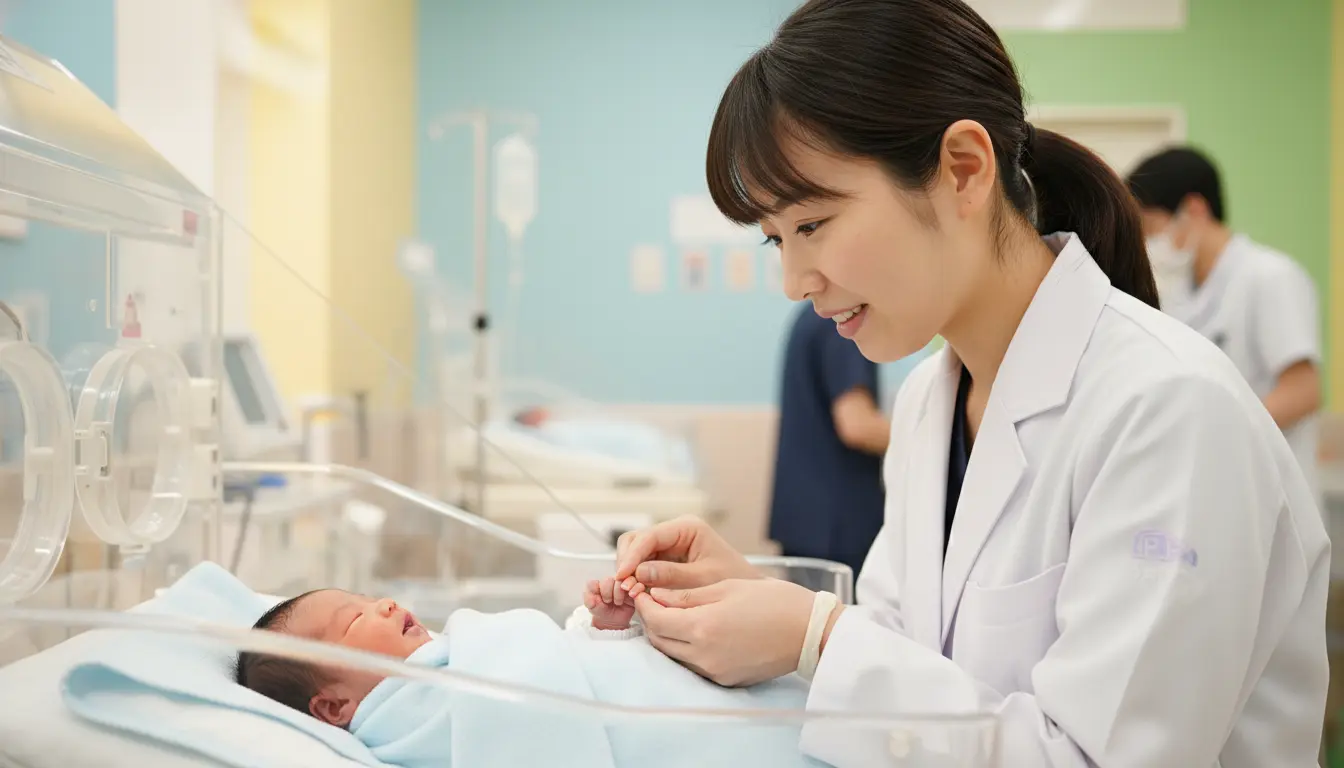
1p36 deletion syndrome is a congenital chromosomal abnormality caused by the deletion of the 1p36 region, the terminal-most portion of the short arm (p arm) of chromosome 1. Human chromosomes consist of 22 pairs of autosomes and one pair of sex chromosomes, and chromosome 1 is the largest of these, concentrating many important genes. As a result, deletion of this region causes a variety of symptoms affecting multiple organs. [ref:1]
Since it was first reported in 1980, this condition has been recognized as one of the most common terminal chromosomal deletion syndromes. Its incidence is estimated at about 1 in 5,000 to 10,000 people, with almost no difference between males and females. In Japan, it is designated as an intractable disease by the Ministry of Health, Labour and Welfare (Designated Intractable Disease 197) and is eligible for medical expense assistance. [ref:1] [ref:2] [ref:13]
The most common mechanism of onset is a de novo mutation, in which the deletion occurs spontaneously during fertilization or early cell division even though the parents' chromosomes are normal. In about 20% of cases, however, one parent carries a structural abnormality such as a balanced translocation, which manifests as an unbalanced translocation in the child. [ref:3]
The 1p36 region contains genes such as PRDM16, KCNAB2, RERE, UBE4B, and CASZ1, which are essential for brain development, heart formation, and cell growth regulation. Because the size and location of the deletion vary from case to case, the severity of symptoms also varies considerably between individuals, which is a hallmark of this condition. [ref:4]
Symptoms and Characteristics

The symptoms of 1p36 deletion syndrome are wide-ranging, mainly involving developmental delay, intellectual disability, characteristic physical findings, and complications affecting multiple organs. The severity varies greatly depending on the extent of the deletion and the genes involved.
◆Development and Intellectual Function
Nearly all patients have some degree of intellectual disability, most falling into the moderate-to-severe range. Language development is characteristically severely delayed, with many patients having no speech or only a few words, although comprehension often exceeds expressive ability. Communication using AAC (augmentative and alternative communication) devices or picture cards can be effective in some cases. [ref:3]
In motor development, hypotonia (low muscle tone) markedly delays the acquisition of sitting and walking. In about half of cases, independent walking remains difficult even past age 4, but many cases have been reported in which motor ability improved with ongoing physical and occupational therapy intervention. [ref:5]
◆Physical Characteristics
This condition is associated with a characteristic facial appearance. The main physical characteristics are as follows.
- Microcephaly/brachycephaly (a small head that is short front-to-back)
- Deep-set eyes and straight eyebrows
- Midface hypoplasia (a sunken central portion of the face)
- A broad, flat nasal bridge and a long philtrum
- A pointed chin and low-set, posteriorly rotated ears
These findings serve as clinical clues for suspecting this condition, but the features may be less distinct depending on the extent of the deletion. Short stature tends to become more noticeable with growth, and a tendency toward obesity has also been reported in some patients. [ref:3] [ref:6]
◆Complications
Many complications have been reported in 1p36 deletion syndrome. The main ones are as follows.
| Complication | Frequency | Representative conditions |
|---|---|---|
| Congenital heart disease | About 43–71% | Ventricular septal defect, patent ductus arteriosus |
| Epilepsy | About 44–58% | Infantile spasms, partial seizures |
| Vision/hearing abnormalities | Widely reported | Strabismus, hearing loss |
Congenital heart disease is seen in about 43–71% of cases, with ventricular septal defect and patent ductus arteriosus being representative. Because there is also a risk of dilated cardiomyopathy, regular cardiac follow-up is recommended. Epilepsy is seen in 44–58% of cases, with infantile spasms (West syndrome) reported to be particularly common. [ref:2]
Diagnostic Methods
Diagnosis of 1p36 deletion syndrome differs between the prenatal and postnatal periods. Advances in genetic testing technology have made earlier and more accurate diagnosis possible.
◆Prenatal Diagnosis (NIPT)
Non-invasive prenatal testing (NIPT) using next-generation sequencing (NGS) analyzes fetal-derived cell-free DNA (cfDNA) in the pregnant woman's blood, making non-invasive screening for 1p36 deletion syndrome possible. For deletions of about 3 Mb or larger, a sensitivity of 98.4% has been reported. [ref:7]
However, NIPT performance varies by testing facility, with reported sensitivity ranging from 20–100% and specificity from 81.62–100%. It is important to understand that NIPT is a screening test, not a definitive diagnosis. [ref:8]
The general flow when NIPT returns a positive result is as follows.
- NIPT returns a positive result
- Genetic counseling is provided to explain the meaning of the result and the options going forward
- Amniocentesis or chorionic villus sampling is performed for a definitive diagnosis
- The collected sample is analyzed using chromosomal microarray analysis or FISH to confirm the diagnosis
- Based on the confirmed result, genetic counseling is used to discuss the plan going forward
A definitive diagnosis requires invasive tests such as amniocentesis or chorionic villus sampling, which carry a small risk of miscarriage. It is recommended that decisions be made with thorough genetic counseling. [ref:9]
◆Postnatal Diagnosis
When this condition is suspected after birth, a chromosome test using the G-banding method is typically performed first, but because its resolution is only about 5–10 Mb, it has limits in detecting microdeletions. The FISH method is therefore used in combination, employing a fluorescent probe specific to the 1p36 region to determine whether a deletion is present.
Currently, the most reliable method is chromosomal microarray analysis (CMA). It can detect genome-wide copy number variations (CNVs) at high resolution, allowing detailed analysis of the extent of the deletion. CMA is internationally recommended as the first-line test for unexplained intellectual disability and multiple congenital anomalies. [ref:10] [ref:14]
Treatment and Support
There is currently no fundamental cure for 1p36 deletion syndrome, but symptom-based medical management combined with comprehensive multidisciplinary support can greatly improve quality of life.
◆Medical Management
Heart disease is managed with surgical or medical treatment depending on type and severity. Because there is also a risk of dilated cardiomyopathy, long-term monitoring of cardiac function is important. For epilepsy, drug therapy with anti-epileptic medications is the mainstay, and seizure control is well managed in about 80% of cases. When drug therapy is difficult, options such as the ketogenic diet or vagus nerve stimulation therapy may also be considered. [ref:11]
For vision and hearing abnormalities, regular follow-up with ophthalmology and otolaryngology is provided; for growth impairment, nutritional management and endocrinological evaluation are conducted; and for swallowing difficulties, rehabilitation by a speech-language pathologist is provided.
◆Developmental Support and Therapy
Early intervention with developmental therapy is recommended, with individualized programs centered on physical therapy (PT), occupational therapy (OT), and speech-language therapy (ST). Music-based learning, activities incorporating visual and tactile stimulation, and digital devices such as tablets are effective learning support tools. Having ample patience, engaging in repeated practice, and offering active praise and encouragement are considered effective approaches. [ref:12]
◆Genetic Counseling and Family Support
In about 20% of cases, the deletion is inherited from a parent. When a parent carries a balanced chromosomal structural abnormality, the risk of another unbalanced chromosomal abnormality occurring in a future pregnancy increases, so it is extremely important to receive genetic counseling for an accurate assessment of recurrence risk. Counseling comprehensively covers options for future pregnancies, including preimplantation genetic testing (PGT), as well as psychological support. [ref:3]
Information exchange and mutual support through patient and family associations are also active, and various services based on the Comprehensive Support Act for Persons with Disabilities—such as welfare services, developmental therapy, and special-needs education—are available.
Latest Research Trends
Research into 1p36 deletion syndrome is being actively pursued around the world. Progress is being made in understanding the function of individual genes—for example, haploinsufficiency of the PRDM16 gene is involved in growth impairment and cardiomyopathy, deletion of the KCNAB2 gene is involved in the mechanism of epilepsy onset, and the CASZ1 gene is associated with congenital heart disease. [ref:3] [ref:15]
Furthermore, research using iPS cells is underway to differentiate patient-derived cells into neurons and cardiomyocytes to analyze the disease's molecular mechanisms at the cellular level. In the future, the development of fundamental treatments using genome editing technologies such as CRISPR-Cas9 is anticipated. Natural history studies using large-scale patient registries are also advancing, aiming to build optimal support systems tailored to each life stage. [ref:2]
Summary
1p36 deletion syndrome is a chromosomal microdeletion syndrome caused by a deletion at the terminal end of the short arm of chromosome 1, causing a range of symptoms including intellectual developmental delay, congenital heart disease, and epilepsy. Its incidence, at about 1 in 5,000 to 10,000 people, is relatively high, making it one of the most common terminal deletion syndromes.
Early diagnosis and appropriate support can greatly improve quality of life. Advances in NIPT have made prenatal screening possible, and after birth, chromosomal microarray analysis enables rapid and accurate diagnosis. Medical management of heart disease and epilepsy, comprehensive developmental therapy centered on physical, occupational, and speech-language therapy, and support systems through genetic counseling and family associations are all well developed, steadily creating an environment in which patients and their families can build better lives.
Further advances in genetic research and iPS cell research are expected to bring new treatment options, including gene therapy.
Test 8 Genetic Disease Risks at Japan's Lowest Price with "Non-Invasive Prenatal Testing (NIPT)"
Find out your baby's risk of genetic disease
Frequently Asked Questions
Q1. How common is 1p36 deletion syndrome?
A. The incidence of 1p36 deletion syndrome is estimated at about 1 in 5,000 to 10,000 people. It is one of the most common terminal chromosomal deletion syndromes, with almost no difference between males and females. In Japan, it is also designated as an intractable disease by the Ministry of Health, Labour and Welfare (Designated Intractable Disease 197). [ref:2] [ref:13]
Q2. Can 1p36 deletion syndrome be detected by NIPT (non-invasive prenatal testing)?
A. Yes, NIPT using NGS technology allows screening for 1p36 deletion syndrome. A high sensitivity of 98.4% has been reported for deletions of about 3 Mb or larger. However, since NIPT is a screening test and not a definitive diagnosis, a positive result requires confirmation through amniocentesis or chorionic villus sampling. [ref:7]
Q3. Is 1p36 deletion syndrome inherited from a parent?
A. About 80% of cases result from a de novo mutation, occurring spontaneously with no chromosomal abnormality in either parent. However, in about 20% of cases, a parent carries a balanced chromosomal structural abnormality, which manifests as an unbalanced translocation in the child. It is recommended to undergo genetic counseling to assess recurrence risk. [ref:3]
Q4. How can I support the development of a child with 1p36 deletion syndrome?
A. Early intervention with developmental therapy is important. A comprehensive support program combining physical therapy (PT), occupational therapy (OT), and speech-language therapy (ST) is effective. Materials that use music and visual/tactile stimulation, as well as digital devices such as tablets, are also useful. Having patience, practicing repeatedly, and offering active praise and encouragement are important. [ref:12]
Q5. Can the epilepsy associated with 1p36 deletion syndrome be treated?
A. Epilepsy is seen in about 44–58% of cases, but drug therapy with anti-epileptic medications achieves good seizure control in about 80% of cases. When drug therapy is not sufficiently effective, alternative approaches such as the ketogenic diet may also be considered. [ref:11]
Q6. Which test is best for a definitive diagnosis of 1p36 deletion syndrome?
A. Chromosomal microarray analysis (CMA) is currently considered the most reliable test. It can detect genome-wide copy number variations at high resolution, allowing even minute deletions to be identified with high precision. Because it enables detailed analysis of the extent of the deletion, it is also useful for identifying the genes involved and predicting prognosis. [ref:10] [ref:14]
Q7. What kind of life can patients with 1p36 deletion syndrome expect as adults?
A. While the severity of symptoms varies by individual, many patients reach adulthood with appropriate medical management and ongoing support. They can lead lives suited to their individual abilities using various welfare services under the Comprehensive Support Act for Persons with Disabilities, group homes, and employment support. Continued medical follow-up, such as regular cardiac function monitoring and epilepsy management, also remains important. [ref:11] [ref:13]
seeDNA Institute of Genetic Medicine's Trusted Support
seeDNA Institute of Genetic Medicine is a trusted and reliable specialist institution for DNA testing and genetic testing, holding the international quality standard ISO9001 and the Privacy Mark for privacy protection.
If you are concerned about family or parent-child biological relationships, or a partner's infidelity, our DNA testing experts will provide thorough support to give you peace of mind, so please feel free to contact us.
[Free Consultation with Specialist Staff]

If you have any questions,
please feel free to contact our toll-free number.
/Open every day, including weekends/
Business hours: Monday–Sunday 9:00 AM–6:00 PM
(excluding holidays)
Author
M.D., Ph.D.
Tasuku Hiroshige
Ph.D. in Medicine; Specialist and Instructor, Japanese Urological Association; Certified Physician, Japanese Society of Medical Oncology; Specialist, Japanese Society of Anti-Aging Medicine; Certified Occupational Physician, Japan Medical Association; Certified Physician, Japanese Society of Chemotherapy; Certified Physician, Japanese Society for Sexually Transmitted Infections; Certificate of da Vinci System
Training As a Console Surgeon, and more
After graduating from Kagoshima University School of Medicine in 2010, he built extensive clinical experience as a urologist. In addition to his clinical work, he is also active in academic pursuits such as conference presentations, writing papers, and securing research funding. He holds specialist qualifications in a wide range of fields, including urology (specialist and instructor), cancer treatment, anti-aging medicine, and infectious disease treatment. Drawing on the extensive medical knowledge and skills he has cultivated, he provides care tailored to each individual patient.
[References]
(2) MedlinePlus Genetics, March 2024
(3) 1p36 Deletion Syndrome (Designated Intractable Disease 197) – Intractable Disease Information Center
(4) Deep Phenotyping in 1p36 Deletion Syndrome, 2020
(5) Appl Clin Genet, 2015
(6) What Is 1p36 Deletion Syndrome? (Institute of Medical Science, The University of Tokyo)
(7) Epilepsia, March 2008
(8) PLoS One, 2020
(9) J Clin Med, June 2022
(10) Unique, October 2018
(11) Am J Hum Genet, May 2010
(12) 1p36 Deletion Syndrome (Designated Intractable Disease 197) – Intractable Disease Information Center, October 2024
(13) J Biol Chem, March 1997