
 walking speed

- Walking speed (gait balance) is associated with type C mutation in DNA region rs80092143A study by Erasmus Medical Center found that people with blood type C tend to walk slower.
- rs80092143 near LINC01049 geneThe GG type has a long single leg support time and stable walking balance, while the CC type tends to have unstable gait balance.
- The prevalence of type CC among Japanese people is79.9%The distribution is almost the same as the world average of 78.3%.
Overview Walking balance is one of the bodily functions that plays an important role in daily life. Poor walking balance can pose health risks, especially for older people. Gait balance involves the two-leg support phase and the single-leg support phase in the gait cycle, and the ability to maintain the single-leg support phase is essential for living a safe life. Gait balance is complicated by the effects of genetic factors, age, gender, height, weight, cognitive function, and disease. Recent research has discovered multiple genes related to gait balance, and has focused on a region near the LINC01049 gene, which is associated with single leg support time in elderly people. It has been revealed that the longer single leg support time in elderly people is associated with a region near the LINC01049 gene. (Reference link 1) Although the role of genes has not yet been elucidated, future research is expected to lead to the identification of genes necessary for maintaining walking balance and the elucidation of their functions. It is hoped that this will lead to the development of new treatments and preventive measures that will help maintain the health of the elderly. Rationale Collaborative research at the Erasmus University Medical Center in the Netherlands has revealed a specific type of gene around the LINC01049 gene that influences single leg support time in older adults. This region is called "rs80092143" and consists of three genotypes. It has been found that people with the GG type tend to have a longer single leg support time (stable gait balance in the elderly), while those with the CG type tend to have a shorter time (the gait balance in the elderly is somewhat unstable). (Reference link 2) However, among Japanese genotypes, the CC type accounts for the most (76.4%), the CG type accounts for 22.0%, and the GG type accounts for the least (1.6%), so the genotype is not necessarily related to walking balance. (Reference link 3) Gait balance is greatly influenced by the environment, so it is not necessarily determined by genetic type alone. Muscle strength and joint flexibility are important for maintaining walking balance, which requires training and stretching tailored to your age, as well as a nutritionally balanced diet. Determining your genotype through genetic testing may help you develop your abilities and take early countermeasures. Mechanism of action The LINC01049 gene is located on chromosome 13 of the 24 human chromosomes. This gene is known to be expressed in organs such as the testis and lungs, but it is also known to be expressed in leg muscles (such as the gastrocnemius muscle). (Reference link 4) However, the biological function of LINC01049 and its mechanism for gait balance have not yet been elucidated. However, since LINC01049 may be involved in various biological reactions such as cell division, it is thought that the rs80092143 gene type, which is present near LINC01049, may affect the decline in muscle strength associated with aging and may be related to gait balance. (Reference links 5 and 6) As described above, "rs80092143" is attracting attention as one of the DNA regions related to walking balance in old age.
What is walking speed (gait balance)?
Walking speed (gait balance) is an index of physical function that refers to the ability to move while maintaining body stability while walking.Walking balance is directly connected to the safety of daily life, and is an important factor that affects the risk of falls and healthy life expectancy, especially for the elderly.
Why walking balance is important
Decreased walking balance can cause falls, fractures, and bedriddenness in the elderly. The ability to maintain the single leg support phase of the gait cycle is essential for safe daily life.
- Structure of gait cycle:It consists of a bipedal support period and a single leg support period, and the length of the single leg support period is an indicator of stability.
- Influencing factors:Complex involvement of genetic factors, age, gender, height, weight, cognitive function, and disease
- Fall risk for older people:Loss of walking balance is the main cause of falls experienced by approximately 30% of elderly people each year
Comparison of factors affecting walking balance
| influencing factors | concrete impact | Possibility of improvement |
|---|---|---|
| genetic factors | rs80092143 near LINC01049 gene is involved in gait balance | Although the genotype does not change, it is useful for early measures |
| muscle strength | Decline in lower limb muscle strength directly reduces walking speed and balance. | Can be improved with strength training |
| joint flexibility | Restricted range of motion in ankles, knees, and hip joints affects walking | Can be improved by stretching |
| nutritional status | Protein and calcium deficiencies promote the decline of the musculoskeletal system | Can be treated by improving diet |
Relationship between genes and walking speed
Relationship between DNA region rs80092143 and walking balance
A joint study by Adams et al. (2015) at Erasmus University Medical Center in the Netherlands revealed that the DNA region rs80092143 is associated with gait balance (single-leg support time) in the elderly.
- There are three genotypes of rs80092143: CC, CG, and GG.
- GG typeHumans have a longer single leg support time and stable walking balance.
- CG typeHumans have a slightly shorter single leg support time and a slightly unstable walking balance.
- People with type C mutation(CC type/CG type) tend to walk slower
Comparison of genotype distribution in Japanese and the world (rs80092143)
| Genotype | Percentage of Japanese people | percentage of the world |
|---|---|---|
| CC type | 79.9% | 78.3% |
| CG type | 18.9% | 20.3% |
| GG type | 1.1% | 1.3% |
The prevalence of type CC among Japanese people is79.9%This is almost the same level as the world average of 78.3%. GG type (tendency to have stable walking balance) is Japanese.1.1%, the global average is 1.3%, both of which are low.
Mechanism of action of LINC01049 gene
The LINC01049 gene is a long non-coding RNA gene located on chromosome 13.It is expressed not only in organs such as the testicles and lungs, but also in the muscles of the legs (such as the gastrocnemius muscle).
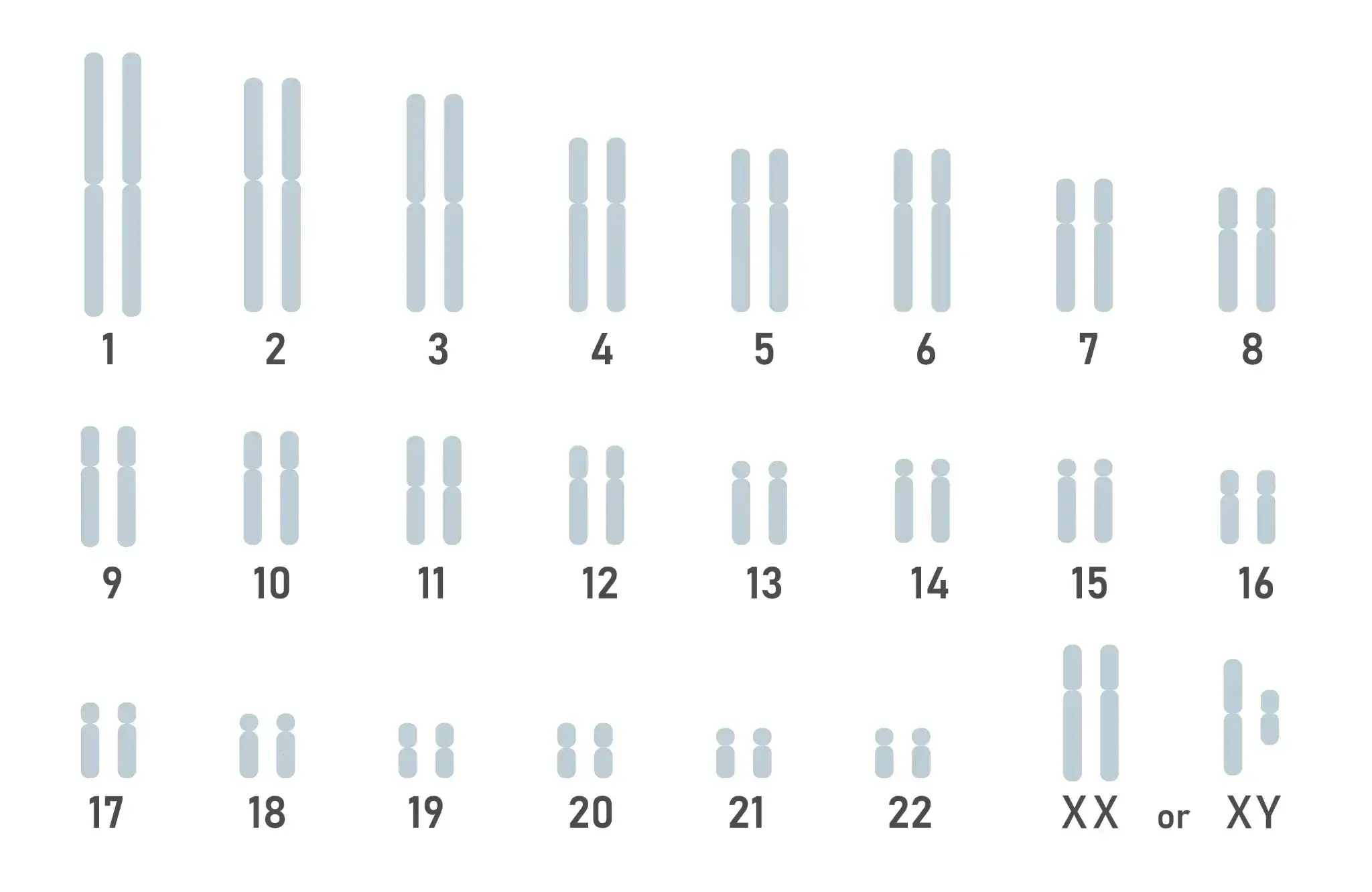
- Chromosome location:Chromosome 13 out of 24 human chromosomes
- Expression site:Testicles, lungs, gastrocnemius (calf muscles), etc.
- Estimation function:Involved in biological reactions including cell division, and may affect age-related muscle weakness
- Research stage:Mechanisms related to biological functions and gait balance remain unknown.
It has been reported that the gene type of rs80092143 near LINC01049 influences age-related decline in muscle strength and may be related to gait balance in old age.
Rationale for testing
Surface DNA region: walking speed
The gene region that most strongly influences walking speed is rs80092143. The distribution of isomorphic genotypes in Japan is as follows.
- CC
79.9 % - CG
18.9 % - GG
1.1 %
Basis for inspection
A study by Adams and colleagues at the Erasmus Medical Center revealed that walking speed is linked to genes. There is a region called rs80092143 in the human genome, and there are two types of mutations, C and G, in the gene in this region. It was found that people with the type C mutation tend to walk slower.
The DNA region investigated this time
Schematic diagram of DNA map present in cells
- ■
- ■
- ■
- ■
- ■
- ■
- ■
- ■
- ■
Related genes
| Related genes | KRT18P27 |
|---|
Frequently asked questions (FAQ)
Q1. How is walking speed determined by genes?
Walking speed is associated with DNA region rs80092143.A study by Adams et al. (2015) at the Erasmus Medical Center found that there are three genotypes of rs80092143: CC, CG, and GG, and that people with the C mutation tend to walk slower. The prevalence of type CC among Japanese people is 79.9%.
Q2. What genes affect walking balance?
The rs80092143 region near the LINC01049 gene affects walking balance.GG type people have a long single leg support time and stable walking balance, while CG type people tend to be slightly unstable. However, the percentage of Japanese people with GG type is as low as 1.1%.
Q3. What is the distribution of the rs80092143 genotype in Japanese people?
The genotype distribution of rs80092143 in Japanese people isCC type 79.9%, CG type 18.9%, GG type 1.1%It is. Worldwide, 78.3% are CC type, 20.3% CG type, and 1.3% GG type, showing almost the same level of distribution in Japan and the world.
Q4. How can I improve my walking balance?
The following methods are effective for improving walking balance.
- Strength training:Strengthen your lower limb muscles with squats, standing on one leg, heel raises, etc.
- Stretch:Improves flexibility of ankles, knees, and hip joints and maintains range of motion
- Nutritional management:Maintain your musculoskeletal system with a diet containing protein, calcium, and vitamin D
- Genetic testing:Understand your genotype and take preventive measures early
References
- Reference link 1: 2016., Tsukahiro Chidori, Physical Therapy Science
- Reference link 2: 2015 Jul., Hieab H H Adams, J Gerontol A Biol Sci Med Sci
- Reference link 3: DNA Information on region “rs80092143” NIH
- Reference link 4: Information on gene "LINC01049" Bgee
- Reference link 5: 2017 Mar., Piero Carninci, Harry Perkins Medical Institute
- Reference link 6: 2017 May., Ryoichiro Mukai, Japanese Physical Therapy Congress
- Reference link 7: 2016 Jun., Hieab H H Adams, J Gerontol A Biol Sci Med Sci