
 Volume of subcortical structures

- Subcortical structures are areas located deep in the brain, such as the amygdala, pituitary gland, and brain stem.plays an important role in learning, memory, and emotional regulation.
- CC type of DNA region rs11684404Study finds that people with this condition tend to have a higher risk of developing neurological disorders
- Related genesEIF2AK3has been confirmed to regulate protein synthesis and interact with IGF1, which is involved in cognitive function.
Overview The brain is a complex organ made up of many areas, and is responsible for many functions necessary for life, such as language, walking, thinking, and breathing. Brain regions deep within the brain are called "subcortical structures," and these structures, including the amygdala, pituitary gland, and brainstem, are thought to play important roles in learning, memory, and emotion. Changes in this subcortical structure are also associated with various cognitive and psychiatric disorders. A 2018 study by the University of Tokyo reported that thalamic volume abnormalities are associated with social dysfunction seen in people with schizophrenia (Reference link 1). In this way, knowing your own subcortical structure will lead to knowing your own "brain" and knowing your risk for cognitive disorders and mental disorders. Why not deepen your understanding of your own risk of developing the disease with a genetic test that you can perform at home? 2. Rationale In 2019, a study was conducted in the United States to explore genetic variations associated with the relationship between the amount of subcortical structures and the development of neurological disorders. The study examined the genomes of nearly 40,000 individuals of European descent. As a result, they identified 48 genetic loci that correlate with the volume of various subcortical structures in the brain. Furthermore, using gene expression and neuropathology data, we identified 199 putative genes at these loci that are involved in neurodevelopment, synaptic signaling, axonal transport, apoptosis, inflammation, and susceptibility to neurological disorders (Reference link 2). These genes are thought to be involved in a variety of functions, from controlling the flow of information in the nervous system to neurodevelopment and inflammation. One of these DNA regions, ``rs11684404,'' was found to be related to brain stem volume. The genotype of "rs11684404" can be classified into three types: "TT type", "TC type", and "CC type", and in East Asia, "TT type" accounts for 22.7%, "TC type" 49.9%, and "CC type" 27.5% (Reference link 3). Among these, the genetic type considered to have a high risk of developing neurological disorders is the CC type. 3. Mechanism of action This study revealed that variants in 148 genes affect interactions between proteins. Among them, the gene "EIF2AK3" produced by the DNA region "rs11684404" is located on chromosome 2, and phosphorylates the alpha subunit of eukaryotic translation initiation factor II, resulting in inactivation and suppression of overall protein synthesis. Additionally, "EIF2AK3" has various neuroprotective effects and is known to interact with various proteins, including "IGF1," which is involved in cognitive functions. Additionally, it has been suggested that the activity of EIF2AK3 varies depending on genetic polymorphisms, and it has been found that this may affect neural activity in the brain (Reference link 4).
What is the volume of subcortical structures?
Subcortical structures are the general term for brain regions such as the amygdala, pituitary gland, and brain stem, which are located deep within the brain.These structures play important roles in learning, memory, and emotional regulation.
What brain functions are carried out by subcortical structures?
The brain is a complex organ that is responsible for functions necessary for daily life, such as language, walking, thinking, and breathing. As its core regions, subcortical structures are involved in the following functions:
- Learning and memory:Control the intake and retention of new information
- Emotional regulation:The amygdala manages emotional responses such as fear, anxiety, and joy.
- Hormone secretion:The pituitary gland regulates the secretion of growth hormone, thyroid stimulating hormone, etc.
- Life support:The brainstem controls autonomic functions such as breathing, heartbeat, and body temperature regulation.
Relationship between changes in subcortical structure and cognitive and psychiatric disorders
Volume changes in subcortical structures areOnset of cognitive and psychiatric disordersis closely related to
- In a 2018 study from the University of Tokyo,Thalamic volume abnormalities are involved in social dysfunction in schizophrenia patientsIt was reported that (Reference link 1)
- Knowing the volume of subcortical structures leads to understanding the risk of cognitive impairment and mental disorders.
Genetic testing that can be performed at home can help you better understand your own risk of developing the disease.
Genetic variations associated with the volume of subcortical structures
In 2019, a large-scale study targeted the genomes of approximately 40,000 people of European descent in the United States.was carried out.
- Correlates with the volume of subcortical structures48 lociidentify
- Involved in neural development, synaptic signal transmission, axonal transport, apoptosis, inflammation, and susceptibility to neurological disorders199 genesIdentification (reference link 2)
- DNA region "rs11684404"brainstem volumefound to be related to
Differences in neurological disorder risk depending on genotype
The genotype of the DNA region rs11684404 is classified into three types.
| Genotype | Percentage in East Asia | risk trends |
|---|---|---|
| TT type | 22.7% | standard |
| TC type | 49.9% | standard |
| CC type | 27.5% | High risk of neurological disorders |
(Reference link 3)
What is the mechanism of action of the EIF2AK3 gene?
The gene "EIF2AK3" produced by the DNA region rs11684404 is located on chromosome 2.I will. This gene has the following functions:
- phosphorylates the alpha subunit of eukaryotic translation initiation factor II,Inhibits global protein synthesis
- related to cognitive functionIGF1Interacts with various proteins including
- EIF2AK3 activity differs depending on genetic polymorphism,Affects neural activity in the brain(Reference link 4)
Rationale for testing
Superficial DNA area: volume of subcortical structures
The gene region that most strongly influences the volume of subcortical structures is rs11684404. The distribution of isomorphic genotypes in Japan is as follows.
- TT
31.6 % - TC
49.2 % - CC
19.1 %
Basis for inspection
A 2019 American study revealed that the volume of subcortical structures is associated with genes. There are two types of mutations in the rs11684404 region, T and C, and people with the CC type tend to have a higher risk of developing neurological disorders (reference link 2).
The DNA region investigated this time
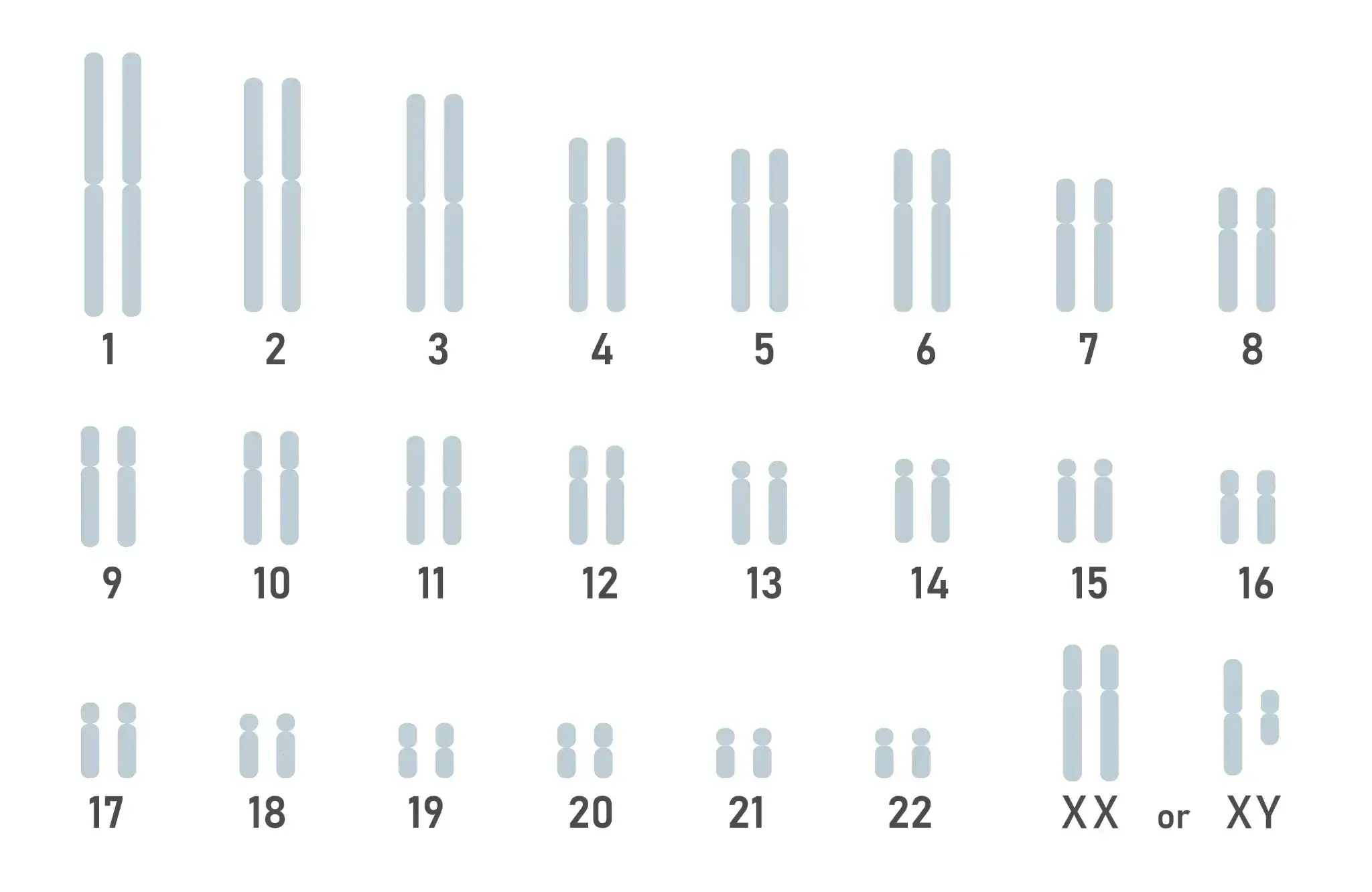
Schematic diagram of DNA map present in cells
- ■
- ■
- ■
- ■
- ■
- ■
- ■
- ■
- ■
Related genes
| Related genes | EIF2AK3 |
|---|
Frequently asked questions (FAQ)
Q1. What are subcortical structures?
Subcortical structures are the general term for brain regions such as the amygdala, pituitary gland, and brain stem, which are located deep within the brain.It plays an important role in learning, memory, and emotional regulation, and changes in its volume are associated with cognitive and psychiatric disorders.
Q2. What is the relationship between the volume of subcortical structures and neurological disorders?
In a 2019 American study, genome analysis of approximately 40,000 people of European descent revealed a correlation with the volume of subcortical structures.48 locihas been identified. These genes are presumed to be involved in neural development, synaptic signaling, inflammation, and susceptibility to neurological disorders (Reference link 2).
Q3. What is the relationship between DNA region rs11684404 and subcortical structures?
DNA region rs11684404 isbrainstem volumerelated to. There are three genotypes: TT, TC, and CC, and in East Asia, TT type accounts for 22.7%, TC type 49.9%, and CC type 27.5%.CC types have a high risk of developing neurological disorders.(Reference link 3).
Q4. Can genetic testing determine the risk of subcortical structures in the brain?
By examining the genotype of DNA region rs11684404,Brainstem volume trends and neurological disorder riskcan be understood. The related gene EIF2AK3 interacts with IGF1, which is involved in cognitive function, and it has been suggested that its activity differs depending on genetic polymorphism (Reference link 4).
References
- Reference link 1: 2018 Jan., Daisuke Koshiyama, Scientific reports
- Reference link 2: 2019 Nov., Claudia L Satizabal, Nature genetics
- Reference link 3: DNA information “rs11684404” information NIH
- Reference link 4: Information on the gene “EIF2AK3” NIH