
 Vitiligo
- Vitiligo (vitiligo vulgaris) is an autoimmune skin disease in which the skin becomes white due to malfunction of melanocytes (pigment cells).and affects 0.5% to 1% of the total population.
- T-type mutation in the DNA region rs5952553 surrounding gene FOXP3People with this condition have a high risk of developing vitiligo, and approximately 64% of Japanese people have the risk genotype (TT type + CT type)
- The familial incidence is20〜30%The risk of developing the disease increases due to a combination of environmental factors such as ultraviolet rays, trauma, stress, and genetic factors.
Overview Vitiligo is a skin disease that causes parts of the skin to turn white and is caused by a problem with the cells that produce skin pigment. This disease is also known as "white catfish", and it is said that Michael Jackson also suffered from this disease and had difficulty equalizing his skin color with foundation. In addition, Michael Jackson's father and sister also suffered from vitiligo, so the incidence of the disease in families is thought to be 20-30%. Vitiligo vulgaris is more likely to develop due to a combination of environmental factors such as sunburn, injury, burns, and other environmental factors, as well as genetic factors. According to the Ministry of Health, Labor and Welfare, it is thought that 0.5% to 1% of the population is infected, and the number of patients is estimated to be 153,000. (Reference link 1) Vitiligo vulgaris is not contagious to humans and is not a disease that directly threatens life, but it can appear in any part of the body, and if left untreated, vitiligo may develop one after another and spread. In particular, if it appears on visible areas such as the face, it can cause psychological damage to social life. The sooner vitiligo vulgaris is treated, and the younger the age of onset, the better the effects of treatment can be expected. For this reason, it is expected that determining one's own genetic type through genetic testing and knowing the risk of developing vitiligo vulgaris may be useful in preventing the onset and taking early measures. 2. Rationale Genetic research conducted at the University of Colorado School of Medicine in the United States identified a DNA region called rs5952553 located around the gene FOXP3, and found that some people are more susceptible to developing vitiligo vulgaris depending on this region. (Reference link 2) The DNA region "rs5952553" has three genotypes: "TT type", "CT type", and "CC type". People with the TT type, who have the Risk Allele ``T'', tend to develop vitiligo vulgaris, and people with the CT type tend to be slightly more likely to develop vitiligo. It is known that the most common genetic type in Japanese people is the CT type at 48.2%, the CC type at 35.3%, and the TT type at 16.5%. (Reference link 3) Approximately 60% or more of Japanese people have the TT type and CT type, so there is a possibility that they will develop vitiligo vulgaris, but this does not necessarily mean that they will develop it. The risk increases when environmental factors overlap, so everyone, including people with the CC type, need to be mindful of environmental factors. Environmental factors are thought to be related to skin irritation and stress. Therefore, it is necessary to take care of yourself by taking measures against UV rays such as applying sunscreen, taking in the nutrients necessary for skin growth, and avoiding stress. By understanding your own risk of developing vitiligo through genetic testing, you can manage risks in your lifestyle and environment. 3. Mechanism of action FOXP3, a gene involved in the development of vitiligo, is located on the X chromosome of the 24 chromosomes common to humans. This gene is expressed in T cells and is present in large numbers in tissues that control immunity, such as lymph nodes, spleen, and appendix. (Reference link 4) FOXP3 also plays an important role in the development of regulatory T cells that can suppress excessive immune responses to prevent autoimmune diseases. (Reference link 5) The direct mechanism by which the gene ``FOXP3'' is involved in ``Vitiligo vulgaris'' has not been elucidated, but if you have the ``TT type'' or ``CT type'' genotype, your immune cells will continue to work uncontrolled, so your immune cells will no longer be able to control the cells that produce pigment, and the production of melanin pigment will be inhibited. As a result, the skin may become pale and develop vitiligo. Based on the above, the DNA region "rs5952553" is considered to be one of the single nucleotide polymorphisms (SNVs) that are attracting attention and are related to the onset of "vitiligo vulgaris."
What is vitiligo (vitiligo vulgaris)?
Vitiligo (vitiligo vulgaris) is an autoimmune skin disease in which the function of melanocytes (pigment cells), which produce pigment in the skin, decreases or disappears, causing parts of the skin to turn white.Also called "white spot", it is not a directly life-threatening disease, but it can occur anywhere on the body, and if left untreated, vitiligo may spread.
Incidence rate and number of patients with vitiligo
According to a report by the Ministry of Health, Labor and Welfare, the incidence of vitiligo and the number of patients are as follows.
- Incidence rate:0.5% to 1% of the total population
- Estimated number of patients:Approximately 153,000 people (in Japan)
- Familial incidence:20-30% (Michael Jackson's father and sister also developed the disease)
- Infectious:None (not transmitted from person to person)
How does vitiligo affect your life?
Although vitiligo is not a directly life-threatening disease, it can have the following effects:
- Appearance changes:Vitiligo on exposed areas such as the face and hands causes psychological stress in social life.
- Progressive:If left untreated, vitiligo appears one after another and tends to spread.
- Urgency of treatment:The earlier treatment is started and the younger the age of onset, the more effective the treatment is.
Comparison of factors causing vitiligo
| Factor classification | specific factors | degree of influence |
|---|---|---|
| genetic factors | Mutation of FOXP3 gene (rs5952553) | Familial incidence 20-30% |
| Environmental factors (physical stimuli) | Skin irritation such as sunburn, injury, burns, etc. | triggers the onset of the disease |
| Environmental factors (psychological) | mental stress | Induces abnormalities in immune function |
| autoimmune | Regulatory T cell dysfunction | destruction of melanocytes |
Relationship between genes and risk of developing vitiligo
What is the relationship between DNA region rs5952553 and vitiligo?
Research by Ying Jin et al., University of Colorado School of Medicine, USA (2016, Nature Genetics) revealed that the DNA region rs5952553 surrounding the gene FOXP3 is associated with the risk of developing vitiligo.
- There are three genotypes of rs5952553: TT, CT, and CC.
- TT type with “T” which is Risk Allelepeople are at high risk of developing vitiligo
- CT typepeople tend to have a slightly higher risk of developing the disease
- CC type people are at relatively low risk.
Comparison of genotype distribution in Japanese and the world (rs5952553)
| Genotype | Percentage of Japanese people | percentage of the world |
|---|---|---|
| CC type (low risk) | 35.8% | 24.8% |
| CT type (slightly high risk) | 48.0% | 49.9% |
| TT type (high risk) | 16.1% | 25.1% |
The T mutation prevalence rate (TT+CT) in Japanese people is64.1%This is a slightly lower percentage than the world average of 75.0%. On the other hand, the percentage of people with type CC (low risk) is35.8%This is approximately 1.4 times higher than the world average of 24.8%, reflecting the genetic characteristics of the Japanese population.
Other DNA regions involved in vitiligo
In addition to rs5952553, the following DNA regions are involved in the development of vitiligo.
| DNA region | Related genes | Major genotypes of Japanese people |
|---|---|---|
| rs2476601 | PTPN22 | GG type 99.9% |
| rs73456411 | IL1RAPL1 | GG type 99.9% |
The prevalence of risk alleles rs2476601 and rs73456411 is extremely low in Japanese people, and these regions have a limited effect on the risk of developing vitiligo in Japanese people.
Mechanism of action of vitiligo
Why is the gene FOXP3 related to vitiligo?
The gene FOXP3 is located on the X chromosome of the 24 human chromosomes and plays an important role in the development of regulatory T cells.
- FOXP3 features:Expressed in T cells and present in immune tissues such as lymph nodes, spleen, and appendix
- Role of regulatory T cells:Suppress excessive immune response and prevent autoimmune diseases
- Connection with vitiligo:Regulatory T cell function is reduced in TT and CT genotypes.
Mechanism of vitiligo onset (by stage)
- Genetic predisposition:T-type mutation of rs5952553 changes the expression of FOXP3 gene
- Immune abnormality:Regulatory T cells do not function properly and immune cells become uncontrolled.
- Melanocyte attack:Immune cells attack melanocytes (pigment producing cells) as foreign substances
- Pigment loss:The production of melanin pigment is inhibited, causing vitiligo to appear on the skin.
Based on the above, the DNA region rs5952553 is attracting attention as a single nucleotide polymorphism (SNV) that is closely related to the onset of vitiligo.
Prevention methods and measures for vitiligo
Lifestyle habits to reduce vitiligo risk
It is important to understand your own risk through genetic testing and to manage the following environmental factors.
- UV protection:Apply sunscreen (SPF 30 or higher) on a daily basis
- Avoiding skin irritation:Avoid excessive skin irritation such as injuries, burns, and friction
- Nutritional management:Consume nutrients related to skin pigment production, such as vitamin D, vitamin B12, and folic acid.
- Stress management:Reduce mental stress with moderate exercise, sufficient sleep, and relaxation
- Early consultation:If white spots appear on your skin, consult a dermatologist immediately.
Rationale for testing
Surface DNA region: vitiligo
The gene region that most strongly affects vitiligo is rs5952553. The distribution of isomorphic genotypes in Japan is as follows.
- CC
35.8 % - CT
48.0 % - TT
16.1 %
Another gene region involved in vitiligo is rs2476601. The distribution of isomorphic genotypes in Japan is as follows
- AA
0.1%以下 - AG
0.1%以下 - GG
99.9 %
Another gene region involved in vitiligo is rs73456411. The distribution of isomorphic genotypes in Japan is as follows
- GG
99.9 % - GT
0.1%以下 - TT
0.1%以下
Basis for inspection
Ying of the University of Colorado School of Medicine Research by Jin et al. revealed that the development of vitiligo is related to genes. The DNA region rs5952553 surrounding the gene FOXP3 has three genotypes: TT, CT, and CC. People with the T mutation genotype (TT type/CT type) tend to be susceptible to immune attack on melanocytes due to decreased function of regulatory T cells, and tend to have a higher risk of developing vitiligo.
The DNA region investigated this time
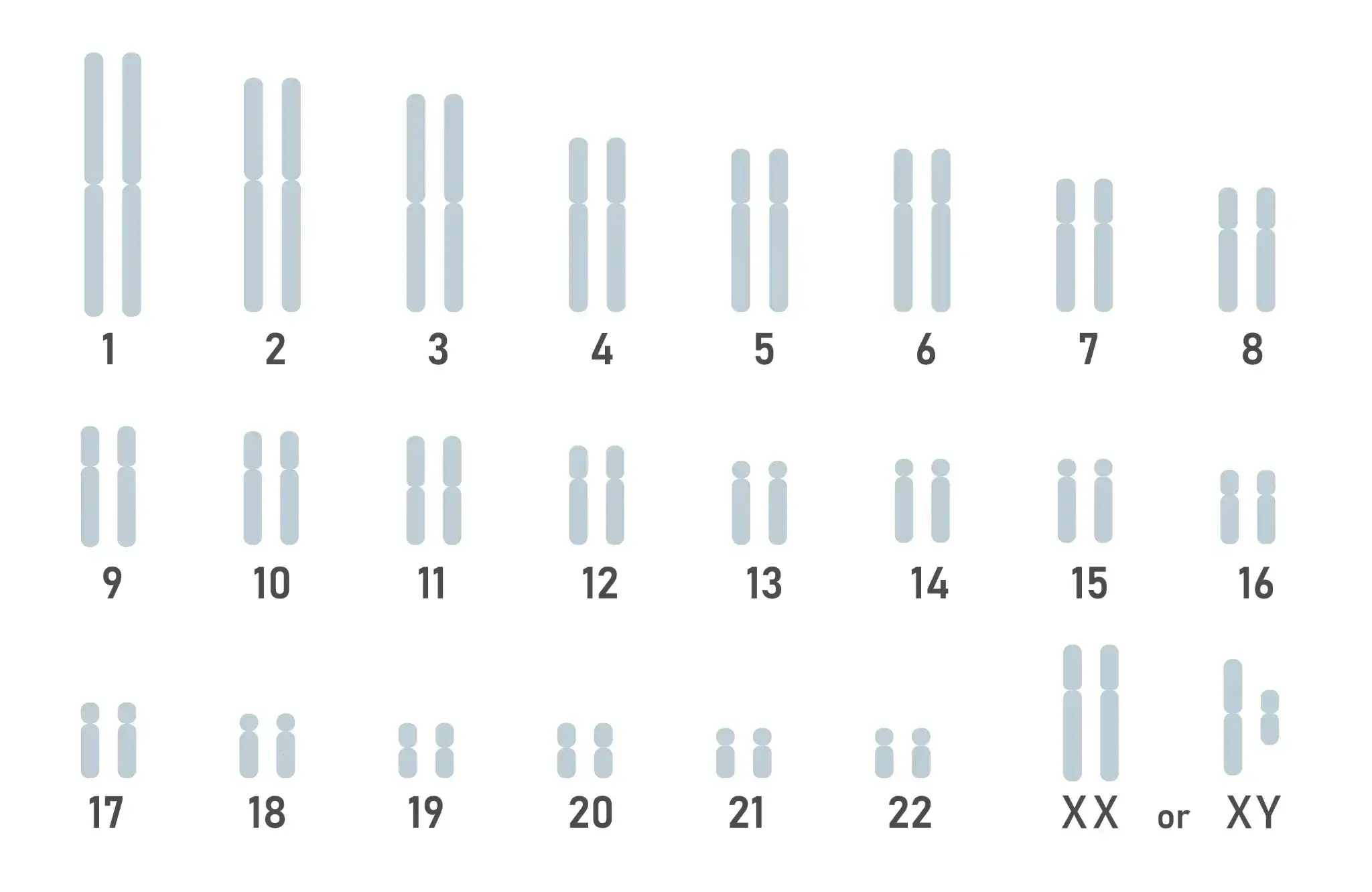
Schematic diagram of DNA map present in cells
- ■
- ■
- ■
- ■
- ■
- ■
- ■
- ■
- ■
Related genes
| Related genes | GAGE1 |
|---|---|
| Related genes | PTPN22 |
| Related genes | IL1RAPL1 |
Frequently asked questions (FAQ)
Q1. What is vitiligo (vitiligo vulgaris)?
Vitiligo (vitiligo vulgaris) is an autoimmune skin disease in which the function of melanocytes (pigment cells), which produce pigment in the skin, decreases or disappears, causing parts of the skin to turn white.Also known as "white catfish," it affects 0.5% to 1% of the total population, and the estimated number of patients in Japan is approximately 153,000. Although it is not a directly life-threatening disease, vitiligo tends to spread if left untreated.
Q2. Are genes involved in the development of vitiligo?
Yes.Research by Ying Jin et al., University of Colorado School of Medicine (2016, Nature Genetics) has found that the DNA region rs5952553 surrounding the gene FOXP3 is associated with the risk of developing vitiligo.There are three genotypes of rs5952553: TT, CT, and CC, and people with the T mutation (TT type/CT type) tend to have a higher risk of developing vitiligo.
Q3. What is the distribution of the genotype (rs5952553) associated with vitiligo in Japanese people?
The genotype distribution of rs5952553 in Japanese people isCC type 35.8%, CT type 48.0%, TT type 16.1%It is. Approximately 64% of Japanese people carry the risk variant (T type). Worldwide, 24.8% are CC type, 49.9% CT type, and 25.1% are TT type, and Japanese people have a lower rate of TT type than the world average.
Q4. Can vitiligo be prevented?
Although it is difficult to completely prevent vitiligo, the risk of developing it can be reduced by managing environmental factors.Specifically, it is effective to protect yourself from UV rays by using sunscreen, avoid excessive skin irritation, manage stress through moderate exercise and relaxation, and take in nutrients such as vitamin D, B12, and folic acid.
Q5. What treatments are available for vitiligo?
The main treatments for vitiligo include:Ultraviolet light therapy (narrow band UVB), topical steroids, topical tacrolimus ointment, excimer laser therapy, skin graftingand so on. It is believed that the earlier treatment is started and the younger the age of onset, the more effective the treatment is.
References
- Reference link 1: Information on “Congenital and acquired intractable vitiligo/albinism (2011)” Intractable Disease Information Center
- Reference link 2: 2016 Oct., Ying Jin, Nature Genetics.
- Reference link 3: DNA Information on region “rs5952553” NIH
- Reference link 4: Information on the gene “FOXP3” NIH
- Reference link 5: 2020., Kei Nakajima, Japanese Society of Allergy.
- Reference link 6: 2016 Nov., Ying Jin, Nat Genet
- Reference link 7: 2010 May., Ying Jin, N Engl J Med