
 ventricular arrhythmia

- Ventricular arrhythmia is associated with T-type mutation in DNA region rs1805128 and QT prolongationThe gene KCNE1 affects heart rhythm by regulating the opening and closing of K channels.
- The prevalence of type CC among Japanese people is approximately 99.0%., which is 1.4 points higher than the world average of about 97.6%.
- Due to T-type mutation of rs1805128Amino acid of KCNE1 protein changes from aspartic acid to asparagine(D85N) and affects K channel functionality
Overview The heart can move without instructions from the brain because it has a system that creates its own electrical signals and transmits them throughout the heart. The electrical signals in the heart are generated in a place called the sinus node, which causes the heart muscle to contract. The beating of the heart is caused by the repeated contraction and relaxation of the heart muscle. An electrocardiogram allows you to check the heartbeat by viewing the heart's electrical activity as a waveform. The period from the start to the end of heart contraction is called the QT time. This "QT time" is greatly involved in arrhythmia. Currently, multiple genes related to "QT time" have been discovered, and we will explain one of them, the specific DNA region "rs1805128" of "KCNE1". Rationale Multiple studies have reported the relationship between QT time and genes, one of which is the DNA region rs1805128. This region is located within the gene for a protein called KCNE1, and this genotype is known to be associated with QT time. (Reference link 1) "rs1805128" has three genotypes, called "CC type," "CT type," and "TT type." It is known that the distribution of genotypes in Japanese people is approximately 97.81% "CC type", approximately 2.18% "CT type", and approximately 0.01% "TT type". (Reference link 2) The distribution of genotypes worldwide also shows a similar trend to Japan, with "CC type" being the most common at approximately 98.41%, "CT type" at approximately 1.591.53%, and "TT type" being the least at approximately 0.06%. It has been reported that the T type of rs1805128 is involved in prolonging the QT time, and it has been shown that people with the TT type and CT type tend to have a longer QT time. (Reference link 3) Finding out your own genetic type through genetic testing may help you take early measures. Mechanism of action DNA is made up of many of the four types of bases linked together: adenine (A), thymine (T), guanine (G), and cytosine (C). The way these bases are arranged (base sequence) is the blueprint needed to create proteins. Proteins are made up of many amino acids linked together, and the base sequence, which is the blueprint for proteins, specifies how the amino acids are arranged (amino acid sequence). In the DNA region "rs1805128" in the gene "KCNE1", there is one amino acid that changes from aspartic acid (D) to asparagine (N) when the base changes from "C" to "T" (D85N, Asp85Asn). It has been revealed that this mutation changes the structure and activity of the entire protein and affects the function of the gene KCNE1. (Reference link 3) The cell membrane of cardiomyocytes has holes (channels) through which ions can enter and exit. After myocardial contraction, K channels open and K ions inside myocardial cells are released, causing the myocardium to relax. The gene ``KCNE1'' exists near this K channel, and by regulating the timing of opening and closing of the K channel, it is possible to relax the heart muscle and expand the heart at the appropriate time. (Reference link 4) The type of DNA region "rs1805128" is thought to affect heart beats through the function of "KCNE1", which is reflected in the "QT time" of an electrocardiogram.
What is ventricular arrhythmia?
Ventricular arrhythmia is a disease in which heart rhythm is disrupted due to abnormal electrical signals in the ventricles.The heart generates electrical signals in the sinus node and beats autonomously without direction from the brain. The repeated contraction and relaxation of the heart muscle forms the heartbeat, which can be confirmed on an electrocardiogram.
Heart electrical signal system and QT time
QT time is the time from the start to the end of heart contraction on an electrocardiogram.Prolonged QT time is an important risk factor for ventricular arrhythmias.
- Sinus node:a pacemaker that generates electrical signals for the heart
- Myocardial contraction:Electrical signals from the sinus node cause the heart muscle to contract
- Myocardial relaxation:K ions are expelled through K channels and the heart muscle relaxes.
- QT time:The time from the start to the end of a contraction; the longer it is, the higher the risk of arrhythmia.
Difference between normal and prolonged QT time
| Comparison items | QT time normal | QT time prolongation |
|---|---|---|
| myocardial relaxation | Relax at the right time | delayed relaxation |
| K channel function | Opens and closes normally | Abnormal opening/closing timing |
| Arrhythmia risk | low | expensive |
| KCNE1 features | functioning properly | Functional change due to mutation |
Association between genes and ventricular arrhythmia
Relationship between DNA region rs1805128 and QT time
A study by Jessica van Setten and colleagues (1) revealed that the DNA region rs1805128 is associated with QT time.
- There are three genotypes of rs1805128: CC, CT, and TT.
- Genotype with T-type mutationPeople with (CT type/TT type) tend to have a prolonged QT time.
- The related genes areKCNE1(myocardial K channel regulatory protein)
Genotype distribution in Japanese (rs1805128)
There are differences in genotype distribution between Japanese and the rest of the world.
| Genotype | Percentage of Japanese people | percentage of the world | difference |
|---|---|---|---|
| CC type | 99.0% | 97.6% | +1.4 points |
| CT type | 0.9% | 2.3% | −1.4 points |
| TT type | 0.1%以下 | 0.1%以下 | ±0.0 points |
Mechanism of action of KCNE1 gene
When the base changes from C to T in rs1805128, an amino acid mutation from aspartic acid (D) to asparagine (N) (D85N) occurs.This mutation changes the structure and activity of the KCNE1 protein (3).
- K channel:Ion entrance/exit of myocardial cell membrane. Excretes K ions after myocardial contraction to relax the myocardium
- KCNE1's role:Exists near K channel and regulates opening/closing timing
- Effects of T-type mutation:QT time prolongs and ventricular arrhythmia risk increases through functional changes in KCNE1
Rationale for testing
Superficial DNA region: ventricular arrhythmia
The gene region that most strongly influences ventricular arrhythmia is rs1805128. The distribution of isomorphic genotypes in Japan is as follows.
- CC
99.0 % - CT
0.9 % - TT
0.1%以下
Basis for inspection
Research by Jessica van Setten et al. (1) revealed that QT time is related to genes.There is a region called rs1805128 in the human genome, and there are two types of mutations, C and T, in the gene in this region. It is known that people with the T mutation tend to have a prolonged QT time. A study by Nishio et al. (3) showed that the T-type mutation at rs1805128 causes an amino acid mutation (D85N) in the KCNE1 protein, which affects the timing of opening and closing of K channels.
The DNA region investigated this time
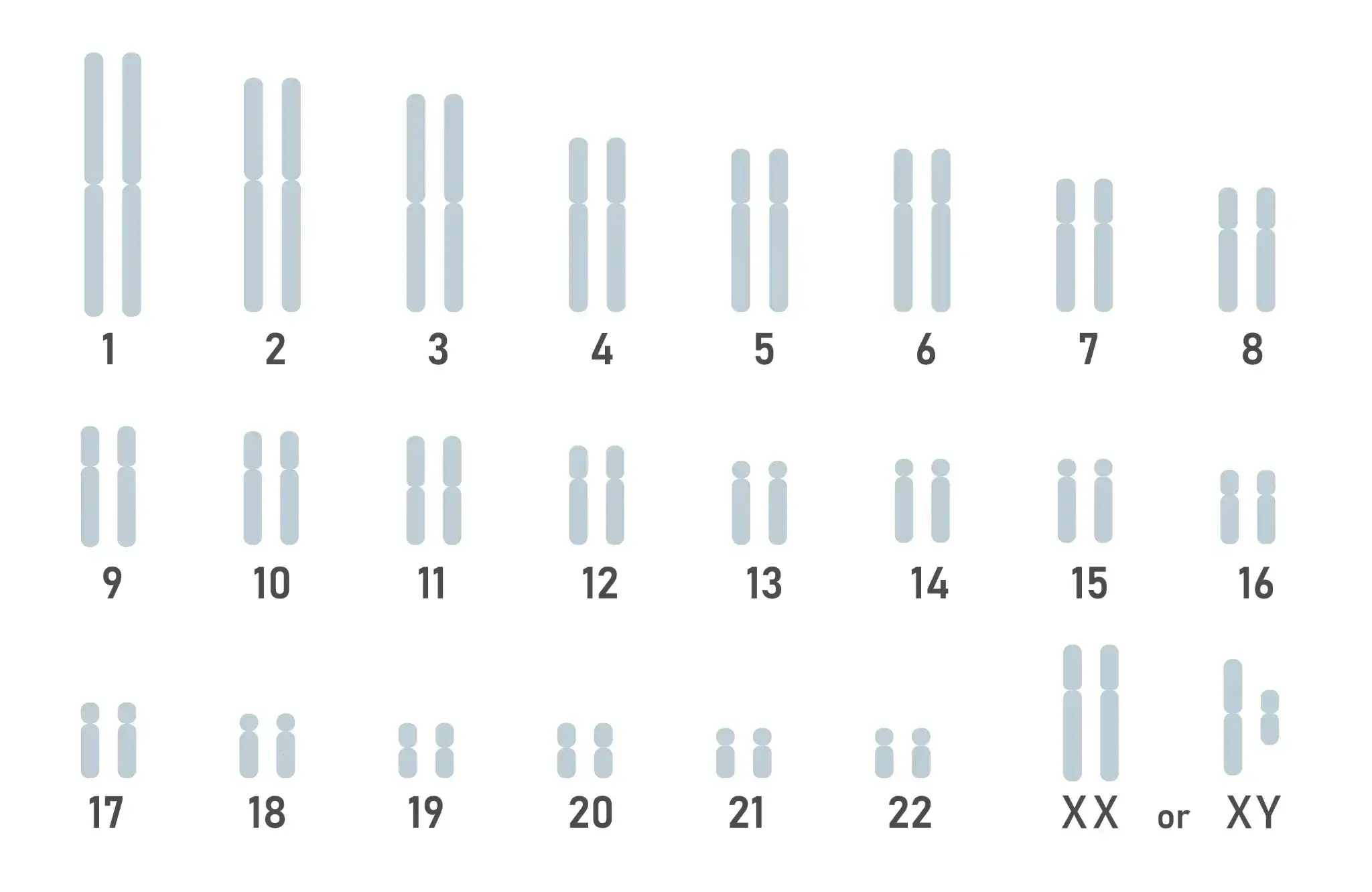
Schematic diagram of DNA map present in cells
- ■
- ■
- ■
- ■
- ■
- ■
- ■
- ■
- ■
Related genes
| Related genes | KCNE1 |
|---|
Frequently asked questions (FAQ)
Q1. What is ventricular arrhythmia?
Ventricular arrhythmia is a disease in which heart rhythm is disrupted due to abnormal electrical signals in the ventricles.When the "QT time" from the start to the end of heart contraction increases, the risk of arrhythmia increases. The T-type mutation in the DNA region rs1805128 of the gene KCNE1 is involved in QT prolongation (1) (3).
Q2. What is the relationship between QT time and arrhythmia?
QT time represents the time from the start to the end of heart contraction on an electrocardiogram.Prolonged QT time delays myocardial relaxation and increases the risk of ventricular arrhythmias. People with the rs1805128 T mutation tend to have a prolonged QT time (1).
Q3. How does the KCNE1 gene affect the heart?
KCNE1 isProtein that regulates the timing of K channel opening and closing in cardiomyocytesis coded. The T-type mutation in rs1805128 changes the amino acid from aspartate to asparagine (D85N), altering K channel function and affecting QT time (3)(4).
Q4. Can genetic testing determine the risk of ventricular arrhythmia?
By examining the genotype of the DNA region rs1805128,Understand trends in QT prolongationYou can. Approximately 99.0% of Japanese people have the CC type, and the prevalence of the T mutation (CT type/TT type) is approximately 1.0%. Genetic testing provides an opportunity to take early measures (2).
Q5. What are the characteristics of the rs1805128 genotype distribution in Japanese people?
The Japanese rs1805128 genotype distribution isCC type 99.0%, CT type 0.9%, TT type 0.1%以下It is. The proportion of CC type is 1.4 points higher than the world average (CC type 97.6%), and it is characterized by a low prevalence of type T mutation (2).
References
- Reference link 1: 2019 Jan., Jessica van Setten, European Journal of Human Genetics
- Reference link 2: Information on DNA region "rs1805128" TogoVar
- Reference link 3: 2009 Aug., Yukiko Nishio, Journal of the American College of Cardiology
- Reference link 4: 2020., Koichi Nakajo, Electrocardiogram
- Reference link 5: 2014 Aug., Dan E Arking, Nat Genet
- Reference link 6: 2022 May., Victor Nauffal, Circulation
- Reference link 7: 2021 Nov., Stefan van Duijvenboden, Hum Mol Genet
- Reference link 8: 2022 Sep., William J Young, Nat Commun