
 venous thromboembolism

- Venous thromboembolism (VTE) is a general term for deep vein thrombosis and pulmonary embolism.The incidence rate is 1.84 per 1,000 people, and the risk increases with age.
- TT type mutation in DNA region rs7051718People with the TT type have a high risk of developing the disease, and approximately 65% of Japanese people have the TT type.
- appropriateHydration, regular exercise, and dietary improvementsIt is possible to reduce the risk of blood clot formation and prevent it early.
Overview A blood clot is a blood clot that forms when blood flow is impaired due to dehydration or pressure. "Venous thromboembolism" is a collective term for deep vein thrombosis, a disease in which blood clots form in veins deep in the legs, and pulmonary embolism, a disease in which blood clots travel through the bloodstream and become clogged in the arteries of the lungs. Generally referred to as "economy class syndrome," it is said to be caused by staying in the same position for long periods of time, and if pulmonary embolism develops, it can lead to a dangerous illness such as difficulty breathing and fainting. The incidence of venous thromboembolism is 1.84 per 1,000 people, which is not high, but it is known that the incidence tends to increase with age. (Reference link 1) Venous thromboembolism is caused by a combination of environmental and genetic factors, and multiple genes have been reported to be involved. Recent research reports indicate that a certain region near the gene BRCC3 may influence the risk of developing venous thromboembolism. If pulmonary embolism develops, death may occur in a short period of time depending on the size of the blood clot, so routine prevention and early detection are important. Investigating one's own genetic type through genetic testing and knowing the risk of developing venous thromboembolism is expected to be useful in preventing the onset and taking early measures. 2. Rationale A study conducted at the VA Boston Healthcare System in the United States found that certain types of genes around the BRCC3 gene increase the risk of developing venous thromboembolism. One of these is a DNA region called "rs7051718." The DNA region "rs7051718" has three genotypes: "TT type," "CT type," and "CC type." Regarding the genotypes of Japanese people, 64.5% have the TT type, followed by 31.6% with the CT type, and 3.9% with the CC type. (Reference link 2) It was also found that ``TT type'' patients tend to be more likely to develop venous thromboembolism, and ``TC type'' patients are slightly more likely to develop venous thromboembolism. However, people with type TT and type CT do not necessarily develop venous thromboembolism. However, surprisingly, approximately 65% of Japanese people have the TT type in the DNA region rs7051718, which makes them a race that is more likely to develop venous thromboembolism. Furthermore, caution is required as the possibility of developing the disease increases due to the combination of environmental factors such as dietary habits. For example, eating too much fatty meat, fried foods, sugary desserts, and soft drinks can make your blood thicker, making it easier to form blood clots. In order to avoid such meals and prevent blood clots, it is important to consume foods such as blue fish containing EPA and DHA and natto containing nattokinase. Also, if you are going to be on a plane or in a car for a long time, it is important to move your body regularly and keep hydrated frequently. You can reduce your risk of developing the disease using these methods. By understanding the risk of venous thromboembolism at an early stage through genetic testing, it becomes possible to manage risks in daily life and the environment. 3. Mechanism of action BRCC3, a gene involved in the development of venous thromboembolism, is located on the X chromosome of the 24 chromosomes common to humans. This gene contains genetic information that regulates the activation of inflammasomes (protein complexes that cause inflammation) that cause inflammation in response to danger signals such as injury or stress. (Reference link 3) However, the direct mechanism by which the gene "BRCC3" is involved in "venous thromboembolism" has not been elucidated. However, prolonged compressive stress on the lower limbs and conditions such as dehydration may make it easier to form blood clots and activate inflammasomes, which cause inflammation. In other words, people with the TT type genotype of the DNA region rs7051718, which is located near the BRCC3 gene, have difficulty controlling inflammasome activation in response to stress in the lower limbs, and are also more prone to inflammation within blood vessels, which is thought to exacerbate deep vein thrombosis and continuous pulmonary embolism. As described above, the DNA region "rs7051718" is one of the single nucleotide polymorphisms that is closely related to the onset of "venous thromboembolism" and is attracting attention.
What is venous thromboembolism?
Venous thromboembolism (VTE) is a general term for deep vein thrombosis (DVT), in which blood clots form in the deep veins of the legs, and pulmonary embolism (PE), in which blood clots travel in the bloodstream and become lodged in the pulmonary arteries.It is also commonly referred to as "economy class syndrome" and has an incidence of 1.84 per 1,000 people (1).
Causes and mechanisms of venous thromboembolism
Venous thromboembolism is caused by a combination of environmental and genetic factors. The main causes are as follows.
- Stagnant blood flow:Staying in the same position for long periods of time worsens blood flow to the lower limbs, leading to the formation of blood clots.
- Dehydration/increased blood viscosity:Due to lack of water, blood becomes thick and blood clots are more likely to form.
- Post-surgery/long-term bed rest:Prolonged bed rest due to surgery or hospitalization causes blood flow stagnation.
- Genetic predisposition:TT type mutation in DNA region rs7051718 near gene BRCC3 is associated with risk
Main symptoms of venous thromboembolism
Deep vein thrombosis and pulmonary embolism have different symptoms.
- Deep vein thrombosis:Swelling, pain, warmth, and skin discoloration in the feet
- Pulmonary embolism:Sudden difficulty breathing, chest pain, syncope, tachycardia
Pulmonary embolism isDepending on the size of the blood clot, it can be fatal in a short period of time.Therefore, early detection and prevention are important.
Difference between deep vein thrombosis and pulmonary embolism
| Comparison items | Deep vein thrombosis (DVT) | Pulmonary embolism (PE) |
|---|---|---|
| Occurrence site | deep veins in the legs | pulmonary artery |
| Main symptoms | Swelling, pain, and heat sensation in the feet | Difficulty breathing, chest pain, fainting |
| severity | Can be improved with appropriate treatment | Fatal depending on the size of the blood clot |
| Onset course | Symptoms appear gradually | sudden onset |
| relevance | Cause pulmonary embolism | Secondary to deep vein thrombosis |
Prevention and countermeasures for venous thromboembolism
Venous thromboembolism isDaily preventionis important. The following measures are effective.
- Regular exercise:Avoid sitting or lying down for long periods and move your body frequently
- Hydration:Drink plenty of water to prevent dehydration
- Improving your eating habits:Actively consume blue fish containing EPA and DHA and natto containing nattokinase.
- Restricting high fat diets:Avoid excessive consumption of fatty meats, fried foods, and sugary soft drinks.
- Precautions when moving:Stretch and walk regularly during long trips by plane or car.
Mechanism of action of venous thromboembolism
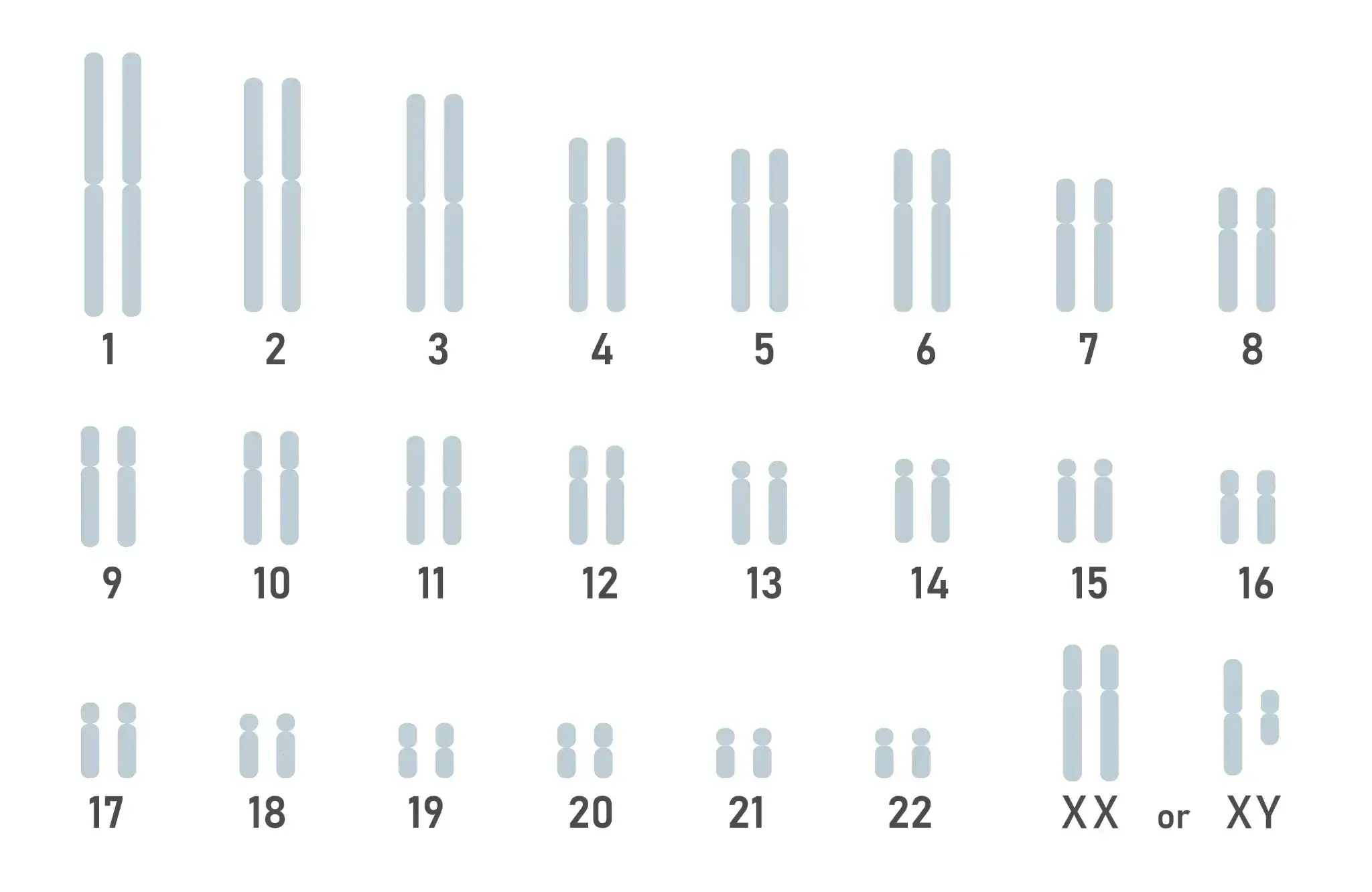
Involved in the development of venous thromboembolismThe gene BRCC3 is located on the X chromosomeI'm doing it. This gene responds to danger signals such as obstacles and stress.Regulates activation of inflammasomes (protein complexes that cause inflammation)It has genetic information to do this (3).
- Blood clots are more likely to form due to prolonged pressure stress on the lower limbs and dehydration.
- Inflammasomes are activated, increasing the tendency towards inflammation within blood vessels.
- DNA region rs7051718TT typePeople with this condition tend to have difficulty controlling inflammasome activation.
- Increased risk of progression from deep vein thrombosis to pulmonary embolism
Relationship between genes and venous thromboembolism
Relationship between DNA region rs7051718 and onset risk
A study by Klarin et al. (4) at the VA Boston Healthcare System revealed that the DNA region rs7051718 surrounding the gene BRCC3 is associated with the risk of developing venous thromboembolism.
- There are three genotypes of rs7051718: TT, TC, and CC.
- TT typepeople are more likely to develop venous thromboembolism
- TC typepeople are slightly more likely to develop venous thromboembolism
- Japanese people have a TT type prevalence rate of approximately 65%, and can be said to be a race with a high genetic risk.
Genotype distribution in Japanese (rs7051718)
| Genotype | Percentage of Japanese people | percentage of the world |
|---|---|---|
| TT type | 72.0% | 59.5% |
| TC type | 25.6% | 35.2% |
| CC type | 2.2% | 5.2% |
Rationale for testing
Superficial DNA region: venous thromboembolism
The gene region that most strongly influences venous thromboembolism is rs7051718. The distribution of isomorphic genotypes in Japan is as follows.
- TT
72.0 % - TC
25.6 % - CC
2.2 %
Basis for inspection
A study conducted at the VA Boston Healthcare System in the United States found that the specific genotype of the DNA region rs7051718 surrounding the gene BRCC3 influences the risk of developing venous thromboembolism. There are two types of mutations in rs7051718, T and C, and people with the TT type tend to have a higher risk of developing venous thromboembolism (4). Approximately 72% of Japanese people have type TT, and the risk of developing the disease increases further due to a combination of environmental factors, so it is important to take preventive measures on a daily basis.
The DNA region investigated this time
Schematic diagram of DNA map present in cells
- ■
- ■
- ■
- ■
- ■
- ■
- ■
- ■
- ■
Related genes
| Related genes | MTCP1 |
|---|
Frequently asked questions (FAQ)
Q1. What is venous thromboembolism?
Venous thromboembolism (VTE) is a collective term for deep vein thrombosis (DVT), in which blood clots form in the deep veins of the legs, and pulmonary embolism (PE), in which blood clots form in the pulmonary arteries.Commonly referred to as "economy class syndrome," the incidence is 1.84 per 1,000 people. The risk of developing the disease tends to increase with age (1).
Q2. What is the cause of venous thromboembolism?
The main cause isBlood flow stagnation due to the same position for a long time, increased blood viscosity due to dehydration, and long-term bed rest after surgery.It is. A combination of environmental and genetic factors are involved, and people with the TT mutation in the rs7051718 DNA region tend to have a higher risk of developing the disease (4).
Q3. Can genetic testing determine the risk of venous thromboembolism?
By examining the genotype of the DNA region rs7051718,Understanding risk trends for venous thromboembolismYou can. Approximately 72% of Japanese people carry the high-risk type TT, and a study by the VA Boston Healthcare System has confirmed a genetic link (2)(4).
Q4. Is there a way to prevent venous thromboembolism?
Regular exercise, frequent hydration, and intake of blue fish containing EPA and DHA and natto containing nattokinase.is valid. It is important to avoid excessive consumption of fatty meats, fried foods, and sugary soft drinks, and to stretch when traveling for long periods of time.
Q5. What is the difference between deep vein thrombosis and pulmonary embolism?
deep vein thrombosisA disease in which blood clots form in the deep veins of the legs.The main symptoms are swelling and pain in the legs. Pulmonary embolism isA disease in which blood clots block the pulmonary arteriesThis can cause difficulty breathing and fainting, and depending on the size of the blood clot, it can be fatal. Pulmonary embolism occurs when a blood clot from deep vein thrombosis reaches the lungs.
References
- Reference link 1: Epidemiological investigation of venous thromboembolism in the elderly National Center for Geriatrics and Gerontology
- Reference link 2: Information on DNA region “rs7051718” NIH
- Reference link 3: 2013 Jan.,Bénédicte F. Py, Molecular cell
- Reference link 4: 2019 Nov., Derek Klarin, Nat Genet