
 varicose veins

- Varicose veins are a disease in which the veins in the legs dilate and tortuate due to malfunctioning venous valves.It occurs in approximately 30% of adults.
- G-type mutation in DNA region rs35318931Research shows that people with the disease tend to be at higher risk of developing
- appropriateExercise, wearing elastic stockings, weight managementIt is possible to reduce the risk of onset and prevent progression.
Overview Varicose veins are abnormally wide veins that twist and bulge under the skin, commonly found on the legs and feet. Especially when you stand or walk, the pressure on this area increases and the veins may bulge. The color can range from dark blue to purple and is easy to recognize visually. Varicose veins occur when the vein valves that return blood to the heart weaken. Blood flows backwards and collects in the veins, causing them to dilate and form aneurysms. This condition can result in a feeling of weight, pain, and fatigue in your feet and hands. Itching and pain around the area may also occur. Varicose veins can also signal a risk of blood circulation problems and can sometimes lead to serious health problems such as ulcers and blood clots. Some people seek treatment for cosmetic reasons. Treatments range from lifestyle changes and wearing special stockings to medical procedures such as laser therapy and surgery. A study by Sakaue et al. at Osaka University revealed that the risk of developing varicose veins is associated with the DNA region rs35318931. There are three genotypes in this DNA region: GG, GA, and AA, and it was found that people with the G genotype tend to have a higher risk of developing varicose veins.
What is varicose veins?
Varicose veins are a disease in which the venous valves in the legs malfunction, causing blood to flow backwards and stagnate, causing the veins to dilate and tortuate.It affects approximately 30% of adults and is two to three times more common in women than men (1).
Causes and mechanisms of varicose veins
Veins have valves that prevent blood from flowing backwards, but when these valves become weak, blood flows backwards and pools in the veins. As a result, the veins dilate and form aneurysms.
- Venous valve insufficiency:Blood flows backwards due to decreased valve function, increasing intravenous pressure
- Weakening of vein walls:Vein walls weaken due to degeneration of collagen and elastin
The main risk factors are:
- Aging (incidence rate increases in people over 50 years old)
- Obesity (BMI 30 or higher increases risk by approximately 1.7 times)
- Pregnancy (hormonal changes and venous compression by the uterus)
- Standing/sitting for long periods of time (standing for more than 6 hours a day)
- Genetic predisposition (risk approximately doubles if family history exists)
Main symptoms of varicose veins
The symptoms areProgressing slowlyTherefore, in the early stages, there may be only cosmetic changes.
- The blood vessels in my legs stand out in a blue-purple color and meander.
- Heaviness and fatigue in the legs (especially worse in the evening)
- Swelling (edema)/cramps
- Skin itching/pigmentation
- As it progresses, skin ulcers and thrombophlebitis occur.
Differences in types and characteristics of varicose veins
| type | Features | Treatment guideline |
|---|---|---|
| saphenous varicose veins | Large veins become meandering, dilated, and bumpy. | Surgery/laser treatment recommended |
| side branch varicose veins | Branches of the saphenous vein dilate, and somewhat thick blood vessels stand out. | Sclerotherapy/laser treatment |
| varicose veins | A network of blue blood vessels with a diameter of 2 to 3 mm is visible. | sclerotherapy |
| spider web varicose veins | Thin blood vessels less than 1 mm in diameter spread out radially. | Sclerotherapy for cosmetic purposes |
What happens if varicose veins are left untreated?
Without proper treatment, the following complications may occur:
- stasis dermatitis(Skin inflammation/itching)
- pigmentation(Dark browning of the skin due to hemosiderin deposition)
- skin ulcer(Chronic ulcer that is difficult to heal)
- thrombophlebitis(thrombus formation and inflammation in veins)
- Deep vein thrombosis (DVT)(with risk of pulmonary embolism)
Treatment and prevention of varicose veins
Treatment is selected depending on the severity of symptoms.
- Conservative treatment:Wearing elastic stockings, exercise therapy, leg elevation
- Sclerotherapy:Inject a sclerosing agent to occlude the vein
- Endovascular laser therapy (EVLA):Cauterize and block the inner wall of the vein with a laser
- Stripping surgery:Surgery to remove dilated veins
For prevention,Regular exercise (walking/swimming), avoiding long periods of standing/sitting, maintaining a proper weight, wearing elastic stockingsis valid.
Relationship between genes and varicose veins
Relationship between DNA region rs35318931 and onset risk
A study by Sakaue et al. at Osaka University (1) revealed that the DNA region rs35318931 is associated with the risk of developing varicose veins.
- There are three genotypes of rs35318931: GG, GA, and AA.
- Genotype with type G mutationpeople tend to have a higher risk of developing varicose veins
Genotype distribution in Japanese (rs35318931)
| Genotype | Percentage of Japanese people | percentage of the world |
|---|---|---|
| GG type | 99.9% | 86.1% |
| GA type | 0.1%以下 | 13.3% |
| AA type | 0.1%以下 | 0.5% |
Rationale for testing
Body surface DNA region: lower limb varicose veins
The gene region that most strongly affects varicose veins is rs35318931. The distribution of isomorphic genotypes in Japan is as follows.
- GG
99.9 % - GA
0.1%以下 - AA
0.1%以下
Basis for inspection
A study by Sakaue et al. at Osaka University revealed that the risk of developing varicose veins is related to genes. There is a region called rs35318931 in the human genome, and there are two types of mutations, G and A, in the gene in this region. It was found that people with type G mutations tend to have a higher risk of developing varicose veins (1).
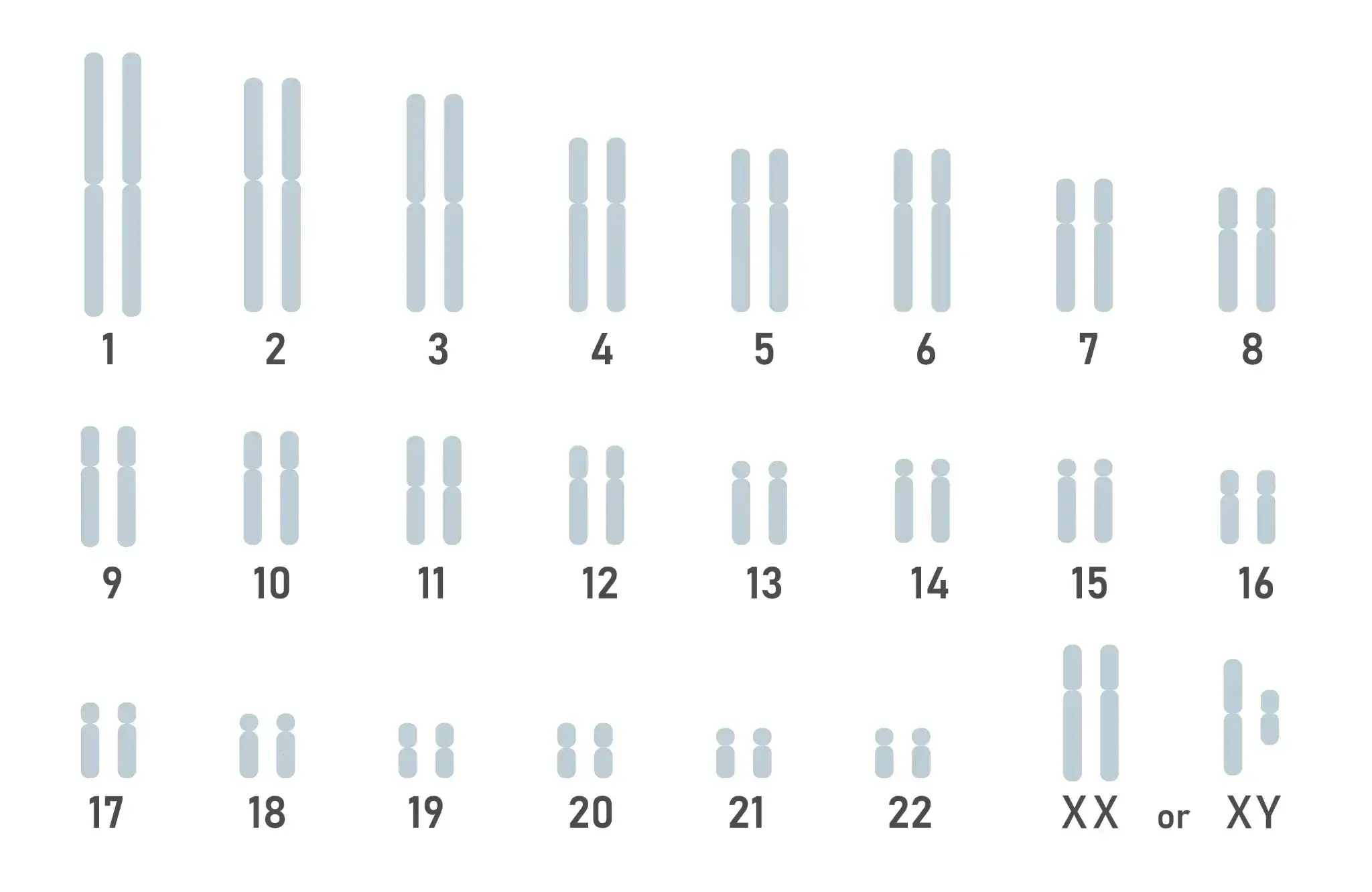
The DNA region investigated this time
Schematic diagram of DNA map present in cells
- ■
- ■
- ■
- ■
- ■
- ■
- ■
- ■
- ■
Related genes
| Related genes | SRPX |
|---|
Frequently asked questions (FAQ)
Q1. What is varicose veins?
Varicose veins are a disease in which the venous valves in the legs malfunction, causing blood to flow backwards and stagnate, causing the veins to dilate and tortuate.It affects approximately 30% of adults and is two to three times more common in women than men (1).
Q2. What is the cause of varicose veins?
The main cause isDysfunction of venous valves and weakening of vein wallsIt is. Age, obesity, pregnancy, prolonged standing/sitting, and genetic predisposition are the main risk factors. Carriers of the G mutation in the DNA region rs35318931 tend to be at higher risk (1).
Q3. What treatments are available for varicose veins?
The treatment isConservative treatment (wearing elastic stockings, exercise therapy)From,Sclerotherapy, laser treatment, stripping surgeryIt covers a wide range of things. If the symptoms are mild, the symptoms can be alleviated by making lifestyle changes.
Q4. Can genetic testing determine the risk of varicose veins?
By examining the genotype of the DNA region rs35318931,Understand the risk trend of developing varicose veins in the lower extremitiesYou can. Studies have shown that people with the G mutation genotype tend to be at higher risk (1).
Q5. What will happen if varicose veins are left untreated?
If you leave it aloneDermatitis, pigmentation, skin ulcers, thrombophlebitisThis can lead to complications such as. In particular, deep vein thrombosis (DVT) poses a risk of pulmonary embolism, so early medical intervention is recommended.