
 uterine fibroid

- Uterine fibroids are benign tumors that form on the uterine wall.It occurs in 20-30% of women over the age of 30.
- Type A mutation (risk allele) in DNA region rs12392108Research shows that people with the disease tend to be at higher risk of developing
- It is dependent on female hormones (estrogen),Genetic testing and lifestyle changesis effective for early detection and prevention
Overview Uterine fibroids are benign tumors that form in the uterine wall (muscle layer) of women, and are a disease seen in 20-30% of women over the age of 30. It rarely turns into cancer, and most people have no symptoms. However, about 25% of people experience symptoms such as excessive menstruation, and it has been pointed out that large fibroids can cause infertility and increase the risk of miscarriage. (Reference link 1) It is known that uterine fibroids grow due to the action of female hormones (estrogen), but the detailed mechanism of their development has not been elucidated. On the other hand, recent research has revealed that there is a certain correlation between genes and uterine fibroids, and the function of genes is also attracting attention. Knowing your own genetic type through genetic testing is expected to be useful in the prevention and early detection of uterine fibroids. 2. Rationale Researchers at Harvard Medical School have reported that genes are associated with the development of uterine fibroids. Among them, the gene "RAP2C" has been found to be particularly involved. (Reference link 1) Human genetic information is determined by the sequence of the base components: adenine (A), thymine (T), guanine (G), and cytosine (C). The gene "RAP2C" has a specific DNA region "rs12392108", and a single nucleotide "T" in the DNA region "rs12392108" is replaced with "A" at a certain frequency. This substitution is correlated with the onset of uterine fibroids, and in this case, "A" is called a "risk allele." There are three genotypes for the DNA region "rs12392108": "TT type", "TA type", and "AA type". People with type AA tend to be more likely to develop uterine fibroids, and people with type TA are slightly more likely to develop uterine fibroids. Regarding the genetic types of Japanese people, it is known that ``TT type'' is the most common at 89.7%, ``TA type'' is the most common at 10.0%, and ``AA type'' is the least common at 0.3%. (Reference link 2) However, it has been pointed out that ``uterine fibroids'' are more common among women of African descent, with ``AA type'' accounting for a high rate of 56.4%. (Reference link 3) In addition, because environmental factors such as stress also affect uterine fibroids, it is important to review your lifestyle habits in addition to your genetic type. 3. Mechanism of action The gene "RAP2C" involved in the development of uterine fibroids is located on the X chromosome of the sex chromosome. The RAP2C gene is involved in the synthesis of proteins that control cell functions such as cell growth and proliferation, and the proteins that perform these functions are called RAS. (Reference link 4) Normally, the protein ``RAS'' controls cell proliferation and cell functions like a switch, but due to genetic mutations, ``RAS'' may become permanently activated. When this happens, cell proliferation occurs even when it is not necessary, and it is thought that the cells are more likely to become cancerous. The mechanism by which the gene ``RAP2C'' causes uterine fibroids has not yet been elucidated, but if we know the genetic type of the DNA region ``rs12392108,'' we can understand the susceptibility to developing uterine fibroids, which will lead to ``maintenance and promotion of health'' through physical condition management.
What is uterine fibroid?
Uterine fibroids are benign tumors that form in the uterine wall (muscle layer) of women, and are a disease that occurs in 20 to 30% of women over the age of 30.It rarely turns into cancer, and most patients are asymptomatic (Reference link 1).
Causes and mechanisms of uterine fibroids
Uterine fibroids areFemale hormone (estrogen)increases due to the action of Although the detailed mechanism of occurrence is unknown, the following factors are involved.
- Hormonal factors:Tumor growth due to estrogen action
- Genetic factors:Mutations in the gene RAP2C are involved in the risk of developing the disease
- Environmental factors:Effects of lifestyle habits such as stress
Main symptoms of uterine fibroids
approx.75% of patients are asymptomaticHowever, approximately 25% of people experience the following symptoms:
- excessive menstruation(Increase in menstrual flow)
- Increased menstrual pain
- Increased risk of infertility
- Increased risk of miscarriage
- If the fibroid is large, a feeling of bloating in the abdomen due to pressure
Classification of uterine fibroids
| classification | Occurrence site | Features |
|---|---|---|
| submucosal fibroid | Just below the endometrium | Prone to excessive menstruation and irregular bleeding |
| intramuscular fibroid | Intramyometrium | Most frequent (approximately 70%) |
| subserosal fibroid | outside of the uterus | Often asymptomatic |
Relationship between genes and uterine fibroids
Relationship between DNA region rs12392108 and onset risk
A study by Gallagher et al. at Harvard Medical School (reference link 1) revealed that the DNA region rs12392108 of the gene RAP2C is associated with the development of uterine fibroids.
- There are three genotypes of rs12392108: TT, TA, and AA.
- Base “T” replaced with “A”“A” is a risk allele
- AA typePeople who are more likely to develop uterine fibroids
- TA typePeople tend to be more likely to develop the disease
Genotype distribution in Japanese (rs12392108)
| Genotype | Percentage of Japanese people | percentage of the world | risk trends |
|---|---|---|---|
| TT type | 89.7% | 37.9% | standard |
| TA type | 9.9% | 47.3% | somewhat expensive |
| AA type | 0.2% | 14.7% | expensive |
Ethnic differences and differences in uterine fibroid risk
African women have a higher incidence of uterine fibroidsThis has been pointed out (Reference link 3). In African descent, type AA (risk allele)56.4%On the other hand, in Japanese people, type AA is0.3%It is.
Mechanism of action: Function of gene RAP2C
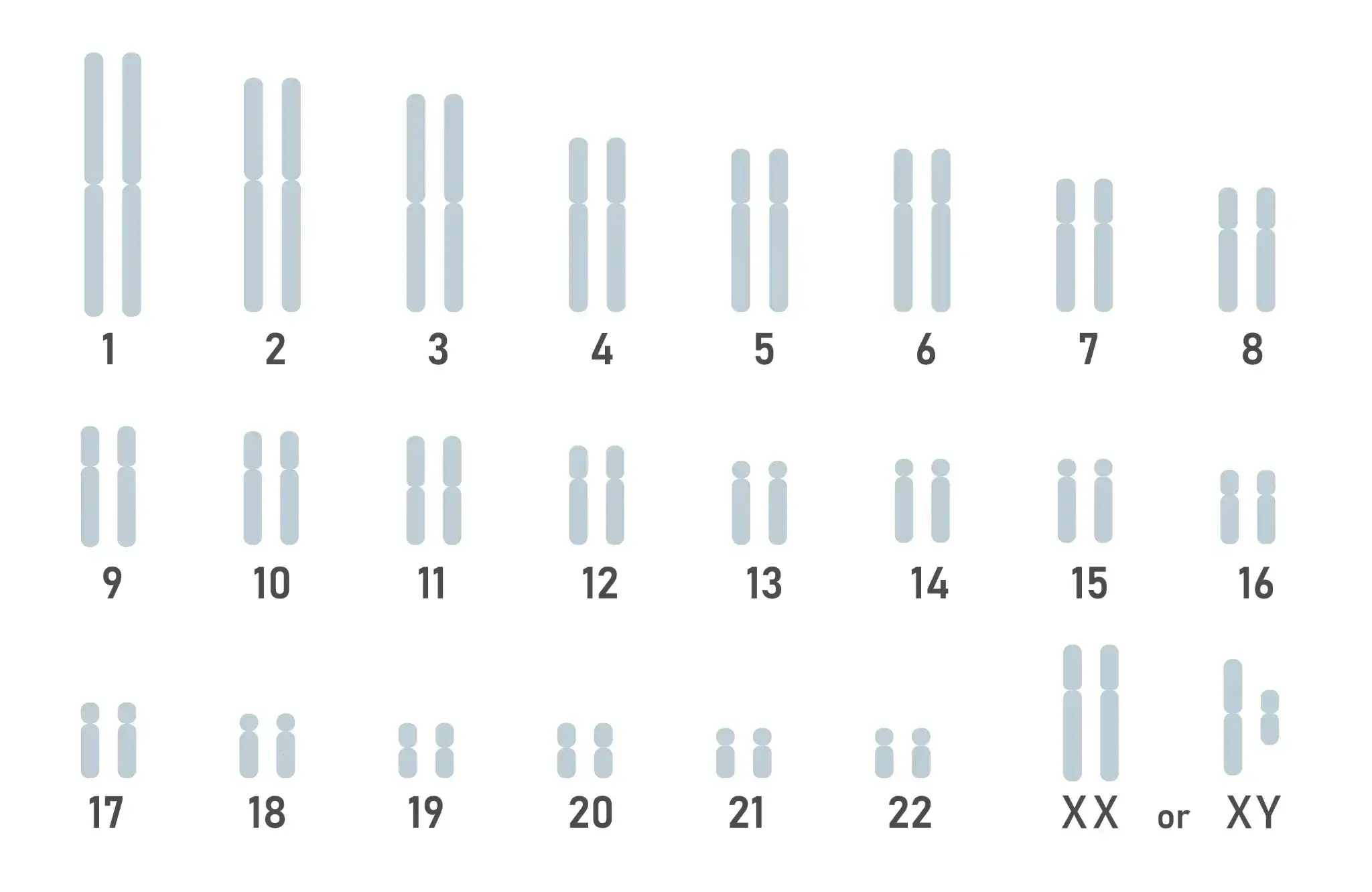
The gene RAP2C isSex chromosome X chromosomeexists in This gene is a protein that controls cell growth and proliferation."RAS"It is involved in the synthesis of (Reference link 4).
- Typically, RASlike a switchControl cell proliferation and cell function
- Genetic mutations cause RASpermanently activatedmay do
- Unnecessary cell proliferation occurs,tumor formationpossibility of leading to
Rationale for testing
Superficial DNA region: Uterine fibroid
The gene region that most strongly affects uterine fibroids is rs12392108. The distribution of isomorphic genotypes in Japan is as follows.
- TT
89.7 % - TA
9.9 % - AA
0.2 %
Another gene region involved in uterine fibroids is rs4360450. The distribution of isomorphic genotypes in Japan is as follows
- AA
0.1%以下 - AG
0.1%以下 - GG
99.9 %
Basis for inspection
A study by Gallagher et al. at Harvard Medical School revealed that the risk of developing uterine fibroids is linked to genes. There are two types of mutations in the rs12392108 region, T and A, and people with the A type mutation (risk allele) tend to have a higher risk of developing uterine fibroids (Reference link 1).
The DNA region investigated this time
Schematic diagram of DNA map present in cells
- ■
- ■
- ■
- ■
- ■
- ■
- ■
- ■
- ■
Related genes
| Related genes | AGKP2 |
|---|---|
| Related genes | SLC7A3 |
Frequently asked questions (FAQ)
Q1. What is uterine fibroid?
Uterine fibroids are benign tumors that form in the wall (muscle layer) of a woman's uterus.It occurs in 20-30% of women over the age of 30 and rarely turns into cancer. Approximately 75% are asymptomatic, but approximately 25% experience excessive menstruation and an increased risk of infertility (Reference link 1).
Q2. What is the cause of uterine fibroids?
The main cause isEffects of female hormones (estrogen)It is. Estrogen causes fibroids to grow. Although the detailed mechanism of occurrence is unknown, the DNA region rs12392108 of the gene RAP2C is involved in the risk of developing the disease (Reference link 1).
Q3. What is the relationship between uterine fibroids and genes?
According to research from Harvard Medical School,DNA region rs12392108 of gene RAP2Cwas found to be associated with the development of uterine fibroids. People with type AA have a high risk of developing the disease, and only 0.3% of Japanese people have type AA (reference link 1) (reference link 2).
Q4. Can genetic testing determine the risk of uterine fibroids?
By examining the genotype of the DNA region rs12392108,Understand the risk trend of developing uterine fibroidsYou can. There are three genotypes: TT type, TA type, and AA type, and people with type AA tend to be at higher risk (Reference link 1).
Q5. Does the risk of uterine fibroids differ depending on race?
African women are more likely to be affectedIt has been reported that. Among people of African descent, the AA type (risk allele) has a high rate of 56.4%, while among Japanese people, the AA type accounts for 0.3% (Reference link 3).
References
- Reference link 1: 2019 Oct., Gallagher, C. S, Nature Communications.
- Reference link 2: Information on DNA region “rs12392108” NIH
- Reference link 3: 2019 Aug., P Igboeli, Current opinion in gynecology and obstetrics.
- Reference link 4: Information on the gene "RAP2C" NIH