
 depression

- Depression is a mental illness characterized by persistent low mood and loss of motivation.Approximately 280 million people worldwide are affected by this disease.
- TT type mutation in DNA region rs12912233 of RORA geneResearch has found that people with depression tend to feel depressed
- appropriateStress management, exercise, sleep improvement, cognitive behavioral therapyIt is possible to reduce the risk of developing symptoms and improve symptoms.
Overview People may have various problems such as work, life, love, and relationships. Even if you want to be positive about these worries, you may end up worrying deeply and the negative chain continues. Additionally, some people tend to feel guilty, sad, hopeless, and lonely, regardless of the situation. Personality is formed by inherited genetic traits and acquired environmental factors. Regarding the relationship between genes and personality, research by the National Institute on Aging has reported that a specific type of the gene ``RORA'' has a significant impact on a person's tendency to feel depressed. By finding out your own genetic type through genetic testing, you can check whether you have a genetic tendency to feel depressed. 2. Rationale Research by the National Institute on Aging has revealed that certain types of the RORA gene are associated with low mood and depression. A specific region of the RORA gene called ``rs12912233'' is associated with low mood and depression, and there are three genotypes: ``TT type'', ``TC type'', and ``CC type''. People with the TT type tend to feel depressed easily, and people with the TC type tend to feel slightly depressed. Regarding the genetic types of Japanese people, the "CC" type is the most common at 60.0%, the "TC" type at 33.3%, and the "TT" type the least at 6.7%. The genetic types ``TT type'' and ``TC type'' tend to feel depressed, which leads to a decrease in motivation and poor sleep quality. This may affect your work or studies. Everyone has different ways of dealing with depression, but it's important to find a method that works for you. Examples include redecorating or cleaning your room, playing sports that move your body, going to the movies or reading for a change of pace, or asking someone to listen to you talk. On the other hand, people with the genetic type ``CC'' are less likely to feel depressed, have a more flexible way of looking at things, and tend to view obstacles and troubles in life as learning and growth. In this way, by scientifically understanding how easily you feel depressed, it may be beneficial to consider ways to deal with stress, etc., and for adults to consider assigning the right people to the right places, and for children to consider the appropriate learning locations and methods. 3. Mechanism of action The RORA gene is a gene involved in depressed mood, and is located on chromosome 15 of the 24 human chromosomes. Experiments on mice revealed that the Rora gene is abundantly present in Purkinje cells and the hypothalamus of the brain. Purkinje cells are nerve cells involved in GABA, an amino acid that reduces stress, and the hypothalamus is a place that regulates various physiological functions in the body. According to a Swedish study, research examining genes involved in the body clock also found that the RORA gene is clinically associated with depression. It has also been suggested that the RORA gene may be involved in the cycle of mood swings. Based on the above, genetic testing revealed that the DNA region "rs12912233" is one of the notable SNPs that influences personality traits such as susceptibility to feeling depressed. 4. References
What is depression?
Depression (unipolar depression) is a mental illness characterized by persistent low mood, loss of motivation, and sleep disturbances.According to WHO 2023 data, approximately 280 million people worldwide are affected (1).
Causes and mechanisms of depression
Both genetic and environmental factors play a role in the development of depression.
- Genetic factors:Multiple genes involved in mood regulation are involved, including the RORA gene. People with a family history of the disease have a two- to three-fold increased risk of developing the disease.
- Neurotransmitter abnormalities:Disturbance of the secretory balance of serotonin, noradrenaline, and dopamine
- Environmental factors:Stress, trauma, social isolation, and poor lifestyle habits
- Physical factors:Chronic diseases, hormonal imbalance changes, drug side effects
Main symptoms of depression
Symptoms of depression areboth mental and physicalAppears on. If it continues for more than 2 weeks, it is recommended to consult a specialist.
- Persistent depression/sadness
- loss of interest or pleasure
- Sleep disorders (insomnia or hypersomnia)
- Changes in appetite (decreased or increased)
- Decreased concentration/judgment
- Chronic fatigue/fatigue
- Feelings of guilt/decreased sense of self-worth
Differences between genetic tendency and environmental factors for depression
| Comparison items | genetic factors | environmental factors |
|---|---|---|
| cause | Mutations in the RORA gene, etc. | Stress/trauma/lifestyle habits |
| degree of influence | Involved in approximately 40% of the risk of developing the disease | Involved in approximately 60% of the risk of developing the disease |
| Time of onset | Exists as a congenital predisposition | Expressed after stress events |
| How to deal with it | Understand trends through genetic testing | Improvement of living environment/psychological therapy |
| Preventability | Preventive action through early recognition | Can be reduced by adjusting the environment |
Mechanism of action of RORA gene
RORA gene is located on chromosome 15It is widely present in the Purkinje cells and hypothalamus of the brain.
- Purkinje cells:Nerve cells involved in the amino acid GABA that reduces stress
- Hypothalamus:Center that regulates the body's physiological functions (body temperature, sleep, appetite, emotions)
- Relationship with body clock:Swedish research suggests RORA gene may be involved in body clock and mood cycles
Effective ways to deal with depression
It is important to understand your genetic tendencies and combine the following methods.
- Cognitive behavioral therapy (CBT):Correcting negative thought patterns
- Exercise therapy:Aerobic exercise of 150 minutes or more per week promotes serotonin secretion
- Improved sleep:Maintaining regular bedtime and wake-up times
- Change of mood:Hobby activities, sports, movies/reading
- Social interaction:Consultation and counseling with a trusted person
- Environmental adjustment:Refresh your mood by redecorating and organizing your room
The relationship between genes and depression
Relationship between DNA region rs12912233 and onset risk
Terraciano from the National Institute on Aging (1) revealed that the DNA region rs12912233 of the RORA gene is associated with the risk of developing depression.
- There are three genotypes of rs12912233: CC, CT, and TT.
- TT type persontend to feel depressed and have a higher risk of depression
- CT type personTendency to feel slightly depressed
- CC type personare less likely to feel depressed and tend to think more flexibly
Genotype distribution in Japanese (rs12912233)
| Genotype | Percentage of Japanese people | percentage of the world | risk trends |
|---|---|---|---|
| CC type | 57.7% | 32.8% | Hard to get depressed |
| CT type | 36.5% | 48.9% | Slightly depressed |
| TT type | 5.7% | 18.2% | easy to get depressed |
The proportion of Japanese people with type CC is 57.7%, which is much higher than the world average (32.8%), and 5.7% with type TT, which is lower than the world average (18.2%).
Rationale for testing
Superficial DNA region: depression
The gene region that most strongly influences depression is rs12912233. The distribution of isomorphic genotypes in Japan is as follows.
- CC
57.7 % - CT
36.5 % - TT
5.7 %
Another gene region involved in depression is rs12966052. The distribution of isomorphic genotypes in Japan is as follows
- GG
99.9 % - GC
0.1%以下 - CC
0.1%以下
Basis for inspection
A study by Terracciano et al. from the National Institute on Aging revealed that the risk of developing depression is associated with the RORA gene. There are two types of mutations in the rs12912233 region, T and C, and people with TT type tend to feel depressed and have a higher risk of depression (1). A Swedish study also confirmed that the RORA gene is involved in the body clock and is clinically associated with depression (3).
The DNA region investigated this time
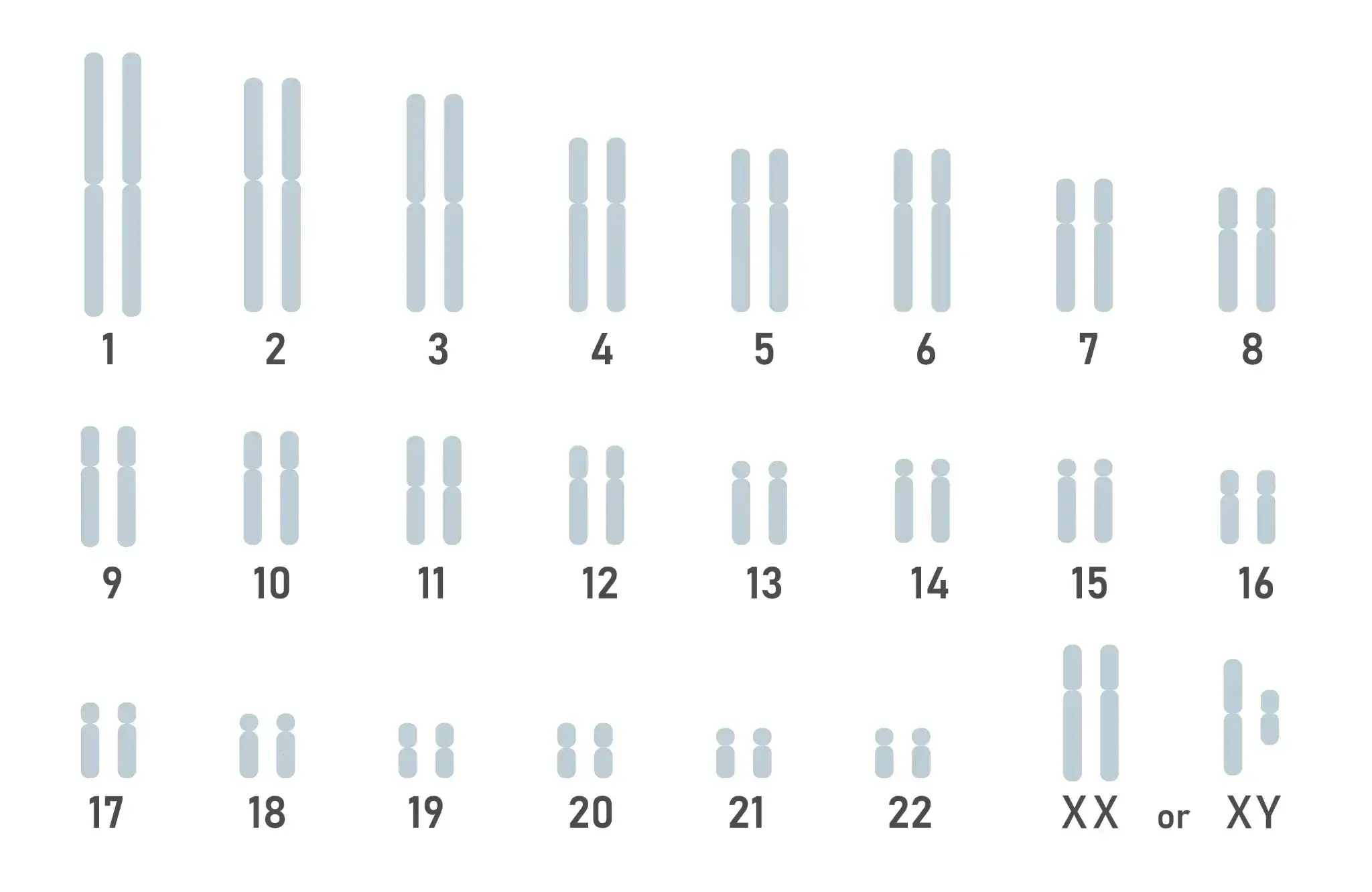
Schematic diagram of DNA map present in cells
- ■
- ■
- ■
- ■
- ■
- ■
- ■
- ■
- ■
Related genes
| Related genes | RORA |
|---|---|
| Related genes | CCDC68 |
Frequently asked questions (FAQ)
Q1. What is depression?
Depression (unipolar depression) is a mental illness characterized by persistent low mood, loss of motivation, and sleep disturbances.According to the WHO, it affects approximately 280 million people worldwide, and genetic and environmental factors are involved in a complex manner (1).
Q2. What is the relationship between depression and genes?
According to research by the National Institute on Aging,The DNA region rs12912233 of the RORA gene is associated with the risk of developing depression.It turns out that it is. People with the TT genotype tend to be more depressed (1).
Q3. What are the main symptoms of depression?
The main symptoms arePersistent depression, loss of interest/pleasure, sleep disturbances(insomnia or hypersomnia), changes in appetite, loss of concentration, fatigue, and feelings of guilt. If it continues for more than 2 weeks, it is recommended to consult a specialist.
Q4. Can genetic testing determine the risk of depression?
By examining the genotype of DNA region rs12912233,Understanding the genetic tendency to feel depressedYou can. Among Japanese people, 57.7% are CC type, 36.5% are CT type, and 5.7% are TT type, and carriers of TT type and CT type tend to be at higher risk (1).
Q5. What is an effective way to deal with depression?
Cognitive behavioral therapy (CBT), moderate exercise (at least 150 minutes of aerobic exercise per week), and regular sleep, maintaining social interaction is helpful. For people who are genetically at high risk, learning how to manage stress early can help prevent it.
References
- Reference link 1: 2010 Aug., Antonio Terracciano, Biological psychiatry.
- Reference link 2: DNA Information on area "rs12912233" SNPedia
- Reference link 3: 2010 Nov., Antonio Terracciano, Biol Psychiatry
- Reference link 4: 2019 Mar., David M Howard, Nat Neurosci