
 unibrow tendency
- Unibrow is a physical characteristic in which hair grows continuously between the eyebrows.Genes, hormones, and ethnic background play a role.
- G-type mutation in DNA region rs16891982A 2016 study found that people with eyebrows are more likely to have unibrows.
- The prevalence of type CC among Japanese people is99.9%, the genetic risk of unibrow is low compared to the world average (CC type 1.8%).
Overview A unibrow is a continuous band of hair that crosses between the eyebrows, crosses the bridge of the nose, and connects both eyebrows. These physical characteristics can range from faintly scattered to densely defined, and their prominence varies depending on individual genes, hormonal factors, and racial or ethnic background. Normally, in people with unibrows, hair grows concentrated in the space between the two eyebrows, medically known as the glabellar area. The density, color, and texture of unibrow hair generally matches an individual's eyebrows and reflects the natural characteristics of hair found on other parts of the face. The appearance of unibrows varies depending on culture and historical period. It may be seen as a sign of beauty or virility in some cultures, and unfashionable in others. Today, people deal with unibrows in different ways, with some people accepting this feature as part of their identity, while others choose to take care of it with techniques such as tweezing, waxing, and threading. This can be a behavior that reflects personal or societal standards of beauty. Research by Pickrell and colleagues at the New York Genome Center revealed that the tendency to have unibrows is associated with a DNA region called rs16891982. There are three genotypes in this DNA region: CC, CG, and GG, and it was found that people with the G genotype are more likely to have unibrows.
What is unibrow?
Unibrow is a physical feature in which both eyebrows are connected in a row across the space between the eyebrows.Medically, it refers to the phenomenon of concentrated hair growth in the area between the eyebrows (glabella), and it varies from person to person, ranging from thin and scattered types to thick and distinct types.
Causes and mechanisms of unibrows
The following three factors are involved in the development of unibrow.
- Genetic factors:Directly affected by mutations in the DNA region rs16891982 related to the SLC45A2 gene
- Hormonal factors:The amount of androgens (male hormones) secreted affects the growth of hair between the eyebrows.
- Ethnic background:Because the distribution of genotypes differs depending on race/ethnicity, there are differences in the frequency of unibrow appearance.
Characteristics of unibrow
Unibrow hair has the following characteristics:
- hairDensity/color/texturetends to match the individual's eyebrows.
- hair found on other parts of the faceReflects natural characteristicsdo
- Growth patterns vary from person to person, ranging from thin and scattered to dense and distinct.
Differences in cultural views on unibrows
What is the evaluation of unibrow?Varies by culture and historical period。
| Comparison items | A positive culture | Culture that is viewed negatively |
|---|---|---|
| meaning | A symbol of beauty and virility | unfashionable appearance |
| How to deal with it | keep it natural | Tweezing, waxing, and thread care |
| social recognition | accepted as part of identity | Removal according to social beauty standards |
How to deal with unibrow
Here are some ways to deal with unibrows:
- Tweezers:This is the easiest method and allows for precise adjustment as it pulls out each piece one by one.
- Waxing:A wide area can be treated at once, leaving the skin smooth after treatment.
- Method using thread (threading):Less irritation to the skin and can remove even the smallest hairs
- Laser hair removal:Long-term effects can be expected and the number of repeated treatments can be reduced.
The relationship between genes and unibrows
What is the relationship between DNA region rs16891982 and unibrow?
A 2016 study by Pickrell and colleagues at the New York Genome Center found that the DNA region rs16891982 is associated with the tendency to have unibrows.
- rs16891982 has CC/CG/GG3 genotypesexists
- Genotype with type G mutation(CG type/GG type) people are more likely to have unibrows.
- The related genes areSLC45A2This gene is also known to be involved in pigmentation.
Comparison of genotype distribution in Japanese and the world (rs16891982)
| Genotype | Percentage of Japanese people | percentage of the world |
|---|---|---|
| CC type | 99.9% | 1.8% |
| CG type | 0.1%以下 | 23.2% |
| GG type | 0.1%以下 | 74.9% |
From the above data, the Japanese99.9% are CC typeThe G mutation prevalence rate is less than 0.1%. On the other hand, in the world as a wholeGG type 74.9%It is clear that Japanese people are a population with a low genetic tendency to have unibrows.
Rationale for testing
External DNA region: unibrow tendency
The gene region that most strongly influences the tendency to have unibrows is rs16891982. The distribution of isomorphic genotypes in Japan is as follows.
- CC
99.9 % - CG
0.1%以下 - GG
0.1%以下
Basis for inspection
A 2016 study by Pickrell and colleagues at the New York Genome Center revealed that the tendency to have unibrows is linked to genes. There is a region called rs16891982 in the human genome, and there are two types of mutations, C and G, in the gene in this region.People with type G mutation are more likely to have unibrows.I understand that. 99.9% of Japanese people have the CC type, and they are genetically less likely to have unibrows.
The DNA region investigated this time
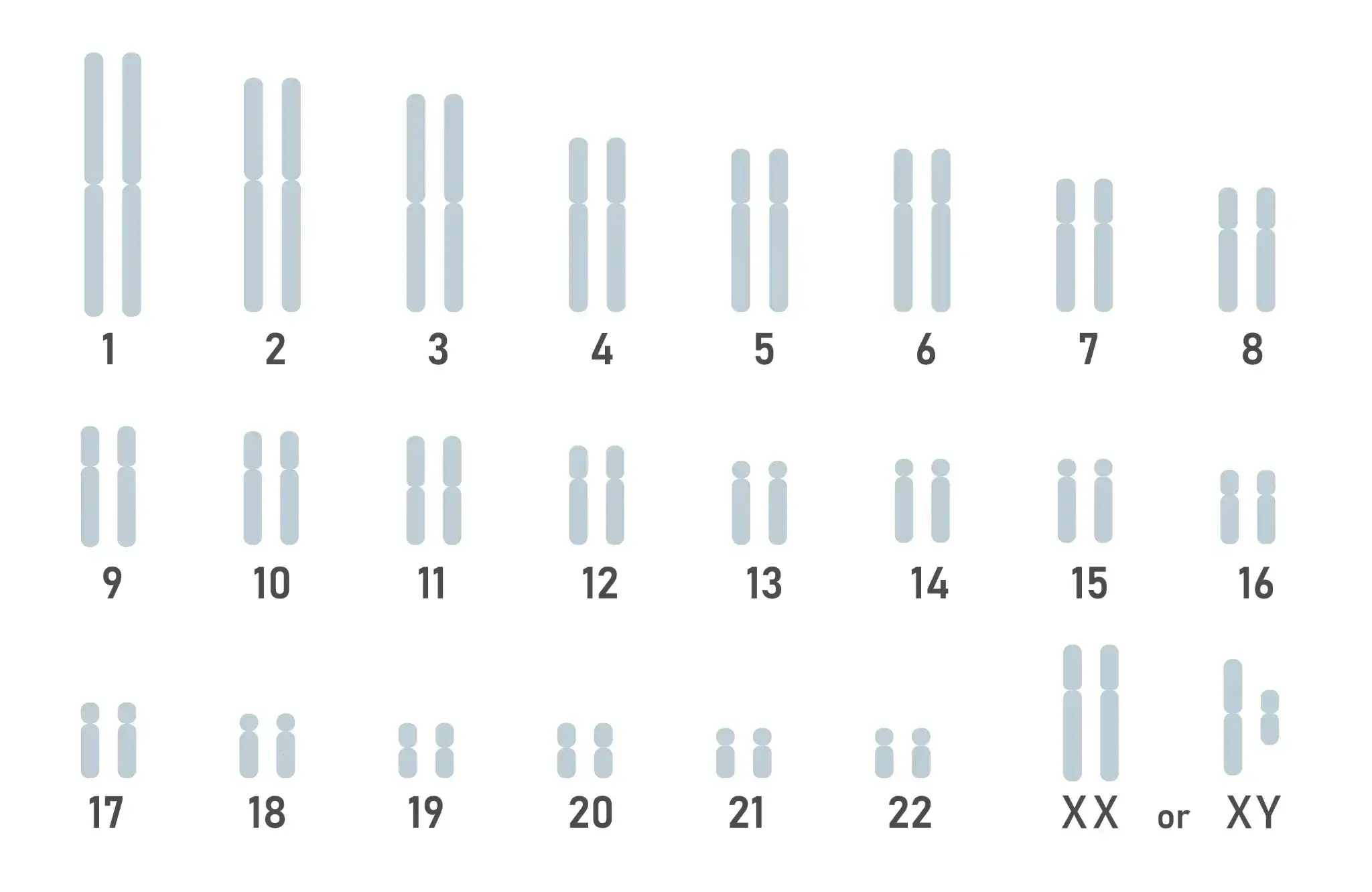
Schematic diagram of DNA map present in cells
- ■
- ■
- ■
- ■
- ■
- ■
- ■
- ■
- ■
Related genes
| Related genes | SLC45A2 |
|---|
Frequently asked questions (FAQ)
Q1. What is unibrow?
Unibrow is a physical feature in which both eyebrows are connected in a row across the space between the eyebrows.Medically, it refers to the phenomenon in which hair grows intensively in the area between the eyebrows (glabella). The density, color, and texture of the hair match each individual's eyebrows, and there are individual differences from thin and scattered types to thick and distinct types.
Q2. Is the cause of unibrow genetic?
The unibrow isgenetic factorsis greatly involved. A 2016 study by Pickrell et al. at the New York Genome Center found thatG-type mutation in DNA region rs16891982It has been found that people with this condition are more likely to have unibrows. In addition, hormonal factors and ethnic background also play a role.
Q3. Do many Japanese people have unibrows?
In JapaneseCC type of rs16891982 is 99.9%, and the G mutation prevalence rate is less than 0.1%. GG type accounts for 74.9% of people in the world, so Japanese people are a group with a low genetic tendency to have unibrows.
Q4. What are the genes associated with unibrows?
The gene most strongly associated with unibrows isSLC45A2It is. This gene is also involved in pigmentation, and among the three genotypes (CC, CG, and GG) of the DNA region rs16891982, it has been confirmed that people with the G mutation are more likely to have unibrows.
References
- Reference link 1: 2016 Jul., Joseph K Pickrell, Nat Genet