
 ulcerative colitis

- Ulcerative colitis is an inflammatory bowel disease (IBD) that causes chronic inflammation of the mucosa of the large intestine.It is a designated intractable disease that causes repeated symptoms such as abdominal pain, bloody stool, and diarrhea.
- Type A mutation in DNA region rs1297265A Wellcome Trust Sanger Institute study found that people with the disease tend to be at higher risk of developing ulcerative colitis.
- The prevalence of type A mutation (AA+AG) in Japanese people is97.0%This is a high percentage compared to the world average of 82.5%.
Overview Ulcerative colitis is an inflammatory bowel disease that causes chronic inflammation of the mucosa of the large intestine. The disease starts in the rectum and can spread throughout the large intestine. Inflammation causes ulcers and sores (defects in the epidermis) to form on the lining of the large intestine, leading to increased bleeding and mucus secretion. The cause of ulcerative colitis is not completely understood, but genetic factors, immune system abnormalities, and environmental factors are thought to be involved. It is known that genetic factors increase the risk of developing ulcerative colitis if there is a family history of ulcerative colitis. It is also believed that inflammation is caused by the immune system overreacting to normal intestinal bacteria and food. Symptoms of ulcerative colitis include abdominal pain, diarrhea, blood in the stool, weight loss, and fatigue. The severity of symptoms varies from person to person, and is characterized by repeating active periods (when symptoms appear) and remission periods (when symptoms subside). Diagnosis is performed by endoscopy or biopsy. During endoscopy, the lining of the large intestine is directly observed to check for inflammation and ulcers. During the biopsy, a portion of the mucous membrane of the large intestine is taken and its condition is checked under a microscope. Blood and stool tests may also be done. Treatment for ulcerative colitis includes lifestyle changes, medication, and in severe cases, surgery. Although it is difficult to completely cure this disease, with appropriate treatment it is possible to control symptoms and improve quality of life. A study by Anderson and colleagues at the Wellcome Trust Sanger Research Institute revealed that the risk of developing ulcerative colitis is associated with a DNA region called rs1297265. There are three genotypes in this DNA region: AA, AG, and GG, and it was found that people with genotype A tend to have a higher risk of ulcerative colitis.
What is ulcerative colitis?
Ulcerative colitis is a type of inflammatory bowel disease (IBD) that causes chronic inflammation of the mucosa of the large intestine, resulting in the formation of ulcers and erosions (defects in the epidermis).It is characterized by starting in the rectum and spreading throughout the large intestine, and is designated as an intractable disease in Japan.
What causes ulcerative colitis?
The cause of ulcerative colitis is not completely understood, but three factors are involved:
- Genetic factors:Having a family history of ulcerative colitis increases the risk of developing ulcerative colitis by 2 to 4 times.
- Immune system abnormalities:The immune system overreacts to normal gut bacteria and food, causing inflammation.
- Environmental factors:Westernized dietary habits, stress, and changes in intestinal flora are involved in the onset of the disease.
Main symptoms of ulcerative colitis
The severity of symptoms is characterized by repeating active periods (flares) and remission periods.
- Bloody/mucus-bloody stool:Bleeding from ulcers in the large intestine, resulting in stool mixed with blood and mucus
- Abdominal pain:Pain mainly in the left lower abdomen
- Diarrhea:Diarrhea may occur more than 10 times a day
- Weight loss:Weight loss due to malabsorption of nutrients
- Feeling of fatigue/malaise:Persistent fatigue due to anemia and chronic inflammation
How to diagnose ulcerative colitis
- Endoscopy:Directly observe the inner wall of the large intestine to check for inflammation and ulcers
- Biopsy:A portion of the colon mucosa is collected and pathologically evaluated using a microscope.
- Blood test/fecal test:Check for inflammation markers (CRP level, etc.) and anemia.
Difference between ulcerative colitis and Crohn's disease
| Comparison items | ulcerative colitis | crohn's disease |
|---|---|---|
| Inflammation site | Colon mucosa only | Entire digestive tract from oral cavity to anus |
| spread of inflammation | spreads continuously from the rectum | spread discontinuously (stepping stone-like) |
| depth of inflammation | limited to mucosal layer | Covers the entire thickness of the intestinal wall |
| Age of onset | Mainly people in their 20s and 30s | Mainly people in their 10s to 20s |
| Main symptoms | Bloody stool, abdominal pain, diarrhea | Abdominal pain, diarrhea, weight loss, fistula |
Treatment of ulcerative colitis
Treatment is given in stages depending on the severity of symptoms. Although a complete cure is difficult, it is possible to control symptoms and improve quality of life with appropriate treatment.
- 5-ASA preparation (mesalazine):Used as a first-line drug for mild to moderate symptoms
- Steroid drugs:Suppresses inflammation in the acute stage of moderate to severe symptoms
- Immunomodulatory drugs:Suppressing the immune response in steroid-dependent cases
- Biological products:Used when existing treatments are insufficiently effective
- Surgery:Total colectomy is performed in severe cases or when the risk of colorectal cancer is high.
Relationship between genes and ulcerative colitis
Relationship between DNA region rs1297265 and ulcerative colitis
Wellcome Trust Sanger Institute's Anderson et al. (2011, Nat. (published in Genet) revealed that the risk of developing ulcerative colitis is associated with the DNA region rs1297265.
- There are three genotypes of rs1297265: AA, AG, and GG.
- Genotype with type A mutation(AA type/AG type) people tend to have a higher risk of developing ulcerative colitis
- Other gene regions rs4781011, rs7240004, and rs2823286 are also involved in ulcerative colitis.
Comparison of genotype distribution in Japanese and the world (rs1297265)
| Genotype | Percentage of Japanese people | percentage of the world |
|---|---|---|
| AA type | 69.1% | 33.9% |
| AG type | 27.9% | 48.6% |
| GG type | 2.8% | 17.4% |
The prevalence of type A mutation in Japanese people (AA+AG) is97.0%, which is higher than the global average of 82.5%. The percentage of Japanese people with type AA is69.1%This is approximately 2.0 times higher than the world average of 33.9%, reflecting the genetic characteristics of the Japanese population.
Comparison of Japanese and other related DNA regions in the world
| DNA region | Genotype | Japanese | world |
|---|---|---|---|
| rs4781011 | TT | 71.5% | 8.8% |
| TG | 26.0% | 41.7% | |
| GG | 2.3% | 49.3% | |
| rs7240004 | AA | 18.7% | 37.4% |
| AG | 49.0% | 47.4% | |
| GG | 32.1% | 15.0% | |
| rs2823286 | GG | 74.8% | 50.5% |
| GA | 23.2% | 41.0% | |
| AA | 1.8% | 8.3% |
Rationale for testing
Superficial DNA region: ulcerative colitis
The gene region that most strongly affects ulcerative colitis is rs1297265. The distribution of isomorphic genotypes in Japan is as follows.
- AA
69.1 % - AG
27.9 % - GG
2.8 %
Another gene region involved in ulcerative colitis is rs4781011. The distribution of isomorphic genotypes in Japan is as follows
- TT
71.5 % - TG
26.0 % - GG
2.3 %
Another gene region involved in ulcerative colitis is rs7240004. The distribution of isomorphic genotypes in Japan is as follows
- AA
18.7 % - AG
49.0 % - GG
32.1 %
Another gene region involved in ulcerative colitis is rs2823286. The distribution of isomorphic genotypes in Japan is as follows
- GG
74.8 % - GA
23.2 % - AA
1.8 %
Basis for inspection
A study by Anderson and colleagues at the Wellcome Trust Sanger Institute revealed that the risk of developing ulcerative colitis is linked to genes. There is a region called rs1297265 in the human genome, and there are two types of mutations, A and G, in the gene in this region. It was found that people with type A mutations tend to have a higher risk of developing ulcerative colitis.
The DNA region investigated this time
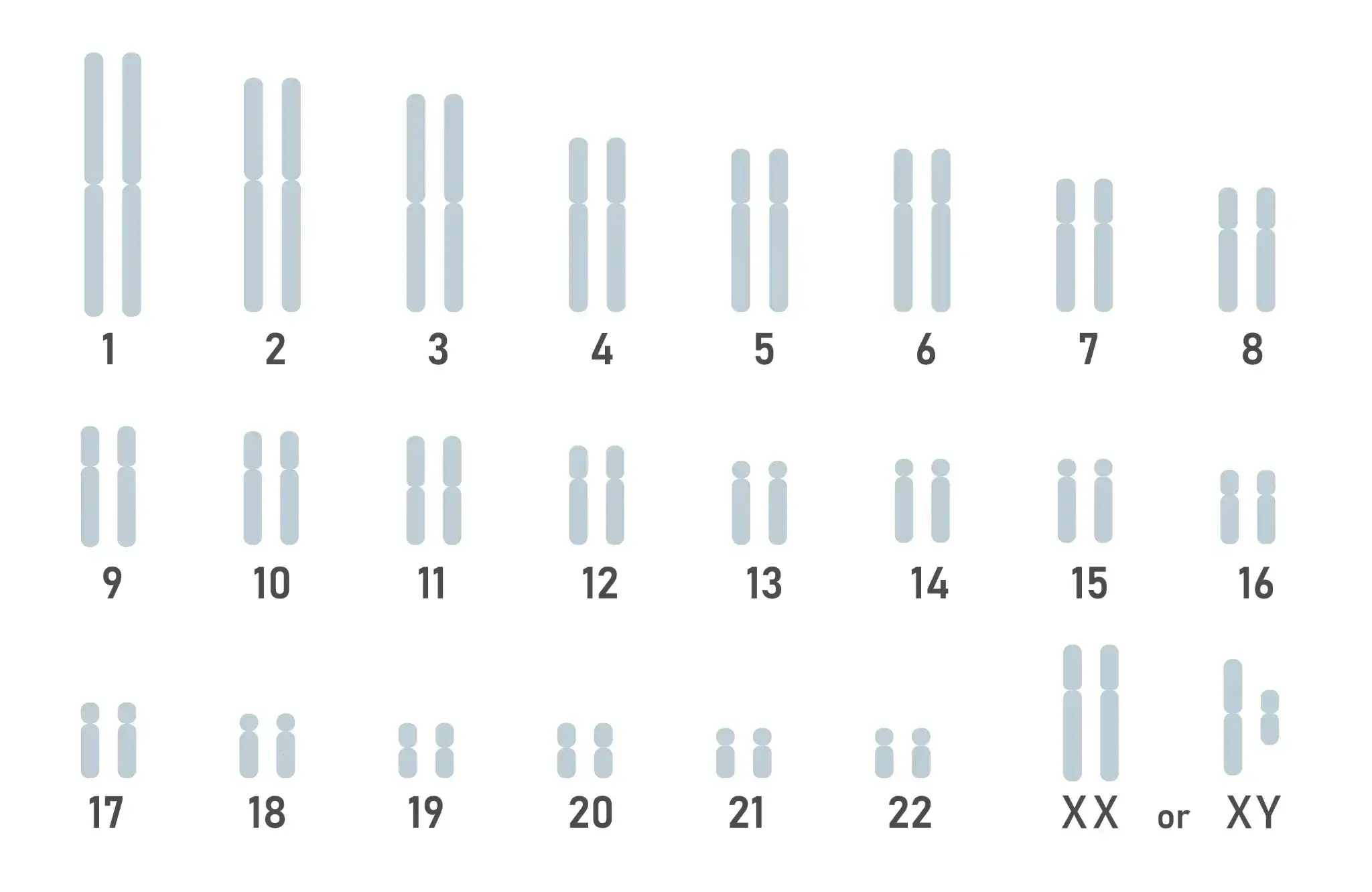
Schematic diagram of DNA map present in cells
- ■
- ■
- ■
- ■
- ■
- ■
- ■
- ■
- ■
Related genes
| Related genes | LINC02920 |
|---|---|
| Related genes | CIITA |
| Related genes | CTIF |
| Related genes | LINC02920 |
Frequently asked questions (FAQ)
Q1. What is ulcerative colitis?
Ulcerative colitis is an inflammatory bowel disease (IBD) in which chronic inflammation occurs in the mucous membrane of the large intestine, resulting in the formation of ulcers and erosions.It is characterized by starting in the rectum and spreading throughout the large intestine. Symptoms include abdominal pain, bloody stool, and diarrhea, and the disease repeats active and remission periods. In Japan, more than 220,000 people are affected by this disease, and it has been designated as an intractable disease.
Q2. Is ulcerative colitis related to genes?
Yes.Wellcome Trust Sanger Institute's Anderson et al. (2011, Nat. Genet) found that the DNA region rs1297265 is associated with the risk of ulcerative colitis.There are three genotypes of rs1297265: AA, AG, and GG, and people with the type A mutation tend to have a higher risk of developing the disease.
Q3. What is the distribution of the genotype (rs1297265) related to ulcerative colitis in Japanese people?
The genotype distribution of rs1297265 in Japanese people isAA type 69.1%, AG type 27.9%, GG type 2.8%It is. Worldwide, 33.9% are type AA, 48.6% are type AG, and 17.4% are type GG, and the proportion of Japanese people with type AA is approximately 2.0 times higher than the world average.
Q4. What are the main symptoms of ulcerative colitis?
The main symptoms areBloody/mucus-bloody stools, abdominal pain, diarrhea (sometimes more than 10 times a day), weight loss, fatigue/malaise.It is. The severity of the symptoms is characterized by repeating active periods (flares) and remission periods, and may be exacerbated by stress or changes in eating habits.
Q5. What is the difference between ulcerative colitis and Crohn's disease?
Ulcerative colitis causes inflammation only in the mucous membrane of the large intestine and spreads continuously from the rectum.On the other hand, Crohn's disease causes discontinuous inflammation throughout the digestive tract from the oral cavity to the anus, affecting not only the mucous membranes but also the entire thickness of the intestinal wall. The most common age of onset is 20s to 30s for ulcerative colitis, and 10s to 20s for Crohn's disease.
References
- Reference link 1: 2011 Mar., Carl A Anderson, Nat Genet
- Reference link 2: 2010 Apr., Dermot P B McGovern, Nat Genet
- Reference link 3: 2015 Sep., Jimmy Z Liu, Nat Genet