
 Amount of trans fatty acids

- Trans fatty acids are unsaturated fatty acids produced through industrial hydrogenation.increases cardiovascular disease risk by approximately 23%
- G-type mutation in DNA region rs2806949Research has found that people with 20% of the body tend to have a higher amount of trans fatty acids in their bodies.
- By measuring trans fatty acids in blood,Assessing dietary intake and predicting health risksis possible
Overview Trans fatty acids are a type of unsaturated fatty acids in which the double bond arrangement is trans, which is different from cis fatty acids that are common in nature. These fats come from industrial processing, such as the partial hydrogenation of vegetable oils, and are also found in small amounts in ruminant meat and dairy products. Measuring trans fatty acids in the body is an important tool for assessing dietary intake and its impact on health. Typically, a blood sample is used to measure trans fatty acid levels and based on this the lipid profile is analyzed. Techniques such as gas chromatography are used to accurately determine the composition of fatty acids in the blood. Understanding trans fatty acid levels is important because high intakes can increase the risk of cardiovascular disease and inflammation. This information is therefore useful for reviewing dietary habits, predicting health risks, and is a valuable source for providing dietary advice to improve physical and mental health. A study by Mozaffarian et al. at Tufts University revealed that the amount of trans fatty acids is associated with a DNA region called rs2806949. There are three genotypes in this DNA region: AA, AG, and GG, and it was found that people with the G genotype tend to have a higher amount of trans fatty acids.
What are trans fatty acids
Trans fatty acids are a type of unsaturated fatty acids whose double bond configuration is trans.The structure is different from cis fatty acids that exist in nature, and they are mainly produced during industrial processing.
Causes of formation of trans fatty acids
There are two main routes for producing trans fatty acids:
- Industrial hydrogenation:Produced in the process of producing margarine and shortening by adding hydrogen to vegetable oil (approximately 80% of total trans fatty acid intake)
- Natural origin:Produced by microorganisms during the digestive process of ruminants (cows and sheep), and contained in trace amounts (approximately 20%) in meat and dairy products.
How to measure trans fatty acids
Trans fatty acid levels in the body are measured using the following steps:
- Taking a blood sample
- Gas chromatography (GC)Analysis of fatty acid composition by
- Calculation of trans fatty acid ratio in red blood cell membrane
- Comprehensive evaluation of lipid profile
This measurement allows you to objectively assess your dietary trans fat intake over the past few months.
Health effects of trans fatty acids
Excess intake of trans fats is associated with the following health risks:
| Impact items | concrete action |
|---|---|
| LDL cholesterol | Increase (increase in bad cholesterol) |
| HDL cholesterol | Reduce (lower good cholesterol) |
| cardiovascular disease risk | Approximately 23% increase with 2% increase in energy intake |
| systemic inflammation | Increases inflammatory markers such as CRP and IL-6 |
| insulin resistance | Contributed to increased risk of type 2 diabetes |
Intake standards for trans fatty acids
WHO (World Health Organization)calculates the intake of trans fatty acids as part of the total daily energy intake.less than 1%We recommend keeping it to . Japan's Food Safety Commission has adopted similar standards.
Relationship between genes and amount of trans fatty acids
Relationship between DNA region rs2806949 and amount of trans fatty acids
A study by Mozaffarian et al. at Tufts University revealed that the DNA region rs2806949 is associated with the amount of trans fatty acids in the body.
- There are three genotypes of rs2806949: AA, AG, and GG.
- Genotype with type G mutationpeople tend to have higher amounts of trans fatty acids
Genotype distribution in Japanese (rs2806949)
| Genotype | Percentage of Japanese people | percentage of the world |
|---|---|---|
| AA type | 5.1% | 13.7% |
| AG type | 34.9% | 46.6% |
| GG type | 59.9% | 39.6% |
Among Japanese people, GG type accounts for the highest proportion at 59.9%, which is about 20 points higher than the world average (39.6%).
Rationale for testing
Surface DNA region: amount of trans fatty acids
The gene region that most strongly influences the amount of trans fatty acids is rs2806949. The distribution of isomorphic genotypes in Japan is as follows.
- AA
5.1 % - AG
34.9 % - GG
59.9 %
Basis for inspection
A study by Mozaffarian et al. at Tufts University revealed that the amount of trans fatty acids is related to genes. There is a region called rs2806949 in the human genome, and there are two types of mutations, A and G, in the gene in this region. It was found that people with the G mutation tend to have higher amounts of trans fatty acids.
The DNA region investigated this time
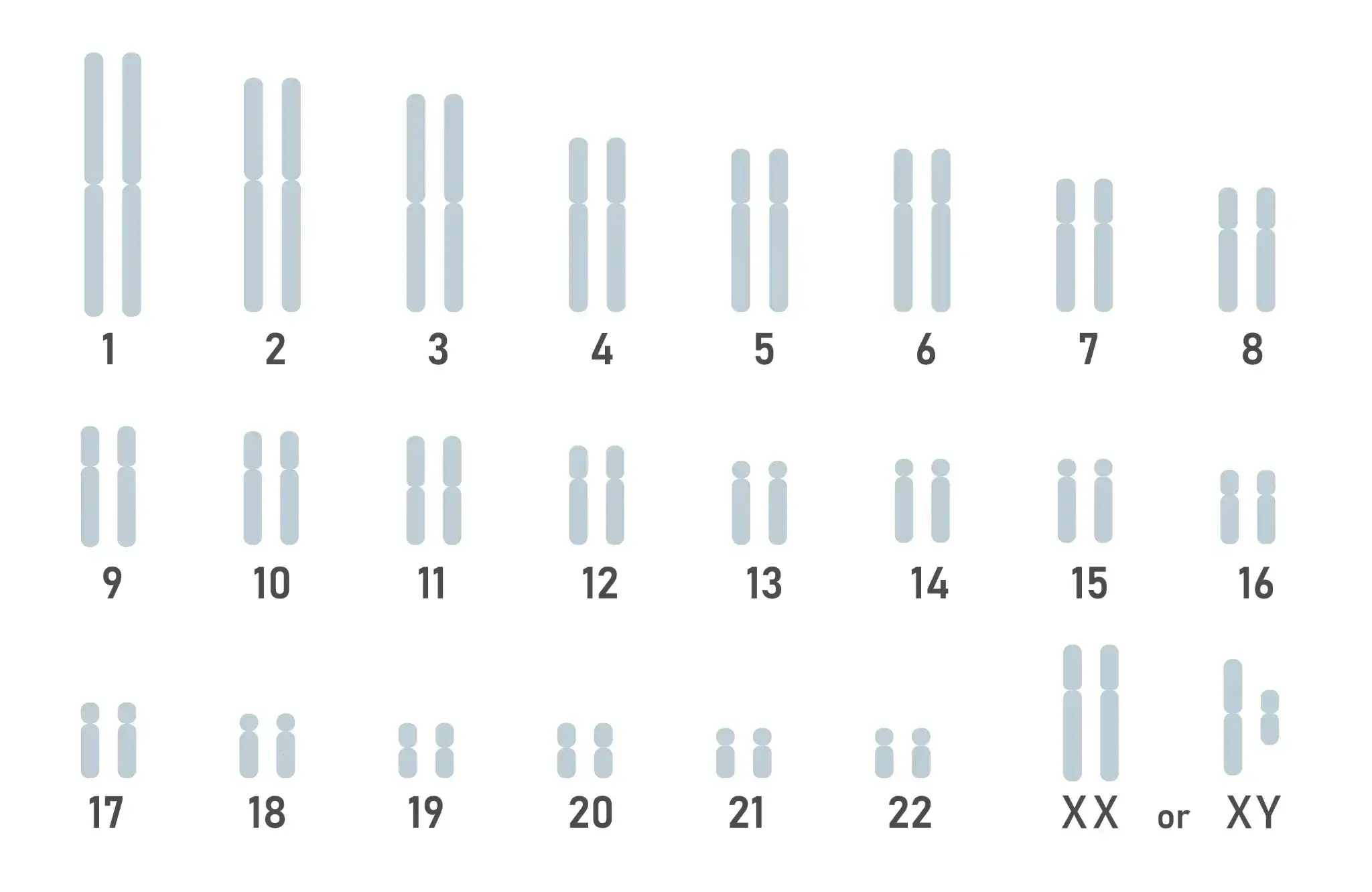
Schematic diagram of DNA map present in cells
- ■
- ■
- ■
- ■
- ■
- ■
- ■
- ■
- ■
Related genes
| Related genes | OLFM4 |
|---|
Frequently asked questions (FAQ)
Q1. What are trans fatty acids?
Trans fatty acids are a type of unsaturated fatty acids whose double bond configuration is trans.It is mainly produced by industrial partial hydrogenation of vegetable oils and is found in processed foods such as margarine and shortening. WHO recommends that daily intake be less than 1% of total energy.
Q2. How to measure trans fatty acids?
take a blood sample,Gas chromatography (GC)Measuring fatty acid composition using analytical techniques such as By analyzing the proportion of trans fatty acids in red blood cell membranes, it is possible to assess dietary trans fatty acid intake over the past few months.
Q3. What is the relationship between trans fatty acids and genes?
According to research by Mozaffarian et al. at Tufts University,DNA region rs2806949 is associated with the amount of trans fatty acids in the bodyIt turns out that it is. People with the G mutation genotype tend to have higher amounts of trans fatty acids.
Q4. What are the health effects of trans fatty acids?
Excessive intake of trans fatty acidsIncreases LDL cholesterol (bad)let me,Reduces HDL cholesterol (good)Let me do it. This results in an approximately 23% increased risk of cardiovascular disease, as well as an increased risk of systemic inflammation and insulin resistance.
Q5. How can I reduce my intake of trans fatty acids?
Refrain from consuming processed foods (margarine, shortening, fried foods) containing partially hydrogenated fats and oils.Check the amount of "trans fatty acids" on the nutritional information labelIt is important to do so. Replacement with fats and oils containing unsaturated fatty acids, such as olive oil and flaxseed oil, is recommended.
References
- Reference link 1: 2015 Feb., Dariush Mozaffarian, Am J Clin Nutr