
 Trend of missing teeth
- Missing teeth (congenitally missing teeth) are associated with the T-type mutation in the DNA region rs6435957However, genetic factors influence tooth formation and eruption.
- The prevalence of type TT among Japanese people is 0.7%., 44.4 points lower than the global average of 45.1%.
- The related genes areDIRC3-AS1Therefore, missing teeth affect masticatory function, speech, and jaw development.
Overview Toothlessness refers to a condition in which an infant has fewer than normal teeth or no teeth at one year of age. This condition can range in severity from a single missing tooth to multiple expected teeth failing to erupt. Infants usually begin to see their first tooth around 6 months of age, and often have 4 to 8 teeth by their first birthday. These first teeth, called baby teeth, provide the ability to chew food, develop proper pronunciation, and ultimately lay the foundation for the eruption of permanent teeth. Missing teeth at 1 year of age may indicate delayed teething or congenital tooth loss. Medically, a condition in which fewer than six teeth are missing is called hypodontia or oligodontia, and a complete absence of teeth is called edentia. This condition may occur alone or as part of a syndrome that affects other systems. Early consultation is necessary because the effects of missing teeth are not only cosmetic, but also affect the child's nutrition, speech development, and jaw growth. This helps support the child's overall development. A study by Pillas et al. from Imperial College London revealed that the tendency to have missing teeth is associated with a DNA region called rs6435957.This DNA region has three genotypes: TT, TC, and CC, and it was found that people with the T genotype tend to have a higher risk of missing teeth.
What is a missing tooth?
Missing teeth (congenitally missing teeth) are a condition in which teeth are not formed at birth and do not erupt.During the baby teeth stage, the first tooth begins to emerge around 6 months of age, and typically 4 to 8 teeth will emerge by the child's first birthday. Genetic factors are deeply involved in missing teeth.
Classification and severity of missing teeth
Missing teeth are classified as follows depending on the number of missing teeth.
| classification | Number of missing teeth | Features |
|---|---|---|
| Hypopodontia (oligodontia) | Less than 6 bottles | The most common forms of congenitally missing teeth |
| oligodontia | 6 or more | with extensive tooth loss |
| Adontia | all teeth | An extremely rare condition in which all teeth are missing |
Effects of missing teeth
Missing teeth are not only a cosmetic problem, but also affect the development of the whole body.
- Decline in masticatory function:Limited ability to chew food
- Effect on pronunciation:Difficulty acquiring proper pronunciation
- Negative effect on jaw growth:Missing teeth affect jawbone development
- Failure of permanent tooth eruption:Lack of baby teeth prevents normal eruption of permanent teeth
This condition may occur alone or as part of a syndrome that affects other body systems.Early dental checkup is importantIt is necessary to develop an appropriate treatment plan to support the child's overall development.
Differences in characteristics of people with high and low risk of missing teeth
The propensity for missing teeth varies by genotype.The table below compares the differences in characteristics depending on the presence or absence of the T-type mutation.
| Comparison items | People at high risk (carrying T mutation) | People with low risk (type C only) |
|---|---|---|
| Genotype | TT type/TC type | CC type |
| Japanese percentage | 16.5%(TT 0.7%+TC 15.8%) | 83.4% |
| Trend of missing teeth | High risk of missing teeth | Lower risk of missing teeth |
The relationship between genes and missing teeth
Relationship between DNA region rs6435957 and risk of missing teeth
A study by Pillas et al. (1) from Imperial College London found that the DNA region rs6435957 is associated with a tendency to have missing teeth.
- There are three genotypes of rs6435957: TT, TC, and CC.
- Genotype with T-type mutationpeople tend to be at higher risk of missing teeth
- The related genes areDIRC3-AS1
Genotype distribution in Japanese (rs6435957)
There are significant differences between the Japanese and global genotype distributions.
| Genotype | Percentage of Japanese people | percentage of the world | difference |
|---|---|---|---|
| TT type | 0.7% | 45.1% | −44.4 points |
| TC type | 15.8% | 44.0% | −28.2 points |
| CC type | 83.4% | 10.7% | +72.7 points |
The proportion of Japanese people with type TT (a type with a high risk of missing teeth) is 44.4 points lower than the world average, and the proportion of type CC is 72.7 points higher than the world average.It is characterized by this. This difference in genotype distribution may contribute to the difference in the incidence of missing teeth in Japan and other countries.
Rationale for testing
Superficial DNA region: tendency for missing teeth
The gene region that most strongly influences the propensity for missing teeth is rs6435957. The distribution of isomorphic genotypes in Japan is as follows.
- TT
0.7 % - TC
15.8 % - CC
83.4 %
Basis for inspection
A study by Pillas et al. (1) from Imperial College London revealed that the tendency to have missing teeth is linked to genes.There is a region called rs6435957 in the human genome, and there are two types of mutations, T and C, in the gene in this region. It was found that people with the T mutation tend to have a higher risk of missing teeth.
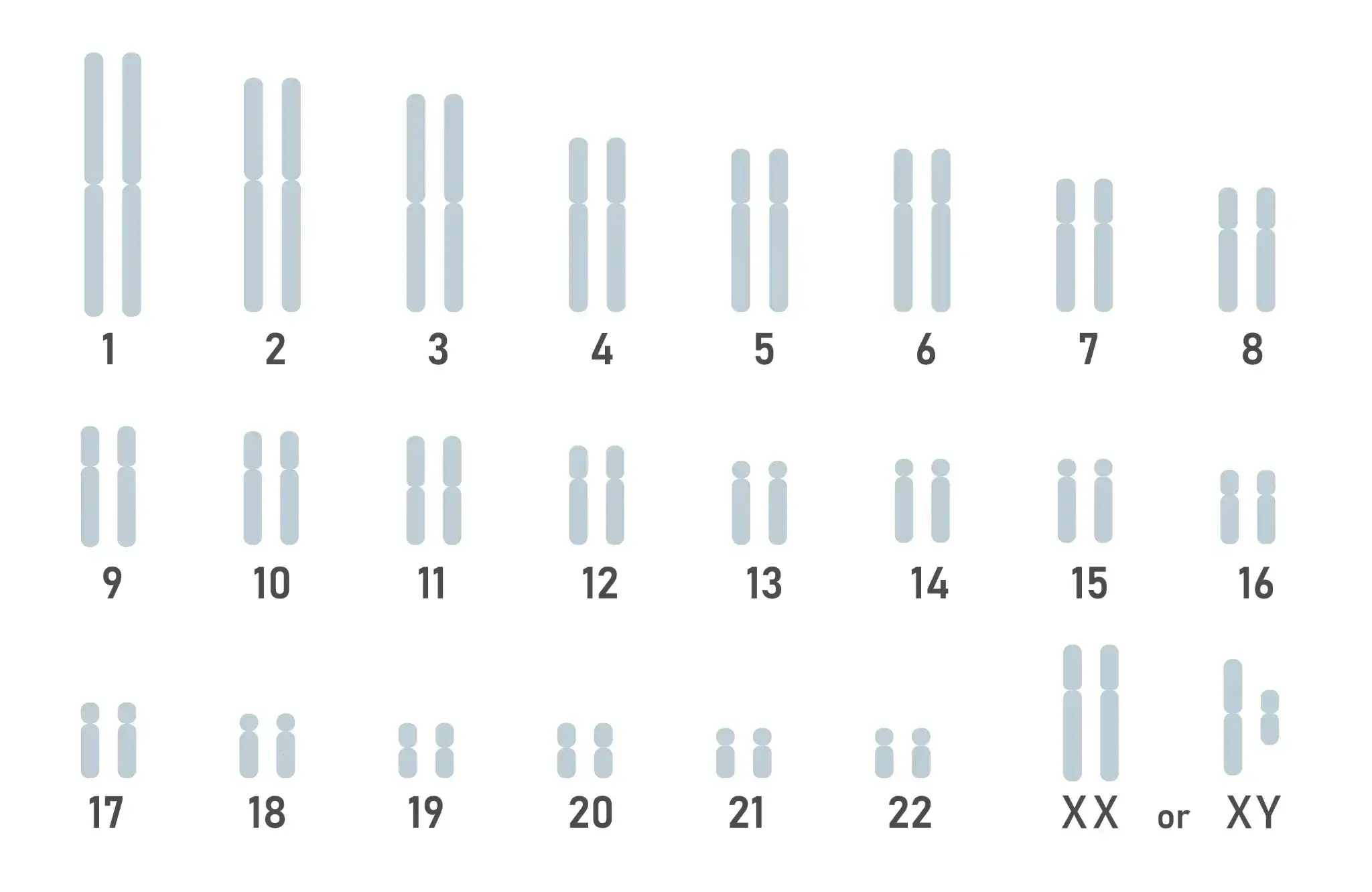
The DNA region investigated this time
Schematic diagram of DNA map present in cells
- ■
- ■
- ■
- ■
- ■
- ■
- ■
- ■
- ■
Related genes
| Related genes | DIRC3-AS1 |
|---|
Frequently asked questions (FAQ)
Q1. What is a missing tooth?
Missing teeth (congenitally missing teeth) are a condition in which teeth are not formed at birth and do not erupt.The absence of fewer than six teeth is called hypodontia, and the complete absence of teeth is called edentia. Genetic factors are deeply involved (1).
Q2. What genes are associated with missing teeth?
According to a study by Pillas et al. at Imperial College London,DNA region rs6435957 associated with propensity for missing teethIt turns out that it is. People with the T mutation tend to have an increased risk of missing teeth, and the associated gene is DIRC3-AS1 (1).
Q3. What are the effects of missing teeth?
Missing teeth reduce masticatory function, affect pronunciation, and adversely affect jaw growth.may cause. It is important to make an appropriate treatment plan by visiting the dentist early.
Q4. Can genetic testing determine trends in missing teeth?
By examining the genotype of the DNA region rs6435957,Understand trends in missing teethYou can. Studies have shown that people with the T mutation genotype (TT and TC) tend to be at higher risk (1).
Q5. What are the characteristics of the genotype distribution regarding missing teeth in Japanese people?
The Japanese rs6435957 genotype distribution isTT type 0.7%, TC type 15.8%, CC type 83.4%It is. Compared to the world average (TT type 45.1%), the proportion of TT type is 44.4 points lower and CC type is 72.7 points higher (1).
References
- Reference link 1: 2010 Feb., Demetris Pillas, PLoS Genet