
 blood clot

- Thrombosis is a disease in which a blood clot forms within a blood vessel, blocking blood flow.It is a major cause of stroke and myocardial infarction.
- CC type of DNA region rs114209171Research has found that the inhibition of platelet apoptosis is strengthened, increasing the risk of blood clots.
- appropriateDiet, exercise, and weight managementPrevention and early measures against thrombosis are possible through the use of genetic testing.
Overview Have you ever thought, "I'm scared that my body will become paralyzed in the future and I'll need nursing care. I don't want that." In recent years, ``cerebrovascular disease'' has become the second-largest reason for Japanese people to require nursing care, and the third-largest cause of death. Stroke is a type of cerebrovascular disease and is also called thrombosis. Thrombosis is a dangerous disease in which a blood clot gets stuck in a blood vessel, stopping the flow of blood. In many cases, the disease develops without warning, and after-effects include paralysis, speech and movement disorders, and in severe cases, it can even lead to death. Thrombosis is a disease with a high risk of recurrence. Thrombosis is often caused by lifestyle factors such as overeating and lack of exercise, but surprisingly, genetic factors (disposition) are said to be involved in the occurrence of thrombosis (Reference link 1). Why not use a genetic test to find out whether you are at risk of developing thrombosis? 2. Rationale One of the causes of many strokes and thrombosis is a high platelet count. Platelets play an important role in blood clotting, but when excessive clotting occurs, blood clots can form and blood vessels become clogged (Reference link 2). In the body, adjustments are made to prevent the number of platelets from becoming excessive, and one of the genes responsible for this function is "FUNDC2 (FUN14 domain containing 3)." ``FUNDC2'' is present on chromosome 10, and it was discovered that there is a mutation in the DNA region ``rs114209171'' that is associated with the occurrence of thrombosis. “rs114209171” has three genotypes: “TT type,” “TC type,” and “CC type.” For Japanese people, the percentage of genotypes is 67.6% for TT type, 29.3% for TC type, and 3.1% for CC type (Reference link 3). It is known that the TC and CC types have an increased number of platelets and are more likely to cause thrombosis. In particular, it has been suggested that the risk of myocardial infarction and stroke tends to be higher for those with type CC, which is the least common type among Japanese people (Reference links 4 and 5). 3. Mechanism of action The human body has a control mechanism to prevent the overproduction of platelets. Platelets decrease in number by causing apoptosis (cell death) in response to stimuli in the blood. The amount of apoptosis is strictly controlled, and its function is carried out by the gene FUNDC2. The gene "FUNDC2" is a protein present in the mitochondria within platelets, and increases the activity of BCLxL (Bcell lymphoma extra large), a mitochondrial transmembrane molecule, through phosphorylation of AKT, thereby suppressing platelet apoptosis and increasing the number of platelets. It has been reported that when the DNA region rs114209171 is CC type, the anti-apoptosis effect of the FUNDC2 gene is strengthened, the number of platelets increases, and the risk of thrombosis increases (Reference link 6). The risk of thrombosis may also be caused by lifestyle habits such as overeating and lack of exercise. In particular, a diet high in fat is thought to increase the risk. By using genetic testing and reviewing your lifestyle habits, you can prevent thrombosis.
What is a blood clot?
Thrombosis is a disease in which a blood clot (thrombus) forms within a blood vessel, partially or completely blocking blood flow.It is a major cause of stroke and myocardial infarction, and ranks as the second leading cause of nursing care (cerebrovascular disease) and third leading cause of death among Japanese people.
Causes and mechanisms of blood clots
Excessive increase in platelets plays a central role in the mechanism of thrombus development.
- Excessive increase in platelet count:Platelets are necessary for blood clotting, but when their number increases too much, excessive clotting occurs and blood clots form.
- Mutations in the gene FUNDC2:The gene "FUNDC2" located on chromosome 10 controls platelet apoptosis (cell death) and adjusts the number of platelets.
- Lifestyle factors:Overeating, lack of exercise, and fatty foods increase risk.
Main symptoms and sequelae of blood clots
Thrombosis isSudden onset without warningIn most cases, it is.
- due to strokeparalysis(hemiplegic, etc.)
- language disorder(Aphasia/dysarthria)
- movement disorders(Difficulty walking/impaired hands)
- In severe casesdeathrisks leading to
- Recurrence riskIt is a disease with a high
Relationship between blood clots and stroke
Stroke is a type of cerebrovascular disease and is a typical condition of thrombosis.It is. It occurs when a blood clot forms in a blood vessel and blocks a blood vessel in the brain. In recent years, cerebrovascular disease has become the second most common reason why Japanese people require nursing care, and the third most common cause of death.
Comparison of genetic and lifestyle factors for blood clots
| Comparison items | genetic factors | lifestyle factors |
|---|---|---|
| Main cause | FUNDC2 gene mutation (rs114209171) | Overeating, lack of exercise, high fat diet |
| Scope of influence | Directly affects platelet count control | Increased blood viscosity/vascular damage |
| Risk level | Particularly high risk for CC type holders | accumulated in multiple ways |
| Preventability | It is possible to know in advance through genetic testing. | Can be reduced by improving lifestyle habits |
How to prevent blood clots
The following measures are effective for preventing blood clots:
- Moderate exercise:Walking or aerobic exercise for at least 30 minutes a day
- Meal management:A well-balanced diet that is low in fat and centered on vegetables and fish
- Maintaining a healthy weight:Aim for a BMI range of 18.5-24.9
- Utilization of genetic testing:Understand your risks and individually optimize preventive measures
Relationship between genes and blood clots
Relationship between DNA region rs114209171 and thrombotic risk
Research has revealed that genetic factors (disposition) are involved in the occurrence of blood clots (Reference link 1).Mutations in the gene FUNDC2 (FUN14 domain containing 3), which is responsible for regulating platelet counts, affect the risk of blood clots.
- FUNDC2 is present on chromosome 10, and a blood clot-related mutation was discovered in the DNA region "rs114209171"
- rs114209171 hasTT type, TC type, CC typeThere are three genotypes of
- In JapaneseTT type 67.6%, TC type 29.3%, CC type 3.1%Distribution by percentage (reference link 3)
- TC type/CC typeThe number of platelets increases, making it more likely to cause blood clots.
- especiallyCC typetend to have a higher risk of myocardial infarction and stroke (reference links 4 and 5)
Genotype distribution in Japanese (rs114209171)
| Genotype | Percentage of Japanese people | percentage of the world |
|---|---|---|
| TT type | 76.5% | 58.4% |
| TC type | 21.8% | 35.9% |
| CC type | 1.5% | 5.5% |
Mechanism of action of FUNDC2 gene
FUNDC2 is a protein present in mitochondria within plateletsand controls the platelet count through the following mechanism.
- Promotes the activity of the mitochondrial transmembrane molecule BCLxL (B-cell lymphoma-extra large) through phosphorylation of AKT
- Activation of BCLxL suppresses platelet apoptosis (programmed cell death)
- As a result of apoptosis inhibition, platelet count increases
- CC typeIn this case, the anti-apoptotic effect of FUNDC2 is strengthened, and the number of platelets increases significantly (Reference link 6)
Rationale for testing
Surface DNA region: blood clot
The gene region that most strongly affects blood clots is rs114209171. The distribution of isomorphic genotypes in Japan is as follows.
- TT
76.5 % - TC
21.8 % - CC
1.5 %
Another gene region involved in blood clots is rs45479691. The distribution of isomorphic genotypes in Japan is as follows
- GG
99.9 % - GA
0.1%以下 - AA
0.1%以下
Another gene region involved in blood clots is rs4558856. The distribution of isomorphic genotypes in Japan is as follows
- CC
42.1 % - CG
45.5 % - GG
12.3 %
Another gene region involved in blood clots is rs7279911. The distribution of isomorphic genotypes in Japan is as follows
- GG
56.9 % - GA
37.0 % - AA
6.0 %
Another gene region involved in blood clots is rs77542162. The distribution of isomorphic genotypes in Japan is as follows
- AA
99.9 % - AG
0.1%以下 - GG
0.1%以下
Another gene region involved in blood clots is rs738409. The distribution of isomorphic genotypes in Japan is as follows
- CC
33.2 % - CG
48.8 % - GG
17.8 %
Basis for inspection
A study by Evangelou et al. (2013) revealed that genetic factors are involved in the occurrence of thrombosis (Reference link 1). In the DNA region rs114209171 of the FUNDC2 gene, CC type carriers have a stronger anti-apoptotic effect on platelets, which increases the number of platelets, increasing the risk of blood clots (Reference link 6).
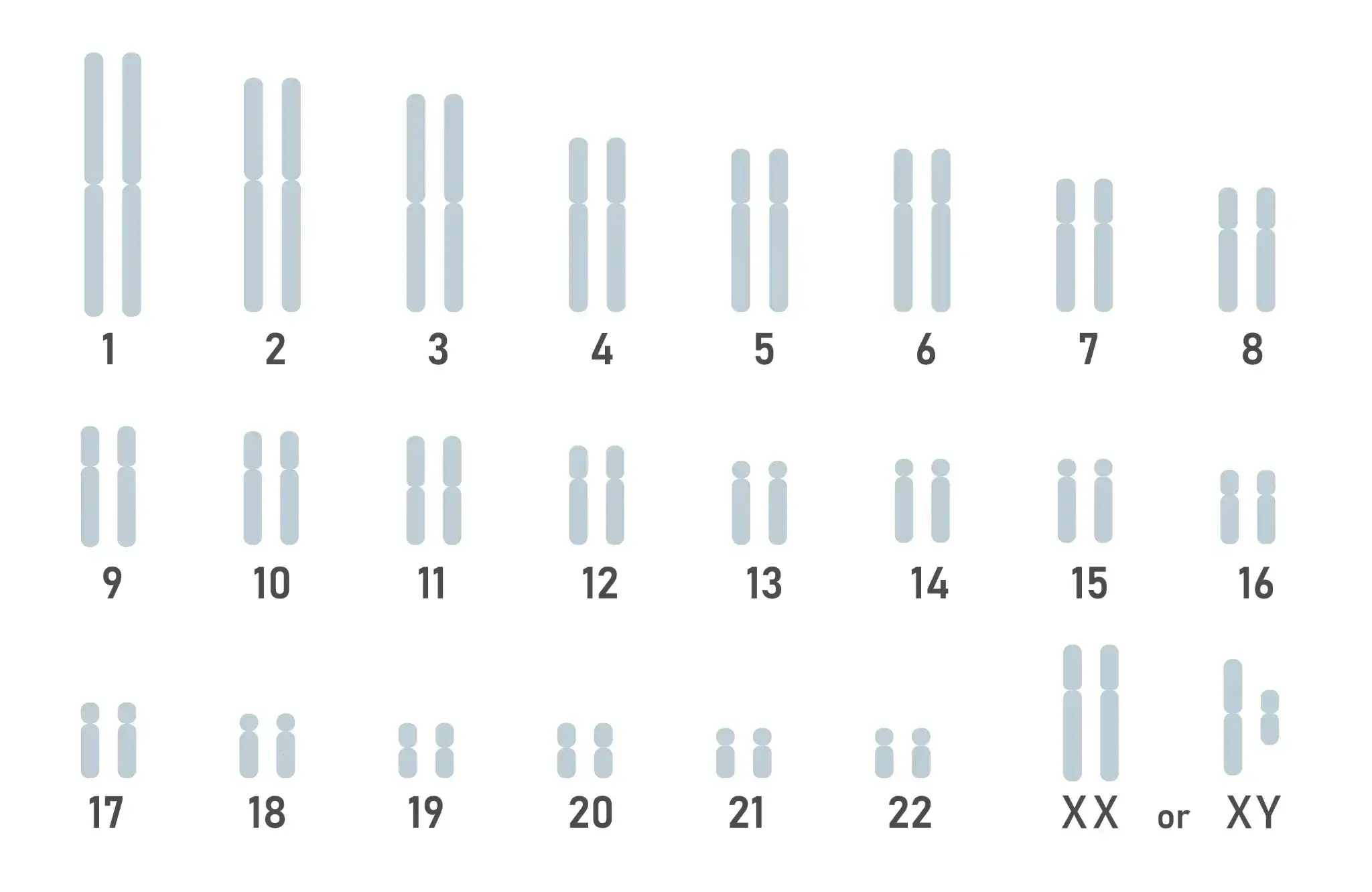
The DNA region investigated this time
Schematic diagram of DNA map present in cells
- ■
- ■
- ■
- ■
- ■
- ■
- ■
- ■
- ■
Related genes
| Related genes | FUNDC2 |
|---|---|
| Related genes | ALAS2 |
| Related genes | TMEM131L |
| Related genes | LINC02920 |
| Related genes | ABCA6 |
| Related genes | PNPLA3 |
Frequently asked questions (FAQ)
Q1. What is a blood clot?
A blood clot is a blood clot that forms within a blood vessel, partially or completely blocking blood flow.It is a major cause of stroke and myocardial infarction, and ranks as the second leading cause of nursing care (cerebrovascular disease) and third leading cause of death among Japanese people.
Q2. What is the cause of blood clots?
The main cause isExcessive increase in platelet countIt is. In the CC type of the DNA region rs114209171 of the gene FUNDC2, the anti-apoptotic effect of platelets is strengthened and the number of platelets increases. In addition, overeating, lack of exercise, and fatty foods are also risk factors.
Q3. What is the relationship between blood clots and stroke?
Stroke is a type of cerebrovascular disease and is a typical condition of thrombosis.It is. It develops when a blood clot that forms in a blood vessel blocks a blood vessel in the brain, resulting in aftereffects such as paralysis, speech and movement disorders.
Q4. Can genetic testing determine the risk of blood clots?
By examining the genotype of the DNA region rs114209171,Understanding trends in the risk of developing blood clotsYou can. In Japanese, 76.5% are TT type, 21.8% are TC type, and 1.5% are CC type, and TC type and CC type tend to have higher risk of thrombosis.
Q5. How can I prevent blood clots?
To prevent blood clotsModerate exercise, well-balanced diet (especially limiting fat content), and maintaining a healthy weightis valid. By understanding the risk through genetic testing and reviewing your lifestyle habits, you can prevent thrombosis.
References
- Reference link 1: 2013 Jun., Evangelos Evangelou, Nat Rev Genet.
- Reference link 2: 2016 Jul., Seung Hee Lee, EMBO Mol Med.
- Reference link 3: Information on DNA region “rs114209171” NIH
- Reference link 4: 2019 Sep., Qi Ma, Cardiovasc Res.
- Reference link 5: 2015 Apr., Marine Germain, Am J Hum Genet.
- Reference link 6: 2016 May., David A Hinds, Hum Mol Genet
- Reference link 7: 2020 Sep., Dragana Vuckovic, Cell
- Reference link 8: 2016 Nov., William J Astle, Cell
- Reference link 9: 2020 Sep., Ming-Huei Chen, Cell