
 testicular cancer

- Testicular cancer is a malignant tumor that occurs in 1 in 100,000 people.It is most common among men in their 20s to 30s.
- T-type mutation in DNA region rs17336718 of gene TKTL1is involved in the risk of developing the CC type, and the prevalence of type CC among Japanese people is 99.9%.
- The initial symptoms are a painless swelling or lump in the scrotum.Early risk understanding through genetic testingis effective for early detection
Overview Testes are internal organs in the male body, with one located inside the left and right scrotum. This organ plays an important role in secreting male hormones and producing sperm. Testicular cancer is a malignant tumor that forms inside the testicles, and is a relatively rare disease that occurs in 1 in 100,000 people. However, it is said to be the most common malignant tumor among men in their 20s and 30s, and its onset is characteristically young (Reference link 1). Although the cause of testicular cancer is not yet clear, people with cryptorchidism (a condition in which the testicle is not inside the scrotum) are more likely to develop testicular cancer. In addition, trauma and family history are considered risk factors, but a recent research report revealed that the gene "TKTL1" has a certain degree of influence on the risk of developing testicular cancer (Reference link 2). 2. Rationale The University of Pennsylvania and the Testicular Cancer Consortium have revealed that the type of a particular gene, TKTL1, can identify people who are more likely to develop testicular cancer. Within this gene, a specific genotype of the DNA region called ``rs17336718'' was shown to have a higher possibility of developing testicular cancer (Reference link 1). The DNA region "rs17336718" has three genotypes: "CC type," "CT type," and "TT type." Among these, it has been revealed that the TT type, which has the risk allele T, tends to be more likely to develop testicular cancer, and the CT type is slightly more likely to develop testicular cancer. In the Japanese population, the distribution of genotypes is as follows. It was found that "CC type" accounted for 81.8%, "CT type" accounted for 17.2%, and "TT type" was almost non-existent (reference link 3). Therefore, it can be said that Japanese people have a relatively low risk of developing testicular cancer. However, testicular cancer often occurs in young people, and early detection is often difficult because the initial symptoms are painless swelling or lumps in the scrotum. Testicular cancer is also fast-growing and can quickly spread to lymph nodes and other organs throughout the body. Based on the above, it is expected that understanding the risk of developing testicular cancer in advance through genetic testing will be useful for early detection and early treatment of testicular cancer. 3. Mechanism of action TKTL1, a gene that may be involved in the development of testicular cancer, is located on the X chromosome of the 24 chromosomes common to humans. It has been revealed that the DNA region rs17336718, which is present in the intron part of the gene TKTL1 (the part that is ultimately removed after gene transcription), controls the expression of the gene TKTL1. Generally, there are two ways for cells to obtain energy: ``glycolysis'' and ``electron transport system (through the citric acid cycle).'' Normal cells use an "electron transport chain" that uses oxygen to efficiently obtain a large amount of energy. However, in cancer cells, it is known that the ``glycolytic system,'' which is less efficient but can obtain energy more quickly and can also produce the nucleic acid materials necessary for proliferation, becomes dominant. *This is called aerobic glycolysis (Warburg effect). The gene "TKTL1" is deeply involved in the pathway that synthesizes nucleic acids derived from this "glycolytic system," and it has been reported that the gene "TKTL1" is expressed in many cancer cells and is associated with poor prognosis. (Reference link 4) The gene "TKTL1" has also been reported to be involved in testicular cancer patients, and is thought to play a role in promoting tumor growth. (Reference link 2) The DNA region ``rs17336718'' of the gene ``TKTL1'' is associated with the risk of developing testicular cancer, and is one of the single nucleotide polymorphisms that is attracting attention.
What is testicular cancer?
Testicular cancer is a malignant tumor that forms inside the testicles, and is a relatively rare cancer that occurs in 1 in 100,000 people.It is a malignant tumor that has the highest incidence in men in their 20s to 30s, and is characterized by its onset in young people (Reference link 1).
Causes and risk factors of testicular cancer
Although the exact cause of testicular cancer is unknown, the following risk factors have been identified:
- Undescended testis:Men with a condition in which the testicles do not descend into the scrotum are at high risk.
- Trauma:Physical damage to the testicles is a risk factor
- Family history:Risk increases if you have a close family member with testicular cancer
- Gene TKTL1:Research reveals that the T-type mutation in the DNA region "rs17336718" increases the risk of developing the disease (Reference link 2)
Early symptoms of testicular cancer
Early symptoms of testicular cancer arePainless swelling or lump in the scrotumIt is. There are cases where the diagnosis is delayed because it is painless.
- Swelling/hardening of the testis on one side
- feeling of weight in the scrotum
- Dull pain in the lower abdomen or groin
- At advanced stage: enlarged lymph nodes, difficulty breathing (in case of lung metastasis)
Progression rate and metastasis risk of testicular cancer
Testicular cancer is fast-growing and quickly metastasizes to lymph nodes and organs throughout the body.It has characteristics. Early detection is directly linked to the success rate of treatment, so it is important to understand the risks through self-examination and genetic testing.
Types and characteristics of testicular cancer
| Comparison items | Seminoma | non-seminoma |
|---|---|---|
| frequency | Approximately 50% | Approximately 50% |
| Age of onset | 30s to 40s | 20s |
| Progress speed | relatively slow | rapid |
| radiation sensitivity | expensive | low |
| treatment response | Good | Chemotherapy is the main focus |
The relationship between genes and testicular cancer
Relationship between DNA region rs17336718 and onset risk
A study conducted by the University of Pennsylvania and the Testicular Cancer Consortium revealed that the DNA region rs17336718 of the gene TKTL1 is associated with the risk of developing testicular cancer (Reference link 2).
- rs17336718 hasThree genotypes: CC, CT, and TTexists
- Has the risk allele TTT types are more likely to develop testicular cancerThere is
- CT type also tends to be more likely to develop.It has been reported that there is
Genotype distribution in Japanese (rs17336718)
| Genotype | Percentage of Japanese people | percentage of the world | risk trends |
|---|---|---|---|
| CC type | 99.9% | 88.4% | low risk |
| CT type | 0.1%以下 | 11.2% | Moderately high risk |
| TT type | 0.1%以下 | 0.3% | high risk |
Since 99.9% of Japanese people have the CC type, the genetic risk of testicular cancer is considered to be relatively low (Reference link 3).
Mechanism of action of TKTL1 gene
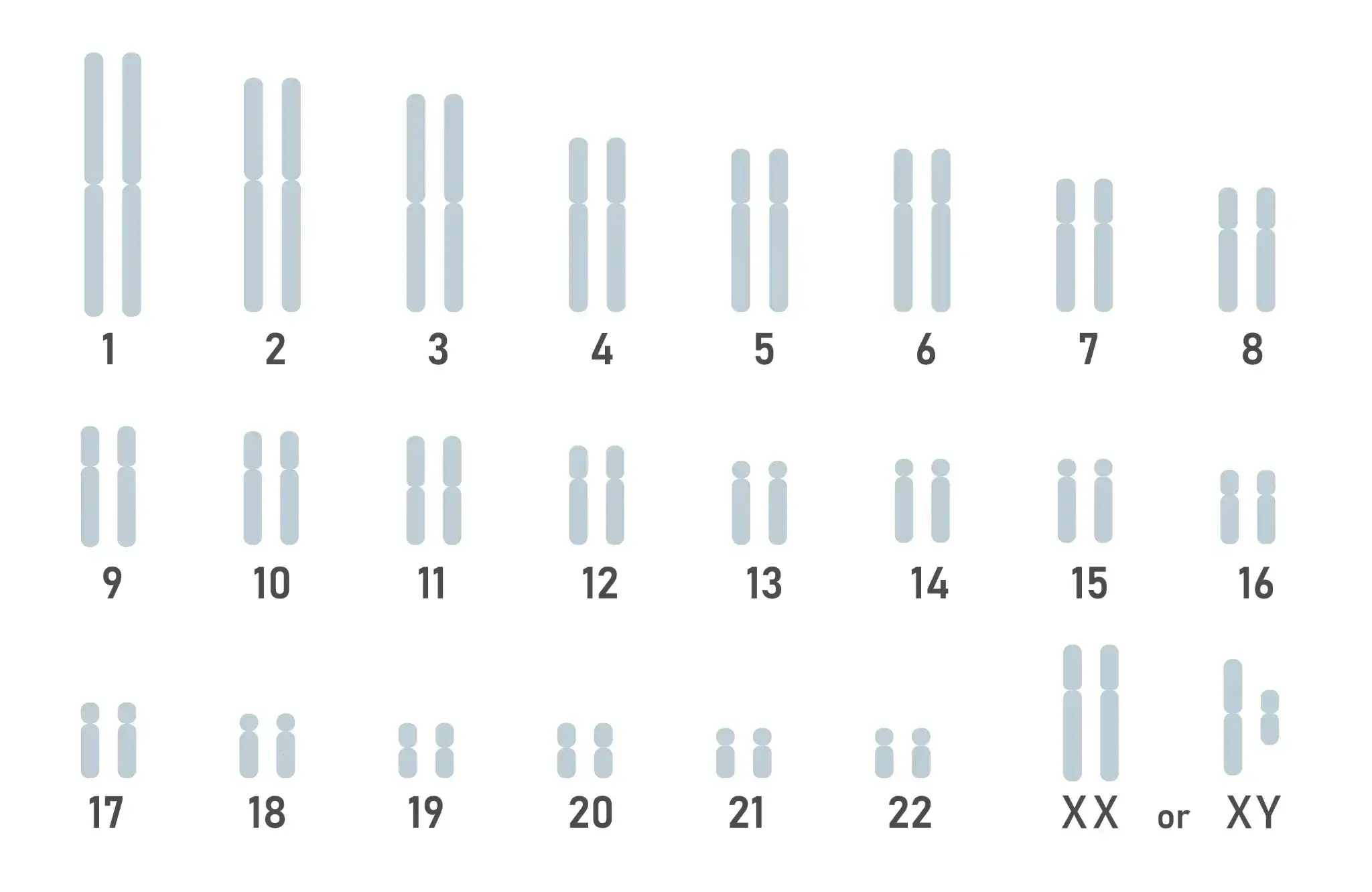
The gene TKTL1 is located on the X chromosome and is deeply involved in energy metabolism in cancer cells.
- The DNA region rs17336718 exists in the intron part of TKTL1,Controls gene expressiondo
- Normal cells obtain energy through an "electron transport chain" that uses oxygen.
- In cancer cells, the less efficient ``glycolytic system'' becomes dominant (Warburg effect)
- TKTL1 is involved in the glycolytic-derived nucleic acid synthesis pathway,promotes tumor growth(Reference link 4)
- Expression of TKTL1 has been confirmed in testicular cancer patients, and its involvement in tumor growth has been reported (Reference link 2)
Rationale for testing
Superficial DNA region: testicular cancer
The gene region that most strongly affects testicular cancer is rs17336718. The distribution of isomorphic genotypes in Japan is as follows.
- CC
99.9 % - CT
0.1%以下 - TT
0.1%以下
Another gene region involved in testicular cancer is rs56016578. The distribution of isomorphic genotypes in Japan is as follows
- CC
99.9 % - CT
0.1%以下 - TT
0.1%以下
Another gene region involved in testicular cancer is rs7221274. The distribution of isomorphic genotypes in Japan is as follows
- AA
65.2 % - AG
31.0 % - GG
3.6 %
Basis for inspection
Research conducted by the University of Pennsylvania and the Testicular Cancer Consortium revealed that the DNA region rs17336718 of the gene TKTL1 is associated with the risk of developing testicular cancer. There are two types of mutations in the rs17336718 region, C and T, and those with type TT mutations (risk alleles) tend to have a higher risk of developing the disease (reference link 2). It has been found that 99.9% of Japanese people have the CC mutation, and the prevalence of the T mutation is extremely low (Reference link 3).
The DNA region investigated this time
Schematic diagram of DNA map present in cells
- ■
- ■
- ■
- ■
- ■
- ■
- ■
- ■
- ■
Related genes
| Related genes | TKTL1 |
|---|---|
| Related genes | CLDN14 |
| Related genes | PPM1E |
Frequently asked questions (FAQ)
Q1. What is testicular cancer?
Testicular cancer is a malignant tumor that forms inside the testicles, and is a relatively rare cancer that occurs in 1 in 100,000 people.It most often occurs in men between the ages of 20 and 30, and its onset is characteristic in young people (Reference link 1).
Q2. What is the cause of testicular cancer?
The exact cause is unknown, butUndescended testis/trauma/family historyis a risk factor. Research has revealed that the T-type mutation in the DNA region rs17336718 of the gene TKTL1 is associated with the risk of developing the disease (reference link 2).
Q3. What can we learn from genetic testing for testicular cancer?
By examining the genotype of the DNA region rs17336718,Understanding trends in the risk of developing testicular cancerYou can. The CC type accounts for 99.9% of Japanese people, and the prevalence of the risk allele T type is extremely low (reference link 3).
Q4. What are the early symptoms of testicular cancer?
The initial symptoms arePainless swelling or lump in the scrotumIt is. Early detection is difficult because it is painless, and as it progresses, it can rapidly spread to lymph nodes and organs throughout the body.
Q5. What is the relationship between the TKTL1 gene and testicular cancer?
The TKTL1 gene is located on the X chromosome and is found in cancer cells.Deeply involved in glycolysis (Warburg effect)I will. It has been reported that TKTL1 is expressed in testicular cancer patients and plays a role in promoting tumor growth (Reference link 4).
References
- Reference link 1: 2021 May.,Tomohiro Matsuda,JJCO.
- Reference link 2: 2017 Dce.,Zhaoming Wang, Nature Genetics.
- Reference link 3: Information on DNA region "rs17336718" TogoVar
- Reference link 4: 2006 Feb., S Langbein, BJC.
- Reference link 5: 2017 Jul., Zhaoming Wang, Nat Genet
- Reference link 6: 2020 Sep., Sara R Rashkin, Nat Commun
- Reference link 7: 2013 Jun., Charles C Chung, Nat Genet