
 stroke
- Stroke is a disease in which brain cells die due to occlusion and bleeding of cerebral blood vessels.Approximately 290,000 people develop this disease annually in Japan, making it the fourth leading cause of death.
- G-type mutation in DNA region rs1564454LMU Munich study finds that people with cancer tend to have a higher risk of stroke
- The prevalence of type G mutation (AG+GG) in Japanese people is75.3%This is a high percentage compared to the world average of 62.9%.
Overview A stroke is a disease in which blood doesn't reach part of the brain due to a blockage or bleeding, causing brain cells in the area to die due to lack of oxygen and nutrients. Symptoms vary depending on the location and area of the brain affected. Common symptoms include paralysis on one side of the face, arm, or leg, making it difficult to maintain balance or walk. Symptoms may also include difficulty speaking or understanding things. Other symptoms include visual disturbances, severe headaches, and dizziness. In addition to these symptoms, it can cause chronic pain, memory loss, and muscle spasms. The symptoms and severity of stroke vary widely from person to person, so treatment is customized to your individual situation. A study by Malik et al. from LMU Munich revealed that the risk of stroke is associated with a DNA region called rs1564454. There are three genotypes in this DNA region: AA, AG, and GG, and it was found that people with the G genotype tend to have a higher risk of stroke.
What is a stroke?
A stroke is a disease in which blood does not reach a part of the brain due to blockage of a cerebral blood vessel (cerebral infarction) or hemorrhage (cerebral hemorrhage/subarachnoid hemorrhage), causing brain cells in the area to die due to lack of oxygen and nutrients.Approximately 290,000 people develop the disease each year in Japan, and it is the fourth leading cause of death and the leading cause of need for nursing care.
What are the main symptoms of stroke?
Symptoms of a stroke vary depending on the area and area of the brain affected. Typical symptoms are classified below.
Impairment of motor function
- Unilateral paralysis:Sudden loss of strength on one side of the face, arm, or leg
- Difficulty walking:Unable to maintain body balance and walking becomes unstable
- Muscle spasms:Involuntary muscle contractions occur during the chronic phase
Language/cognitive impairment
- Aphasia:Difficulty speaking or understanding things
- Memory impairment:Short-term and long-term memory is impaired
- Chronic pain:Persistent pain caused by the area of brain damage
Sensory and other disorders
- Visual impairment:Loss of visual field on one side (homonym hemianopia)
- Severe headache:Particularly in cases of subarachnoid hemorrhage, it is described as ``the worst headache of my life.''
- Dizziness:Sudden onset of vertigo
Types of stroke and comparison
| Comparison items | cerebral infarction | cerebral hemorrhage | subarachnoid hemorrhage |
|---|---|---|---|
| Incidence rate | Approximately 75% of the total | Approximately 20% of the total | Approximately 5% of the total |
| cause | Blood vessel occlusion due to thrombus | rupture of blood vessels | rupture of aneurysm |
| Main risk factors | Arteriosclerosis/atrial fibrillation | high blood pressure | cerebral aneurysm |
| mortality rate | Approximately 10-20% | Approximately 30-40% | Approximately 30-50% |
How to prevent stroke
The following lifestyle changes are effective in preventing stroke.
- Blood pressure management:Maintain systolic blood pressure below 140mmHg (reducing risk by approximately 40%)
- No smoking:Smokers have about twice the risk of stroke compared to non-smokers
- Moderate exercise:Perform at least 150 minutes of aerobic exercise per week
- Salt restriction:Keep salt intake to less than 6g per day
- Maintaining a healthy weight:Aim for a BMI of 18.5 to 24.9
Association between genes and stroke risk
What is the relationship between DNA region rs1564454 and stroke?
Study by Malik et al. at LMU Munich (2018, Nature (Published in Genetics) revealed that the risk of stroke is associated with the DNA region rs1564454.
- There are three genotypes of rs1564454: AA, AG, and GG.
- Genotype with type G mutation(AG type/GG type) people tend to have a higher risk of stroke
- This gene region is related to the FARP1 gene
Comparison of genotype distribution between Japanese and the world (rs1564454)
| Genotype | Percentage of Japanese people | percentage of the world |
|---|---|---|
| AA type | 24.5% | 37.0% |
| AG type | 49.9% | 47.6% |
| GG type | 25.4% | 15.3% |
The G mutation prevalence rate (AG+GG) in Japanese people is75.3%, which is higher than the global average of 62.9%. The percentage of Japanese people with type GG is25.4%This is approximately 1.7 times higher than the world average of 15.3%, reflecting the genetic characteristics of the Japanese population.
Other related DNA regions
rs2822388 and stroke risk
| Genotype | Percentage of Japanese people | percentage of the world |
|---|---|---|
| AA type | 89.7% | 89.8% |
| AG type | 10.0% | 9.8% |
| GG type | 0.2% | 0.2% |
rs720470 and stroke risk
| Genotype | Percentage of Japanese people | percentage of the world |
|---|---|---|
| TT type | 23.5% | 52.9% |
| TC type | 49.9% | 39.6% |
| CC type | 26.4% | 7.4% |
The CC type of rs720470 is Japanese.26.4%This is approximately 3.6 times higher than the world average of 7.4%, indicating a genetic distribution characteristic of the Japanese.
Rationale for testing
Superficial DNA region: Stroke
The gene region most strongly associated with stroke is rs1564454. The distribution of isomorphic genotypes in Japan is as follows.
- AA
24.5 % - AG
49.9 % - GG
25.4 %
Another gene region involved in stroke is rs2822388. The distribution of isomorphic genotypes in Japan is as follows
- AA
89.7 % - AG
10.0 % - GG
0.2 %
Another gene region involved in stroke is rs720470. The distribution of isomorphic genotypes in Japan is as follows
- TT
23.5 % - TC
49.9 % - CC
26.4 %
Basis for inspection
A study by Malik et al. from LMU Munich revealed that the risk of stroke is linked to genes. There is a region called rs1564454 in the human genome, and there are two types of mutations, A and G, in the gene in this region. It was found that people with type A mutations tend to have a higher risk of stroke.
The DNA region investigated this time
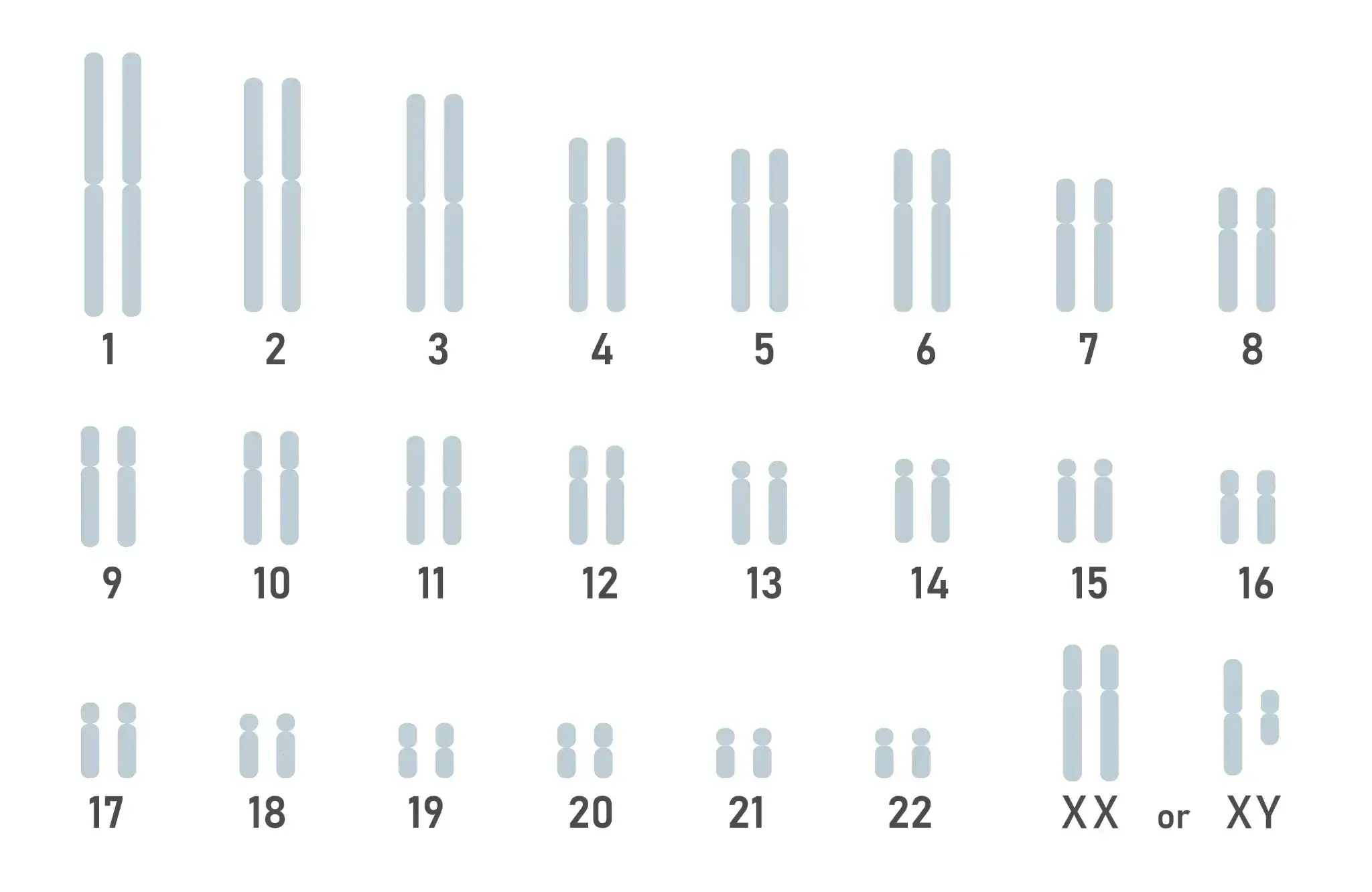
Schematic diagram of DNA map present in cells
- ■
- ■
- ■
- ■
- ■
- ■
- ■
- ■
- ■
Related genes
| Related genes | FARP1 |
|---|---|
| Related genes | FRG2MP |
| Related genes | DYRK1A |
Frequently asked questions (FAQ)
Q1. What is a stroke?
A stroke is a disease in which blood does not reach a part of the brain due to occlusion of a cerebral blood vessel (cerebral infarction) or hemorrhage (cerebral hemorrhage/subarachnoid hemorrhage), causing brain cells to die.Approximately 290,000 people develop it each year in Japan, and it is the fourth leading cause of death. The main symptoms are hemiparesis, speech and vision problems, severe headaches, and dizziness. Symptoms and severity vary depending on the area of the brain affected.
Q2. Is stroke risk related to genes?
Yes.Study by Malik et al. at LMU Munich (2018, Nature Genetics) found that the DNA region rs1564454 is associated with stroke risk.There are three genotypes of rs1564454: AA, AG, and GG, and people with the G-type mutation (AG type and GG type) tend to have a higher risk of stroke.
Q3. What is the distribution of the stroke-related genotype (rs1564454) in Japanese people?
The genotype distribution of rs1564454 in Japanese people isAA type 24.5%, AG type 49.9%, GG type 25.4%It is. The prevalence of type G mutation (AG+GG) is 75.3%, which is higher than the global average of 62.9%. The percentage of Japanese people with type GG is 25.4%, which is about 1.7 times higher than the world average of 15.3%.
Q4. What are the main symptoms of stroke?
The main symptoms of stroke areUnilateral paralysis of the face, arms, and legs, difficulty walking, and speech impairment(difficulty speaking and understanding),Visual disturbances, severe headaches, dizzinessIt is. The chronic stage causes muscle spasms, chronic pain, and memory problems. Early detection is possible with FAST (Face, Arms, Speech, Time) check.
Q5. How can I prevent stroke?
To prevent stroke,Management of high blood pressure(systolic blood pressure less than 140mmHg),No smoking、moderate exercise(more than 150 minutes of aerobic exercise per week),salt restriction(less than 6g per day),Maintaining a healthy weight(BMI 18.5 to 24.9) are valid. It is also important to identify risks early through regular health checkups and genetic testing.
References
- Reference link 1: 2018 Apr., Rainer Malik, Nat Genet
- Reference link 2: 2015 Aug., Cara L Carty, Stroke
- Reference link 3: 2018 Dec., Rainer Malik, Ann Neurol