
 Athletic ability (instantaneous power)

- Instantaneous force is a short-distance running ability that is determined by a complex combination of fast-twitch muscle fibers, nerve-muscle coordination, and anaerobic energy supply.Genetic factors are responsible for approximately 50-80% of individual differences.
- Type C mutation in DNA region rs8192678 (PPARGC1A gene)Research shows that people with a tendency to have high explosive power
- In addition to genetic predisposition,Appropriate training and nutritional managementis essential for maximizing explosive power.
Overview Explosive power refers to the ability to run at maximum speed over short distances. This ability depends on several physiological factors, including muscle strength, muscle composition, nerve-muscle coordination, and energy supply. Great sprinters have a high proportion of fast-twitch fibers, their nerves and muscles work together quickly and precisely, and they have a high anaerobic capacity. Genetic factors play a large role in differences in explosive power. Multiple genetic variations affect muscle composition, contraction speed, and ability to clear lactic acid, which in turn affects an individual's sprinting ability. However, not only genetics, but also environmental factors such as training and nutrition are important in improving sprinting ability. An individual's sprinting ability is the result of the interaction between genetics and environment, and a deeper understanding of this relationship can aid in athlete selection and training. Overall, explosive power is an ability that is formed by a combination of innate and environmental factors. Training that takes into account genetic factors and environmental influences is important to bring out explosive power. A study by Maciejewska and colleagues at the University of Szczecin revealed that athletic ability (instantaneous strength) is associated with a DNA region called rs8192678. There are three genotypes in this DNA region: CC, CT, and TT, and it has been found that people with the C genotype tend to have higher athletic ability (instantaneous strength).
What is explosive power?
Instantaneous power (sprint ability) is the athletic ability to achieve maximum speed over short distances.This ability depends on four physiological factors: muscle strength, muscle composition, nerve-muscle coordination, and energy supply.
Main factors determining explosive power
High explosive power is determined by a combination of the following factors:
- Proportion of fast-twitch muscle fibers (Type II):Excellent sprinters have a high proportion of fast-twitch fibers, which instantly generate large amounts of force.
- Nerve-muscle coordination:Commands from the brain and muscle contractions work together quickly and accurately
- Anaerobic energy supply:Short-term, high-output energy production by ATP-CP system and glycolysis system
- Muscle contraction speed:The speed at which muscle fibers contract is directly linked to instantaneous power.
The role of genetics and environment in explosive power
Genetic factors are reported to contribute to approximately 50-80% of individual differences in explosive power. Multiple genetic variations affect muscle composition, rate of contraction, and ability to remove lactate.
- Genetic factors:Muscle fiber composition, muscle contractile protein properties, energy metabolic efficiency
- Environmental factors:Training content, nutrition, conditioning
Personal momentum isThe result of genetic and environmental interactionsBy understanding this relationship, it can be used for athlete selection and training optimization.
Difference between explosive power and endurance
| Comparison items | explosive power | endurance |
|---|---|---|
| main muscle fibers | Fast-twitch fibers (Type II) | Slow twitch fibers (Type I) |
| energy system | Anaerobic system (ATP-CP/glycolytic system) | Aerobic system (oxidative phosphorylation) |
| exercise time | Explosive exercise within 10 seconds | Sustained exercise for several minutes to several hours |
| Representative competition | 100m dash/shot put | Marathon/long distance running |
| Related genes | PPARGC1A(rs8192678) | ACE・ACTN3 |
Points to increase explosive power
In addition to genetic predisposition, the following training and nutritional management are effective in improving explosive power.
- Short distance dash:Sprint iterations at maximum speed
- Plyometrics:Improving muscle power through jump training
- High-intensity interval training (HIIT):Repeated short periods of high-intensity exercise and rest
- Nutritional management:Adequate intake of protein, creatine, and BCAA (branched chain amino acids)
The relationship between genes and explosive power
Relationship between DNA region rs8192678 and explosive force
A study by Maciejewska and colleagues at Szczecin University revealed that the DNA region rs8192678 of the PPARGC1A gene is associated with explosive power.
- There are three genotypes of rs8192678: CC, CT, and TT.
- Genotype with type C mutationPeople tend to have high explosive power
Genotype distribution in the Japanese and the world (rs8192678)
| Genotype | Percentage of Japanese people | percentage of the world |
|---|---|---|
| CC type | 24.5% | 45.7% |
| CT type | 49.9% | 43.7% |
| TT type | 25.4% | 10.4% |
The percentage of Japanese people with the CC type (which tends to have high explosive power) is 24.5%, while it is 45.7% in the world as a whole, a difference of about 1.9 times.
Rationale for testing
Physical DNA region: Athletic ability (instantaneous force)
The gene region that most strongly influences athletic performance (explosive power) is rs8192678. The distribution of isomorphic genotypes in Japan is as follows.
- CC
24.5 % - CT
49.9 % - TT
25.4 %
Basis for inspection
Research by Maciejewska and colleagues at the University of Szczecin revealed that athletic ability (explosive power) is related to genes. There is a region called rs8192678 in the human genome, and the gene in that region has two types of mutations: C and T.People with type C mutation tend to have higher explosive power.I understand that. The PPARGC1A gene is involved in muscle energy metabolism and mitochondrial function, and influences the contractile properties of muscle fibers.
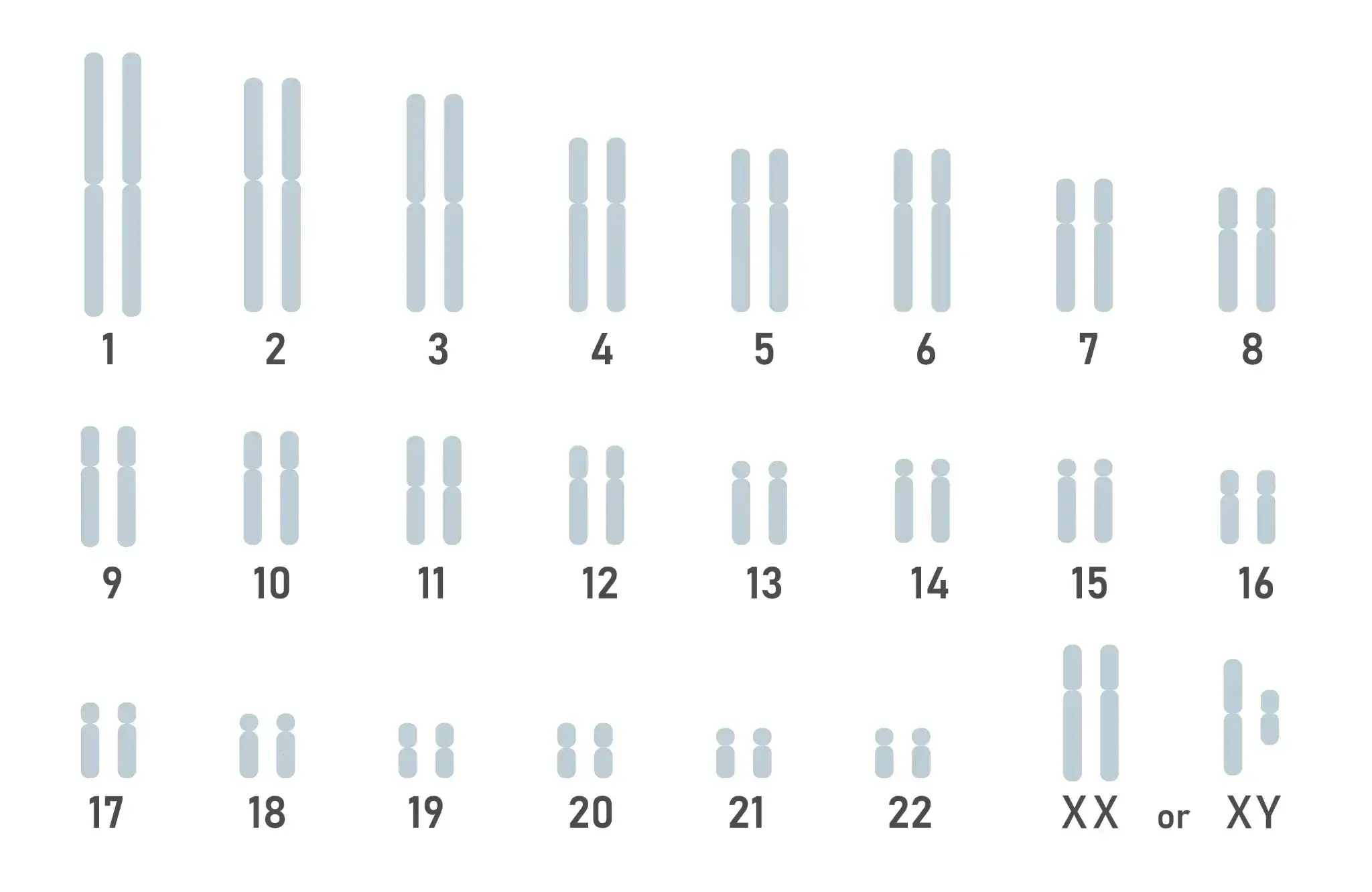
The DNA region investigated this time
Schematic diagram of DNA map present in cells
- ■
- ■
- ■
- ■
- ■
- ■
- ■
- ■
- ■
Related genes
| Related genes | PPARGC1A |
|---|
Frequently asked questions (FAQ)
Q1. What is explosive power?
Explosive power is the athletic ability to achieve maximum speed over short distances.Three factors are involved in a complex manner: proportion of fast-twitch muscle fibers, nerve-muscle coordination, and anaerobic energy supply, and genetic factors are said to explain approximately 50-80% of individual differences.
Q2. What genes are involved in explosive power?
DNA region of PPARGC1A gene rs8192678is involved in explosive force. A study by Maciejewska and colleagues at Szczecin University found that people with type C mutation tend to have higher explosive power.
Q3. What is the difference between explosive power and endurance?
The instantaneous power isMainly uses fast-twitch fibers (Type II)It exerts explosive force within 10 seconds using anaerobic energy. Endurance isSlow twitch fibers (Type I)Use this to provide aerobic energy for long periods of exercise.
Q4. Can a genetic test determine if someone has explosive power?
By testing the genotype of the DNA region rs8192678,Understanding the genetic predisposition to explosive powerYou can. CC type is found in 24.5% of Japanese people, and those with type C mutation tend to have higher explosive power.
Q5. What is the training method to increase explosive power?
Short distance dash/plyometrics/HIITis valid. In addition to genetic predisposition, proper training and nutritional intake (protein, creatine, BCAA) are the keys to improving explosive power.
References
- Reference link 1: 2011 Mar., Agnieszka Maciejewska, J Sports Sci