
 spherocytosis

- Spherocytosis is a genetic blood disorder in which red blood cells become spherical due to a genetic defect in a red blood cell membrane protein, causing hemolytic anemia.is
- T-type mutation in DNA region rs113021938A University of Cambridge study finds that people with the disease tend to have a higher risk of spherocytosis.
- The prevalence of type TT among Japanese people is98.0%, TG type is 1.9%, showing a distribution close to the world average (TT type 98.3%).
Overview Spherocytosis is a genetic blood disorder that significantly affects the shape and function of red blood cells. Normal red blood cells are double-concave discs with a concave center and raised edges. This allows it to flow smoothly through the blood vessels. However, in spherocytosis, red blood cells become spherical and lose their original shape. This disease is caused by defects in certain proteins in the red blood cell membrane (band 3 protein and protein 4.2). These proteins help keep red blood cells in shape and give them flexibility. When the defect occurs, red blood cells become fragile and break down quickly, including in the spleen, causing hemolytic anemia. Spherical red blood cells are difficult to deform within blood vessels, making it difficult for them to pass through small capillaries. This is one of the causes of tissue oxygen deprivation. These red blood cells are also prone to clumping, which can clog blood vessels and affect organ function. Symptoms include anemia, jaundice, and swelling of the spleen. Mild cases can be treated with nutritional support and drug therapy, but severe cases may require surgery to remove the spleen. In short, spherocytosis is a genetic disorder that affects the shape and function of red blood cells, leading to hemolytic anemia. Treatment options are limited, but many patients can control symptoms and improve their quality of life with medications and surgery. A study by Vuckovic et al. at the University of Cambridge revealed that the risk of developing spherocytosis is associated with a DNA region called rs113021938. There are three genotypes in this DNA region: TT, TG, and GG, and it was found that people with the T genotype tend to have a higher risk of spherocytosis.
What is spherocytosis?
Spherocytosis is an inherited blood disorder in which a genetic defect in a protein in the red blood cell membrane causes red blood cells to change from their normal double-concave disc shape to a spherical shape.Spheroidized red blood cells are prematurely destroyed in the spleen, causing hemolytic anemia.
What is the cause of spherocytosis?
Spherocytosis is caused by a genetic defect in certain proteins that make up the red blood cell membrane. Specifically, the following two proteins are involved.
- Band 3 protein:Structural protein that maintains the shape of red blood cells
- Protein 4.2:Plays a role in imparting flexibility to red blood cell membranes
When these proteins are defective, red blood cells are unable to maintain their original double-concave disc shape and deform into a spherical shape. Spheroidized red blood cells cause the following problems:
- Early destruction in the spleen:Brittle red blood cells are rapidly broken down in the spleen
- Difficulty passing through capillaries:Spherical shape makes it difficult to pass through small capillaries
- Insufficient oxygen supply:Reduced ability to transport oxygen to tissues
- Red blood cell agglutination:May clog blood vessels and affect organ function
Main symptoms of spherocytosis
Symptoms of spherocytosis vary depending on the severity, but the three main symptoms are:
- Anemia:Early destruction of red blood cells reduces oxygen carrying capacity
- Jaundice:Yellowing of the skin and whites of the eyes due to the accumulation of bilirubin released when red blood cells are destroyed.
- Splenomegaly:Spleen enlargement due to excessive destruction of red blood cells
Comparison of treatments for spherocytosis
| treatment method | Target | Content |
|---|---|---|
| nutritional support therapy | mild patient | Supporting red blood cell production with folic acid supplementation, etc. |
| drug therapy | Mild to moderate patients | Medications to manage symptoms of anemia and jaundice |
| Splenectomy (splenectomy) | severe patient | Prevents early destruction of red blood cells and fundamentally improves anemia |
Relationship between genes and spherocytosis
Relationship between DNA region rs113021938 and spherocytosis
A study by Vuckovic et al. from the University of Cambridge (published in Cell, 2020) revealed that the risk of developing spherocytosis is associated with the DNA region rs113021938.
- There are three genotypes of rs113021938: TT, TG, and GG.
- Genotype with T-type mutation(TT type/TG type) people tend to have a higher risk of spherocytosis
- This gene region is related to LINC02571 gene
Comparison of genotype distribution in Japanese and the world (rs113021938)
| Genotype | Percentage of Japanese people | percentage of the world |
|---|---|---|
| TT type | 98.0% | 98.3% |
| TG type | 1.9% | 1.6% |
| GG type | 0.1%以下 | 0.1%以下 |
The T mutation prevalence rate (TT+TG) in Japanese people is99.9%This is almost the same level as the world average of 99.9%. Type GG is common both in Japan and around the world.0.1%以下This is an extremely rare genotype.
Genotype distribution comparison of other related DNA regions
| DNA region | Genotype | Japanese | world |
|---|---|---|---|
| rs45479691 | GG | 99.9% | 90.6% |
| GA | 0.1%以下 | 9.0% | |
| AA | 0.1%以下 | 0.2% | |
| rs77542162 | AA | 99.9% | 96.8% |
| AG | 0.1%以下 | 3.0% | |
| GG | 0.1%以下 | 0.1%以下 | |
| rs964184 | GG | 10.3% | 2.2% |
| GC | 43.6% | 25.2% | |
| CC | 45.9% | 72.5% |
Regarding rs964184, the prevalence of GG type among Japanese people is10.3%This is approximately 4.7 times higher than the world average of 2.2%.
Rationale for testing
Superficial DNA region: spherocytosis
The gene region that most strongly influences spherocytosis is rs113021938. The distribution of isomorphic genotypes in Japan is as follows.
- TT
98.0 % - TG
1.9 % - GG
0.1%以下
Another gene region involved in spherocytosis is rs45479691. The distribution of isomorphic genotypes in Japan is as follows
- GG
99.9 % - GA
0.1%以下 - AA
0.1%以下
Another gene region involved in spherocytosis is rs77542162. The distribution of isomorphic genotypes in Japan is as follows
- AA
99.9 % - AG
0.1%以下 - GG
0.1%以下
Another gene region involved in spherocytosis is rs964184. The distribution of isomorphic genotypes in Japan is as follows
- GG
10.3 % - GC
43.6 % - CC
45.9 %
Basis for inspection
A study by Vuckovic et al. from the University of Cambridge revealed that the risk of developing spherocytosis is linked to genes. There is a region called rs113021938 in the human genome, and there are two types of mutations, T and C, in the gene in this region. It was found that people with the T-type mutation tend to have a higher risk of spherocytosis.
The DNA region investigated this time
Schematic diagram of DNA map present in cells
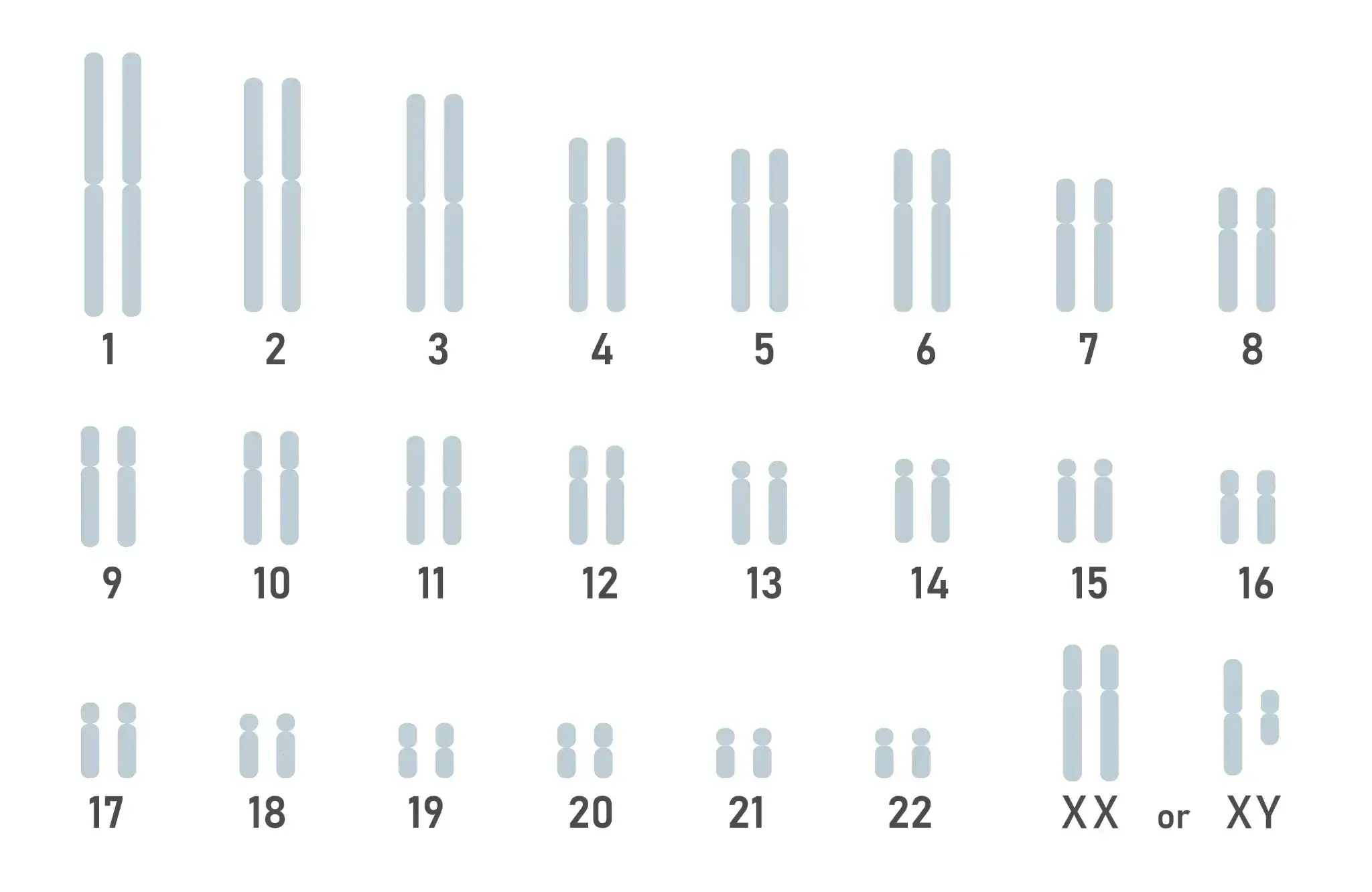
- ■
- ■
- ■
- ■
- ■
- ■
- ■
- ■
- ■
Related genes
| Related genes | LINC02571 |
|---|---|
| Related genes | ALAS2 |
| Related genes | ABCA6 |
| Related genes | ZPR1 |
Frequently asked questions (FAQ)
Q1. What is spherocytosis?
Spherocytosis is a genetic blood disorder in which red blood cells change from their normal double-concave disc shape to a spherical shape due to genetic defects in proteins in the red blood cell membrane (band 3 protein and protein 4.2).Spheroidized red blood cells are destroyed early in the spleen, causing symptoms such as hemolytic anemia, jaundice, and splenomegaly.
Q2. What is the cause of spherocytosis?
The cause isGenetic defects in band 3 protein and protein 4.2, which make up red blood cell membranesIt is. These proteins are essential for maintaining the shape and giving flexibility to red blood cells, and defects cause red blood cells to become spherical and prematurely destroyed in the spleen.
Q3. Is spherocytosis related to genes?
Yes.A study by Vuckovic et al. from the University of Cambridge (2020, published in Cell) found that the DNA region rs113021938 is associated with the risk of spherocytosis.There are three genotypes of rs113021938: TT, TG, and GG, and people with the T mutation genotype tend to be at higher risk.
Q4. What treatments are available for spherocytosis?
Treatment depends on severity.In mild cases, nutritional support therapy such as folic acid supplementation or drug therapyIt can be managed with.In severe cases, splenectomy (splenectomy)Splenectomy can prevent early destruction of red blood cells and fundamentally improve anemia.
References
- Reference link 1: 2020 Sep., Dragana Vuckovic, Cell
- Reference link 2: 2016 Nov., William J Astle, Cell