
 Spatial comprehension ability

- Spatial comprehension ability is the cognitive ability to understand and manipulate shapes and figures.It is used in a wide range of fields such as architecture, medicine, and engineering.
- T-type mutation in DNA region rs3764030Research shows that people with
- such as chess and puzzlesImprove spatial skills through trainingpossible to
Overview Spatial ability refers to the ability to understand, recognize, and manipulate shapes and figures within a given space. This includes a variety of skills such as visualizing objects from different angles, understanding relationships between objects in space, solving puzzles and navigating environments, and interpreting maps and diagrams. People with high spatial abilities are good at imagining how objects would look if they were rotated, combined, or placed differently. This ability is used in a wide range of areas, from everyday life tasks to architecture, engineering, mathematics, art, and various scientific fields. For example, surgeons use spatial skills to understand the inside of the human body, architects design buildings, and mechanics understand how parts interact. Spatial abilities vary from person to person and can be improved with practice. Spatial skills can be developed through activities such as chess, jigsaw puzzles, and virtual reality games. Research by Kazantseva and colleagues at the Ufa Federal Research Center of the Russian Academy of Sciences revealed that spatial comprehension ability is associated with a DNA region called rs3764030. There are three genotypes in this DNA region: CC, CT, and TT, and it was found that people with the T genotype tend to have higher spatial comprehension abilities.
What is spatial comprehension ability?
Spatial comprehension ability is the cognitive ability to understand, recognize, and manipulate shapes and figures within a given space.It encompasses multiple spatial skills, such as visualizing the rotation and placement of objects, interpreting maps and diagrams, and solving puzzles.
Characteristics of people with high spatial comprehension ability
People with high spatial awareness are good at the following skills:
- Rotation image of object:Can accurately imagine how it will look from different angles
- Combination prediction:You can understand the result of changing the placement of parts.
- Understanding spatial relationships:Quickly recognize positional relationships between objects
- Navigation ability:You can accurately imagine the actual environment from maps and drawings.
Fields where spatial comprehension ability is utilized
Spatial comprehension ability is used in a wide range of areas, from everyday life to specialized fields.
| field | Usage example |
|---|---|
| surgical medical care | Understanding the three-dimensional structure inside the human body |
| architecture | Building design/space design |
| engineering | Understanding the interaction of mechanical parts |
| Mathematics/Science | Analysis of rotation and symmetry of figures |
| art | Creation of perspective and three-dimensional expression |
How to train spatial comprehension skills
Although there are individual differences in spatial comprehension ability,Can be improved with practiceIt is.
- Chess:Enhances spatial layout and strategic thinking across the board
- Jigsaw puzzle:Improved ability to recognize shapes and grasp positional relationships
- Virtual reality (VR) games:Training ability to operate in 3D space
- Block assembly:Strengthen understanding of 3D structure
Relationship between genes and spatial comprehension ability
Relationship between DNA region rs3764030 and spatial comprehension ability
A study by Kazantseva et al. (1) of the Ufa Federal Research Center of the Russian Academy of Sciences revealed that the DNA region rs3764030 is associated with spatial comprehension ability.
- There are three genotypes of rs3764030: CC, CT, and TT.
- Genotype with T-type mutation(CT/TT) people tend to have high spatial comprehension ability
Genotype distribution in Japanese (rs3764030)
| Genotype | Percentage of Japanese people | percentage of the world |
|---|---|---|
| CC type | 36.1% | 62.7% |
| CT type | 47.9% | 32.9% |
| TT type | 15.9% | 4.3% |
Japanese people have a high prevalence of type T mutation (CT+TT).63.8%This exceeds the world average of 37.2%, and there is a tendency for a high proportion of people to have a genotype with high spatial comprehension ability.
Rationale for testing
Physical DNA region: Spatial comprehension ability
The gene region that most strongly influences spatial comprehension ability is rs3764030. The distribution of isomorphic genotypes in Japan is as follows.
- CC
36.1 % - CT
47.9 % - TT
15.9 %
Basis for inspection
Research by Kazantseva and colleagues at the Ufa Federal Research Center of the Russian Academy of Sciences has revealed that spatial comprehension ability is linked to genes. There is a region called rs3764030 in the human genome, and there are two types of mutations, C and T, in the gene in this region.People with the T mutation tend to have better spatial comprehension abilitiesIt has been found that (1)
The DNA region investigated this time
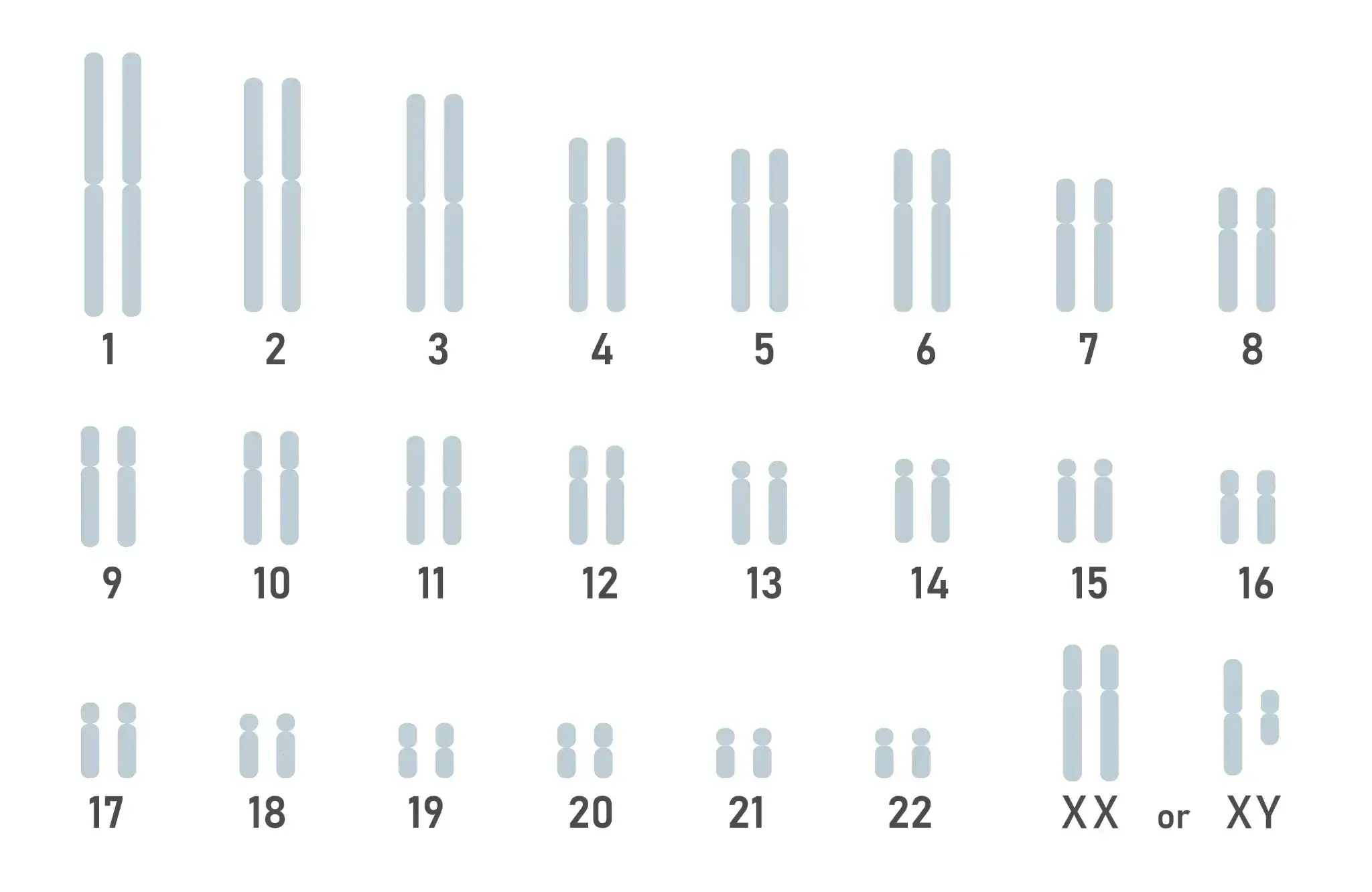
Schematic diagram of DNA map present in cells
- ■
- ■
- ■
- ■
- ■
- ■
- ■
- ■
- ■
Related genes
| Related genes | GRIN2B |
|---|
Frequently asked questions (FAQ)
Q1. What is spatial comprehension ability?
Spatial comprehension ability is the cognitive ability to understand, recognize, and manipulate shapes and figures within a given space.It encompasses multiple skills such as visualizing rotations and changes in the arrangement of objects, interpreting maps and diagrams, and solving puzzles. It is used in a wide range of fields including architecture, medicine, engineering, and art.
Q2. What is the relationship between spatial comprehension ability and genes?
According to research by Kazantseva et al. of the Russian Academy of Sciences,DNA region rs3764030 is associated with spatial comprehension abilityIt turns out. People with the T mutation genotype (CT/TT) tend to have high spatial comprehension abilities (1).
Q3. How can I improve my spatial comprehension skills?
Spatial comprehension abilityCan be improved with practiceIt is. Activities such as chess, jigsaw puzzles, virtual reality (VR) games, and block building can help strengthen spatial skills.
Q4. In what fields is spatial comprehension ability utilized?
Surgery, architecture, engineering, mathematics, art, scienceIt is used in a wide range of specialized fields. Surgeons use spatial skills to understand the insides of the human body, architects to design buildings, and mechanics to understand how parts interact.
References
- Reference link 1: 2021 Dec., A V Kazantseva, Vavilovskii Zhurnal Genet Selektsii