
 Smoking amount

- Smoking amount refers to the number of cigarettes consumed per day., influenced by genetic factors, environmental factors, psychological factors, sociocultural background, and public health policies.
- Type A mutation in DNA region rs1051730A study at the University of North Carolina found that people with
- The prevalence of type A mutation (GA+AA) in Japanese people is3.7%This is an extremely low percentage compared to the world average of 54.3%.
Overview Smoking amount is influenced by a variety of factors, including genetic, environmental, sociocultural, and psychological factors. Genetic Factors Some genetic variations affect how fast nicotine is metabolized and how addictive it is, which is directly related to how much you smoke. For example, genetic variations related to nicotine receptors can affect the number of cigarettes a smoker smokes per day. Environmental factors Home and work environments also influence how much you smoke. People tend to smoke more in environments where there are many smokers around them. Stressful environments and jobs can also increase smoking. Sociocultural Context Individuals may smoke more in cultures where smoking is socially accepted or where smoking is customary in certain social settings. For example, if smoking is common during certain rituals or social gatherings. Psychological factors Psychological issues such as stress, anxiety, and depression can also affect how much you smoke. Smoking may increase to relieve these feelings. Also, the degree of nicotine dependence has a large effect on the amount of smoking. Public Health Policies Policies such as increasing tobacco taxes and expanding smoke-free areas have the effect of reducing smoking. Strong smoking cessation programs can also help individuals reduce their smoking. A complex interplay of these factors determines how much an individual smokes. In order to take effective countermeasures, it is important to understand these factors comprehensively. A study by the Tobacco and Genetics Consortium at the University of North Carolina revealed that smoking amount is associated with a DNA region called rs1051730. There are three genotypes in this DNA region: GG, GA, and AA, and it was found that people with the A genotype tend to smoke more.
What is smoking amount?
Smoking consumption is a measure of the number of cigarettes an individual consumes per day.The amount of tobacco smoked is determined by a complex interplay of multiple factors, including genetic predisposition, living environment, mental status, cultural background, and policy.
5 factors that determine how much you smoke
The amount of smoking is not a single cause, but the following five factors interact to create individual differences.
- Genetic factors:Genetic mutations related to nicotine receptors affect nicotine metabolism rate and dependence, which in turn influences the number of cigarettes smoked per day
- Environmental factors:Smoking tends to increase in environments where there are smokers at home or at work.
- Psychological factors:Smoking increases to alleviate mental problems such as stress, anxiety, and depression.
- Sociocultural background:Individual smoking is likely to increase in cultures where smoking is a habit in social situations and rituals.
- Public health policy:Policies such as raising tobacco taxes and expanding non-smoking areas have the effect of reducing the amount of smoking.
Relationship between smoking amount and health risks
The amount you smoke has a direct correlation to your health risks. The table below shows the main health effects by smoking amount.
| Smoking amount (cigarettes/day) | Health effects | risk level |
|---|---|---|
| 1-10 pieces | Decreased lung function and increased risk of periodontal disease | medium |
| 11-20 pieces | 2-4 times higher risk of developing cardiovascular disease/COPD | expensive |
| 21 or more | Lung cancer risk 15-30 times that of non-smokers | extremely high |
Ways to reduce smoking
The following approaches can be used to effectively reduce smoking.
- Nicotine replacement therapy (NRT):Gradually reduce nicotine with patches, gum, inhalers, etc.
- Smoking cessation outpatient visit:Treatment with prescription drugs such as varenicline (Champix) improves smoking cessation success rates by two to three times.
- Cognitive behavioral therapy:Identify smoking triggers and build alternative behaviors
- Environmental improvement:Disposing of smoking materials, interacting with non-smokers, and avoiding smoking areas
Relationship between genes and smoking amount
Relationship between DNA region rs1051730 and smoking amount
Tobacco and Genetics at the University of North Carolina Consortium research has revealed that smoking amount is associated with the DNA region rs1051730.
- There are three genotypes of rs1051730: GG, GA, and AA.
- Genotype with type A mutationPeople with type GA and type AA tend to smoke more.
- This region is the nicotine receptor geneCHRNA3directly involved in nicotine metabolism
Comparison of genotype distribution in Japanese and the world (rs1051730)
| Genotype | Percentage of Japanese people | percentage of the world |
|---|---|---|
| GG type | 96.1% | 45.6% |
| GA type | 3.7% | 43.8% |
| AA type | 0.1%以下 | 10.5% |
The prevalence of type A mutation in Japanese people (GA+AA) is3.7%This is approximately 14.7 times lower than the world average of 54.3%. This suggests that genetic predispositions associated with increased smoking are distributed at extremely low rates in the Japanese population.
Rationale for testing
External DNA region: Smoking amount
The gene region that most strongly influences smoking intensity is rs1051730. The distribution of isomorphic genotypes in Japan is as follows.
- GG
96.1 % - GA
3.7 % - AA
0.1%以下
Basis for inspection
Tobacco and Genetics at the University of North Carolina A study by the Consortium found that the amount of smoking is linked to genes. There is a region called rs1051730 in the human genome, and there are two types of mutations, G and A, in the gene in this region. It was found that people with the type A mutation tend to smoke more.
The DNA region investigated this time
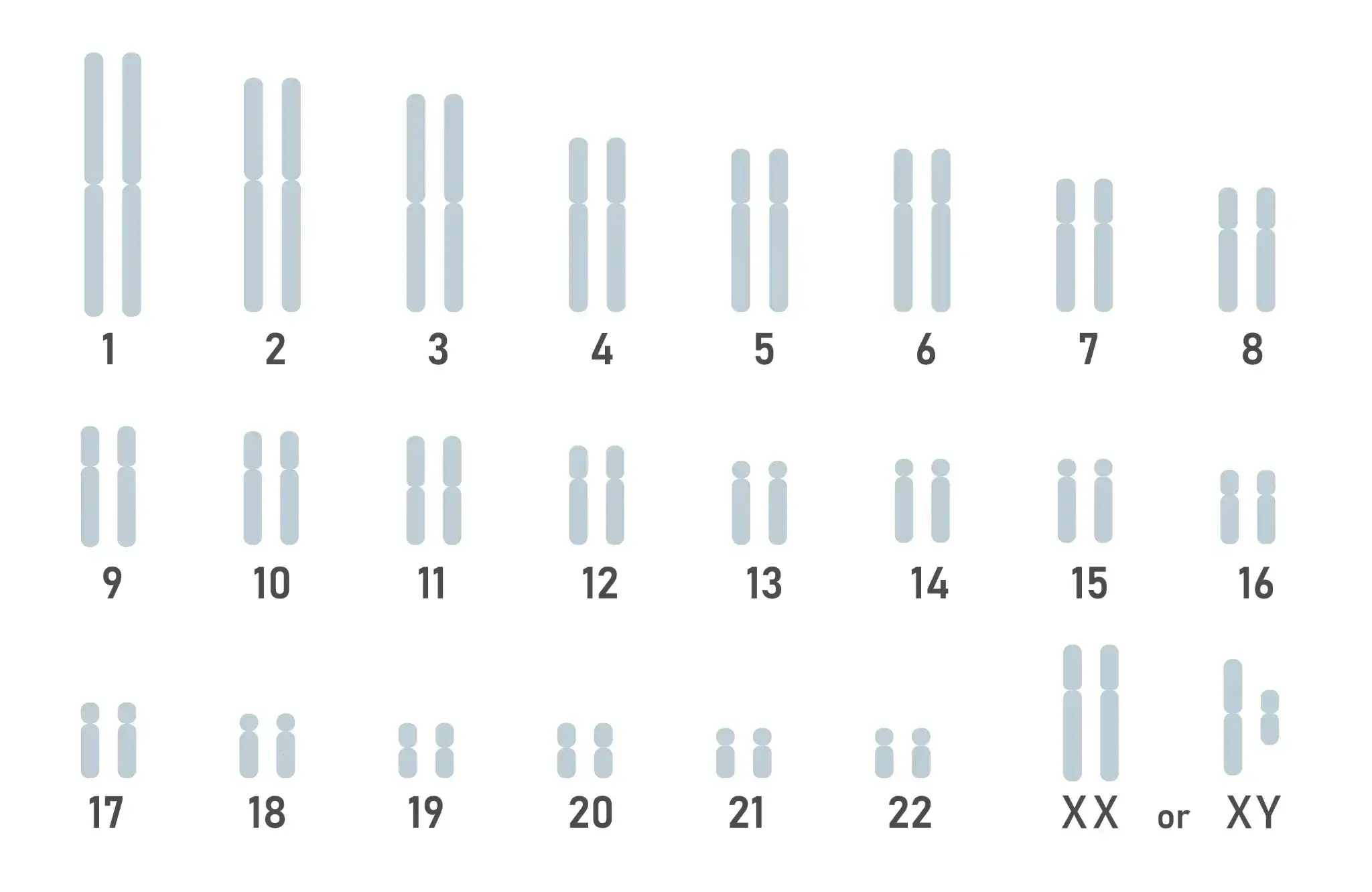
Schematic diagram of DNA map present in cells
- ■
- ■
- ■
- ■
- ■
- ■
- ■
- ■
- ■
Related genes
| Related genes | CHRNA3 |
|---|
Frequently asked questions (FAQ)
Q1. What is smoking amount?
Smoking consumption is a measure of the number of cigarettes an individual consumes per day.Five factors work together to determine the amount an individual smokes: genetic factors, environmental factors, psychological factors, sociocultural background, and public health policies. Genetic predisposition also has a direct bearing on how much you smoke, as genetic variations associated with nicotine receptors influence the rate of nicotine metabolism and dependence.
Q2. Is smoking amount related to genes?
Yes.Tobacco and Genetics at the University of North Carolina Consortium research has found that the DNA region rs1051730 is associated with smoking amount.There are three genotypes of rs1051730: GG, GA, and AA, and people with the genotype A mutation tend to smoke more.
Q3. What is the gene CHRNA3 that affects smoking amount?
CHRNA3 is a gene encoding the nicotinic acetylcholine receptor α3 subunit.Located on chromosome 15, it is involved in nicotine binding and signal transmission. Variations in this gene affect the degree of nicotine dependence and are one of the genetic bases for individual differences in smoking amount.
Q4. What is the distribution of the smoking amount genotype (rs1051730) in Japanese people?
The genotype distribution of rs1051730 in Japanese people isGG type 96.1%, GA type 3.7%, AA type 0.1%以下It is. Worldwide, 45.6% are GG, 43.8% GA, and 10.5% AA, and Japanese people have an extremely low prevalence of the A mutation compared to the world average.
References
- Reference link 1: 2010 May., Tobacco and Genetics Consortium, Nat Genet
- Reference link 2: 2010 May., Jason Z Liu, Nat Genet
- Reference link 3: 2010 May., Thorgeir E Thorgeirsson, Nat Genet