
 skin cancer
- Skin cancer is a malignant tumor that is broadly divided into three types: malignant melanoma, basal cell carcinoma, and squamous cell carcinoma.UV exposure is the biggest risk factor in
- Type A mutation in DNA region rs2776353Research at Osaka University reveals that people with the disease tend to have a higher risk of developing the disease
- appropriateUV protection, regular skin checks, early consultationIt is possible to improve the detection rate and prognosis by
Overview Skin cancer has different appearances depending on the type of cancer that occurs. The main types include malignant melanoma, basal cell carcinoma (BCC), and squamous cell carcinoma (SCC), each with different characteristics. Malignant melanoma is the most dangerous type and has an asymmetrical, mole-like appearance. The appearance of a mole is a mixture of black, brown, blue, or red, and its size, shape, and color may change over time. Basal cell carcinoma is a low-grade cancer characterized by a pearly bump or scar-like appearance. It mainly occurs in areas exposed to sunlight. Squamous cell carcinoma is characterized by the appearance of a red lump or scaly scab. It can occur all over the body, but it tends to occur in areas exposed to sunlight. If you notice any of these changes on your skin, you should see your doctor right away. A study by Sakaue et al. at Osaka University revealed that the risk of developing skin cancer is associated with a DNA region called rs2776353. There are three genotypes in this DNA region: AA, AT, and TT, and it was found that people with the A genotype tend to have a higher risk of skin cancer.
What is skin cancer?
Skin cancer is a malignant tumor that occurs when skin cells proliferate abnormally.It is mainly classified into three types: malignant melanoma (melanoma), basal cell carcinoma (BCC), and squamous cell carcinoma (SCC).
Differences between the three main types of skin cancer
| Comparison items | malignant melanoma | Basal cell carcinoma (BCC) | Squamous cell carcinoma (SCC) |
|---|---|---|---|
| malignancy | highest | low | medium |
| Appearance | Asymmetrical mole-shaped (mixture of black, brown, blue, and red) | Pearl-like bumps/scars | Red lump/scaly scab |
| Frequently occurring site | whole body skin | Sun-exposed areas (face/neck) | Mainly in areas exposed to sunlight (can occur all over the body) |
| Features | Changes in size, shape, and color over time | low metastasis rate | Infiltration into surrounding tissues |
Causes and risk factors of skin cancer
The following risk factors are involved in the development of skin cancer:
- Ultraviolet (UV) exposure:The biggest risk factor is repeated sunburn, which accumulates DNA damage in cells.
- Skin type:Fair-skinned skin that is prone to sunburn (Fitzpatrick classification I-II) is at high risk.
- Genetic predisposition:If you have a family history, your risk of developing the disease increases approximately 2-3 times.
- Immunosuppression:Risk increases approximately 65 times for people using immunosuppressants after organ transplant
- Aging:More common in middle-aged and elderly people due to increased cumulative UV radiation
Main symptoms of skin cancer and points for early detection
If you notice any of the following changes in your skin,Immediately consult a dermatologistMust be.
- Appearance and changes of moles with asymmetrical and irregular margins
- Pigment spots with uneven color (mixture of black, brown, blue, and red)
- A mole that grows larger than 6mm in diameter
- Appearance of nubs with pearly luster
- Ulcers or red lumps that don't heal well
ABCDE method(Asymmetry: Asymmetry, Border: Irregularity, Color: Uneven color, Diameter: Diameter: 6 mm or more, Evolving: Change) Self-checking is effective for early detection.
How to prevent skin cancer
The following measures can reduce the risk of developing the disease.
- sunscreenReapply (SPF 30 or higher) every 2 hours
- By wearing long sleeves, hat, and sunglassesphysical UV protection
- During the day from 10:00 to 14:00Avoiding direct sunlight
- once a monthFull body skin self-check
- More than once a yearSkin examination by a specialist
The relationship between genes and skin cancer
Relationship between DNA region rs2776353 and onset risk
A study by Sakaue et al. at Osaka University revealed that the DNA region rs2776353 is associated with the risk of developing skin cancer.
- There are three genotypes of rs2776353: AA, AT, and TT.
- Genotype with type A mutationpeople tend to be at higher risk of skin cancer
Genotype distribution in Japanese (rs2776353)
| Genotype | Percentage of Japanese people | percentage of the world |
|---|---|---|
| AA type | 40.8% | 41.7% |
| AT type | 46.1% | 45.7% |
| TT type | 13.0% | 12.5% |
Rationale for testing
Surface DNA region: skin cancer
The gene region most strongly associated with skin cancer is rs2776353. The distribution of isomorphic genotypes in Japan is as follows.
- AA
40.8 % - AT
46.1 % - TT
13.0 %
Basis for inspection
Research by Sakaue et al. at Osaka University revealed that the risk of developing skin cancer is related to genes. There is a region called rs2776353 in the human genome, and there are two types of mutations, A and T, in the gene in this region.People with the type A mutation tend to have a higher risk of skin cancerI found out that there is.
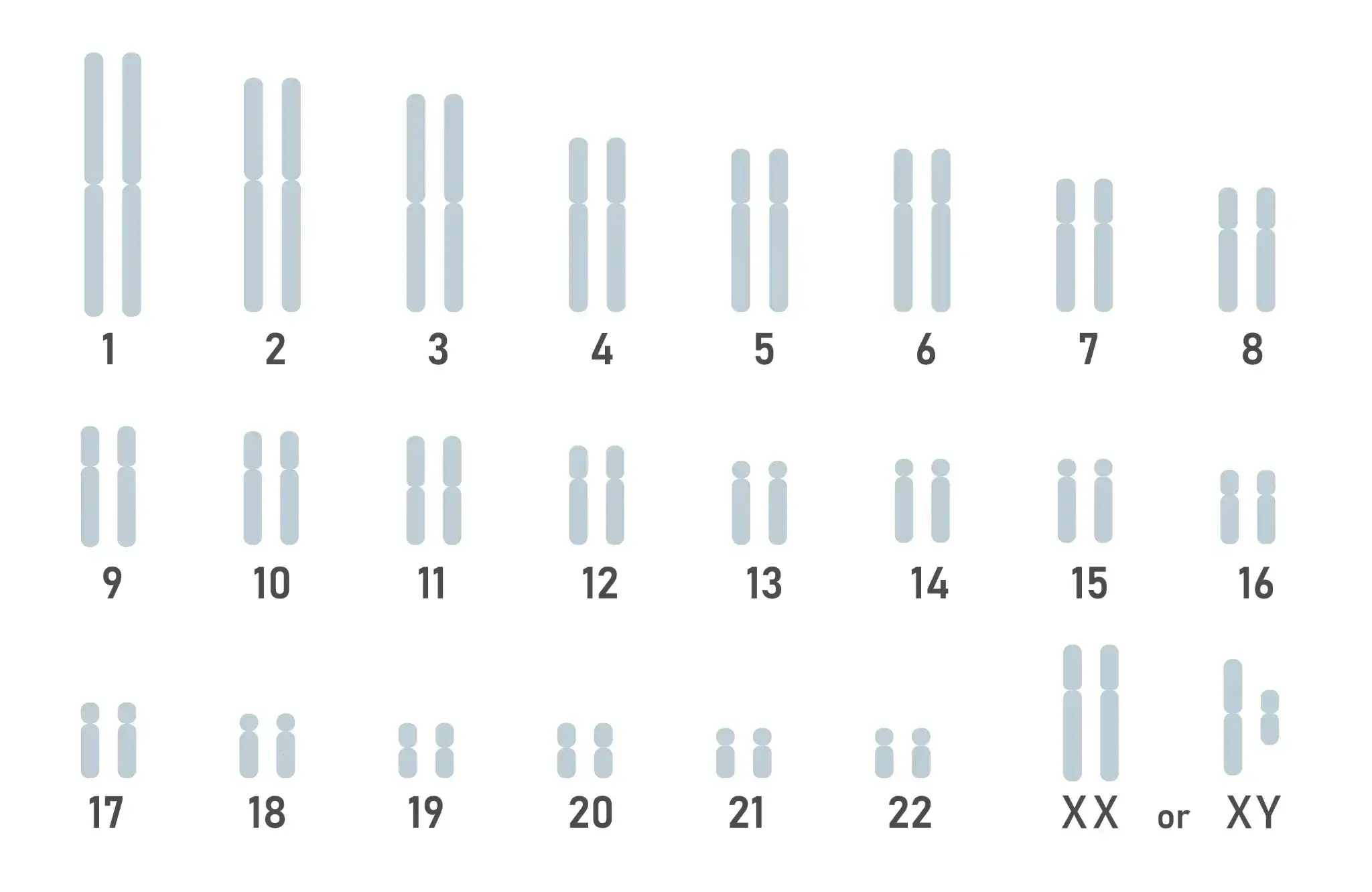
The DNA region investigated this time
Schematic diagram of DNA map present in cells
- ■
- ■
- ■
- ■
- ■
- ■
- ■
- ■
- ■
Related genes
| Related genes | PCSEAT |
|---|
Frequently asked questions (FAQ)
Q1. What is skin cancer?
Skin cancer is a malignant tumor that causes abnormal growth of skin cells.There are three main types: malignant melanoma, basal cell carcinoma (BCC), and squamous cell carcinoma (SCC), each of which differs in appearance, degree of malignancy, and location of occurrence.
Q2. What is the cause of skin cancer?
The biggest risk factor isExcessive exposure to ultraviolet (UV) radiationIt is. Repeated sun exposure, fair skin, immunosuppression, and genetic predisposition increase the risk of developing the disease. Carriers of type A mutation in the DNA region rs2776353 tend to be at higher risk.
Q3. What are the differences between the three types of skin cancer?
malignant melanoma isThe most dangerous and asymmetrical mole-shapedShows what it looks like. Basal cell carcinoma isLow-grade, pearl-like bumpsIt appears as . Squamous cell carcinoma appears as a red lump or scaly scab, and often occurs in areas exposed to sunlight.
Q4. Can genetic testing determine the risk of skin cancer?
By examining the genotype of DNA region rs2776353,Understand skin cancer risk trendsYou can. A study by Osaka University Sakaue et al. found that people with the type A mutation tend to be at higher risk.
Q5. How can I prevent skin cancer?
Use sunscreen (SPF30 or higher), wear long sleeves, and wear a hatUV protectionEffective preventive measures include avoiding direct sunlight between 10 a.m. and 2 p.m., and regular skin checks. If you notice any abnormal changes in your skin, please consult a dermatologist immediately.
References
- Reference link 1: 2021 Oct., Saori Sakaue, Nat Genet