
 Sclerosing cholangitis

- Sclerosing cholangitis is a progressive liver disease that causes narrowing of the bile ducts due to chronic inflammation and scarring.If left untreated, it progresses to cirrhosis and liver failure.
- G-type mutation in DNA region rs2836883A Wellcome Trust Sanger Institute study found that people with
- Although it is difficult to cure completely,Regular examinations, endoscopic treatment, liver transplantationIt is possible to prevent complications and suppress the progression of the disease.
Overview Sclerosing cholangitis is a progressive liver disease that causes chronic inflammation and scarring of the bile ducts, leading to narrowing. This disease affects the bile ducts inside and outside the liver, obstructing the flow of bile. Bile is a digestive fluid that helps digest fats, but when its flow is blocked, bile can build up in the liver and eventually cause liver damage. Patients with sclerosing cholangitis exhibit various symptoms depending on the progress of the disease. There may be no symptoms in the early stages, but as the disease progresses, symptoms include jaundice (yellowing of the skin and eyes), itching (pruritus), weight loss, diarrhea due to fat malabsorption, abdominal pain, and fatigue. When it becomes severe, the risk of developing liver cirrhosis increases, which can lead to liver failure. Additionally, the risk of developing bile duct cancer and liver cancer increases. Diagnosis may include blood tests, MRI, ultrasound imaging, liver biopsy (removal of liver tissue by inserting a needle into the abdomen for examination), and cholangiography. Although sclerosing cholangitis cannot be completely cured, it is possible to understand the symptoms through treatment and tests, prevent complications, and slow the progression of the disease. A study by Ji et al. at the Wellcome Trust Sanger Institute revealed that the risk of developing sclerosing cholangitis is associated with a DNA region called rs2836883. There are three genotypes in this DNA region: GG, AG, and AA, and it was found that people with the G genotype tend to have a higher risk of developing sclerosing cholangitis.
What is sclerosing cholangitis?
Sclerosing cholangitis is a progressive liver disease in which chronic inflammation and scarring (fibrosis) of the bile ducts narrows them and blocks the flow of bile.It affects the bile ducts inside and outside the liver, and cholestasis causes liver damage.
Causes and mechanisms of sclerosing cholangitis
The exact cause of onset is unknownHowever, autoimmune disorders are thought to be the main cause. The following risk factors are involved:
- Autoimmune disorders:The immune system mistakenly attacks the bile ducts, causing chronic inflammation and fibrosis
- Genetic predisposition:Individuals with the G mutation in the DNA region rs2836883 have an increased risk.
- Complications with inflammatory bowel disease:Approximately 70-80% of patients have ulcerative colitis
- Common in men:The male to female ratio is approximately 2:1, and onset is concentrated in people in their 30s and 40s.
Main symptoms of sclerosing cholangitis
Asymptomatic in the early stagesHowever, as the disease progresses, the following symptoms may appear:
- jaundice(yellowing of the skin and eyes)
- Pruritus(Chronic itching)
- Diarrhea due to weight loss/fat malabsorption
- right upper abdominal pain
- chronic fatigue
Difference between sclerosing cholangitis and primary biliary cholangitis
| Comparison items | Sclerosing cholangitis (PSC) | Primary biliary cholangitis (PBC) |
|---|---|---|
| Faulty part | Large intrahepatic and extrahepatic bile ducts | Intrahepatic small bile duct |
| Prevalence gender | Male (male to female ratio approximately 2:1) | Female (male to female ratio approximately 1:9) |
| Age of onset | 30s to 40s | 40s to 60s |
| IBD merger | Approximately 70-80% | Rare |
| specific antibody | p-ANCA (approximately 60-80%) | Anti-mitochondrial antibodies (approximately 95%) |
| treatment | Endoscopic treatment/liver transplantation | Ursodeoxycholic acid |
Complication risk of sclerosing cholangitis
Without proper treatment, there is a risk of developing the following complications:
- liver cirrhosis(Hepatic fibrosis due to chronic liver damage)
- liver failure(loss of liver function)
- bile duct cancer(The risk of developing bile duct cancer is approximately 400 times that of the general population)
- Gallbladder stones/bile duct stones
- fat-soluble vitamin deficiency(Maorabsorption of vitamins A, D, E, and K)
Diagnostic method
It is diagnosed by the following tests.
- Blood test:Confirmed increase in ALP/γ-GTP
- MRCP (MR cholangiopancreatography):Image confirmation of bile duct stricture and dilation patterns
- ERCP (endoscopic retrograde cholangiopancreatography):Cholangiography and treatment performed simultaneously
- Liver biopsy:Pathological evaluation of liver tissue
- Ultrasound examination:Screening for structural abnormalities in the bile duct
Relationship between genes and sclerosing cholangitis
Relationship between DNA region rs2836883 and onset risk
A study by Ji et al. at the Wellcome Trust Sanger Institute found that the DNA region rs2836883 was associated with the risk of developing sclerosing cholangitis.
- There are three genotypes of rs2836883: GG, GA, and AA.
- Genotype with type G mutationpeople tend to be at higher risk of sclerosing cholangitis
Genotype distribution in Japanese (rs2836883)
| Genotype | Percentage of Japanese people | percentage of the world |
|---|---|---|
| GG type | 69.9% | 55.6% |
| GA type | 27.3% | 37.9% |
| AA type | 2.6% | 6.4% |
Rationale for testing
Superficial DNA region: Sclerosing cholangitis
The gene region that most strongly affects sclerosing cholangitis is rs2836883. The distribution of isomorphic genotypes in Japan is as follows.
- GG
69.9 % - GA
27.3 % - AA
2.6 %
Basis for inspection
A study by Ji et al. at the Wellcome Trust Sanger Institute revealed that the risk of developing sclerosing cholangitis is linked to genes. There is a region called rs2836883 in the human genome, and there are two types of mutations, G and A, in the gene in this region.People with type G mutations tend to be at higher risk of sclerosing cholangitisI found out that there is.
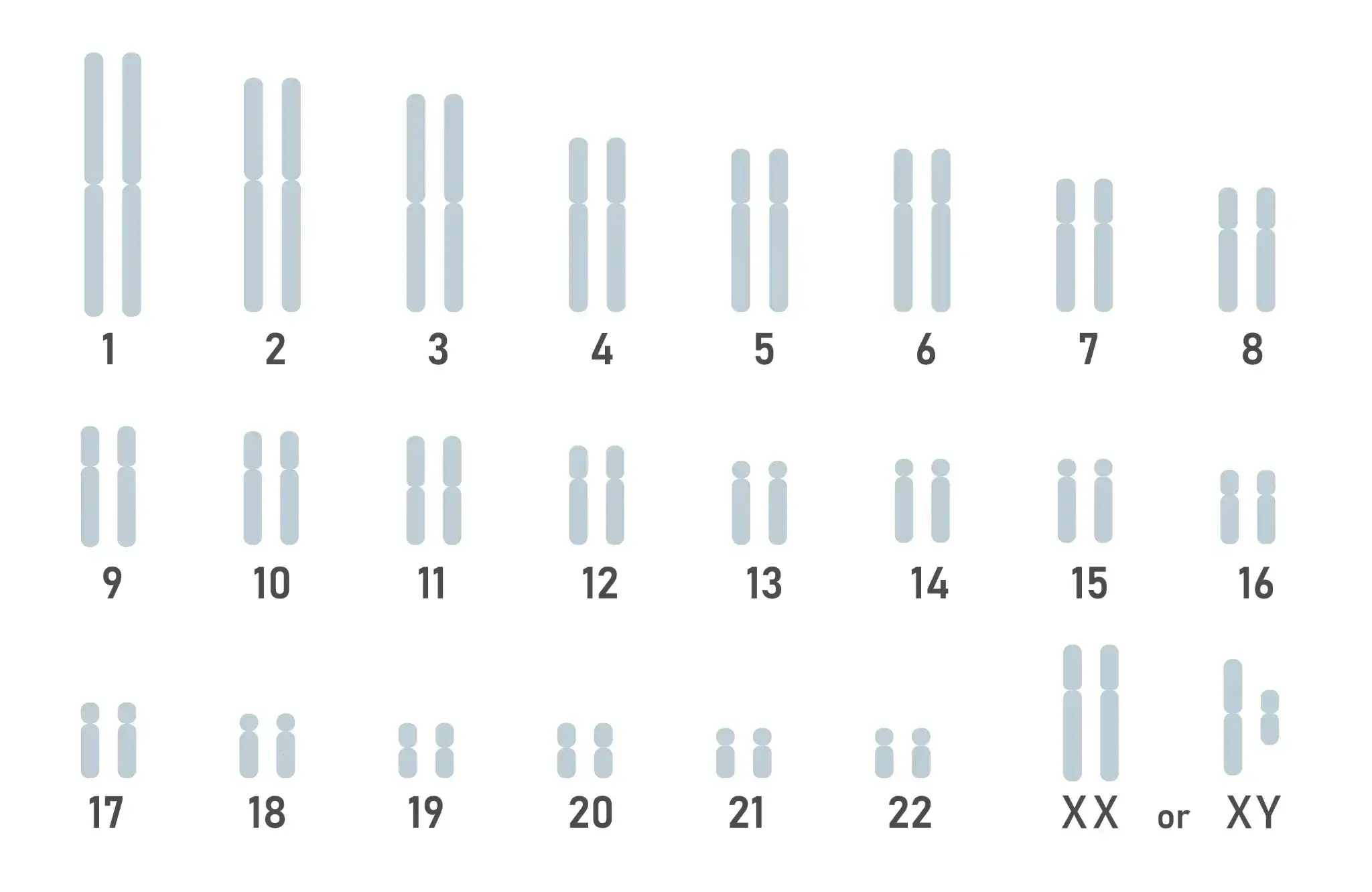
The DNA region investigated this time
Schematic diagram of DNA map present in cells
- ■
- ■
- ■
- ■
- ■
- ■
- ■
- ■
- ■
Related genes
| Related genes | LINC02940 |
|---|
Frequently asked questions (FAQ)
Q1. What is sclerosing cholangitis?
Sclerosing cholangitis is a progressive liver disease in which chronic inflammation and scarring (fibrosis) of the bile ducts narrows them and blocks the flow of bile.It affects the bile ducts inside and outside the liver, and if left untreated, there is a risk of progression to cirrhosis and liver failure.
Q2. What is the cause of sclerosing cholangitis?
The exact cause is unknown, butautoimmune disorderis considered to be the main factor. Genetic predisposition also plays a role, with people carrying the G mutation in the rs2836883 DNA region tend to be at higher risk.The complication rate with inflammatory bowel disease (especially ulcerative colitis) is approximately 70-80%.It is.
Q3. What is the difference between sclerosing cholangitis and primary biliary cholangitis?
Sclerosing cholangitis isInflammation and fibrosis in large bile ducts inside and outside the liverThis is a disease that occurs more commonly in men. Primary biliary cholangitis isDestruction of small intrahepatic bile ductsIt is a disease that often occurs in middle-aged women, and anti-mitochondrial antibodies are positive.
Q4. Can genetic testing determine the risk of sclerosing cholangitis?
By examining the genotype of the DNA region rs2836883,Understand the risk trend of developing sclerosing cholangitisYou can. A study by the Wellcome Trust Sanger Institute found that people with the genotype G tend to be at higher risk.
Q5. Can sclerosing cholangitis be cured?
at the momentNo drug therapy has been established to completely cure. Symptom relief with ursodeoxycholic acid and endoscopic bile duct dilation are performed, but there is no definitive treatment.liver transplant onlyIt is. It is possible to prevent complications and slow the progression of the disease through regular follow-up.
References
- Reference link 1: 2017 Feb., Sun-Gou Ji, Nat Genet