
 schizophrenia

- Schizophrenia is a mental illness characterized by hallucinations, delusions, and thought disorders.onset in late adolescence to early adulthood, with significant impact on social and occupational functioning.
- T-type mutation in DNA region rs1378559A study by the Psychiatric Genomics Consortium found that people with
- Combining antipsychotic drugs, psychotherapy, and rehabilitationcomprehensive treatmentcan help manage symptoms and improve quality of life
Overview Schizophrenia is a type of psychosis, a mental disorder that makes it difficult to distinguish between reality and unreality. The disease affects thoughts, emotions, and behavior and is characterized by hallucinations, delusions, and disordered thinking and behavior. Symptoms of schizophrenia can be broadly divided into three categories: positive symptoms, negative symptoms, and cognitive symptoms. Positive symptoms include hallucinations and delusions. Negative symptoms include difficulty in feeling pleasure, decreased motivation, avoidance of conversation, and decreased emotional expression. Cognitive symptoms affect the ability to think and process information, resulting in symptoms such as decreased concentration, poor judgment, and decreased memory, which can greatly interfere with daily life, work, and school. Schizophrenia typically begins in late adolescence or early adulthood and can have a significant impact on social and occupational functioning. Although the type and severity of symptoms varies from person to person, treatment usually includes antipsychotic medications and social support to care for symptoms and improve quality of life. Treatment for schizophrenia primarily uses antipsychotic drugs to reduce symptoms by adjusting the action of dopamine, a neurotransmitter in the brain. Psychotherapy is also provided to help patients understand their illness and learn skills to cope with symptoms, as well as rehabilitation to help them return to work. Although it is difficult to completely cure the condition with these treatments, it is possible to improve the quality of life with appropriate treatment and support. Research by the Psychiatric Genomics Consortium's Schizophrenia Working Group has revealed that the risk of developing schizophrenia is associated with a DNA region called rs1378559. There are three genotypes in this DNA region: TT, TC, and CC, and it was found that people with the T genotype tend to have a higher risk of schizophrenia.
What is schizophrenia?
Schizophrenia is a mental illness in which people have difficulty distinguishing between reality and unreality.It affects thoughts, emotions, and behavior, causing hallucinations, delusions, and disordered thinking and behavior. It begins in late adolescence and early adulthood and has a significant impact on social and occupational functioning (1).
Three symptom classifications of schizophrenia
Symptoms of schizophrenia are classified into three types:
| Symptom classification | Main symptoms | Impact on daily life |
|---|---|---|
| positive symptoms | hallucinations/delusions | Difficulty perceiving reality |
| negative symptoms | Decreased motivation, decreased emotional expression, avoidance of conversation | Social isolation/difficulty in interpersonal relationships |
| cognitive symptoms | Decreased concentration, impaired judgment, decreased memory | Interference with work, school, and daily life |
Causes and risk factors for schizophrenia
The development of schizophrenia involves a combination of genetic predisposition and environmental factors.
- Genetic factors:T-type mutation in DNA region rs1378559 is associated with risk (1)
- Neurotransmitter abnormalities:Abnormal functioning of the dopamine system in the brain
- Environmental factors:Severe stress, perinatal complications, and growing up in an urban area
- Developmental factors:Commonly occurs in late adolescence to early adulthood
Treatment and prognosis
Treatment of schizophrenia involves a combination of the following three approaches:
- Drug therapy:Dopamine regulation with antipsychotics reduces symptoms
- Psychotherapy:Learn understanding of illness and coping skills through cognitive behavioral therapy
- Rehabilitation:Support program for reintegration into society and work
Although a complete cure is difficult, it is possible to improve your quality of life with appropriate treatment and support.
The relationship between genes and schizophrenia
Relationship between DNA region rs1378559 and onset risk
A study by the Schizophrenia Working Group of the Psychiatric Genomics Consortium (1) found that the DNA region rs1378559 is associated with the risk of developing schizophrenia.
- There are three genotypes of rs1378559: TT, TC, and CC.
- Genotype with T-type mutation (TT type/TC type)people tend to be at higher risk of schizophrenia
Genotype distribution in Japanese (rs1378559)
| Genotype | Percentage of Japanese people | percentage of the world |
|---|---|---|
| TT type | 44.1% | 75.1% |
| TC type | 44.5% | 23.1% |
| CC type | 11.2% | 1.7% |
Association between DNA region rs72934570 and schizophrenia
rs72934570 is also a DNA region associated with schizophrenia.
- There are three genotypes of rs72934570: CC, CT, and TT.
- In Japanese, CC type accounts for 99.9%, and CT type and TT type are almost never confirmed.
- Globally, 86.8% are CC type, 12.6% are CT type, and 0.4% are TT type.
Rationale for testing
Surface DNA region: schizophrenia
The gene region most strongly associated with schizophrenia is rs1378559. The distribution of isomorphic genotypes in Japan is as follows.
- TT
44.1 % - TC
44.5 % - CC
11.2 %
Another gene region associated with schizophrenia is rs72934570. The distribution of isomorphic genotypes in Japan is as follows
- CC
99.9 % - CT
0.1%以下 - TT
0.1%以下
Basis for inspection
Research by the Psychiatric Genomics Consortium's Schizophrenia Working Group has revealed that the risk of developing schizophrenia is linked to genes. There is a region called rs1378559 in the human genome, and there are two types of mutations, T and C, in the gene in this region. It was found that people with the T-type mutation tend to have a higher risk of schizophrenia.
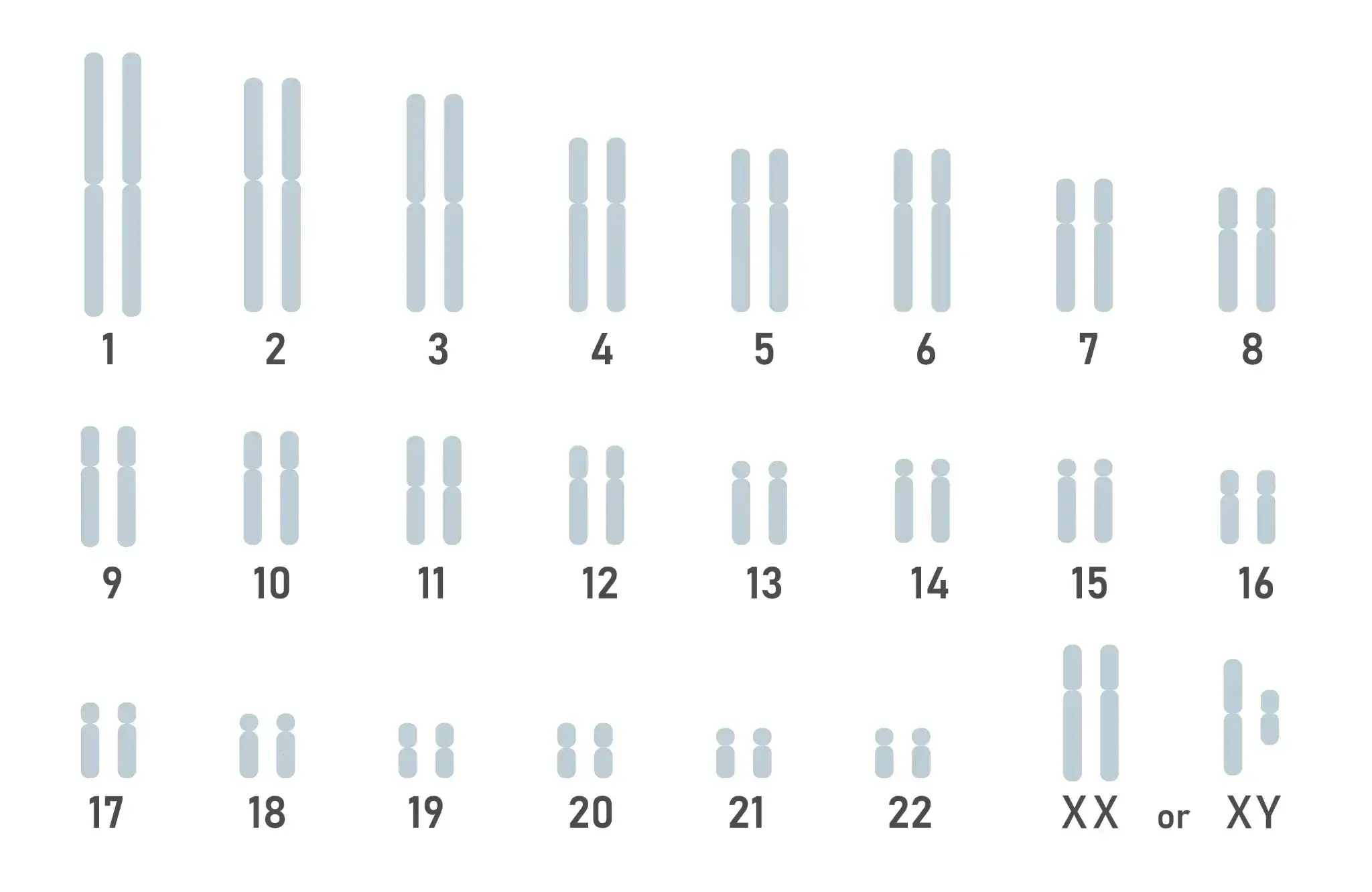
The DNA region investigated this time
Schematic diagram of DNA map present in cells
- ■
- ■
- ■
- ■
- ■
- ■
- ■
- ■
- ■
Related genes
| Related genes | RNU6-133P |
|---|---|
| Related genes | LINC01415 |
Frequently asked questions (FAQ)
Q1. What is schizophrenia?
Schizophrenia is a mental illness in which people have difficulty distinguishing between reality and unreality.It is characterized by hallucinations, delusions, and disordered thinking and behavior, and onset occurs between late adolescence and early adulthood. It has a significant impact on social and occupational functioning (1).
Q2. What is the cause of schizophrenia?
The main cause isA combination of genetic predisposition and environmental factorsIt is. The T-type mutation in the DNA region rs1378559 is involved in the risk, and dysfunction of the dopamine system in the brain is deeply involved in the manifestation of symptoms (1).
Q3. Can genetic testing determine the risk of schizophrenia?
By examining the genotype of the DNA region rs1378559,Understanding trends in the risk of developing schizophreniaYou can. A study by the Psychiatric Genomics Consortium found that people with the T mutation genotype (TT type and TC type) tend to be at higher risk (1).
Q4. What treatments are available for schizophrenia?
Drug therapy with antipsychotic drugs, psychological therapy such as cognitive behavioral therapy, and rehabilitation to support social reintegrationThere are three main treatments. Although a complete cure is difficult, it is possible to improve the quality of life with appropriate treatment and support.
References
- Reference link 1: 2014 Jul., Schizophrenia Working Group of the Psychiatric Genomics Consortium, Nature
- Reference link 2: 2019 Dec., Max Lam, Nat Genet
- Reference link 3: 2015 Dec., Fernando S Goes, Am J Med Genet B Neuropsychiatr Genet
- Reference link 4: 2022 Apr., Vassily Trubetskoy, Nature