
 Skeletal disease

- The risk of skeletal disease is determined by the blood concentration of alkaline phosphatase (ALP) and the genotype of the DNA region rs9533095.related to
- 86.3% of Japanese people are type GGand tend to have lower ALP blood levels.
- Total of 7 DNA regions and 6 related genes(LINC02341, LARP1B, RUNX1, SLC17A1, ST8SIA3, AXIN1) is involved in skeletal diseases
Overview Do you know the term “biomarker”? Blood pressure, electrocardiogram, and blood sugar levels measured during health checkups are also used as biomarkers. In recent years, it has also been used to determine whether cancer has recurred or metastasized, and various biomarkers have been identified for each type of cancer. Among these, a type of enzyme called alkaline phosphatase is used as a biomarker for liver cancer and osteosarcoma. It is known that alkaline phosphatase is released into the blood in large amounts when there are abnormalities in liver function or bones. However, biomarkers including alkaline phosphatase have problems with sensitivity and specificity, and cannot determine the presence or absence of a disease with 100% certainty. (Sensitivity here refers to the rate at which a test can correctly identify people who are sick, and specificity refers to the rate at which a test can correctly identify people who are not sick.) Biomarkers are influenced not only by the disease but also by genes, so it is known that genetic factors need to be taken into account to improve the accuracy of biomarkers. Why not take a genetic test to find out how your genetic type affects your biomarkers? 2. Rationale A research team at the University of Iceland investigated the relationship between the cancer biomarker alkaline phosphatase and the DNA sequence ``rs9533095'' of a specific gene ``LINC02341'' (Reference link 1). Genetic analysis confirmed a correlation between this specific DNA sequence and blood levels of alkaline phosphatase. A person's genetic information is determined by the sequence of A, T, G, and C base components. In "rs9533095", T may be replaced with G, and it was also found that when this replacement occurs, the blood concentration of alkaline phosphatase tends to decrease. This DNA region "rs9533095" is classified into three types: "TT type", "TG type", and "GG type". The genotype of this DNA region "rs9533095" in Japanese people is 0.5% "TT type", 13.2% "TG type", and 86.3% "GG type". In particular, the blood concentration of alkaline phosphatase in the GG type tends to decrease easily, and the blood concentration of alkaline phosphatase in the TG type tends to decrease slightly compared to the GG type (reference links 2 and 3). The GG type, which is the most common type among Japanese people, is known to affect biomarkers including alkaline phosphatase more than other types. 3. Mechanism of action The gene "LINC02341" is located on the 13th chromosome out of 46 human chromosomes. Although this gene does not serve as a blueprint for making proteins, it is known that it is involved in the production of RNA in the process of synthesis in the order of ``gene ⇒ RNA ⇒ protein.'' However, there are still many aspects of how this gene functions that are not yet understood, and in particular, it is not known how it functions in reducing alkaline phosphatase. What has been confirmed so far is that the gene "LINC02341" and its DNA region "rs9533095" are related, and that they are correlated with a decrease in alkaline phosphatase.
What are skeletal diseases?
Skeletal disease is a general term for diseases that occur in bones, joints, and cartilage, and includes osteosarcoma and osteoporosis.The blood concentration of the biomarker alkaline phosphatase (ALP) is used as an indicator for risk assessment of skeletal diseases.
What is alkaline phosphatase (ALP)? A biomarker for skeletal diseases
Alkaline phosphatase (ALP) is an enzyme used as a biomarker for liver cancer and osteosarcoma.It is. ALP has been confirmed to increase in the blood when there are abnormalities in liver function or bones.
| Item | Content |
|---|---|
| Name | Alkaline phosphatase (ALP) |
| type | Enzymes (biomarkers) |
| Purpose | Test indicators for liver cancer and osteosarcoma |
| Features | Blood concentration increases when liver function and bone abnormalities occur. |
| Challenge | Sensitivity and specificity are limited, and genetic factors must be considered |
Biomarkers have limits in sensitivity (the rate at which they can correctly identify people who are sick) and specificity (the rate at which they can correctly identify people who are not sick). Biomarkers including ALP are also influenced by genes, soConsideration of genetic factors is essential for improving accuracyIt is.
The relationship between skeletal diseases and genes - why genetic testing is important
A research team at the University of Iceland (reference link 1) has elucidated the relationship between ALP and the DNA region ``rs9533095'' of the gene ``LINC02341.''As a result of the research, the following points were found.
- Base sequence of DNA region rs9533095 and ALP blood concentrationcorrelationwas confirmed
- In rs9533095, T (thymine) may be replaced by G (guanine)
- When the substitution to type G occurs, the blood concentration of ALP increases.decreasing trendThere is
Genotype and characteristics of DNA region rs9533095
| Genotype | Percentage of Japanese people | Effect on ALP blood concentration |
|---|---|---|
| TT type | 0.5% | ALP concentration is standard |
| TG type | 13.2% | ALP concentration is slightly lower than that of GG type |
| GG type | 86.3% | ALP concentration tends to decrease |
Highest percentage among JapaneseGG type (86.3%)is a type that has a genetic influence on biomarkers including ALP.
Mechanism of action of LINC02341 gene
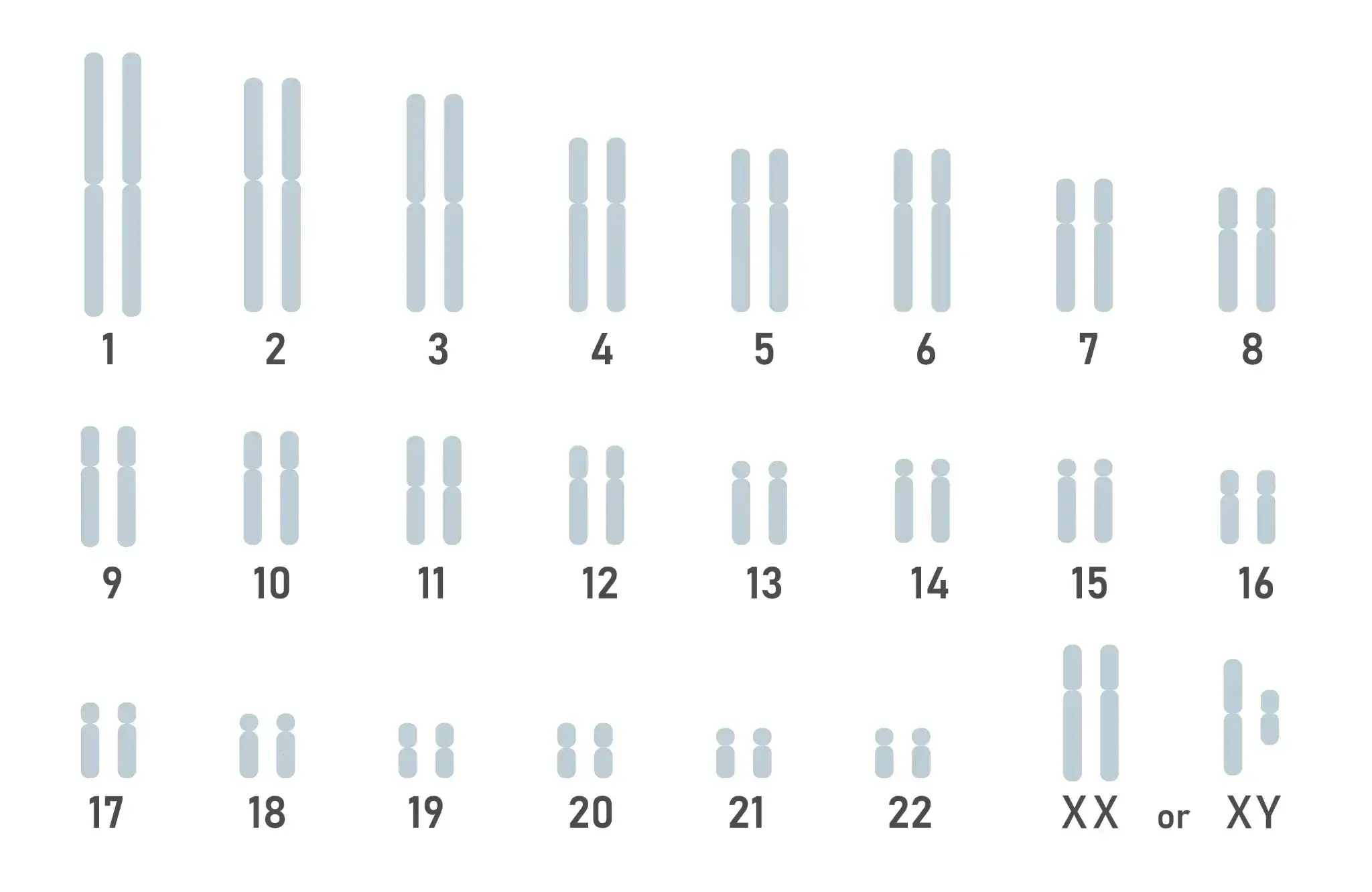
The LINC02341 gene is located on chromosome 13 of the 46 human chromosomes.The characteristics of this gene are as follows.
- Genes that directly encode proteinsNot
- In the process of synthesizing genetic information in the order of "gene → RNA → protein",Involved in RNA productionare doing
- How does it work to reduce ALP?Under researchis
- The association between LINC02341 and DNA region rs9533095 and the correlation with ALP reduction have been confirmed.
Measures to reduce the risk of skeletal diseases
In addition to genetic factors, the following lifestyle changes are effective in reducing the risk of skeletal diseases.
- Regular health checkup:Have a blood test including ALP value at least once a year
- Calcium and vitamin D intake:Supplement essential nutrients for maintaining bone density through meals and supplements
- Weight-bearing exercise:Walking and strength training three or more times a week are effective in improving bone density.
- No smoking/moderate drinking:Smoking and excessive drinking accelerate bone density loss
- Utilization of genetic testing:Understand your own genotype and take early prevention according to your risk.
Distribution data by genotype
Comparison of Japanese and global genotype distributions in seven DNA regions
A total of seven DNA regions are associated with skeletal diseases.The distribution of Japanese and global genotypes for each DNA region is shown below.
| DNA region | Genotype | Percentage of Japanese people | percentage of the world |
|---|---|---|---|
| rs9533095 | GG | 86.0% | 30.9% |
| GT | 13.3% | 49.3% | |
| TT | 0.5% | 19.6% | |
| rs13109814 | AA | 8.3% | 34.0% |
| AT | 41.0% | 48.6% | |
| TT | 50.6% | 17.3% | |
| rs2834963 | CC | 21.3% | 33.8% |
| CT | 49.7% | 48.6% | |
| TT | 28.9% | 17.5% | |
| rs3923 | TT | 42.7% | 14.7% |
| TC | 45.2% | 47.3% | |
| CC | 11.9% | 37.9% | |
| rs4092465 | AA | 59.9% | 15.5% |
| AG | 34.9% | 47.7% | |
| GG | 5.1% | 36.7% | |
| rs2301522 | AA | 38.4% | 11.2% |
| AG | 47.1% | 44.6% | |
| GG | 14.4% | 44.1% | |
| rs9533090 | CC | 87.8% | 31.5% |
| CT | 11.7% | 49.2% | |
| TT | 0.3% | 19.1% |
Rationale for testing
Surface DNA region: Skeletal system diseases
The gene region that most strongly affects skeletal diseases is rs9533095. The distribution of isomorphic genotypes in Japan is as follows.
- GG
86.0 % - GT
13.3 % - TT
0.5 %
Another gene region involved in skeletal diseases is rs13109814. The distribution of isomorphic genotypes in Japan is as follows
- AA
8.3 % - AT
41.0 % - TT
50.6 %
Another gene region involved in skeletal diseases is rs2834963. The distribution of isomorphic genotypes in Japan is as follows
- CC
21.3 % - CT
49.7 % - TT
28.9 %
Another gene region involved in skeletal diseases is rs3923. The distribution of isomorphic genotypes in Japan is as follows
- TT
42.7 % - TC
45.2 % - CC
11.9 %
Another gene region involved in skeletal diseases is rs4092465. The distribution of isomorphic genotypes in Japan is as follows
- AA
59.9 % - AG
34.9 % - GG
5.1 %
Another gene region involved in skeletal diseases is rs2301522. The distribution of isomorphic genotypes in Japan is as follows
- AA
38.4 % - AG
47.1 % - GG
14.4 %
Another gene region involved in skeletal diseases is rs9533090. The distribution of isomorphic genotypes in Japan is as follows
- CC
87.8 % - CT
11.7 % - TT
0.3 %
Basis for inspection
A research team at the University of Iceland has clarified the relationship between alkaline phosphatase (ALP), a biomarker for skeletal diseases, and the DNA region rs9533095 of the gene LINC02341. People with the GG type tend to have lower ALP blood levels, which has a genetic influence on the accuracy of biomarkers (1).
The DNA region investigated this time
Schematic diagram of DNA map present in cells
- ■
- ■
- ■
- ■
- ■
- ■
- ■
- ■
- ■
Related genes
| Related genes | LINC02341 |
|---|---|
| Related genes | LARP1B |
| Related genes | RUNX1 |
| Related genes | SLC17A1 |
| Related genes | ST8SIA3 |
| Related genes | AXIN1 |
| Related genes | LINC02341 |
Frequently asked questions (FAQ)
Q1. What is a skeletal disease?
Skeletal disease is a general term for diseases that occur in bones, joints, and cartilage.It is. Typical examples include osteosarcoma and osteoporosis. By measuring the blood concentration of the biomarker alkaline phosphatase (ALP), the risk of skeletal diseases can be assessed. ALP is an enzyme that increases in the blood when there are abnormalities in liver function or bones.
Q2. What is the relationship between alkaline phosphatase (ALP) and skeletal diseases?
Alkaline phosphatase (ALP) is an enzyme used as a biomarker for liver cancer and osteosarcoma.It is. ALP blood concentration increases when there is an abnormality in liver function or bones. Improving the accuracy of ALP requires consideration of genetic factors,People with the GG type in the DNA region rs9533095 tend to have lower ALP blood levels.There is.
Q3. What gene regions are associated with skeletal diseases?
The genetic region that most strongly influences skeletal diseases isrs9533095It is. In addition, rs13109814, rs2834963, rs3923, rs4092465, rs2301522, rs9533090Total of 7 DNA regionsis related. Related genes include LINC02341, LARP1B, RUNX1, SLC17A1, ST8SIA3, and AXIN1.
Q4. What is the distribution of genotypes related to skeletal diseases in Japanese people?
The genotype distribution of Japanese people in the DNA region rs9533095 isGG type 86.0%, GT type 13.3%, TT type 0.5%It is. Compared to the world average (GG type 30.9%, GT type 49.3%, TT type 19.6%), Japanese people are characterized by an extremely high proportion of GG type.
Q5. What measures can be taken to lower the risk of skeletal diseases?
Check your ALP level through regular health checkups, get enough calcium and vitamin D, and do weight-bearing exercise at least 3 times a week.is recommended. Quitting smoking and drinking alcohol in moderation are also effective in maintaining bone density. It is also effective to understand risk trends through genetic testing and take early preventive measures.
References
- Reference link 1: 2020 Jan., Sigurgeir Olafsson, Cancer Epidemiology, Biomarkers & Prevention.
- Reference link 2: Information on DNA region “rs9533095” GWAS Catalog
- Reference link 3: Information on DNA region “rs9533095” NIH
- Reference link 4: 2020 Jan., Sigurgeir Olafsson, Cancer Epidemiol Biomarkers Prev
- Reference link 5: 2021 May., Raha Pazoki, Nat Commun
- Reference link 6: 2021 Feb., Vincent L Chen, Nat Commun
- Reference link 7: 2021 Oct., Saori Sakaue, Nat Genet
- Reference link 8: 2020 Dec., Jonas B Nielsen, Nat Commun