
 retinal disease
- Retinal disease is a general term for diseases that cause abnormalities in the retina, such as glaucoma, diabetic retinopathy, and age-related macular degeneration.In severe cases, it can cause blindness.
- C-type mutation in DNA region rs1346786Erasmus Medical Center study finds that people with
- The prevalence of type C mutation (CC+CT) in Japanese people is36.2%, which is lower than the global average of 89.6%.
Overview Retinal disease is a disease in which there is some abnormality in the retina (located at the back of the eye and plays an important role in transmitting visual information to the brain). Typical retinal diseases include glaucoma, diabetic retinopathy, age-related macular degeneration, retinitis pigmentosa, and retinal damage, which in severe cases can lead to blindness. An important indicator in these diseases is the depth and width of the optic disc depression. An optic disc depression is a depression that forms where the optic nerve and retina connect. Although it is usually slightly depressed, disease can cause this depression to deepen, especially in association with retinal diseases such as glaucoma. Glaucoma is a condition in which the optic nerve is compressed by increased intraocular pressure, leading to progressive damage to the optic nerve and a depression in the optic disc. As this dent progresses, it causes visual impairment such as narrowing of the field of vision. For diagnosis, an ophthalmologist will perform a fundus examination to determine the depth and extent of the depression. We will also perform visual field tests and intraocular pressure measurements as needed. Optic disc depression is an important indicator for determining retinal disease, and early diagnosis and appropriate treatment can prevent visual impairment, so regular eye exams are important. Research by Springelkamp et al. at the Erasmus Medical Center revealed that the risk of developing retinal diseases is associated with a DNA region called rs1346786. There are three genotypes in this DNA region: CC, CT, and TT, and it was found that people with the C genotype tend to have a higher risk of retinal diseases.
What is retinal disease?
Retinal disease is a general term for diseases that cause some kind of abnormality to the retina, which is located at the back of the eye.The retina is an important tissue that transmits visual information to the brain, and abnormalities can lead to vision loss and blindness.
Typical types and characteristics of retinal diseases
There are several major types of retinal diseases, each with different causes and symptoms.
| Disease name | Main cause | Features |
|---|---|---|
| glaucoma | Optic nerve damage due to increased intraocular pressure | Gradual narrowing of visual field, the number one cause of blindness in Japanese people |
| diabetic retinopathy | Damage to retinal blood vessels due to hyperglycemia | Approximately 30-40% of diabetic patients develop |
| age-related macular degeneration | Macular degeneration due to aging | Decreased central vision, more common in people over 50 years old |
| retinitis pigmentosa | Degeneration of retinal cells due to genetic factors | Starts with night blindness and progresses to narrowed vision |
| retinal detachment | Trauma, aging, severe myopia | Floaters and photopsia are signs, emergency treatment is required. |
What is optic disc depression?
An optic disc depression is a depression that forms where the optic nerve and retina connect.Normally, the eye is slightly concave, but in cases of retinal diseases such as glaucoma, the optic nerve is compressed due to increased intraocular pressure, causing the concave to deepen.
- Normal condition:There is a slight dent (a C/D ratio of 0.3 or less)
- Abnormal condition:The depression deepens and spreads (glaucoma is suspected if the C/D ratio is 0.7 or higher)
- Diagnosis method:Check the depth and spread of the dent with fundus examination, along with visual field test and intraocular pressure measurement.
Optic disc depression is an important indicator for determining retinal diseases.Early detection through regular eye examsis essential for preventing visual impairment.
Relationship between genes and retinal diseases
Relationship between DNA region rs1346786 and retinal diseases
A study by Springelkamp et al. at the Erasmus Medical Center (2015, Genet Epidemiol) revealed that the risk of developing retinal diseases is associated with the DNA region rs1346786.
- There are three genotypes of rs1346786: CC, CT, and TT.
- Genotype with type C mutation(CC type/CT type) people tend to have a higher risk of retinal disease
- This gene region is related to the EFEMP1 gene
Comparison of genotype distribution in Japanese and the world (rs1346786)
| Genotype | Percentage of Japanese people | percentage of the world |
|---|---|---|
| CC type | 4.0% | 46.0% |
| CT type | 32.2% | 43.6% |
| TT type | 63.6% | 10.3% |
The prevalence of type C mutation (CC+CT) in Japanese people is36.2%, which is lower than the global average of 89.6%. On the other hand, the percentage of Japanese people with type TT is63.6%This is approximately 6.2 times higher than the world average of 10.3%, reflecting the genetic characteristics of the Japanese population.
Rationale for testing
Superficial DNA region: retinal disease
The gene region that most strongly affects retinal diseases is rs1346786. The distribution of isomorphic genotypes in Japan is as follows.
- CC
4.0 % - CT
32.2 % - TT
63.6 %
Basis for inspection
Research by Springelkamp et al. at the Erasmus Medical Center has revealed that the risk of developing retinal diseases is linked to genes. There is a region called rs1346786 in the human genome, and the gene in that region has two types of mutations, C and T. It was found that people with type C mutations tend to have a higher risk of retinal disease.
The DNA region investigated this time
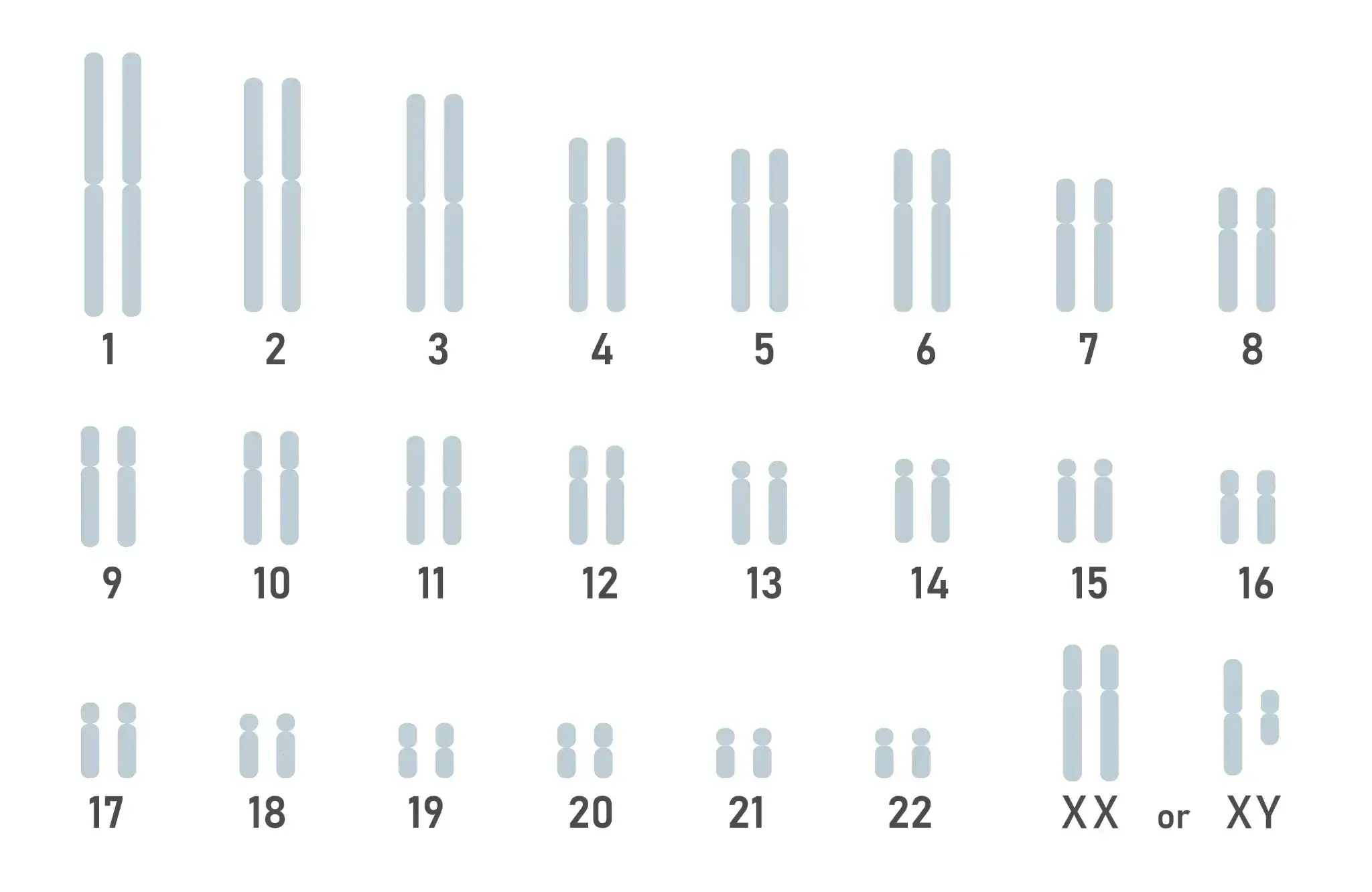
Schematic diagram of DNA map present in cells
- ■
- ■
- ■
- ■
- ■
- ■
- ■
- ■
- ■
Related genes
| Related genes | EFEMP1 |
|---|
Frequently asked questions (FAQ)
Q1. What is retinal disease?
Retinal disease is a general term for diseases that cause abnormalities in the retina located at the back of the eye.Typical diseases include glaucoma, diabetic retinopathy, age-related macular degeneration, retinitis pigmentosa, and retinal detachment. The retina is a tissue that transmits visual information to the brain, and as abnormalities progress, it can cause narrowing of the visual field and blindness.
Q2. What is the relationship between retinal diseases and genes?
According to a study by Springelkamp et al. (2015) at the Erasmus Medical Center,The DNA region rs1346786 was found to be associated with the risk of developing retinal diseases.There are three genotypes of rs1346786: CC, CT, and TT, and people with the C mutation genotype tend to be at higher risk.
Q3. What is the distribution of genotypes related to retinal diseases in Japanese people?
The genotype distribution of rs1346786 in Japanese people isCC type 4.0%, CT type 32.2%, TT type 63.6%It is. Worldwide, 46.0% are CC type, 43.6% are CT type, and 10.3% are TT type, and Japanese people have a characteristic that the proportion of TT type is about 6.2 times higher than the world average.
Q4. What is optic disc depression?
An optic disc depression is a depression that forms where the optic nerve and retina connect.Normally, the dents are mild, but in cases such as glaucoma, the dents become deeper due to increased intraocular pressure. This can be confirmed by fundus examination, and glaucoma is suspected if the C/D ratio is 0.7 or higher. Early detection through regular eye exams is essential to preventing visual impairment.
References
- Reference link 1: 2015 Mar., Henriët Springelkamp, Genet Epidemiol