
 Response to bronchodilators (FEV/FVC ratio)

- The response to bronchodilators (FEV/FVC ratio) is an index that shows how much lung function improves before and after administration of bronchodilators.and is essential for the diagnosis and treatment evaluation of asthma and COPD.
- Type A mutation in DNA region rs138607199A University of Colorado study found that people with bronchodilators are more likely to respond to bronchodilators.
- The prevalence of type GG among Japanese people is99.9%The distribution is almost the same as the world average of 99.5%.
Overview Bronchodilators are drugs that make breathing easier by dilating the bronchi, and are primarily used to treat respiratory diseases such as asthma and chronic obstructive pulmonary disease (COPD). These drugs relax the smooth muscles of the bronchi, making the airways less narrow, allowing the patient to move air in and out more efficiently. This effect also plays an important role in the evaluation of lung function. The indicators FVC (forced vital capacity) and FEV (volume in 1 second) are used to evaluate lung function. FVC refers to the total amount of air you can exhale when you inhale as much as possible and then exhale as quickly and forcefully as possible. FEV refers to the amount of air exhaled in the first second during the same exhalation movement. These two indicators are important for assessing various aspects of respiratory function, such as airway passage obstruction and lung elasticity. The effectiveness of bronchodilators can be evaluated by measuring FVC and FEV before and after using them. For example, when the bronchi are constricted, FVC and FEV decrease and the patient is unable to exhale air adequately. However, the use of bronchodilators is expected to widen the airways and improve FVC and FEV values. FEV is particularly important as an indicator that reflects airway obstruction, and improvement with bronchodilator drugs indicates that the drug is effective. A study by Lutz et al. at the University of Colorado revealed that the efficacy of bronchodilator drugs is associated with a DNA region called rs138607199. There are three genotypes in this DNA region: GG, GA, and AA, and it has been found that people with type A mutations tend to be more responsive to bronchodilators.
What is the response to bronchodilators (FEV/FVC ratio)?
The response to bronchodilators (FEV/FVC ratio) is an index that evaluates the degree to which the ratio of FEV (volume in 1 second) to FVC (forced vital capacity) improves before and after administration of bronchodilators.This index is used to diagnose and determine the effectiveness of treatments for respiratory diseases such as asthma and chronic obstructive pulmonary disease (COPD).
What is the role of bronchodilators?
Bronchodilators are drugs that relax the smooth muscles of the bronchi, reducing airway narrowing. It exhibits the following effects in the treatment of respiratory diseases.
- Airway dilation:Relaxes the smooth muscles of the bronchi and opens the airways
- Improved breathing:Allows patients to move air in and out more efficiently
- Target of treatment:Respiratory diseases such as asthma and COPD (chronic obstructive pulmonary disease)
What is the difference between FEV and FVC?
Two indicators are used to evaluate lung function: FVC and FEV. The differences are summarized below.
| indicators | definition | Measurement details |
|---|---|---|
| FVC (forced vital capacity) | Total amount of air exhaled with full force after maximum inhalation | Assess overall lung capacity |
| FEV (volume per second) | Amount of air exhaled in the first second | Reflects the degree of airway obstruction |
| FEV/FVC ratio | Ratio of FEV divided by FVC | Determine the presence and degree of airway obstruction |
When the bronchi are constricted, FVC and FEV decrease and air cannot be exhaled adequately. The use of bronchodilators is expected to widen the airways and improve the FEV/FVC ratio.FEV is particularly important as an index that reflects airway obstruction, and if improvement with bronchodilators is confirmed, it indicates the effectiveness of the drug.
Association between genes and response to bronchodilators
Relationship between DNA region rs138607199 and bronchodilator efficacy
A study by Lutz et al. at the University of Colorado (2015, BMC Genetics) revealed that the response to bronchodilators (FEV/FVC ratio) is associated with the DNA region rs138607199.
- There are three genotypes of rs138607199: GG, GA, and AA.
- Genotype with type A mutation(GA type/AA type) people tend to be more likely to see the effects of bronchodilators.
- Related genes are related to LINC00364
Comparison of genotype distribution in Japanese and the world (rs138607199)
| Genotype | Percentage of Japanese people | percentage of the world |
|---|---|---|
| GG type | 99.9% | 99.5% |
| GA type | 0.1%以下 | 0.4% |
| AA type | 0.1%以下 | 0.1%以下 |
The prevalence of type GG among Japanese people is99.9%This is almost the same as the world average of 99.5%. Type A mutations (GA and AA) are extremely rare in the Japanese population, and account for only 0.4% worldwide.
Genotypic distribution of other relevant DNA regions
| DNA region | Genotype | Percentage of Japanese people | percentage of the world |
|---|---|---|---|
| rs141008343 | TT type | 99.9% | 99.4% |
| TA type | 0.1%以下 | 0.5% | |
| AA type | 0.1%以下 | 0.1%以下 | |
| rs9978142 | AA type | 99.9% | 72.9% |
| AT type | 0.1%以下 | 24.9% | |
| TT type | 0.1%以下 | 2.1% | |
| rs1076135 | AA type | 9.7% | 33.2% |
| AT type | 42.9% | 48.8% | |
| TT type | 47.2% | 17.8% |
For rs1076135, the prevalence of TT type among Japanese people is47.2%This is approximately 2.7 times the world average of 17.8%, reflecting the genetic characteristics of the Japanese population. On the other hand, for rs9978142, AA type accounts for 99.9% of Japanese people, while the world average is 72.9%.
Rationale for testing
Surface DNA region: response to bronchodilators (FEV/FVC ratio)
The gene region that most strongly influences the response to bronchodilators (FEV/FVC ratio) is rs138607199. The distribution of isomorphic genotypes in Japan is as follows.
- GG
99.9 % - GA
0.1%以下 - AA
0.1%以下
Another gene region involved in the response to bronchodilators (FEV/FVC ratio) is rs141008343. The distribution of isomorphic genotypes in Japan is as follows
- TT
99.9 % - TA
0.1%以下 - AA
0.1%以下
Another gene region involved in the response to bronchodilators (FEV/FVC ratio) is rs9978142. The distribution of isomorphic genotypes in Japan is as follows
- AA
99.9 % - AT
0.1%以下 - TT
0.1%以下
Another gene region involved in the response to bronchodilators (FEV/FVC ratio) is rs1076135. The distribution of isomorphic genotypes in Japan is as follows
- AA
9.7 % - AT
42.9 % - TT
47.2 %
Basis for inspection
A study by Lutz et al. at the University of Colorado revealed that the response to bronchodilators (FEV/FVC ratio) is associated with genes. There is a region called rs138607199 in the human genome, and there are two types of mutations, G and A, in the gene in this region. They found that people with the G-type mutation tended to respond better to bronchodilators.
The DNA region investigated this time
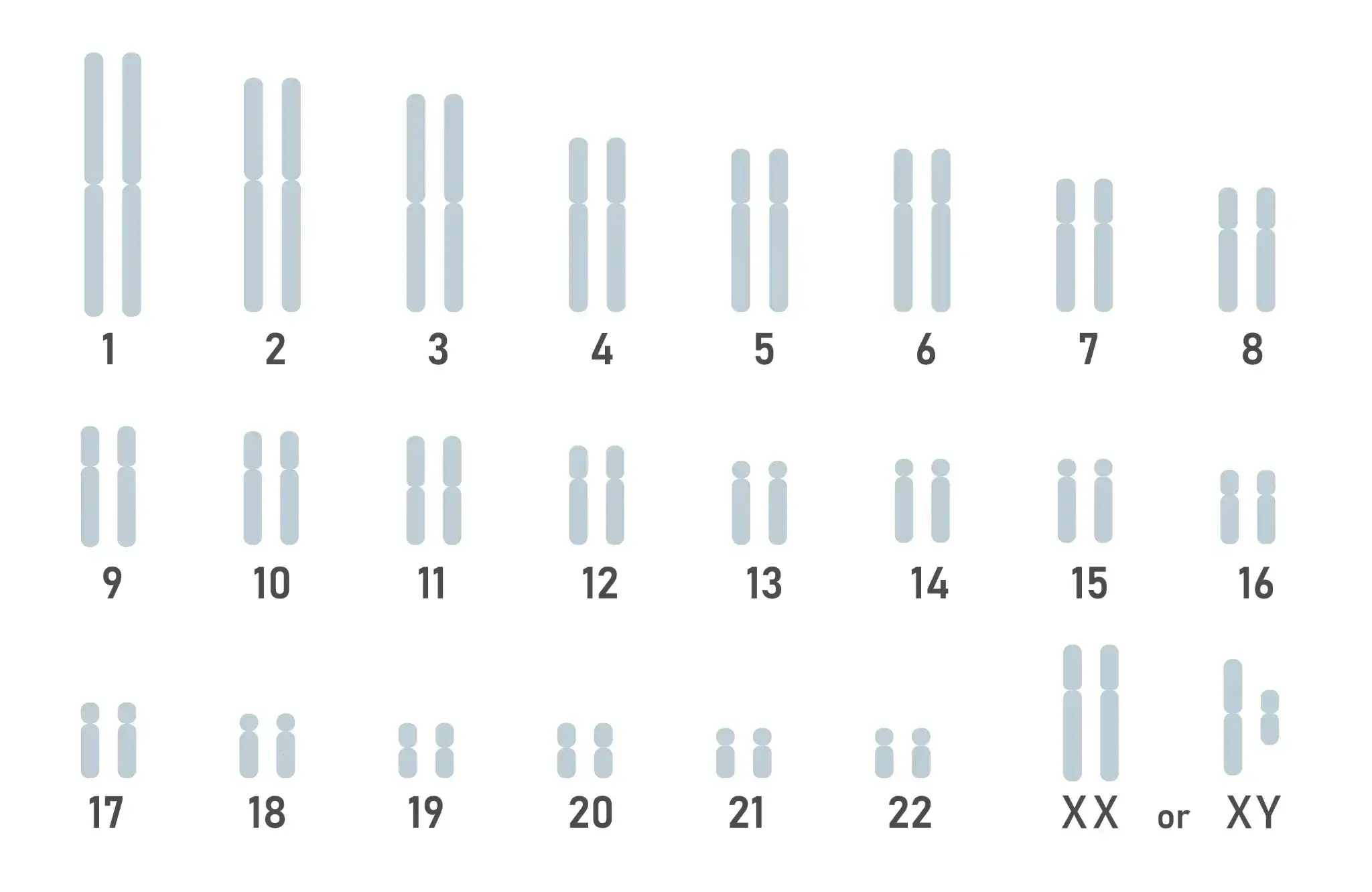
Schematic diagram of DNA map present in cells
- ■
- ■
- ■
- ■
- ■
- ■
- ■
- ■
- ■
Related genes
| Related genes | LINC00364 |
|---|---|
| Related genes | LINC00364 |
| Related genes | LINC00310 |
| Related genes | ASCC2 |
Frequently asked questions (FAQ)
Q1. What is the response to bronchodilators (FEV/FVC ratio)?
The response to bronchodilators (FEV/FVC ratio) is an index that evaluates the degree to which the ratio of FEV (volume in 1 second) to FVC (forced vital capacity) improves before and after administration of bronchodilators.In respiratory diseases such as asthma and COPD, this index is used to determine the reversibility of airway obstruction. An improvement in the FEV/FVC ratio indicates that the bronchodilator is effective.
Q2. Is response to bronchodilators related to genes?
Yes.A study by Lutz et al. at the University of Colorado (2015, BMC Genetics) found that the DNA region rs138607199 is associated with response to bronchodilators (FEV/FVC ratio).There are three genotypes of rs138607199: GG, GA, and AA, and people with the genotype A mutation tend to be more likely to respond to bronchodilators.
Q3. What is the difference between FEV and FVC?
FVC (forced vital capacity) is the total amount of air that you exhale with all your might after inhaling as much as you can.Pointing toFEV (volume in 1 second) is the amount of air exhaled in the first second of exhalation.It is. If the FEV/FVC ratio is low, airway obstruction is suspected, and the effectiveness of the drug is determined by whether this ratio improves after bronchodilator administration.
Q4. What is the distribution of the genotype (rs138607199) related to response to bronchodilators in Japan?
The genotype distribution of rs138607199 in Japanese people isGG type 99.9%, GA type 0.1%以下, AA type 0.1%以下It is. Worldwide, 99.5% are GG, 0.4% GA, and 0.1%以下 AA, and the prevalence of the A mutation among Japanese people is extremely low.
References
- Reference link 1: 2015 Dec., Sharon M Lutz, BMC Genet
- Reference link 2: 2011 Sep., María Soler Artigas, Nat Genet
- Reference link 3: 2023 Mar., Nick Shrine, Nat Genet
- Reference link 4: 2018 Jul., Kristin M Burkart, Am J Respir Crit Care Med