
 Good kidney function (creatinine)

- Creatinine is an important indicator for evaluating kidney filtration function., and elevated blood levels indicate the risk of decreased renal function and chronic kidney disease (CKD).
- G-type mutation in DNA region rs17786744A study at the University of Bristol found that people with diabetes tend to have a higher risk of kidney function decline.
- The prevalence of type AA in Japanese people is52.7%This is a high percentage compared to the world average of 35.7%.
Overview Creatinine levels are an important indicator of kidney health and overall kidney function. Creatinine is a waste product from the normal breakdown of muscle in the body and is normally filtered from the blood by the kidneys. Therefore, blood creatinine concentration is an important criterion for evaluating kidney function. In healthy individuals, the kidneys keep creatinine levels within a healthy range and effectively eliminate this waste from the blood. High levels of creatinine in the blood indicate that the kidneys are not functioning properly and are not filtering this waste as well. Conversely, extremely low levels are rare and may indicate other conditions, such as muscle loss or malnutrition. To assess kidney function, creatinine levels are measured in the blood. This information can be combined with factors such as age, gender, and body size to calculate creatinine clearance rate and estimated glomerular filtration rate (eGFR). These values provide detailed information about the kidney's filtration function. eGFR is widely used to grade kidney disease and is useful for disease diagnosis and treatment planning. A study by Richardson et al. at the University of Bristol revealed that the risk of kidney function evaluation (creatinine) is associated with a DNA region called rs17786744. There are three genotypes in this DNA region: AA, AG, and GG, and it has been found that people with the G genotype tend to have a higher risk of decreased kidney function.
What is good kidney function (creatinine)?
Creatinine is a waste product produced by the normal metabolic process of muscles and is a substance filtered and excreted from the blood by the kidneys.Blood creatinine concentration directly reflects the filtration function of the kidneys, so it is one of the most widely used indicators for evaluating kidney function.
What can we learn from creatinine levels?
A creatinine test is a basic blood test to numerically assess the state of kidney function. The meanings of high and low creatinine values are summarized below.
If your creatinine level is high
- Renal function decline:Indicates that the kidneys are not adequately filtering waste products
- Chronic kidney disease (CKD):Persistent high levels suggest progression of CKD
- Dehydration/muscle damage:Temporary increases may be caused by dehydration or rapid muscle damage
If your creatinine level is low
- Loss of muscle mass:Reflects loss of muscle mass due to aging and long-term bed rest
- Malnutrition:Insufficient protein intake may play a role
Difference between creatinine and eGFR
| Comparison items | creatinine | eGFR |
|---|---|---|
| definition | Direct measurement of waste product concentration in blood | Estimating renal filtration capacity from creatinine value |
| calculation element | Direct measurement by blood test | Creatinine + age + gender + physique |
| Purpose | Kidney function screening | CKD stage classification/treatment plan formulation |
| accuracy | Affected by muscle mass | More accurate by correcting individual differences |
eGFR (estimated glomerular filtration rate) is an index calculated by combining the creatinine value with age, gender, and physique.Kidney disease stagingis widely used. If eGFR is less than 60 mL/min/1.73m² for more than 3 months,Chronic kidney disease (CKD)is diagnosed.
Relationship between genes and kidney function (creatinine)
Relationship between DNA region rs17786744 and renal function
A study by Richardson et al. from the University of Bristol (published in PLoS Biol in 2022) revealed that renal function evaluation (creatinine) is associated with the DNA region rs17786744.
- There are three genotypes of rs17786744: AA, AG, and GG.
- Genotype with type G mutation(AG type/GG type) people tend to have a higher risk of renal function decline
- This gene region is related to the STC1 gene
Comparison of genotype distribution in Japanese and the world (rs17786744)
| Genotype | Percentage of Japanese people | percentage of the world |
|---|---|---|
| AA type | 52.7% | 35.7% |
| AG type | 39.7% | 48.0% |
| GG type | 7.5% | 16.1% |
The prevalence of type AA in Japanese people is52.7%This is approximately 1.5 times higher than the global average of 35.7%. On the other hand, the percentage of Japanese people with type GG is7.5%This is about half of the world average of 16.1%, and the Japanese population has a genetic characteristic of having a low prevalence of type G mutations.
Another related DNA region: rs4774940
Another gene region related to kidney function (creatinine)rs4774940has been identified. There are three genotypes of rs4774940: GG, GC, and CC.
| Genotype | Percentage of Japanese people | percentage of the world |
|---|---|---|
| GG type | 72.4% | 48.8% |
| GC type | 25.3% | 42.1% |
| CC type | 2.2% | 9.0% |
The prevalence of type GG among Japanese people is72.4%It is about 1.5 times higher than the world average of 48.8%, and the CC type2.2%This is about a quarter of the world average of 9.0%, indicating a genetic distribution unique to the Japanese population.
Rationale for testing
Surface DNA region: Good kidney function (creatinine)
The gene region that most strongly influences kidney function (creatinine) is rs17786744. The distribution of isomorphic genotypes in Japan is as follows.
- AA
52.7 % - AG
39.7 % - GG
7.5 %
Another gene region related to good kidney function (creatinine) is rs4774940. The distribution of isomorphic genotypes in Japan is as follows
- GG
72.4 % - GC
25.3 % - CC
2.2 %
Basis for inspection
A study by Richardson et al. at the University of Bristol revealed that the risk of kidney function evaluation (creatinine) is related to genes. There is a region called rs17786744 in the human genome, and there are two types of mutations, A and G, in the gene in this region. It was found that people with type A mutations tend to have a higher risk of decreased kidney function.
The DNA region investigated this time
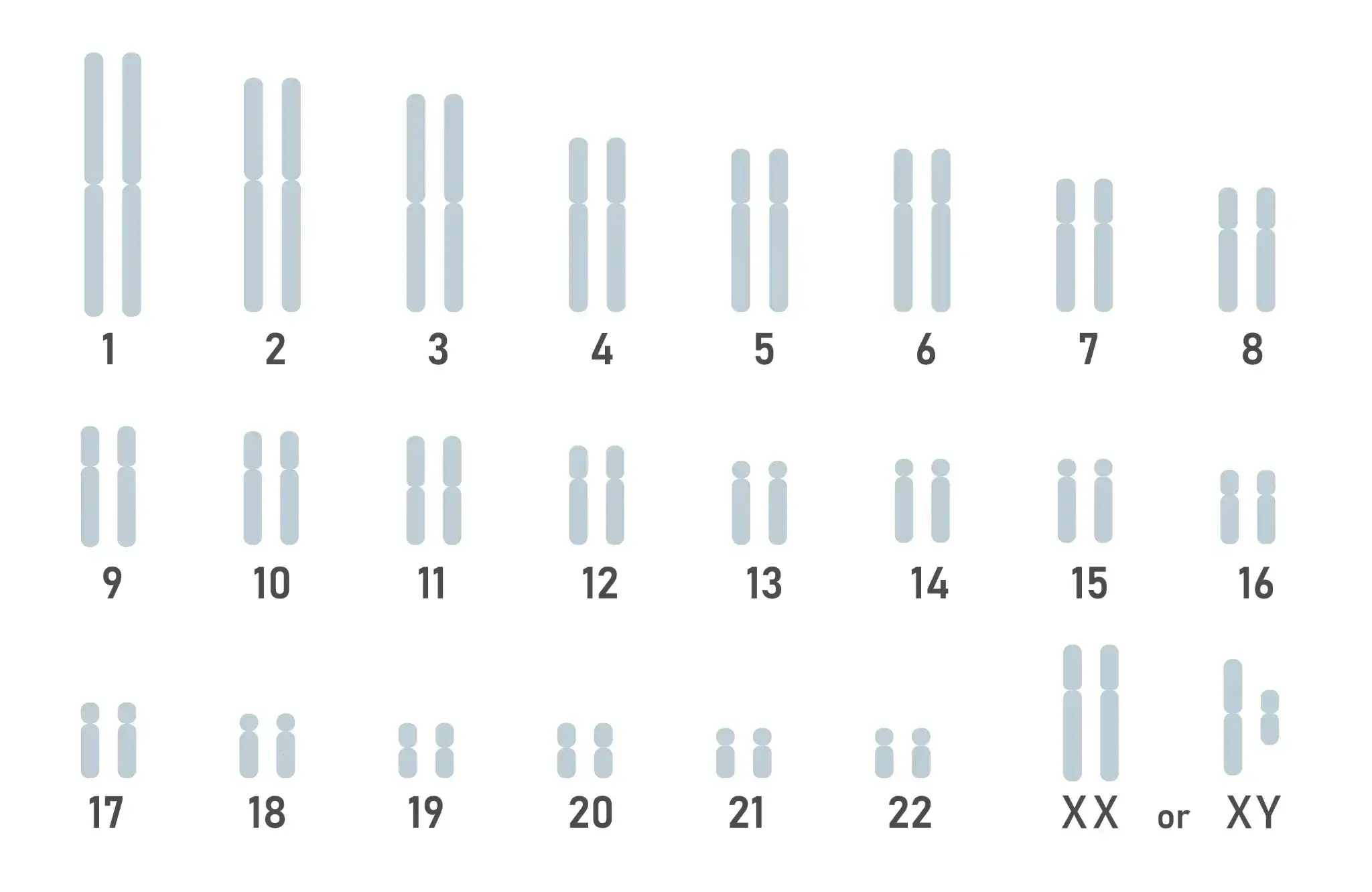
Schematic diagram of DNA map present in cells
- ■
- ■
- ■
- ■
- ■
- ■
- ■
- ■
- ■
Related genes
| Related genes | STC1 |
|---|---|
| Related genes | CGNL1 |
Frequently asked questions (FAQ)
Q1. What is creatinine? How does it relate to kidney function?
Creatinine is a waste product of muscle metabolism that is filtered and excreted from the blood by the kidneys.High blood creatinine levels indicate that the kidney's filtration function is impaired. Healthy kidneys maintain creatinine within a healthy range and effectively remove it from the blood. The eGFR (estimated glomerular filtration rate) is calculated by combining the creatinine value with age, gender, and physique, and is used to classify the stage of kidney disease.
Q2. Is good kidney function (creatinine) related to genes?
Yes.A study by Richardson et al. at the University of Bristol (2022, PLoS Biol) found that the DNA region rs17786744 is associated with renal function evaluation (creatinine).There are three genotypes of rs17786744: AA, AG, and GG, and people with the G-type mutation tend to have a higher risk of decreased kidney function.
Q3. What is the distribution of genotypes related to kidney function (rs17786744) in Japanese people?
The genotype distribution of rs17786744 in Japanese people isAA type 52.7%, AG type 39.7%, GG type 7.5%It is. Worldwide, 35.7% are type AA, 48.0% are type AG, and 16.1% are type GG, and the proportion of Japanese people with type AA is approximately 1.5 times higher than the world average.
Q4. What are the risks if the creatinine level is high?
When blood creatinine level exceeds the standard range,Chronic kidney disease (CKD), renal failure, hypertension, cardiovascular diseaseincreases the risk of It is important to monitor creatinine levels through regular blood tests and to detect and respond early.
Q5. What is the difference between eGFR and creatinine?
Creatinine is a value that directly measures the concentration of waste products in the blood.It is. eGFR (estimated glomerular filtration rate) is an index calculated by combining the creatinine value with age, gender, and body size, and allows for a more accurate evaluation of the kidney's filtration capacity. Chronic kidney disease (CKD) is diagnosed when eGFR is less than 60 mL/min/1.73 m² for more than 3 months.
References
- Reference link 1: 2022 Feb., Tom G Richardson, PLoS Biol
- Reference link 2: 2021 Feb., Nasa Sinnott-Armstrong, Nat Genet