
 Adolescent growth (height)

- Adolescent growth (height) is a period when the skeleton and muscles rapidly develop due to an increase in sex hormones and height increases.It peaks between ages 12 and 15 for men and between ages 10 and 14 for women.
- G-type mutation in DNA region rs3118906A study at the University of Helsinki found that people with this age tend to grow faster during adolescence
- The prevalence of type GG among Japanese people is94.3%This is a high percentage compared to the world average of 54.0%.
Overview Puberty is a critical period in growth, involving not only a rapid increase in height but also a variety of biological changes. It is mainly stimulated by an increase in sex hormones and affects skeletal and muscle growth. Males generally experience a growth spurt later than females, and may peak between the ages of 12 and 15. During this peak, you can grow up to 4 inches (about 10 centimeters) per year. Females typically begin their growth spurt between the ages of 10 and 14, with peak growth of about 3.5 inches (about 9 centimeters) per year. However, growth during puberty involves not only height, but also various factors such as the development of secondary sexual characteristics, changes in body composition, and maturation of reproductive organs. The timing and speed of these changes vary from person to person and are influenced by genetics, nutritional status, and health status. A study by Cousminer et al. at the University of Helsinki revealed that growth (height) during puberty is associated with a DNA region called rs3118906. There are three genotypes in this DNA region: GG, GA, and AA, and it was found that people with the G genotype tend to grow faster during adolescence.
What is pubertal growth (height)?
Adolescent growth (height) is a biological phenomenon in which the skeleton and muscles rapidly develop due to an increase in sex hormones, leading to a rapid increase in height.The interaction between growth hormone and sex hormones (estrogen and testosterone) promotes bone formation in epiphyseal cartilage.
Gender differences in adolescent growth
There are clear differences in height growth during adolescence between men and women. Specific data is shown below.
| Comparison items | men | woman |
|---|---|---|
| Age at which growth spurt starts | Around 12 years old | Around 10 years old |
| peak age | 12-15 years old | 10-14 years old |
| Annual growth at peak | Maximum approximately 10cm (4 inches) | Approximately 9cm (3.5 inches) |
| Growth completion period | Around 17-18 years old | Around 15-16 years old |
Changes involved in adolescent growth
Growth during puberty includes not only growth in height, but also the following biological changes:
- Development of secondary sexual characteristics:Physical changes associated with increased secretion of sex hormones
- Changes in body composition:Increase in muscle mass, change in body fat distribution
- Skeletal growth:Increase in bone density, development of epiphyses
- Reproductive organ maturation:Development and maturation of reproductive function
Factors influencing height growth during adolescence
Multiple factors are involved in height growth during adolescence.
| factor | degree of influence | Specific content |
|---|---|---|
| genetics | 60〜80% | Parents' height and genotype have the greatest influence |
| nutrition | expensive | Adequate intake of protein, calcium, and vitamin D is necessary |
| sleep | expensive | Growth hormone secretion increases during deep sleep |
| exercise | medium | Moderate exercise promotes growth hormone secretion |
| health condition | medium | Chronic diseases and endocrine abnormalities affect growth |
The relationship between genes and adolescent growth
Relationship between DNA region rs3118906 and height growth during adolescence
A study by Cousminer et al. at the University of Helsinki revealed that pubertal growth (height) is associated with the DNA region rs3118906.
- There are three genotypes of rs3118906: GG, GA, and AA.
- Genotype with type G mutationPeople with type GG and type GA tend to grow faster in height during adolescence.
Comparison of genotype distribution in Japanese and the world (rs3118906)
| Genotype | Percentage of Japanese people | percentage of the world |
|---|---|---|
| GG type | 94.3% | 54.0% |
| GA type | 5.6% | 38.9% |
| AA type | 0.1%以下 | 7.0% |
The G mutation prevalence rate (GG+GA) in Japanese people is99.9%, which is higher than the global average of 92.9%. In particular, the prevalence of type GG is 94.3%, approximately 1.7 times higher than the world average of 54.0%, suggesting that the genetic predisposition to rapid height growth during adolescence is more widely distributed in the Japanese population.
Role of DNA region rs7759938
Another important gene region, rs7759938, is also associated with pubertal growth.
Comparison of genotype distribution in Japanese and the world (rs7759938)
| Genotype | Percentage of Japanese people | percentage of the world |
|---|---|---|
| CC type | 6.9% | 10.3% |
| CT type | 38.9% | 43.6% |
| TT type | 54.1% | 45.9% |
Rationale for testing
Physical DNA region: growth during puberty (height)
The gene region that most strongly influences growth (height) during adolescence is rs3118906. The distribution of isomorphic genotypes in Japan is as follows.
- GG
94.3 % - GA
5.6 % - AA
0.1%以下
Another gene region involved in pubertal growth (height) is rs7759938. The distribution of isomorphic genotypes in Japan is as follows
- CC
6.9 % - CT
38.9 % - TT
54.1 %
Basis for inspection
A study by Cousminer et al. at the University of Helsinki revealed that growth (height) during puberty is related to genes. There is a region called rs3118906 in the human genome, and there are two types of mutations, G and A, in the gene in that region. It was found that people with the G-type mutation tended to grow faster during adolescence.
The DNA region investigated this time
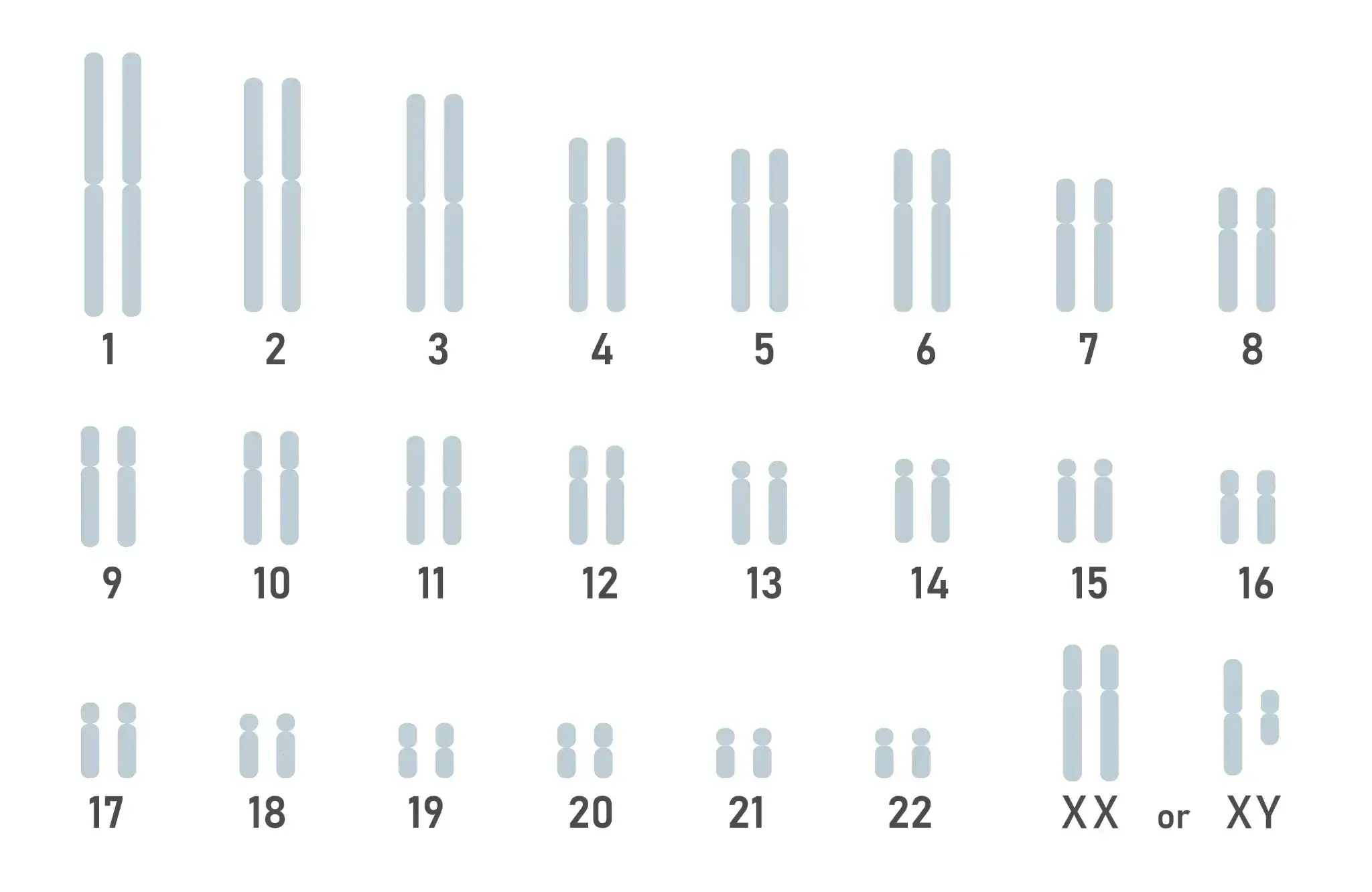
Schematic diagram of DNA map present in cells
- ■
- ■
- ■
- ■
- ■
- ■
- ■
- ■
- ■
Related genes
| Related genes | DLEU7 |
|---|---|
| Related genes | LIN28B-AS1 |
Frequently asked questions (FAQ)
Q1. What is pubertal growth (height)?
Adolescent growth (height) is a biological phenomenon in which the skeleton and muscles rapidly develop due to an increase in sex hormones, leading to a rapid increase in height.Males reach their peak height between the ages of 12 and 15, and females between the ages of 10 and 14, with a maximum increase in height of approximately 10 cm and 9 cm per year, respectively. Development of secondary sexual characteristics and changes in body composition also occur at the same time.
Q2. Are genes related to height growth during adolescence?
Yes.A study by Cousminer et al. at the University of Helsinki found that the DNA region rs3118906 is associated with height growth during adolescence.There are three genotypes of rs3118906: GG, GA, and AA, and people with the G mutation genotype tend to grow faster during adolescence.
Q3. What factors affect growth during adolescence?
Adolescent growth is influenced by genetics (60-80%), nutritional status, sleep, exercise, and health status.In particular, it is important to intake enough protein, calcium, and vitamin D, and to ensure deep sleep that secretes growth hormone. Moderate exercise also promotes the secretion of growth hormone.
Q4. Are there any differences between men and women in growth during adolescence?
Males reach their peak between the ages of 12 and 15Up to about 10cm per yeargrowth, reaching its peak in women between the ages of 10 and 14.Approximately 9cm per yearIt stretches. Males begin their growth spurt about two years later than females, but the longer growth period accounts for the final height difference.
Q5. What is the genotype distribution of DNA region rs3118906 in Japanese people?
The genotype distribution of rs3118906 in Japanese people isGG type 94.3%, GA type 5.6%, AA type 0.1%以下It is. Globally, 54.0% are GG type, 38.9% are GA type, and 7.0% are AA type, and Japanese people have GG type 1.7 times higher than the world average.
References
- Reference link 1: 2013 Jul., Diana L Cousminer, Hum Mol Genet