
 Metastasis rate of prostate cancer

- Prostate cancer metastasis rate is associated with LGR4 gene expression leveland promotion of epithelial-to-mesenchymal transition (EMT) facilitates metastasis.
- Type A mutation in DNA region rs2472632Study finds that men with 20% of prostate cancer tend to have a higher rate of metastasis
- Early detection is keyTherefore, prevention and countermeasures can be taken according to the risk by combining genetic testing and PSA testing.
Overview LGR4 is a protein found on the surface of human cells and is a type of G protein-coupled receptor. These receptors act like the cell's "antennas", receiving signals from the outside and transmitting them into the cell, regulating cell activity. LGR4 is expressed in many organs and tissues and is involved in regulating important processes such as cell growth, differentiation, and apoptosis. Recent studies have shown that the expression level of LGR4 is higher in prostate cancer tissue than in normal prostate tissue, and that LGR4 expression is increased in lesions where prostate cancer has metastasized to bone. This suggests that LGR4 may play an important role in the development and progression of prostate cancer and may be involved in the process of invasion and metastasis of prostate cancer cells. Supporting the above possibility, it has been revealed that LGR4 promotes a change called "epithelial-mesenchymal transition" in prostate cancer cells. These changes make it easier for cancer cells to detach from the primary tumor, invade surrounding tissues and blood vessels, and spread to distant organs. Although further research is needed to understand their specific functions and relationships, LGR4 may serve as a new target for the diagnosis, prognosis, and treatment of prostate cancer. As with all cancers, early detection is important for prostate cancer as well. There are three genotypes in this DNA region: CC, CA, and AA, and it has been found that people with the A genotype tend to have a higher rate of prostate cancer metastasis.
What is the metastasis rate of prostate cancer?
The metastasis rate of prostate cancer is an index that indicates the probability that cancer cells that occur in the prostate will leave the primary tumor and spread to bones, lymph nodes, and other organs.Prostate cancer is one of the most common cancers in men, and the presence or absence of metastasis greatly influences prognosis.
Why does prostate cancer metastasize?
The main cause of metastasis isEpithelial to mesenchymal transition (EMT)This is a cellular change called. This process results in the following changes:
- Loss of cell adhesion:Cancer cells break away from the primary tumor
- Acquisition of motor skills:Cancer cells invade surrounding tissues and blood vessels
- Distant metastasis:Cancer cells reach distant organs such as bones, lymph nodes, and lungs
Role of LGR4 gene
LGR4 is a type of G protein-coupled receptor, and is a protein that acts as a cell's "antenna" to receive external signals and regulate cell activity.
- In prostate cancer tissueLGR4 expression level is higher than normal tissue
- Increased expression of LGR4 has also been confirmed in bone metastatic lesions
- LGR4 isFacilitate EMTpromotes cancer cell invasion and metastasis
- Involved in regulating cell growth, differentiation, and apoptosis
Difference between metastatic and non-metastatic prostate cancer
| Comparison items | Localized (non-metastatic) | metastatic |
|---|---|---|
| location of cancer cells | Localized within the prostate | Spread to bones, lymph nodes, and other organs |
| 5 year survival rate | Almost 100% | Approximately 30% |
| LGR4 expression | normal level | High expression |
| treatment method | Surgery/radiotherapy | Hormone therapy/chemotherapy |
| prognosis | Good | Continuous management required |
The importance of early detection
prostate cancer isEarly detection greatly improves prognosisI will. The following tests are recommended:
- PSA test:Measuring blood prostate-specific antigen levels (recommended for ages 50 and older)
- Digital rectal examination (DRE):Palpation of the prostate by a doctor
- Genetic testing:Risk assessment based on rs2472632 genotype
Relationship between genes and prostate cancer metastasis rate
Relationship between DNA region rs2472632 and metastatic risk
A study by Pietzner et al. from the University of Cambridge found that the DNA region rs2472632 is associated with prostate cancer metastasis rates.
- There are three genotypes of rs2472632: CC, CA, and AA.
- Genotype with type A mutation (CA type/AA type)men tend to have a higher rate of prostate cancer metastasis
Genotype distribution in Japanese (rs2472632)
| Genotype | Percentage of Japanese people | percentage of the world |
|---|---|---|
| CC type | 38.4% | 37.8% |
| CA type | 47.1% | 47.3% |
| AA type | 14.4% | 14.8% |
Rationale for testing
Superficial DNA region: metastasis rate of prostate cancer
The gene region that most strongly influences the metastatic rate of prostate cancer is rs2472632. The distribution of isomorphic genotypes in Japan is as follows.
- CC
38.4 % - CA
47.1 % - AA
14.4 %
Basis for inspection
A study by Pietzner et al. at the University of Cambridge revealed that the metastatic rate of prostate cancer is linked to genes. There is a region called rs2472632 in the human genome, and there are two types of mutations, C and A, in the gene in that region. It was found that men with the type A mutation tend to have a higher rate of prostate cancer metastasis.
The DNA region investigated this time
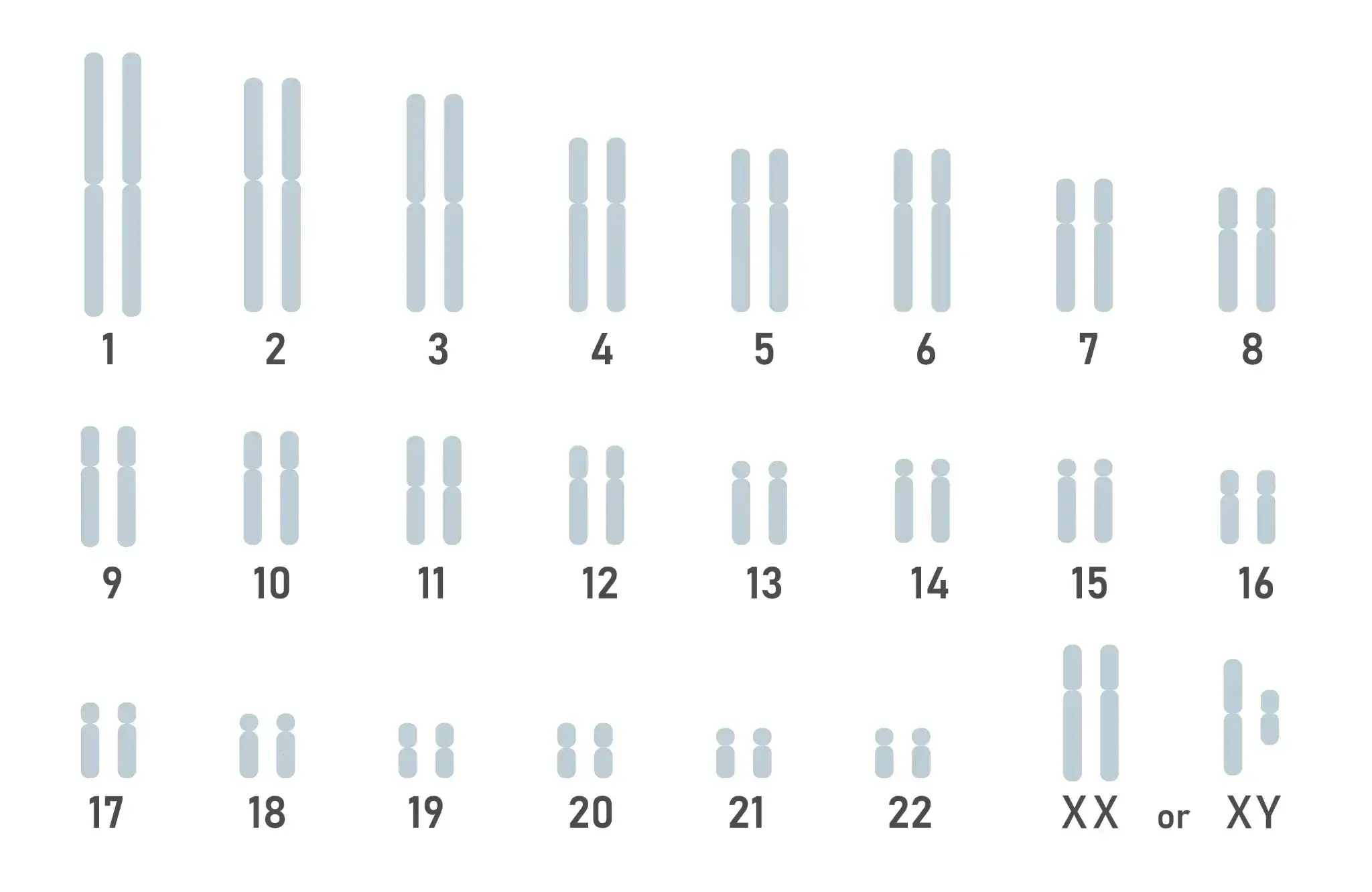
Schematic diagram of DNA map present in cells
- ■
- ■
- ■
- ■
- ■
- ■
- ■
- ■
- ■
Related genes
| Related genes | LGR4 |
|---|
Frequently asked questions (FAQ)
Q1. What is the metastasis rate of prostate cancer?
The metastasis rate of prostate cancer is an index that indicates the probability that cancer cells that occur in the prostate will spread to bones, lymph nodes, and other organs.High expression levels of the LGR4 gene may promote epithelial-to-mesenchymal transition (EMT) and increase metastasis rates.
Q2. What is the relationship between LGR4 gene and prostate cancer metastasis?
LGR4 is a type of G protein-coupled receptorIt has been confirmed that the expression level is higher in prostate cancer tissues compared to normal tissues. LGR4 promotes epithelial-mesenchymal transition (EMT) and promotes cancer cell invasion and metastasis.
Q3. Can a genetic test determine the risk of prostate cancer metastasis?
By examining the genotype of the DNA region rs2472632,Understand trends in prostate cancer metastasis riskYou can. Research at the University of Cambridge has shown that people with the type A mutation (CA type and AA type) tend to have a higher rate of metastasis.
Q4. How can metastasis of prostate cancer be detected early?
PSA test (prostate-specific antigen test)It is important to receive it regularly. Testing is recommended for men over 50 or from age 40 if there is a family history. When used in conjunction with genetic testing, it is possible to create a screening plan that is tailored to each individual's risk.
References
- Reference link 1: 2021 Nov., Maik Pietzner, Science