
 Peripheral artery disease (PAD)

- Peripheral artery disease (PAD) is a disease in which blood flow decreases due to arteriosclerosis in the limbs.It affects 1 in 10 elderly people, and the incidence is particularly high in men over 50.
- From a comparative analysis of twinsGenetic influence on PAD is 58%It has been reported thatDMD gene (DNA region rs6631478)was found to have a negative correlation with ABI value.
- Japanese rs6631478 genotype distribution isTC type 49.5%, TT type 29.8%, CC type 20.6%TT type has a relatively high risk of developing PAD.
Overview There is a disease called Peripheral Artery Disease (PAD) that causes numbness, pain, and a cold sensation in the hands and feet. This disease is caused by arteriosclerosis that occurs in the blood vessels in the limbs, and as the symptoms progress, the patient will feel pain even when resting, and eventually ulcers and necrosis will appear in the limbs, in some cases requiring amputation. It is said that one in 10 elderly people is affected by the disease, and it is especially common in men over 50. One of the indicators for evaluating the degree of PAD is the ankle brachial index (ABI). This can be calculated by measuring blood pressure in the upper arm and ankle and using the following formula: [ABI = ankle systolic blood pressure ÷ brachial systolic blood pressure]. Normally, ABI is 1.0 or higher, and if it is lower than 0.9, arteriosclerosis is suspected. Factors that contribute to the onset and progression of PAD include smoking and obesity. Research has also focused on the relationship between PAD and ABI and genes, and a comparative analysis of twins has reported that genetics account for 58% and environmental effects account for 42% (Reference link 1). To help manage your health, we recommend that you undergo genetic testing to understand your genetic tendencies. 2. Rationale A study by a research team at Harvard Medical School has reported that there is a relationship between the Duchenne muscular dystrophy (DMD) gene located on the X sex chromosome and Peripheral Artery Disease (PAD) (reference link 2). This indicates that there is a relationship between DMD and PAD. 0.90], and investigated the relationship between the genes ``DMD'' and ``PAD'' in Hispanics and Latin Americans. The gene "DMD" has a specific region of the gene called "rs6631478", and within this specific region, one of the DNA base components adenine (A), thymine (T), guanine (G), and cytosine (C) is replaced with another base component.In the case of "rs6631478", it is known that T is replaced with C (reference link 3). Furthermore, the genotype of this DNA region "rs6631478" can be classified into three types: "TT type", "TC type", and "CC type", and it has been pointed out that there is a negative correlation with ABI.The most common genotype in Japanese people is "TC type", followed by "TT type", and the least common is "CC type", at 47.5%, 37.5%, and 15.0%, respectively. In addition, people with the CC genotype are thought to have a relatively low risk of developing PAD, which is the second most common type in Japan.For this reason, people with the TT type need to be aware of non-genetic influences such as smoking and obesity. The gene DMD, which is associated with ABI, which is an indicator of PAD, is present on the X chromosome, which is a common human sex chromosome.This gene is thought to be involved in the synthesis of proteins that form the dystrophin glycoprotein complex (DGC), a substance that supports cell activity. DGC plays the role of linking the cytoskeleton required to maintain cell shape and the extracellular matrix that serves as a scaffold for cell movement, and is considered essential for normal cell activity.Deletions, duplications, or mutations in the gene "DMD" can cause intractable diseases such as muscular dystrophy and cardiomyopathy (Reference link 4). There is a correlation between the DNA region ``rs6631478'' of the gene ``DMD'' and ``ABI,'' which may increase the risk of developing diseases such as angina pectoris and PAD, which can be associated with myocardial infarction. Therefore, knowing your genetic tendencies and taking measures early may help reduce your risk of disease.
What is peripheral artery disease (PAD)?
Peripheral Artery Disease: PAD) is a disease in which arteriosclerosis occurs in the arteries of the limbs, resulting in narrowing and occlusion of the blood vessels, resulting in reduced blood flow.It is said that one in 10 elderly people is affected by this disease, and the incidence is particularly high in men over 50 years of age.
Progressive stages of PAD symptoms
PAD progresses through the following stages: Early detection and early treatment are important.
- Initial:Numbness, cold sensation, and mild pain in the limbs
- Middle period:Pain when walking (intermittent claudication) occurs, requiring rest after a certain distance
- Late period:Persistent pain even when at rest
- Severe:Ulcers and necrosis appear on the limbs, in some cases requiring amputation.
What is ABI (ankle-brachial index)?
ABI (Ankle-Brachial Index) is a non-invasive index to assess the severity of PAD.The calculation formula is [ABI = ankle systolic blood pressure ÷ brachial systolic blood pressure].
| ABI value | Judgment | condition |
|---|---|---|
| 1.0〜1.4 | normal | No signs of arteriosclerosis |
| 0.91〜0.99 | boundary area | Possibility of mild arteriosclerosis |
| less than 0.9 | abnormality | Arteriosclerosis is suspected, and PAD is likely |
Main risk factors for PAD
The risk factors related to the onset and progression of PAD are as follows.
- Smoking:The biggest risk factor that increases the risk of developing PAD by 2-4 times
- Obesity:Promotes progression of arteriosclerosis
- Diabetes:Causes damage to vascular endothelium
- High blood pressure:Increases stress on artery walls
- Dyslipidemia:Plaque tends to accumulate in blood vessels
- Genetic factors:Twin studies show genetic influence on PAD58%, the influence of the environment is42%It is reported that (Reference link 1)
Relationship between genes and PAD
What is the relationship between DMD gene and PAD?
A research team at Harvard Medical School has reported that the DMD (Duchenne muscular dystrophy) gene on the X chromosome is associated with PAD (Reference link 2).
- Research target: Hispanic/Latin American people
- Definition of PAD: ABI value less than 0.90
- DNA region of DMD geners6631478shows a negative correlation with ABI value
Genotype and characteristics of DNA region rs6631478
In rs6631478, a mutation has been confirmed in which the base component thymine (T) is replaced with cytosine (C) (reference link 3). Genotypes are classified into the following three types.
| Genotype | Percentage of Japanese people | percentage of the world | PAD risk |
|---|---|---|---|
| TT type | 29.8% | 69.3% | relatively high |
| TC type | 49.5% | 27.8% | medium |
| CC type | 20.6% | 2.7% | relatively low |
In Japanese people, TC type49.5%is the most common type, followed by TT type.29.8%occupies . People with CC blood type are not affected by T, so their risk of developing PAD is thought to be relatively low. On the other hand, people with TT type also need to be careful about environmental factors such as smoking and obesity.
Involvement of DNA region rs1051730 (CHRNA3 gene)
rs1051730 (CHRNA3 gene related) is also involved in PAD (reference link 5). The CHRNA3 gene encodes the α3 subunit of the nicotinic acetylcholine receptor and is associated with smoking behavior and nicotine dependence.
| Genotype | Percentage of Japanese people | percentage of the world |
|---|---|---|
| GG type | 96.1% | 45.6% |
| GA type | 3.7% | 43.8% |
| AA type | 0.1%以下 | 10.5% |
In Japanese people, type GG is96.1%This is an overwhelmingly large number, showing a distribution that is significantly different from the world average of 45.6%.
Mechanism of action of PAD and the role of genes
How does the DMD gene affect PAD?
The DMD gene is located on the X chromosome and is involved in protein synthesis to form the dystrophin glycoprotein complex (DGC).
- Role of DGC:Connects the cytoskeleton and extracellular matrix, supporting cell shape maintenance and normal activity
- DMD gene abnormality:Deletion, duplication, or mutation can cause muscular dystrophy or cardiomyopathy (reference link 4)
- Relationship with PAD:There is a correlation between the DNA region rs6631478 and ABI, and the risk of developing PAD, which is likely to be complicated by angina pectoris and myocardial infarction, fluctuates.
Understanding genetic tendencies, making early lifestyle changes and regular checkups are considered effective ways to reduce the risk of developing PAD.
Rationale for testing
Superficial DNA region: Peripheral artery disease (PAD)
The gene region most strongly associated with peripheral artery disease (PAD) is rs6631478. The distribution of isomorphic genotypes in Japan is as follows.
- TT
29.8 % - TC
49.5 % - CC
20.6 %
Another gene region involved in peripheral artery disease (PAD) is rs1051730. The distribution of isomorphic genotypes in Japan is as follows
- GG
96.1 % - GA
3.7 % - AA
0.1%以下
Basis for inspection
Research by Tamar Sofer and colleagues at Harvard Medical School (2019, Scientific Reports) revealed that the DNA region rs6631478 of the DMD gene on the X chromosome has a negative correlation with ABI values and is involved in the risk of developing PAD. People with the TT genotype have a relatively high risk of developing PAD, while those with the CC genotype have a relatively low risk. rs1051730 of the CHRNA3 gene also influences PAD risk through its association with smoking.
The DNA region investigated this time
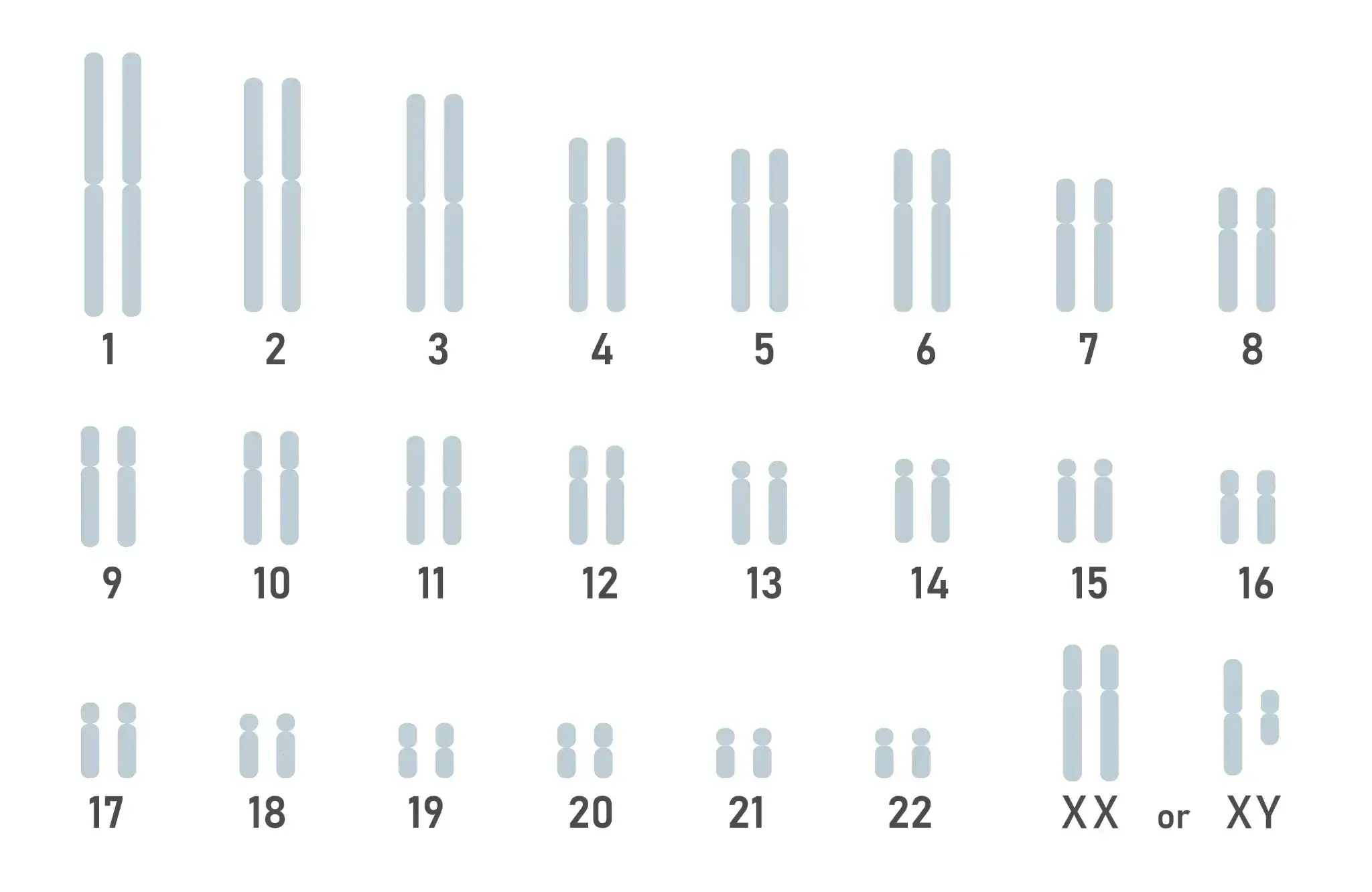
Schematic diagram of DNA map present in cells
- ■
- ■
- ■
- ■
- ■
- ■
- ■
- ■
- ■
Related genes
| Related genes | DMD |
|---|---|
| Related genes | CHRNA3 |
Frequently asked questions (FAQ)
Q1. What is peripheral artery disease (PAD)?
Peripheral artery disease (PAD) is a disease in which arteriosclerosis occurs in the arteries of the limbs, reducing blood flow.Initial symptoms begin with numbness and a feeling of coldness, but as the disease progresses, it can lead to pain when resting, and eventually ulcers and necrosis. It is a disease that affects 1 in 10 elderly people, and the incidence is particularly high in men over 50.
Q2. What is ABI (ankle-brachial index) used to diagnose PAD?
ABI (Ankle-Brachial Index) is a diagnostic index for PAD calculated as ankle systolic blood pressure ÷ brachial systolic blood pressure.Usually it is 1.0 or more, and if it is less than 0.9, arteriosclerosis is suspected. It is widely used as a non-invasive and simple testing method.
Q3. Is there a genetic relationship between PAD?
Yes.Comparative analysis of twins shows that genetics contributes 58% to PAD, while environmental influences account for 42%It is reported that. Research at Harvard Medical School revealed that the DNA region rs6631478 of the DMD gene on the X chromosome has a negative correlation with ABI values, and people with type TT blood type are said to have a relatively high risk of developing PAD.
Q4. What is the genotype distribution of DNA region rs6631478 in Japanese people?
The genotype distribution of rs6631478 in Japanese people isTC type 49.5%, TT type 29.8%, CC type 20.6%It is. Worldwide, 69.3% are TT type, 27.8% are TC type, and 2.7% are CC type, and Japanese people show a unique distribution where the proportion of CC type is about 7.6 times higher than the world average.
Q5. What are the ways to prevent PAD?
Smoking cessation is the most important way to prevent PAD.Smoking increases the risk of developing PAD by 2 to 4 times. Other effective measures include maintaining a healthy weight, regularly walking for at least 30 minutes a day, controlling blood pressure, blood sugar, and lipids, and eating a well-balanced diet. For people with a high genetic risk, early lifestyle changes are recommended.
References
- Reference link 1: 2010 Dec., Wahlgren, Carl Magnus, Arteriosclerosis, thrombosis, and vascular biology.
- Reference link 2: 2019 Aug., Tamar Sofer, Scientific Reports.
- Reference link 3: DNA Information on region “rs6631478” NIH
- Reference link 4: Information on the gene "DMD" Xcode
- Reference link 5: 2021 Oct., Natalie R van Zuydam, Circ Genom Precis Med