
 pelvic organ prolapse

- Pelvic organ prolapse (POP) is a disease in which the bladder, uterus, and rectum droop due to weakening of the pelvic floor muscles.Approximately 50% of women who have given birth experience this
- C-type mutation in DNA region rs3791675Research shows that people with the disease tend to be at higher risk of developing
- Kegel exercises, lifestyle improvement, pessaries, surgeryThere are treatments depending on the severity of the symptoms, such as
Overview Pelvic organ prolapse (POP) is a condition in which the organs in the pelvis shift from their normal position and descend toward the pelvic floor.There are several types of prolapse, including cystocele, in which the bladder descends, rectocele, in which the rectum descends, and uterine prolapse, in which the uterus descends. The main causes include damage to the pelvic floor muscles during childbirth, weakening of muscles and connective tissue due to aging, hormonal changes after menopause, increased abdominal pressure from lifting heavy objects, chronic coughing and constipation. These factors put strain on the pelvic floor muscles, causing the organs to drop out of their correct position. POP symptoms include a feeling of pressure or heaviness in the pelvis or lower abdomen, a feeling of a foreign body in the vagina, difficulty urinating or frequent urination, constipation, and pain during sexual intercourse. Symptoms are worse with prolonged standing and relieved with lying down. As the disease progresses, organs may come out through the vaginal opening. Treatment depends on the severity of your symptoms and your lifestyle. In mild cases, Kegel exercises to strengthen the pelvic floor muscles are recommended. It is also important to improve your lifestyle to prevent constipation and avoid lifting heavy objects. In severe cases, a method of inserting a device called a pessary into the vagina to support the organs or surgery may be considered. During surgery, the pelvic floor muscles are strengthened and the prolapsed organs are returned to their original positions. A study by Olafsdottir and colleagues at Decode Genetics revealed that the risk of developing pelvic organ prolapse is associated with a DNA region called rs3791675. There are three genotypes in this DNA region: CC, CT, and TT, and it was found that people with the C genotype tend to have a higher risk of pelvic organ prolapse.
What is pelvic organ prolapse?
Pelvic Organ Prolapse (POP) is a disease in which the organs in the pelvis (bladder, uterus, rectum) droop from their normal positions due to weakening of the pelvic floor muscles and connective tissues.Approximately 50% of women who have given birth will experience some form of pelvic organ prolapse.
Types and characteristics of pelvic organ prolapse
There are four main types of pelvic organ prolapse:
| type | organs that escape | Features |
|---|---|---|
| cystocele | bladder | Most commonly, the bladder protrudes from the anterior wall of the vagina. |
| Uterine prolapse | uterus | The uterus descends into the vagina and in severe cases protrudes outside the vaginal opening. |
| rectocele | rectum | The rectum protrudes from the back wall of the vagina, causing difficulty defecating. |
| Vaginal stump prolapse | vaginal walls | Vagina inversion and drooping after hysterectomy |
Causes and risk factors for pelvic organ prolapse
The following factors are involved in a complex manner in the development of pelvic organ prolapse.
- Pelvic floor muscle injury during childbirth:Damage to muscles and nerves due to vaginal delivery (especially forceps delivery/suction delivery)
- Aging:Decreased elasticity of muscles and connective tissue
- Hormonal changes after menopause:Atrophy of pelvic floor tissue due to decreased estrogen
- Chronic increased abdominal pressure:Obesity, chronic constipation, chronic cough, heavy lifting
- Genetic predisposition:Carriers of type C mutation in DNA region rs3791675 are at high risk
Main symptoms of pelvic organ prolapse
The symptoms areFluctuations due to gravityIt is worsened by standing for long periods of time and relieved by lying down.
- Pressure or heaviness in the pelvis and lower abdomen
- Foreign body sensation inside the vagina (feeling that something is coming down)
- Difficulty urinating, frequent urination, urinary incontinence
- Constipation/difficulty defecating
- Pain and discomfort during sexual intercourse
- In advanced cases, organs protruding from the vaginal opening can be seen.
Comparison of treatments for pelvic organ prolapse
Treatment is selected in stages depending on the severity of symptoms.
| treatment method | Target | Content |
|---|---|---|
| kegel exercises | Mild symptoms | Strengthen your muscles with pelvic floor muscle training |
| Lifestyle improvement | All cases | Preventing constipation, controlling weight, avoiding heavy objects |
| pessary | Moderate disease | A brace is inserted into the vagina to support the organs. |
| surgical therapy | Severe condition | Fixing organs in their normal positions through pelvic floor reconstruction and mesh surgery |
Relationship between genes and pelvic organ prolapse
Relationship between DNA region rs3791675 and onset risk
A study by Olafsdottir and colleagues at Decode Genetics found that the DNA region rs3791675 is associated with the risk of pelvic organ prolapse.
- There are three genotypes of rs3791675: CC, CT, and TT.
- Genotype with type C mutationpeople tend to be at higher risk of pelvic organ prolapse
Genotype distribution in Japanese (rs3791675)
| Genotype | Percentage of Japanese people | percentage of the world |
|---|---|---|
| CC type | 7.5% | 54.8% |
| CT type | 39.7% | 38.4% |
| TT type | 52.7% | 6.7% |
In the Japanese population, the prevalence of CC type is 7.5%, which is lower than the world average (54.8%), so the genetic risk of pelvic organ prolapse tends to be relatively low.
Rationale for testing
Surface DNA region: Pelvic organ prolapse
The gene region that most strongly influences pelvic organ prolapse is rs3791675. The distribution of isomorphic genotypes in Japan is as follows.
- CC
7.5 % - CT
39.7 % - TT
52.7 %
Basis for inspection
A study by Olafsdottir and colleagues at Decode Genetics revealed that the risk of developing pelvic organ prolapse is linked to genes. There is a region called rs3791675 in the human genome, and the gene in that region has two types of mutations, C and T. It was found that people with type C mutations tend to have a higher risk of pelvic organ prolapse.
The DNA region investigated this time
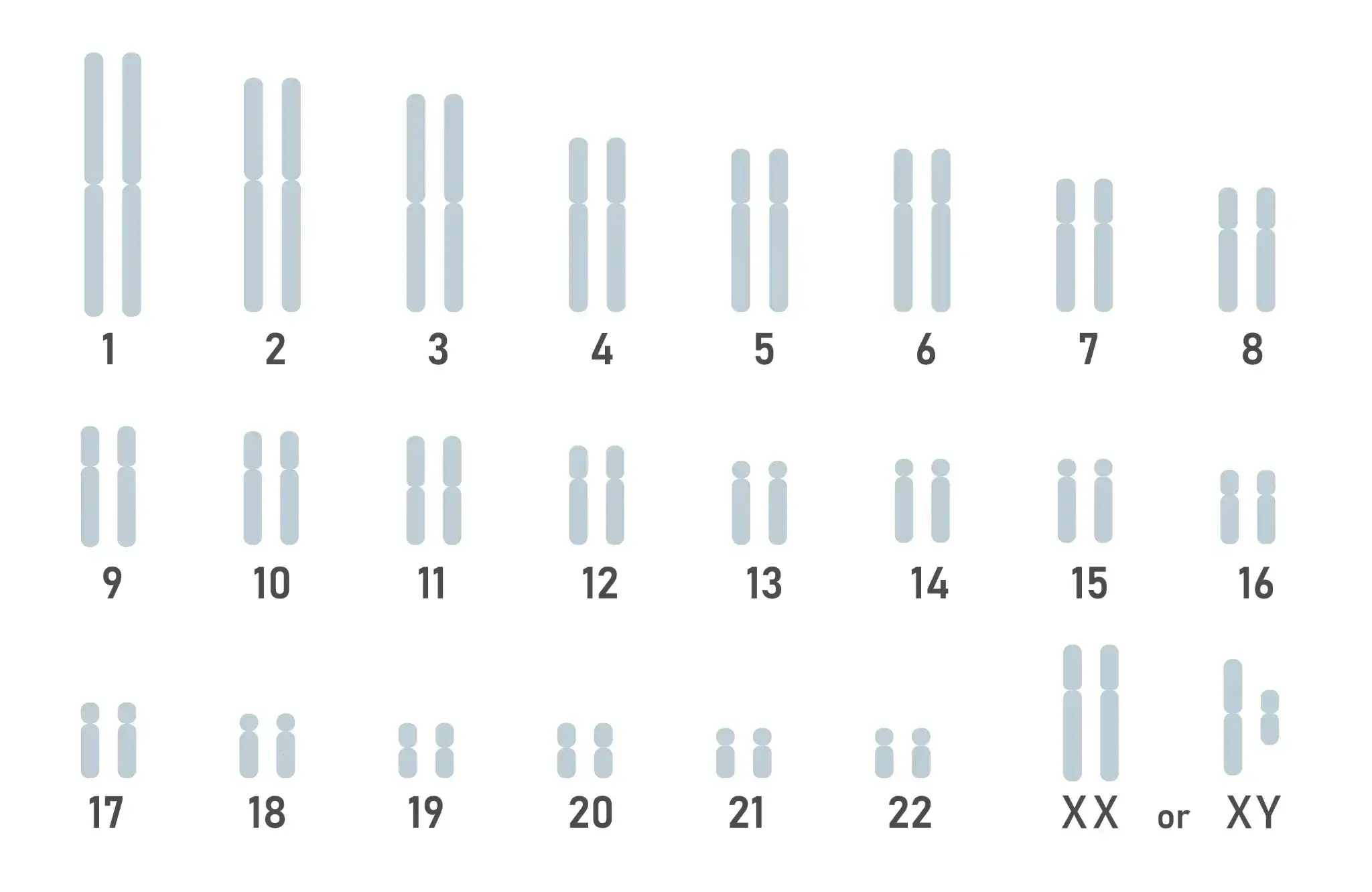
Schematic diagram of DNA map present in cells
- ■
- ■
- ■
- ■
- ■
- ■
- ■
- ■
- ■
Related genes
| Related genes | EFEMP1 |
|---|
Frequently asked questions (FAQ)
Q1. What is pelvic organ prolapse?
Pelvic organ prolapse (POP) is a disease in which the bladder, uterus, and rectum drop from their normal positions due to weakening of the pelvic floor muscles and connective tissues.Approximately 50% of women who have given birth experience some kind of pelvic organ prolapse, and there are four types: cystocele, uterine prolapse, rectocele, and vaginal stump prolapse.
Q2. What are the main causes of pelvic organ prolapse?
The main cause isPelvic floor muscle damage during childbirth, weakening of muscles and connective tissue due to aging, and decreased estrogen after menopauseIt is. Chronic constipation, obesity, and increased abdominal pressure due to lifting heavy objects are also important risk factors. Carriers of the type C mutation in the DNA region rs3791675 tend to be at higher risk.
Q3. What treatments are available for pelvic organ prolapse?
In mild caseskegel exercises(pelvic floor muscle training) is recommended. In moderate casespessary(vaginal device) is effective. In severe casesPelvic floor reconstruction surgerywill be considered, and techniques such as fixation using mesh will be performed.
Q4. Can genetic testing determine the risk of pelvic organ prolapse?
By examining the genotype of the DNA region rs3791675,Understanding trends in the risk of developing pelvic organ prolapseYou can. Studies have found that people with the genotype C tend to be at higher risk.
Q5. What are the types of pelvic organ prolapse?
The main types arecystocele(bladder protrudes from the anterior wall of the vagina),Uterine prolapse(the uterus descends into the vagina),rectocele(the rectum protrudes from the back wall of the vagina),Vaginal stump prolapse(vaginal inversion/drooping after hysterectomy).
References
- Reference link 1: 2020 Mar., Thorhildur Olafsdottir, Commun Biol