
 parkinson's disease

- Parkinson's disease is a progressive neurodegenerative disease that causes a decrease in dopamine-producing neurons in the substantia nigra of the brain, causing movement disorders.Approximately 6 million people worldwide are affected by the disease.
- Type A mutation in DNA region rs2823357A study by 23andMe found that people with
- Drug therapy/rehabilitation/exercise therapyIt is possible to suppress the progression of symptoms and maintain quality of life.
Overview Parkinson's disease is a progressive disease that affects the central nervous system and is caused by a loss of dopamine-producing nerve cells in the substantia nigra of the brain. Dopamine is a chemical necessary for regulating movement, and its decrease causes impaired motor function. Symptoms of this disease include tremors at rest, muscle stiffness, and postural instability. As the disease progresses, it leads to a decline in cognitive function, mood disorders, and autonomic nervous system dysfunction, resulting in a significant decline in quality of life. The cause of Parkinson's disease is not completely understood, but genetic and environmental factors are thought to be involved. Certain genetic mutations are known to increase risk, and exposure to pesticides and heavy metals, as well as a history of smoking, can also increase risk. A study by Chuong B Do and colleagues from the 23andMe company revealed that the risk of developing Parkinson's disease is associated with a DNA region called rs2823357. There are three genotypes in this DNA region: GG, GA, and AA, and it was found that people with the A genotype tend to have a higher risk of Parkinson's disease.
What is Parkinson's disease?
Parkinson's disease is a progressive neurodegenerative disease that affects the central nervous system and is caused by a loss of dopamine-producing neurons in the substantia nigra of the brain.Dopamine is a neurotransmitter essential for motor control, and its decrease causes motor dysfunction.
Causes and risk factors for Parkinson's disease
In the onset of Parkinson's diseaseGenetic and environmental factorsare involved in multiple ways.
- Genetic factors:Certain genetic mutations (LRRK2, GBA, SNCA, etc.) increase risk
- Environmental factors:Long-term exposure to pesticides and herbicides, contact with heavy metals
- Aging:The incidence increases rapidly in people over 60 years old, and the average age of onset is approximately 60 years old.
- Gender:Men are about 1.5 times more likely to develop the disease than women
Four major symptoms of Parkinson's disease
Motor symptoms of Parkinson's disease4 major signsIt is called and has the following characteristics:
- Resting tremor:Regular shaking of limbs (4-6Hz) when at rest
- Muscle rigidity:Joint movement is resisted by muscle stiffness
- Immobile/low movement:Movement becomes slow and it becomes difficult to start moving.
- Postural reflex disorder:Difficulty maintaining balance and increased risk of falling
Non-motor symptoms of Parkinson's disease
As the disease progresses, the following non-motor symptoms appear.
- Decline in cognitive function (occurs in approximately 30-40% of patients)
- Mood disorders such as depression and anxiety disorders
- Autonomic nerve disorder (constipation, orthostatic hypotension, urinary disorder)
- Sleep disorder (REM sleep behavior disorder)
- Anosmia (note as an early symptom)
Comparison of Parkinson's disease and related diseases
| Comparison items | parkinson's disease | essential tremor |
|---|---|---|
| type of tremor | tremor at rest | motion tremor |
| muscle rigidity | Yes | None |
| bradykinesia | remarkable | None |
| Left and right difference | Onset from one side | Bilateral symmetry |
| Age of onset | Approximately 60 years old | wide age range |
| treatment | Levodopa preparations, etc. | β-blockers, etc. |
Treatment for Parkinson's disease
The treatment isFocus on drug therapyA multidisciplinary approach is used depending on the degree of progression of the symptoms.
- Levodopa preparations:Replenish dopamine precursors with the most effective drug therapy
- Dopamine agonist:Drugs that directly stimulate dopamine receptors
- MAO-B inhibitors:Suppresses the breakdown of dopamine and maintains its effect
- Deep brain stimulation (DBS):Surgical treatment for advanced cases
- Rehabilitation:Exercise therapy/occupational therapy/speech therapy
The relationship between genes and Parkinson's disease
Relationship between DNA region rs2823357 and onset risk
A study by Chuong B Do and colleagues at 23andMe (1) revealed that the DNA region rs2823357 is associated with the risk of developing Parkinson's disease.
- There are three genotypes of rs2823357: GG, GA, and AA.
- Genotype with type A mutationof people tend to be at higher risk of Parkinson's disease
Genotype distribution in Japanese (rs2823357)
| Genotype | Percentage of Japanese people | percentage of the world |
|---|---|---|
| GG type | 45.9% | 37.8% |
| GA type | 43.6% | 47.3% |
| AA type | 10.3% | 14.7% |
Rationale for testing
External DNA region: Parkinson's disease
The gene region that most strongly affects Parkinson's disease is rs2823357. The distribution of isomorphic genotypes in Japan is as follows.
- GG
45.9 % - GA
43.6 % - AA
10.3 %
Basis for inspection
A study by Chuong B Do and colleagues at 23andMe revealed that the risk of developing Parkinson's disease is linked to genes. There is a region called rs2823357 in the human genome, and there are two types of mutations, G and A, in the gene in this region. It has been found that people with the type A mutation tend to have an increased risk of developing Parkinson's disease (1).
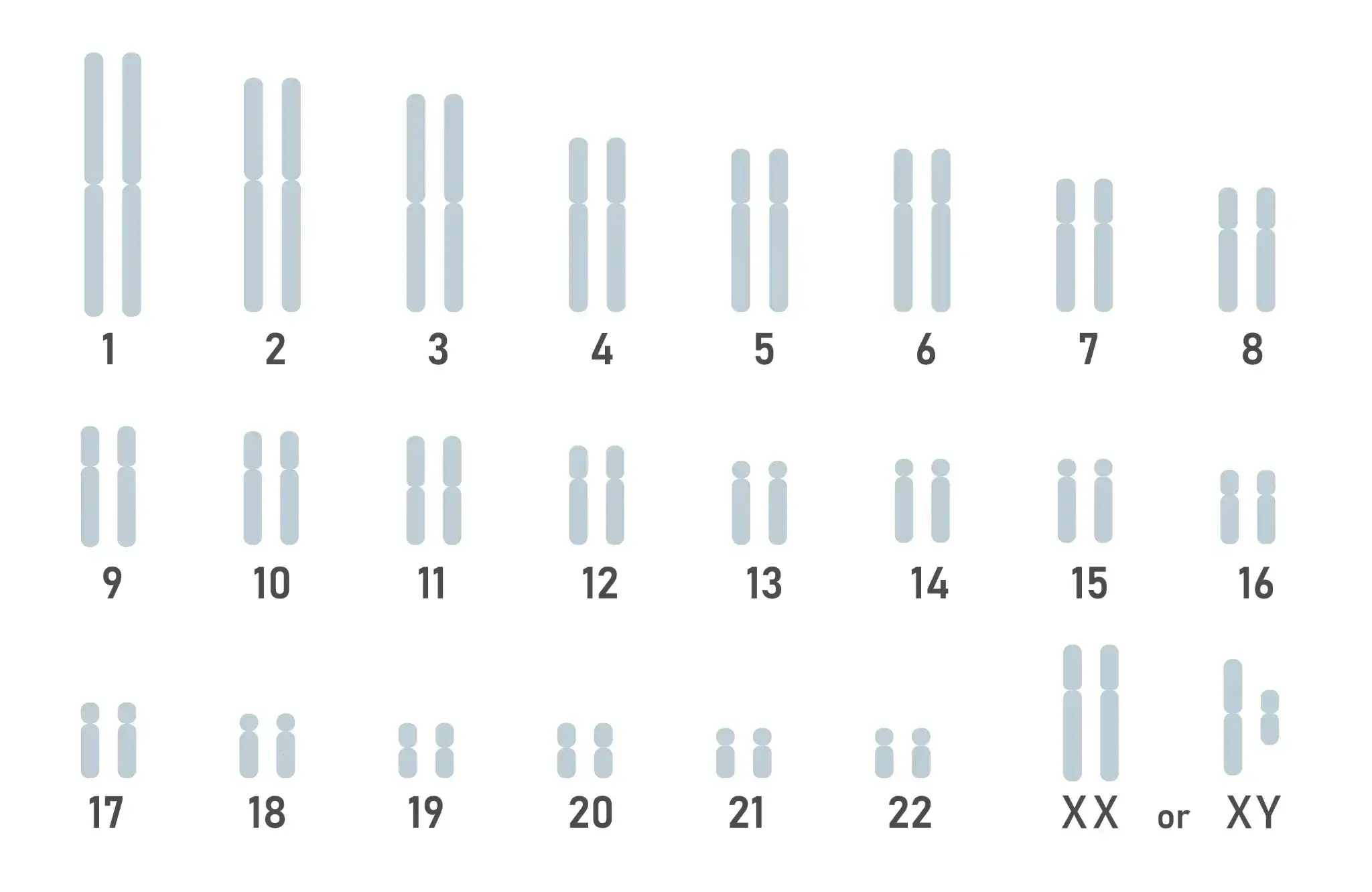
The DNA region investigated this time
Schematic diagram of DNA map present in cells
- ■
- ■
- ■
- ■
- ■
- ■
- ■
- ■
- ■
Related genes
| Related genes | CYCSP42 |
|---|
Frequently asked questions (FAQ)
Q1. What is Parkinson's disease?
Parkinson's disease is a progressive neurodegenerative disease that causes movement disorders due to a loss of dopamine-producing neurons in the substantia nigra of the brain.It affects more than 6 million people worldwide, and affects approximately 1% of people over the age of 60 (1).
Q2. What is the cause of Parkinson's disease?
The main cause isDegeneration and loss of dopamine-producing neurons in the substantia nigraIt is. Genetic predisposition (genetic mutations in LRRK2, GBA, etc.) and environmental factors (exposure to pesticides, contact with heavy metals) are involved in a complex manner, and carriers of type A mutation in the DNA region rs2823357 tend to be at higher risk (1).
Q3. What are the main symptoms of Parkinson's disease?
The 4 major symptoms areResting tremor, muscle rigidity, akinesia/hypokinesia, impaired postural reflexesIt is. As the disease progresses, cognitive function decline, mood disorders, and autonomic nervous disorders occur, leading to a decline in quality of life.
Q4. Can genetic testing determine the risk of Parkinson's disease?
By examining the genotype of the DNA region rs2823357,Understanding trends in the risk of developing Parkinson's diseaseYou can. Studies have shown that people with the genotype A tend to be at increased risk (1).
Q5. What treatments are available for Parkinson's disease?
Dopamine replacement therapy with levodopa preparationsis the most effective drug therapy. Other treatments include dopamine agonists and MAO-B inhibitors, and deep brain stimulation (DBS) is also used in advanced cases. Exercise therapy and rehabilitation are also effective in managing symptoms.
References
- Reference link 1: 2011 Jun., Chuong B Do, PLoS Genet