
 longevity trends

- Longevity trends are determined by the genotype of the DNA region rs28926173 near the gene MC2RIndividual differences occur depending on
- People with type GG tend to live longer lives., 90.8% of Japanese people and 92.3% of the world fall under type GG.
- Excessive secretion of cortisol due to decreased function of MC2Rincreases the risk of mental illness and affects life expectancy
Overview Do you know the saying, ``Parents are absent when filial piety is desired''? This proverb contains the lessons that ``by the time you realize the value of your parents, you will no longer have them'' and ``Be filial to your parents while they are still alive.'' We want our parents to live long lives so that we can show more filial piety to our parents.We want our parents to live longer lives so that we can show more filial piety to our parents. Recent research has revealed that a certain region near the gene ``MC2R'' is associated with the longevity of parents. Genes associated with longevity are associated with the risk of developing disease. Finding out your own genetic type through genetic testing and learning the genetic information about your parents' longevity will serve as a reminder of the importance of spending time with your parents. 2. Rationale A study conducted at a British biobank project revealed that a specific type of gene around the gene ``MC2R'' is associated with the longevity of parents. This site is called "rs28926173" and there are three genotypes: "AA type", "AG type", and "GG type". ``AA type'' tends to have a short lifespan, and ``AG type'' tends to have a slightly shorter lifespan. Globally, the GG type is the most common at 92.3%, the AG type is the lowest at 7.6%, and the AA type is the lowest at 0.1%. The most common genetic type among Japanese people is the GG type at 90.8%, followed by the GA type at 9.19% and the AA type at 0.01%. These genotypes have a weak ability to suppress the secretion of the hormone cortisol, which is secreted when stressed, and are known to be the cause of mental disorders because they are more likely to develop stress-related diseases. It has been shown that when a person develops a mental illness such as depression, insomnia, or anxiety, their life satisfaction decreases and it becomes difficult to feel a sense of happiness. Examining the genetic information related to the longevity of parents may give us an opportunity to reconsider the importance of the bond between parent and child. 3. Mechanism of action The gene "MC2R" is located on chromosome 18 of the 24 chromosomes common to humans, and is particularly abundant in the adrenal glands. This gene has the function of suppressing cortisol secretion. However, when this function does not work, cortisol is excessively secreted, causing brain atrophy and hormonal imbalance, leading to a decline in blood sugar regulation and immune function. These symptoms are thought to be easily inherited, and it is said that the gene ``MC2R'' is associated with the longevity of parents. The DNA region "rs28926173" is one of the SNVs that is attracting attention because it is related to the longevity of parents.
What are the trends in longevity?
Longevity tendency refers to the genetic predisposition of parents to live long lives, and is associated with the DNA region rs28926173 near the gene MC2R.A study conducted by a British biobank project found that people with the GG type tend to live longer lives.
Why is longevity related to genes?
Genes associated with longevity are involved in controlling the secretion of the stress hormone cortisol. Longevity and genetics are directly linked, as excess cortisol increases the risk of disease.
Relationship between gene MC2R and cortisol
The gene MC2R is located on chromosome 18 and is a gene that has the function of suppressing cortisol secretion located in the adrenal glands.
| Comparison items | MC2R function normal | MC2R function decline |
|---|---|---|
| cortisol secretion | properly suppressed | secreted in excess |
| Effect on the brain | Maintain normal brain function | Brain atrophy progresses |
| immune function | normal immune response | Decreased immune function |
| blood sugar regulation | Maintain normal blood sugar levels | Decreased blood sugar regulation function |
| mental illness risk | low | Increased risk of depression, insomnia, and anxiety |
Effects of excessive cortisol secretion on lifespan
When MC2R function declines, excessive cortisol is secreted, causing the following symptoms:
- Decline in cognitive function due to brain atrophy
- Decreased blood sugar control function due to hormonal imbalance
- Increased risk of infection due to decreased immune function
- Onset of mental illnesses such as depression, insomnia, and anxiety
- Decreased life satisfaction and sense of well-being
Because these symptoms are easily inherited, the gene MC2R and the longevity of parents are closely linked.
Significance of knowing genetic information related to longevity
Finding out your rs28926173 genotype through genetic testing is an opportunity to remember the importance of spending time with your parents. Genetic testing can determine the following:
- Own longevity-related genotype:Determine whether you fall under type GG, type GA, or type AA.
- Stress-related disease risk:Understanding genetic trends in cortisol secretion control
- Guidelines for lifestyle improvement:Implement health management based on genetic risk
The link between genes and longevity trends
Relationship between genotype of DNA region rs28926173 and longevity
A study by Pilling et al., from the University of Exeter Medical School, found that the DNA region rs28926173 is associated with a tendency to live longer.
- There are three genotypes of rs28926173: GG, GA, and AA.
- GG type (person with G type mutation)tend to live longer
- AA typetend to have a short lifespan
- Related genes:MC2R(gene encoding melanocortin 2 receptor)
Genotype distribution in Japanese and the world (rs28926173)
| Genotype | Percentage of Japanese people | percentage of the world | longevity trend |
|---|---|---|---|
| GG type | 90.8% | 92.3% | tend to live longer |
| GA type | 9.19% | 7.6% | Tends to have a rather short lifespan |
| AA type | 0.01% | 0.1% | Tendency to have a short lifespan |
Rationale for testing
External DNA regions: trends in longevity
The gene region that most strongly influences longevity is rs28926173. The distribution of isomorphic genotypes in Japan is as follows.
- GG
99.9 % - GA
0.1%以下 - AA
0.1%以下
Basis for inspection
Research by Pilling and colleagues at the University of Exeter Medical School has revealed that the tendency to live longer is linked to genes. There is a region called rs28926173 in the human genome, and there are two types of mutations, G and A, in the gene in this region. It was found that people with the G-type mutation were more likely to live longer lives.
The DNA region investigated this time
Schematic diagram of DNA map present in cells
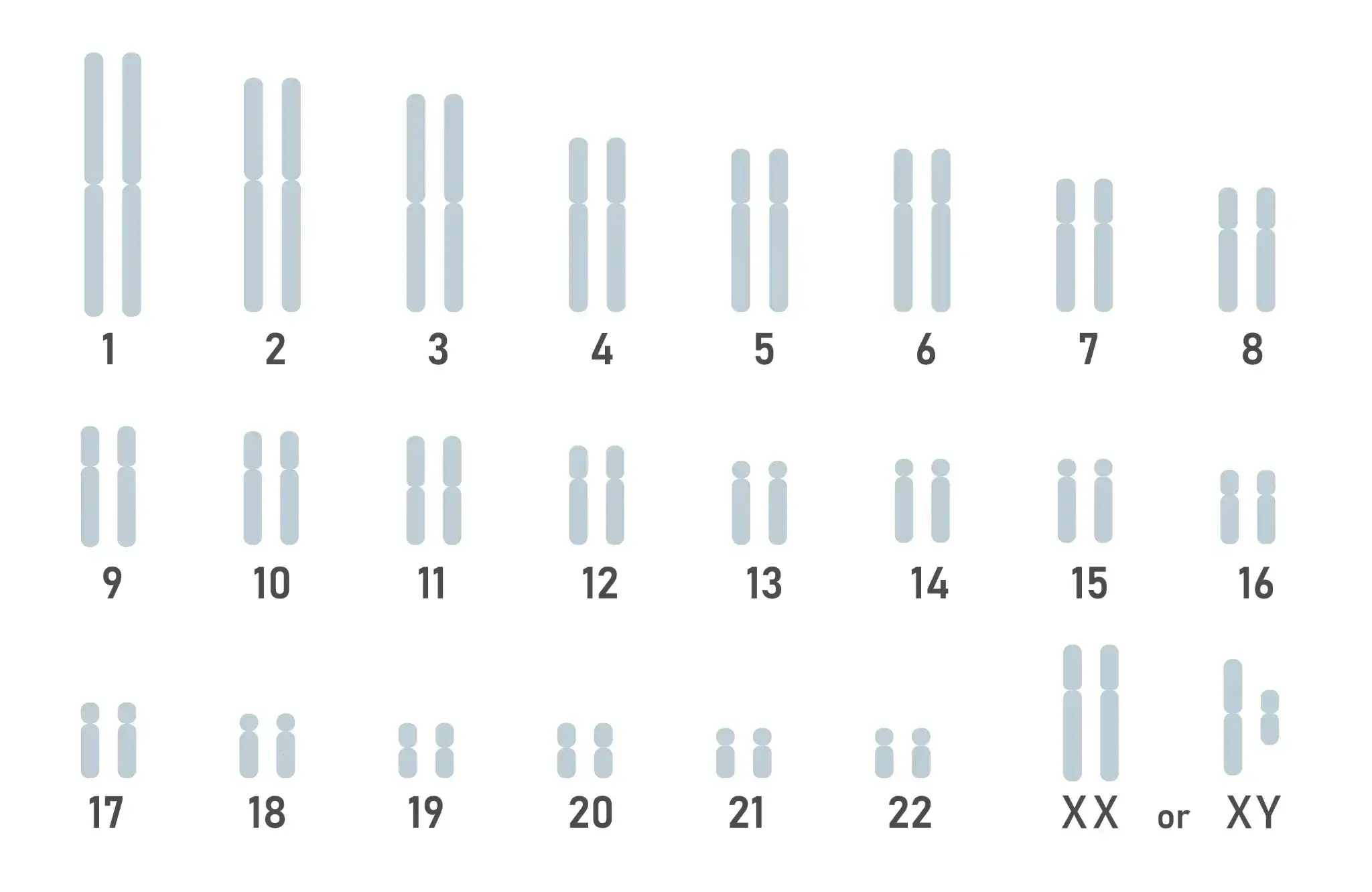
- ■
- ■
- ■
- ■
- ■
- ■
- ■
- ■
- ■
Related genes
| Related genes | MC2R |
|---|
Frequently asked questions (FAQ)
Q1. What is the longevity trend?
Longevity trends refer to genetic predispositions that make parents more likely to live long lives.A British Biobank study found that people with the GG type in the DNA region rs28926173 near the MC2R gene tend to live longer lives. 90.8% of Japanese people are type GG, which is close to the world average of 92.3%.
Q2. How is the gene MC2R related to longevity?
The gene MC2R is located on chromosome 18 and has the function of suppressing cortisol secretion.When MC2R function declines, cortisol is excessively secreted, causing brain atrophy, hormonal imbalance, and decreased immune function, which has a negative impact on lifespan.
Q3. What types of genotypes are there for rs28926173?
rs28926173 hasThree genotypes: GG type, GA type, and AA typeThere is. GG types tend to have a long lifespan, while AA types tend to have a short lifespan. In Japanese, the distribution is 90.8% GG type, 9.19% GA type, and 0.01% AA type.
Q4. What is the relationship between cortisol and longevity?
Cortisol is a hormone secreted by the adrenal glands when you are stressed.When cortisol is excessively secreted due to decreased MC2R function, blood sugar regulation and immune functions decrease. As a result, the risk of mental illnesses such as depression, insomnia, and anxiety increases, leading to a decrease in life satisfaction.
References
- Reference link 1: 2017 Dec., Luke C Pilling, Aging (Albany NY).
- Reference link 2: Information on DNA region “rs28926173” NIH
- Reference link 3: 2017 Dec., Michelle Luciano, Nature Genetics.
- Reference link 4: 2017 Dec., Luke C Pilling, Aging (Albany NY)