
 Ease of overeating

- Ease of overeating is determined by the genotype of the MC4R gene and DNA region rs17782313 on chromosome 18Individual differences occur depending on
- Appetite suppressing signals have difficulty functioning in people with TC and CC types., the risk of overeating and obesity increases.
- The prevalence of type CC among Japanese people is 6.9%., which is slightly higher than the global average of 5.3%.
Overview Have you ever had the experience of eating too much food or snacks even though you thought, ``I have to hold back''? There are people who diet successfully and people who don't, but what's the difference between those who can tolerate overeating and those who can't? Is it just a matter of feeling? In fact, surprisingly, it is said that genetic factors (constitution) are involved in whether a person is prone to overeating (overeating). (Reference link 1) If you continue to overeat, you will become obese. This is because the body takes in too much energy and stores the unused energy as fat. Obesity can lead to lifestyle-related diseases such as diabetes, hypertension, dyslipidemia, fatty liver, and arteriosclerosis, so prevention and countermeasures against obesity are important in promoting health. Why not take a genetic test to find out if you have a tendency to overeat? Rationale When you are full, your brain receives signals to suppress your appetite, which suppresses your appetite. However, if this signal goes out of control for some reason, intake control will not occur, leading to overeating, leading to obesity. (Reference link 2) One of the genes responsible for this is the gene ``MC4R (melanocortin type 4 receptor)'' located on chromosome 18. One of the DNA regions belonging to this gene is "rs17782313". This DNA region was discovered as a polymorphic DNA region associated with obesity in an analysis of genetic polymorphisms conducted on Europeans (approximately 2,800 people). (Reference link 3) The DNA region "rs17782313" has three genotypes: "TT type," "TC type," and "CC type," with TT being the normal type. The genotype of Japanese people is 59.6% TT type, 35.2% TC type, and 5.2% CC type. (Reference link 4) When you are full, the function of the gene ``MC4R'' is turned on and a signal is sent to suppress your appetite. However, if the DNA region "rs17782313" is "TC type" or "CC type", the function of the gene "MC4R" is suppressed, making it difficult to suppress intake, making it easier to overeat and become obese. In particular, in those with type CC, the gene MC4R is greatly suppressed, making them more susceptible to arteriosclerosis and diabetes associated with obesity. (Reference links 1, 5) Mechanism of action When you eat too much, fat cells release a hormone called leptin that suppresses appetite, which acts on the brain and suppresses appetite. This leptin signal is transmitted through a gene called MC4R, which is expressed in the central nervous system, such as the hypothalamus. However, when the function of "MC4R" is suppressed, that is, when the DNA region "rs17782313" is "TC type" or "CC type", leptin signals are not sent and appetite cannot be suppressed. (Reference link 6) Therefore, there is a high possibility that it will lead to overeating and obesity. Furthermore, the effects of rs17782313 may cause lifestyle-related diseases such as diabetes and high blood pressure. Therefore, it is important not only to eat a balanced diet and exercise regularly, but also to avoid stress.
What is the ease of overeating?
Proneness to overeating refers to a genetic predisposition to overeating because the brain signals that suppress appetite do not function properly, and the MC4R gene (melanocortin type 4 receptor) on chromosome 18 is deeply involved.Through genetic polymorphism analysis (reference link 3) of approximately 2,800 Europeans, the DNA region rs17782313 was discovered as a DNA region associated with obesity.
Why do we overeat? - Relationship between MC4R gene and appetite suppression
When a person is full, an appetite suppressing signal is sent to the brain, but when the function of the MC4R gene is suppressed, this signal is not transmitted properly and overeating occurs. The cause is a mutation in the DNA region rs17782313.
| Comparison items | TT type (normal type) | TC type/CC type (mutant type) |
|---|---|---|
| MC4R features | working properly | Functionality is suppressed |
| appetite suppressant signal | transmitted normally | hard to convey |
| Overeating risk | low | expensive |
| obesity risk | low | High (CC type also has increased risk of arteriosclerosis and diabetes) |
The relationship between overeating and obesity - Why does overeating make you fat?
If overeating continues, energy intake exceeds energy expenditure, and excess energy is stored as fat, leading to obesity.Obesity causes the following lifestyle-related diseases.
- diabetes
- high blood pressure
- dyslipidemia
- fatty liver
- arteriosclerosis
People with the CC genotype have greater suppression of MC4R and are more susceptible to obesity-related arteriosclerosis and diabetes (Reference links 1 and 5).
Mechanism of overeating - Relationship between leptin and MC4R
When you eat too much, fat cells release an appetite-suppressing hormone called leptin, which acts on the brain (hypothalamus) to suppress your appetite.This leptin signal is transmitted via the MC4R gene, which is expressed in the central nervous system, such as the hypothalamus.
- For TT type:MC4R functions normally, leptin signals are transmitted, and appetite is suppressed.
- For TC type/CC type:MC4R function is suppressed, leptin signals are not sent, and appetite cannot be suppressed (Reference link 6)
As a result, this leads to overeating and obesity, and also increases the risk of lifestyle-related diseases such as diabetes and high blood pressure.
Measures to prevent overeating
In addition to genetic factors, the following lifestyle habits are said to be effective in preventing overeating.
- Nutritionally balanced diet:Eat three meals a day regularly to prevent sudden fluctuations in blood sugar levels
- Regular exercise:Aerobic exercise at least 3 times a week increases energy expenditure and prevents body fat accumulation
- Stress management:Chronic stress increases appetite, so use mindfulness and deep breathing techniques
- Adequate sleep:7-8 hours of quality sleep maintains the balance of appetite hormones (ghrelin and leptin)
- Genetic testing:Understand your genetic constitution and create a personalized diet and exercise plan
The relationship between genes and overeating risk
Relationship between DNA region rs17782313 and overeating risk
Through genetic polymorphism analysis (reference link 3) of approximately 2,800 Europeans, the DNA region rs17782313 was discovered as a DNA region associated with obesity.
- There are three genotypes of rs17782313: TT, TC, and CC.
- TC type/CC type peopleThe function of MC4R is suppressed, increasing the risk of overeating and obesity.
- Related genes:RNU4-17P
Genotype distribution in Japanese and the world (rs17782313)
| Genotype | Percentage of Japanese people | percentage of the world |
|---|---|---|
| TT type (normal type) | 54.1% | 59.2% |
| TC type | 38.9% | 35.4% |
| CC type | 6.9% | 5.3% |
Rationale for testing
Superficial DNA region: Ease of overeating
The gene region that most strongly influences the tendency to overeat is rs17782313. The distribution of isomorphic genotypes in Japan is as follows.
- TT
54.1 % - TC
38.9 % - CC
6.9 %
Basis for inspection
When you're full, a signal is sent to your brain to suppress your appetite, which suppresses your appetite. However, if this signal becomes uncontrollable for some reason, the intake will not be suppressed and the body will overeat, leading to obesity (reference link 2). One of the genes responsible for this is the MC4R (melanocortin type 4 receptor) gene, which is located on chromosome 18. If the DNA region rs17782313 is TC type or CC type, MC4R function is suppressed, appetite suppression is less likely to occur, and the risk of overeating and obesity increases. The genotype of Japanese people is TT type 59.6%, TC type 35.2%, CC type 5.2% (reference link 4).
The DNA region investigated this time
Schematic diagram of DNA map present in cells
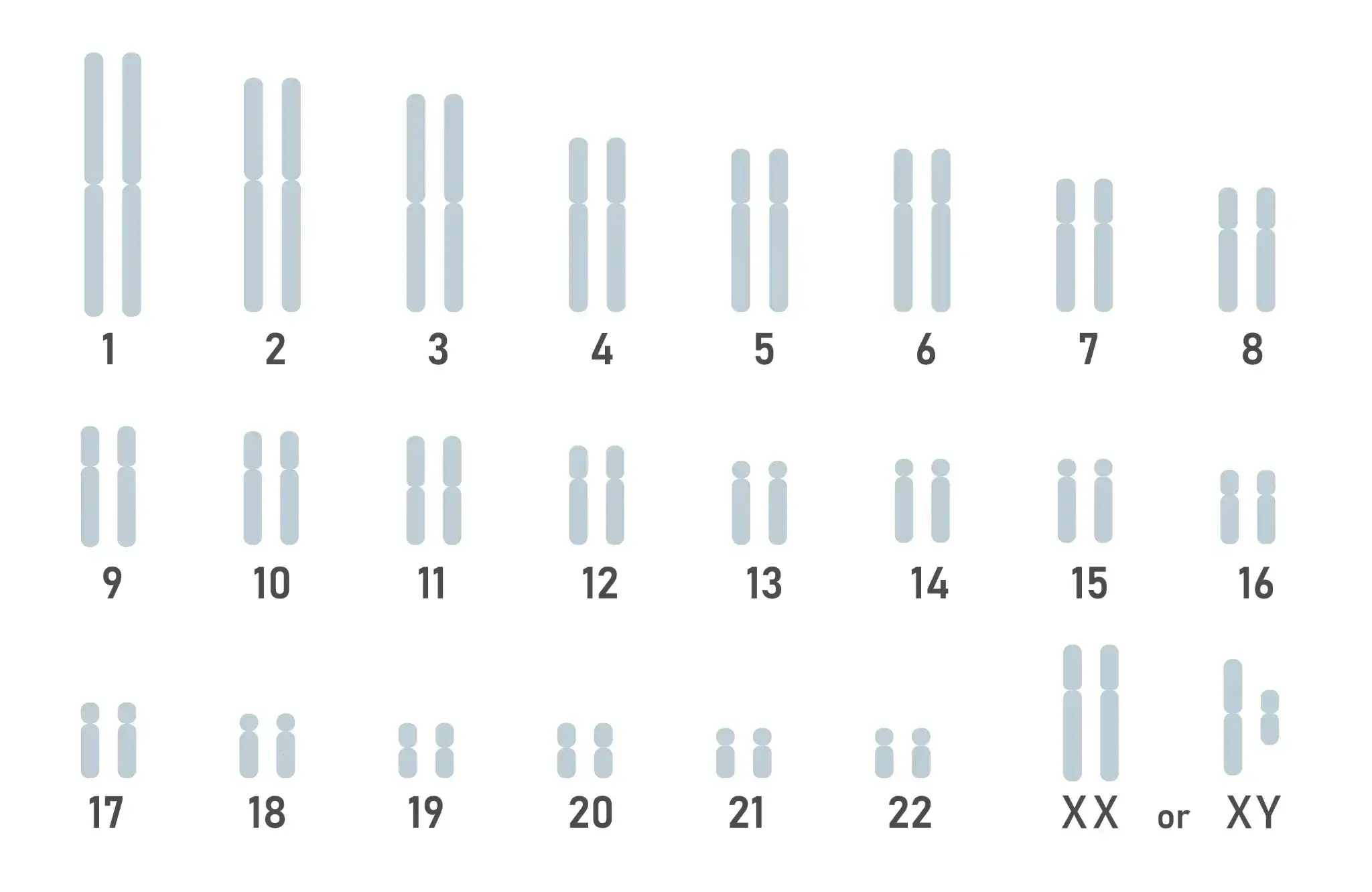
- ■
- ■
- ■
- ■
- ■
- ■
- ■
- ■
- ■
Related genes
| Related genes | RNU4-17P |
|---|
Frequently asked questions (FAQ)
Q1. What is the susceptibility to overeating?
Proneness to overeating refers to a genetic predisposition to overeating because the brain signals that suppress appetite do not function properly.The MC4R gene (melanocortin type 4 receptor) on chromosome 18 and the genotype of the DNA region rs17782313 are deeply involved, and people with TC and CC types are less likely to suppress their appetite and have an increased risk of overeating and obesity (Reference link 1).
Q2. How is the MC4R gene related to overeating?
MC4R (melanocortin type 4 receptor) is a gene expressed in the hypothalamus that transmits the appetite suppressing signal of leptin released from fat cells.If the DNA region rs17782313 is of the TC type or CC type, the function of MC4R is suppressed, and leptin signals are not transmitted, making it impossible to suppress appetite (Reference link 6).
Q3. What is the distribution of genotypes associated with overeating among Japanese people?
The genotype distribution of Japanese people in the DNA region rs17782313 isTT type (normal type) 54.1%, TC type 38.9%, CC type 6.9%It is. Compared to the world average (TT type 59.2%, TC type 35.4%, CC type 5.3%), the proportion of Japanese people with type TC and type CC tends to be slightly higher (reference link 4).
Q4. How can I prevent overeating?
Nutritionally balanced diet, regular exercise (aerobic exercise at least 3 times a week), stress management, and sufficient sleep (7-8 hours)is effective in preventing overeating. It is also recommended that you get a genetic test to understand your constitution and create a personalized diet and exercise plan.
Q5. What is the relationship between overeating and obesity?
If overeating continues, energy intake exceeds energy expenditure,Surplus energy is stored as fat, leading to obesity.It will be. People with the CC genotype have greater suppression of MC4R, which increases the risk of arteriosclerosis and diabetes associated with obesity (Reference link 1, 5).
References
- Reference link 1: 2008 May, Ruth J F Loos, Nature genetics
- Reference link 2: 2012 Aug., Marcelo O. Dietrich, Nature reviews drug discovery
- Reference link 3: 2009 Feb., David Meyre, Nature genetics
- Reference link 4: Information on DNA region “rs17782313” NIH
- Reference link 5: 2020 Apr. Keping Yu, Gene
- Reference link 6: 2014 Mar. Clemence Girardet, Biochimica et Biophysica Acta (BBA) - Molecular Basis of Disease