
 ovarian cancer
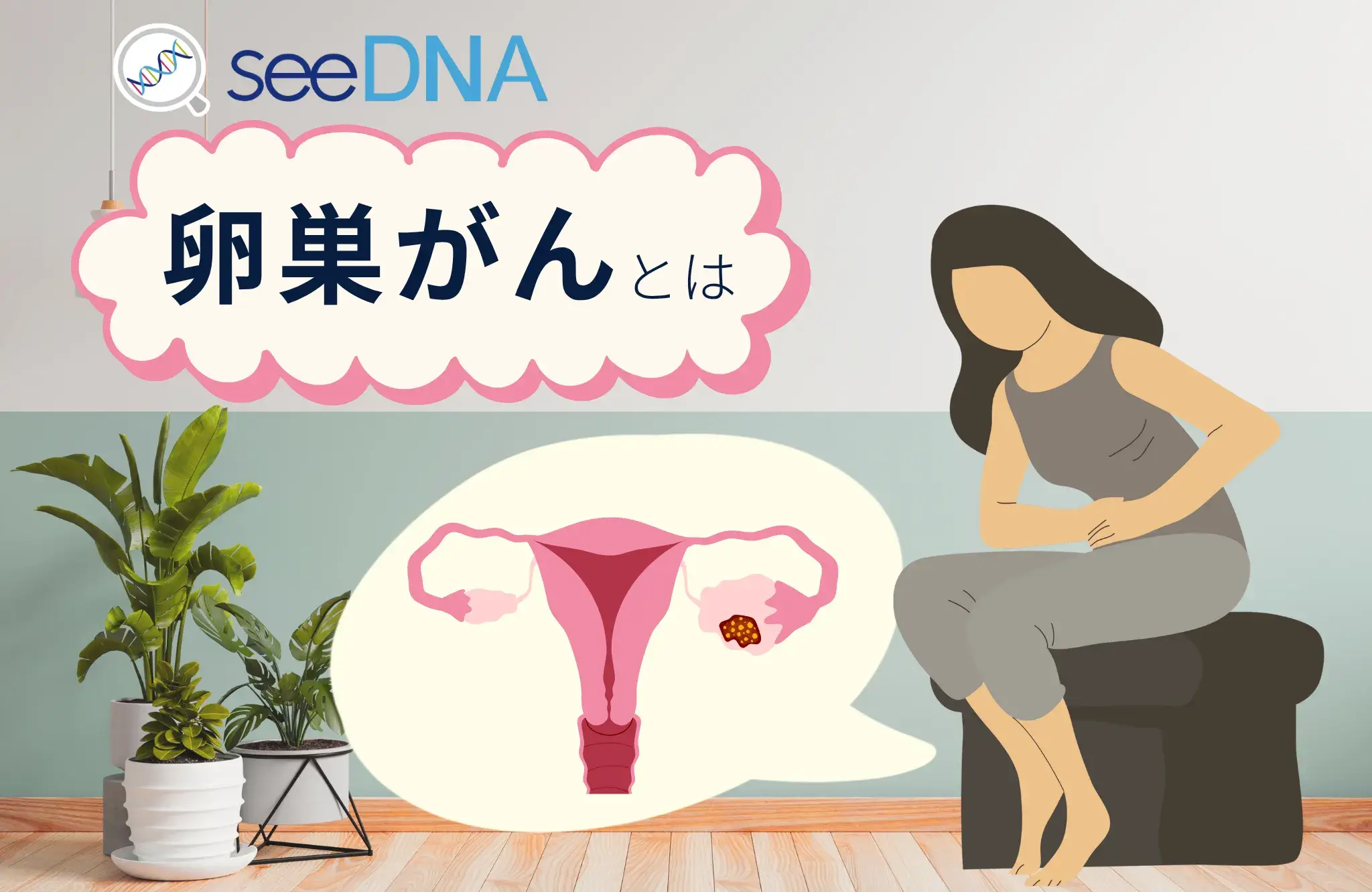
- Ovarian cancer is a malignant tumor with the highest mortality rate among gynecological cancersIt is called the "silent killer" because there are no noticeable symptoms.
- G-type mutation in DNA region rs57403204 (Risk Allele)have an increased risk of developing high-grade serous ovarian cancer (HGSOC)
- The prevalence of type G mutation (AG+GG) in Japanese people is34.4%is approximately 6.7 times higher than the global average of 5.1%.
Overview The ovary is a thumb-sized organ located on each side of the uterus that produces, matures, and ovulates eggs, and secretes female hormones (estrogen and progesterone). Ovarian cancer is a disease in which malignant tumors form in the ovaries, and is said to have the highest mortality rate among gynecological cancers. Types of ovarian cancer include serous cancer, endometrioid cancer, clear cell cancer, and mucinous cancer. High-grade serous ovarian cancer (HGSOC), a type of serous cancer, progresses rapidly and has a poor prognosis. Risk factors for developing ovarian cancer include a history of endometriosis and a family history. According to a recent research report, it has been revealed that a certain region near the gene ``MAGEC1'' particularly affects the risk of developing ``HGSOC.'' 2. Rationale Recently, research conducted by the University of Cambridge in the UK and the National Cancer Institute (NCI) in the US has revealed that ovarian cancer called ``HGSOC'' tends to occur more frequently depending on the genotype of a specific region near the gene ``MAGEC1''. This region is called the DNA region "rs57403204" and there are three genotypes: "AA type", "AG type", and "GG type" (Reference link 1). It is known that "GG type", which has the risk allele "G", tends to have a higher incidence of "HGSOC", and "AG type" tends to have a slightly higher incidence of HGSOC. It is known that 70.2% of Japanese people have the AA type, 27.2% have the AG type, and 2.6% have the GG type (reference link 2). In other words, people with the "AG/GG type" account for approximately 30% of the Japanese population. On the other hand, in terms of genetic types worldwide, 93.9% are ``AA type'', 6.1% are ``AG type'', and approximately 0% are ``GG type''. In other words, "AG/GG type" people account for approximately 6% of the world's total population. From this, it can be said that Japanese people are a race with genes that tend to have a higher risk of developing HGSOC compared to the rest of the world. Ovarian cancer is known as the "silent killer" because it is located deep in the pelvis and does not cause any symptoms such as pain, so it is often detected in an advanced stage. Against this background, genetic testing is expected to help in early detection and treatment by understanding the hereditary tendency to develop ovarian cancer in advance. 3. Mechanism of action The gene "MAGEC1" is present in the human X chromosome, and it is known that it may be involved in the development of "HGSOC". This gene is normally poorly expressed in the ovary, but expression is seen in ovarian cancer. This suggests that the gene "MAGEC1" is involved in cancer development. It is generally known that cancer cells lose their original tissue characteristics and change into germ cell-like characteristics that proliferate rapidly (somatogermline transformation). The gene "MAGEC1" is known to be involved in this change. In fact, a polymorphism in the DNA region ``rs57403204'' near the gene ``MAGEC1'' has been confirmed in ``HGSOC'' patients, and it is attracting attention as a single nucleotide polymorphism that may be involved in ``HGSOC.'' (Reference links 3, 4, 5)
What is ovarian cancer?
Ovarian cancer is a malignant tumor that occurs in the ovaries, and has the highest mortality rate among gynecological cancers.Ovaries are thumb-sized organs located on each side of the uterus, and are responsible for producing, maturing, and ovulating eggs, as well as secreting female hormones (estrogen and progesterone).
Types and characteristics of ovarian cancer
There are four main histological types of ovarian cancer. The characteristics of each are as follows.
| tissue type | Features | Progress speed |
|---|---|---|
| Serous carcinoma (HGSOC) | Most common and strongly associated with genetic mutations | Progress is fast |
| Endometrioid cancer | It has been pointed out that there is a relationship with endometriosis. | medium |
| clear cell carcinoma | Histological type relatively common in Japanese people | medium |
| mucinous cancer | Relatively rare histology | relatively slow |
especiallyHigh-grade serous ovarian cancer (HGSOC)It progresses rapidly and has a poor prognosis, accounting for approximately 70% of all ovarian cancers.
Why is ovarian cancer called a “silent killer”?
The ovaries are located deep in the pelvis, so even if a tumor occurs, there are almost no symptoms such as pain.For this reason, approximately 60% of cases are discovered in an advanced stage (stages III to IV), and the disease is called the "silent killer."
Main risk factors for ovarian cancer
- History of endometriosis:Increased risk of endometrioid cancer and clear cell cancer
- Family history:If your mother or sister has ovarian cancer, your risk increases two to three times
- Genetic mutation:rs57403204 polymorphism near MAGEC1 is involved in the development of HGSOC
- Nulliparous:Increased burden on the ovaries due to frequent ovulation
Relationship between genes and ovarian cancer
Relationship between DNA region rs57403204 and HGSOC
Research by the University of Cambridge and the National Cancer Institute (NCI) revealed that the DNA region rs57403204 near the gene MAGEC1 influences the risk of developing HGSOC (Reference link 1).
- rs57403204 hasAA・AG・GGThere are three genotypes of
- Risk Allele「G」HGSOC tends to occur more frequently in people with type GG.
- It also tends to be slightly more common in AG type.
Comparison of genotype distribution in Japanese and the world (rs57403204)
| Genotype | Percentage of Japanese people | percentage of the world |
|---|---|---|
| AA type | 65.4% | 94.8% |
| AG type | 30.8% | 5.1% |
| GG type | 3.6% | 0.1%以下 |
The G mutation prevalence rate (AG+GG) in Japanese people is34.4%This is approximately 6.7 times higher than the global average of 5.1%. From thisThe Japanese population is a genetically predisposed group with a high risk of developing HGSOC.It can be said that.
The importance of early detection through genetic testing
Ovarian cancer often has few symptoms and is discovered in an advanced stage.Understanding the hereditary tendency to develop symptoms in advance through genetic testing will directly lead to early detection and early treatment.Regular gynecological examinations are especially recommended for those with the AG and GG genotypes.
Rationale for testing
External DNA region: ovarian cancer
The gene region that most strongly affects ovarian cancer is rs57403204. The distribution of isomorphic genotypes in Japan is as follows.
- AA
65.4 % - AG
30.8 % - GG
3.6 %
Basis for inspection
Mechanism of action of gene MAGEC1
The gene MAGEC1 is located on the human X chromosome and has been found to be potentially involved in the development of HGSOC.Normally, this gene is hardly expressed in the ovary, but its expression has been confirmed in ovarian cancer, suggesting its involvement in cancerization.
- Normal ovary:MAGEC1 is hardly expressed
- Ovarian cancer tissue:MAGEC1 expression is confirmed
- Mechanism of canceration:MAGEC1 is involved in the phenomenon in which tissue characteristics change to germ cell-like characteristics (somatogermline transformation)
Since the rs57403204 polymorphism has been confirmed in HGSOC patients, it is attracting attention as a single nucleotide polymorphism (SNP) involved in HGSOC (Reference links 3, 4, and 5).
The DNA region investigated this time
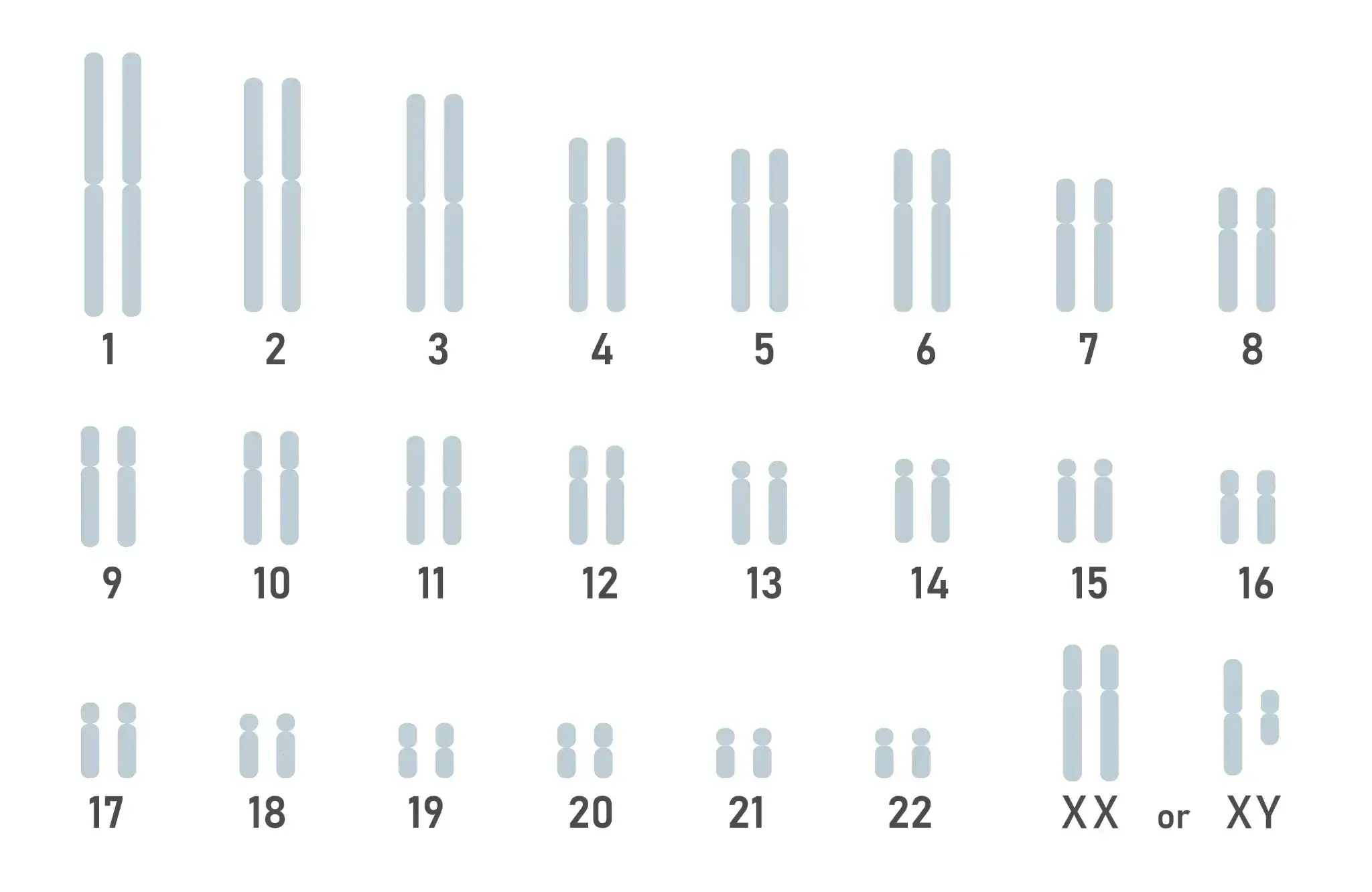
Schematic diagram of DNA map present in cells
- ■
- ■
- ■
- ■
- ■
- ■
- ■
- ■
- ■
Related genes
| Related genes | MAGEC1 |
|---|
Frequently asked questions (FAQ)
Q1. What is ovarian cancer?
Ovarian cancer is a malignant tumor that occurs in the ovaries, and has the highest mortality rate among gynecological cancers.There are four types of cancer: serous carcinoma, endometrioid carcinoma, clear cell carcinoma, and mucinous carcinoma.High-grade serous ovarian cancer (HGSOC) in particular progresses rapidly and has a poor prognosis. It is called the "silent killer" because there are almost no symptoms.
Q2. Is there a genetic relationship with ovarian cancer?
Yes.Research from the University of Cambridge and the National Cancer Institute (NCI) has shown that the DNA region rs57403204 influences the risk of developing HGSOC.There are three genotypes of rs57403204: AA, AG, and GG, and type G (Risk People with HGSOC tend to have a higher risk of developing HGSOC.
Q3. What are the risk factors for ovarian cancer?
The main risk factors arePast history of endometriosis, family history, genetic mutation (RS57403204 type G), nulliparousnessIt is. In particular, Japanese people have a G mutation prevalence rate of 34.4%, approximately 6.7 times the world average, making them a population with a genetically high risk of HGSOC.
Q4. What is the distribution of ovarian cancer-related genotypes (rs57403204) in Japanese people?
The genotype distribution of rs57403204 in Japanese people isAA type 65.4%, AG type 30.8%, GG type 3.6%It is. Worldwide, 94.8% are AA, 5.1% are AG, and 0.1%以下 are GG, and Japanese people have a significantly higher prevalence of the G mutation than the world average.
Q5. Why is it difficult to detect ovarian cancer early?
Because the ovaries are located deep in the pelvis, there are almost no symptoms even if a tumor develops.Approximately 60% of cases are discovered in an advanced stage. Understanding the risk in advance through genetic testing and regular gynecological examinations are the keys to early detection.
References
- Reference link 1: 2019 Aug., Ani Manichaikul, IJC.
- Reference link 2: Information on DNA region “rs7403204” TogoVar
- Reference link 3: Gene "MAGEC1 information" GTEx Portal
- Reference link 4: 2014 Aug., Sayeema Daudi, PloS one.
- Reference link 5: 2019 Jan., Kaipeng Xie, Journal of Ovarian Research.
- Reference link 6: 2020 Jun., Ani Manichaikul, Int J Cancer