
 osteopenia

- Osteopenia is a condition in which bone density falls between normal and osteoporosis.This is a pre-osteoporosis stage with a DXA test T score of -1.0 to -2.5.
- C-type mutation in DNA region rs3736228Erasmus Medical Center study finds that people with this condition tend to be at higher risk of osteopenia
- The CC type prevalence rate in Japanese people at rs3736228 is54.8%, which is lower than the world average of 74.0%, and the CT type38.4%This is approximately 1.6 times higher than the world average of 24.0%.
Overview Osteopenia is a medical concept that refers to a condition in which bone density is lower than the average for one's age, and is considered a pre-stage that progresses to osteoporosis. Although the bones themselves are not so weak that they easily break, the bone mass is being reduced invisibly, leading to an increased risk of fractures in the long term. In particular, hormonal changes due to aging and menopause, lack of exercise, lack of calcium and vitamin D, smoking, heavy drinking, and being too thin are thought to play a role in the development of osteopenia. Bone density measurement called DXA is mainly used for diagnosis, and the result is determined to be between "normal" and "osteoporosis." Even if you are diagnosed with osteopenia, in most cases it is possible to maintain and improve your bone health through lifestyle changes, and measures such as proper nutrition, moderate exercise, sunbathing, and smoking cessation are effective in preventing osteopenia. Osteopenia is more of a "sign that requires attention" than a disease, and taking measures at this stage is the key to preventing osteoporosis and fractures in the future. Research by Karol Estrada and colleagues at the Erasmus Medical Center has revealed that the risk of osteopenia is associated with a DNA region called rs3736228. There are three genotypes in this DNA region: TT, TC, and CC, and it was found that people with the C genotype tend to have a higher risk of osteopenia.
What is osteopenia?
Osteopenia is a medical concept that refers to a condition in which bone density is lower than normal, but osteoporosis has not yet developed.The T-score determined by the DXA test falls within the range of -1.0 to -2.5, which is considered to be a stage before progressing to osteoporosis.
What are the causes and risk factors of osteopenia?
Six major risk factors are involved in the development of osteopenia. These factors accelerate bone density loss and increase fracture risk.
- Aging:Bone regeneration ability decreases and bone mass decreases
- Hormonal changes due to menopause:Reduced estrogen promotes bone resorption
- Lack of exercise:Lack of mechanical stimulation to bones, resulting in decreased bone formation
- Calcium/vitamin D deficiency:Lack of bone material and resorption-promoting factors
- Smoking:Suppresses osteoblast function and reduces bone density
- Heavy drinking/being too thin:Inhibition of nutrient absorption and lack of weight bearing promote bone loss
Difference between osteopenia and osteoporosis
| Comparison items | osteopenia | osteoporosis |
|---|---|---|
| T-score | -1.0~-2.5 | -2.5 or less |
| bone density | mildly decreased | Significant decline |
| fracture risk | moderately elevated | expensive |
| Main treatment | Improving lifestyle habits | Drug treatment + lifestyle improvement |
| stage | Pre-stage (preventable) | definitive diagnosis |
How to prevent osteopenia
Bone health for osteopenia can be maintained and improved through lifestyle changes. The following five measures are effective for prevention.
- Calcium intake:Aim for 800-1000mg a day of intake from dairy products, small fish, and green and yellow vegetables.
- Vitamin D intake:Aim for 600 to 800 IU per day from fish and mushrooms.
- Weight-bearing exercise:Walking, jogging, and climbing stairs at least 3 times a week
- Sunbathing:Do 15 to 30 minutes of outdoor activity a day to synthesize vitamin D in your body.
- No smoking/drinking:Quit smoking and limit alcohol consumption to no more than 2 drinks a day
Association between genes and osteopenia risk
Relationship between DNA region rs3736228 and osteopenia
A study by Karol Estrada of the Erasmus Medical Center and colleagues (published in Nature Genetics in 2012) revealed that the risk of osteopenia is associated with the DNA region rs3736228.
- There are three genotypes of rs3736228: TT, TC, and CC.
- Genotype with type C mutation(CC type/CT type) people tend to have a higher risk of osteopenia
- This gene region is related to the LRP5 gene
Comparison of genotype distribution in Japanese and the world (rs3736228)
| Genotype | Percentage of Japanese people | percentage of the world |
|---|---|---|
| CC type | 54.8% | 74.0% |
| CT type | 38.4% | 24.0% |
| TT type | 6.7% | 1.9% |
The CT type prevalence among Japanese people is38.4%This is approximately 1.6 times higher than the world average of 24.0%. TT type also6.7%This is approximately 3.5 times the world average of 1.9%, indicating that the genetic risk distribution of osteopenia in the Japanese population is different from the world average.
Comparison of all five DNA regions related to osteopenia in Japan and around the world
| DNA region | Related genes | Japan (Main type / 2nd type / 3rd type) | World (Main type / 2nd type / 3rd type) |
|---|---|---|---|
| rs3736228 | LRP5 | CC 54.8% / CT 38.4% / TT 6.7% | CC 74.0% / CT 24.0% / TT 1.9% |
| rs9594759 | LINC02341 | CC 71.5% / CT 26.0% / TT 2.3% | CC 23.5% / CT 49.9% / TT 26.5% |
| rs4869742 | CCDC170 | CC 3.5% / CT 30.4% / TT 66.0% | CC 48.4% / CT 42.3% / TT 9.2% |
| rs3905706 | MPP7 | CC 35.5% / CT 48.1% / TT 16.3% | CC 58.7% / CT 35.8% / TT 5.4% |
| rs9533090 | LINC02341 | CC 87.8% / CT 11.7% / TT 0.3% | CC 31.5% / CT 49.2% / TT 19.1% |
Rationale for testing
Superficial DNA region: Osteopenia
The gene region most strongly associated with osteopenia is rs3736228. The distribution of isomorphic genotypes in Japan is as follows.
- CC
54.8 % - CT
38.4 % - TT
6.7 %
Another gene region involved in osteopenia is rs9594759. The distribution of isomorphic genotypes in Japan is as follows
- CC
71.5 % - CT
26.0 % - TT
2.3 %
Another gene region involved in osteopenia is rs4869742. The distribution of isomorphic genotypes in Japan is as follows
- CC
3.5 % - CT
30.4 % - TT
66.0 %
Another gene region involved in osteopenia is rs3905706. The distribution of isomorphic genotypes in Japan is as follows
- CC
35.5 % - CT
48.1 % - TT
16.3 %
Another gene region involved in osteopenia is rs9533090. The distribution of isomorphic genotypes in Japan is as follows
- CC
87.8 % - CT
11.7 % - TT
0.3 %
Basis for inspection
Research by Karol Estrada and colleagues at the Erasmus Medical Center has revealed that the risk of osteopenia is linked to genes. There is a region called rs3736228 in the human genome, and there are two types of mutations, T and C, in the gene in this region. It was found that people with the C mutation genotype tend to have a higher risk of osteopenia. Additionally, four DNA regions, rs9594759, rs4869742, rs3905706, and rs9533090, are also involved in osteopenia.
The DNA region investigated this time
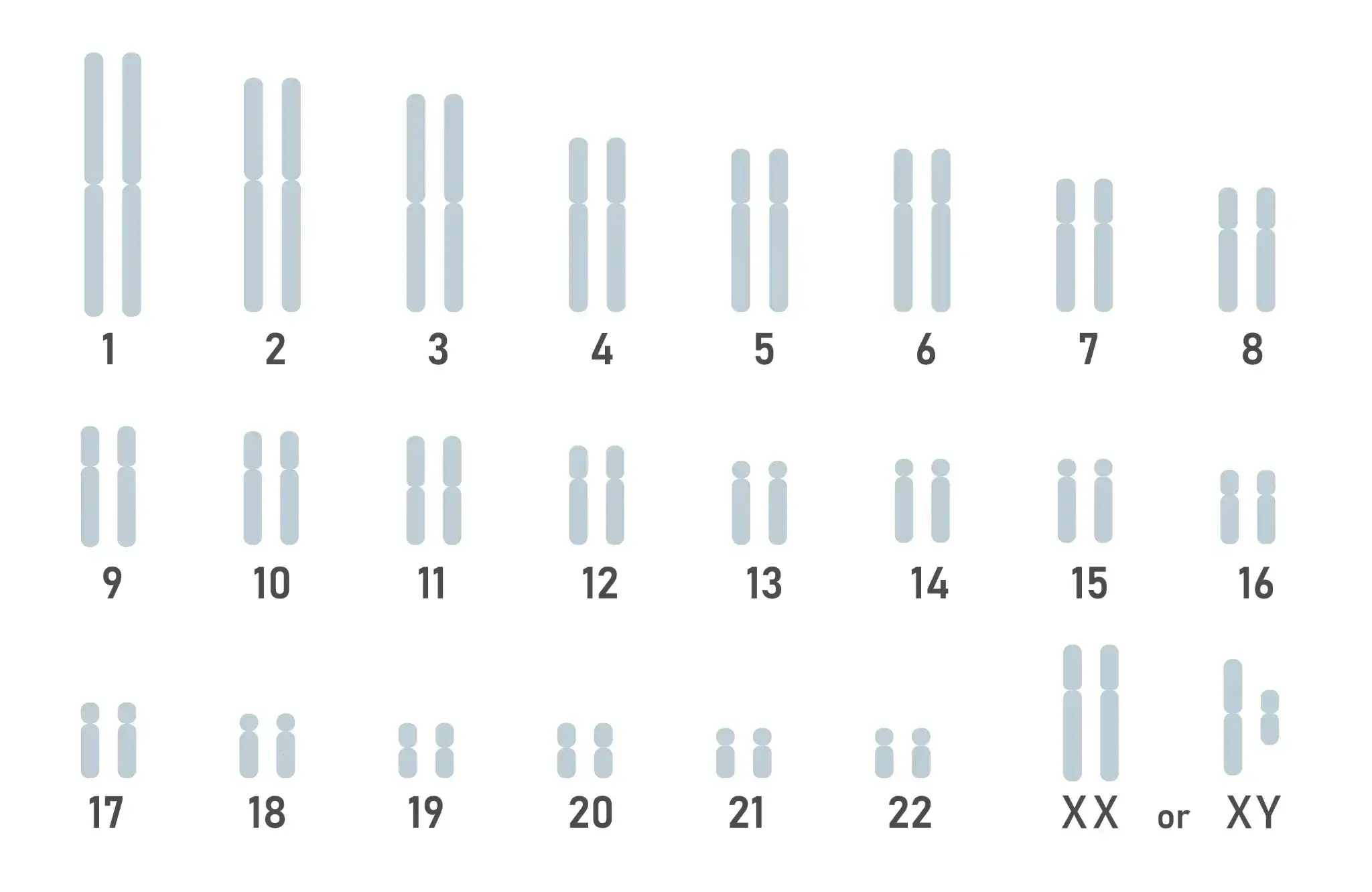
Schematic diagram of DNA map present in cells
- ■
- ■
- ■
- ■
- ■
- ■
- ■
- ■
- ■
Related genes
| Related genes | LRP5 |
|---|---|
| Related genes | LINC02341 |
| Related genes | CCDC170 |
| Related genes | MPP7 |
| Related genes | LINC02341 |
Frequently asked questions (FAQ)
Q1. What is osteopenia?
Osteopenia is a condition in which bone density is lower than normal, but osteoporosis has not yet developed.The T-score of the DXA test falls within the range of -1.0 to -2.5. Osteopenia is a "sign that requires attention," and taking measures at this stage is effective in preventing osteoporosis and bone fractures.
Q2. What is the difference between osteopenia and osteoporosis?
Osteopenia is a condition in which bone density is mildly decreased with a T score of -1.0 to -2.5.Progress can be prevented by improving lifestyle habits.Osteoporosis is a condition in which the T-score is -2.5 or less, resulting in a significant decrease in bone density and a high risk of fracture. Osteoporosis may require drug treatment.
Q3. Is osteopenia related to genes?
Yes.A study by Karol Estrada and colleagues at the Erasmus Medical Center (2012, Nature Genetics) found that the DNA region rs3736228 is associated with the risk of osteopenia.There are three genotypes of rs3736228: TT, TC, and CC, and people with the genotype C mutation tend to have a higher risk of osteopenia.
Q4. What are the ways to prevent osteopenia?
To prevent osteopenia,Adequate intake of calcium (800-1000 mg per day) and vitamin D (600-800 IU per day), weight-bearing exercise (walking/jogging) at least three times a week, quitting smoking, moderately limiting alcohol consumption, and sunbathing for 15 to 30 minutes a day are effective.
Q5. How many genetic regions are associated with osteopenia?
The main DNA regions associated with osteopenia arefiveConfirmed. rs3736228 (LRP5 gene), rs9594759 (LINC02341 gene), rs4869742 (CCDC170 gene), rs3905706 (MPP7 gene), and rs9533090 (LINC02341 gene).
References
- Reference link 1: 2012 Apr., Karol Estrada, Nat Genet
- Reference link 2: 2008 May., Unnur Styrkarsdottir, N Engl J Med