
 osteoarthritis of the hip

- Osteoarthritis of the hip joint is a chronic disease in which the cartilage of the hip joint wears away, causing pain and limited range of motion.As the disease progresses, daily activities and walking become difficult.
- Type A mutation in DNA region rs2836618A study by the GSK Pharmaceutical Research Center found that people with this condition tend to have a higher risk of developing hip osteoarthritis.
- The prevalence of type A mutation (GA+AA) in Japanese people is68.8%This is a high percentage compared to the world average of 46.3%.
Overview Osteoarthritis of the hip joint is a disease that occurs when the cartilage in the hip joint deteriorates and is eventually lost. Cartilage normally acts as a cushion and helps the hip joint move smoothly. However, as osteoarthritis progresses, the cartilage wears away and bones come into direct contact. This can result in symptoms ranging from mild discomfort to severe pain and disability. Symptoms of hip osteoarthritis include pain in the hip, thigh, or buttock. This pain is worsened by activities such as walking, climbing stairs, and standing for long periods of time. In the early stages, the pain may be relieved by rest, but as the disease progresses, the pain may continue during rest and at night, and stiffness and range of motion in the hip joints may occur, making daily tasks such as putting on shoes or getting in and out of a car difficult. In advanced stages, you may experience a rubbing sensation in your hip joint when you move. Your hip joints may also feel weak and your gait may change to avoid the discomfort, resulting in a staggering gait. Additionally, changes in joint structure can change the appearance of the hip and leg, which can affect your overall posture and gait. Research by Tachmazidou and colleagues at the GSK Pharmaceutical Research Center revealed that the risk of developing hip osteoarthritis is associated with a DNA region called rs2836618. There are three genotypes in this DNA region: GG, GA, and AA, and it was found that people with the A genotype tend to have a higher risk of hip osteoarthritis.
What is osteoarthritis of the hip?
Osteoarthritis of the hip is a chronic joint disease in which the cartilage in the hip joint gradually deteriorates and wears out, eventually causing direct bone-to-bone contact, causing pain and limited range of motion.Cartilage acts as a cushion and supports the smooth movement of the hip joint. Loss of this cartilage causes symptoms ranging from mild discomfort to severe pain and disability.
Main symptoms of hip osteoarthritis
Symptoms of hip osteoarthritis vary depending on the stage of progression of the disease.
- Early stage:Pain in the hip joints, thighs, and buttocks during activity, which is relieved by rest.
- Middle stage:Joint stiffness and range of motion decrease, making daily activities such as putting on shoes and getting in and out of a car difficult.
- Progression stage:The pain persists during rest and at night, causing a rubbing sensation in the hip joint and a change in gait (stagger).
- Severe stage:Changes in joint structure change the appearance of the hip joints and legs, which affects overall posture and gait.
Comparison of progression stages and symptoms of hip osteoarthritis
| advanced stage | Main symptoms | Impact on daily life |
|---|---|---|
| early stage | Pain during activity, mild discomfort | Recovery with rest and normal life possible |
| middle period | Stiffness, limited range of motion | Difficulty with some daily activities |
| advanced stage | Persistent pain at rest and at night | Changes in gait, restricted movement |
| severe | Changes in joint structure, walking disorders | Changes in posture, difficulty walking independently |
Relationship between genes and hip osteoarthritis
Relationship between DNA region rs2836618 and hip osteoarthritis
A study by Tachmazidou and colleagues at the GSK Pharmaceutical Research Center revealed that the risk of developing hip osteoarthritis is associated with the DNA region rs2836618.
- There are three genotypes of rs2836618: GG, GA, and AA.
- Genotype with type A mutation(GA type/AA type) people tend to have a higher risk of osteoarthritis of the hip joint
Comparison of genotype distribution in Japanese and the world (rs2836618)
| Genotype | Percentage of Japanese people | percentage of the world |
|---|---|---|
| GG type | 31.1% | 53.6% |
| GA type | 49.3% | 39.2% |
| AA type | 19.5% | 7.1% |
The prevalence of type A mutation in Japanese people (GA+AA) is68.8%This is approximately 1.5 times higher than the global average of 46.3%. This suggests that the genetic predisposition associated with hip osteoarthritis is more widely distributed in the Japanese population.
Rationale for testing
Surface DNA region: hip osteoarthritis
The gene region that most strongly affects hip osteoarthritis is rs2836618. The distribution of isomorphic genotypes in Japan is as follows.
- GG
31.1 % - GA
49.3 % - AA
19.5 %
Basis for inspection
Research by Tachmazidou and colleagues at the GSK Pharmaceutical Research Center revealed that the risk of developing hip osteoarthritis is linked to genes. There is a region called rs2836618 in the human genome, and there are two types of mutations, G and A, in the gene in this region. It was found that people with type G mutations tend to have a higher risk of hip osteoarthritis.
The DNA region investigated this time
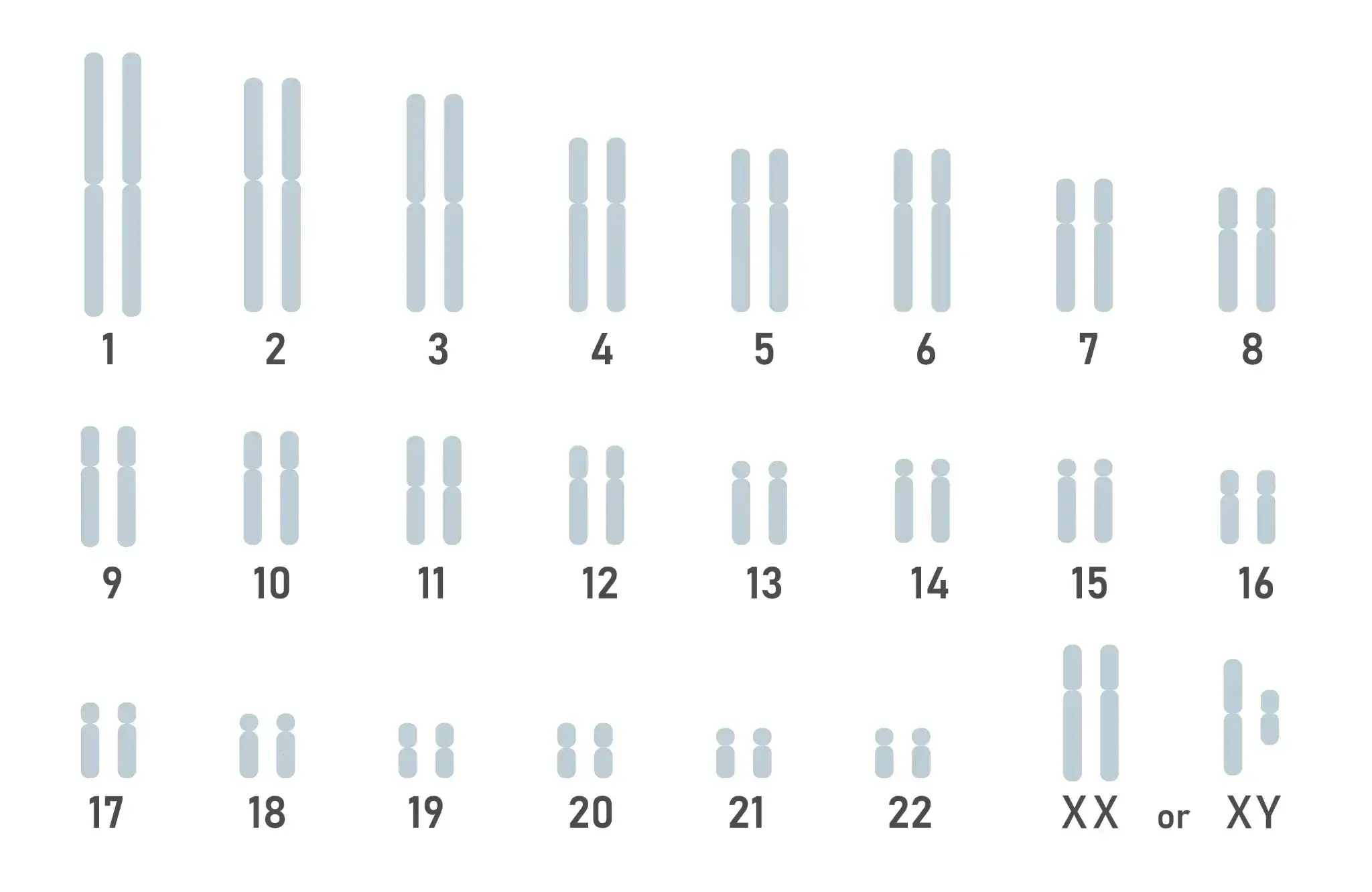
Schematic diagram of DNA map present in cells
- ■
- ■
- ■
- ■
- ■
- ■
- ■
- ■
- ■
Related genes
| Related genes | ERG |
|---|
Frequently asked questions (FAQ)
Q1. What is osteoarthritis of the hip?
Osteoarthritis of the hip joint is a chronic disease in which the cartilage in the hip joint gradually deteriorates and wears out, causing pain and limited range of motion due to direct bone-to-bone contact.In the early stages, the pain is mainly felt during activity, but as the disease progresses, pain persists during rest and at night, causing difficulty walking and changes in posture.
Q2. Is hip osteoarthritis related to genes?
Yes.A study by Tachmazidou et al. of the GSK Pharmaceutical Research Center found that the DNA region rs2836618 is associated with the risk of developing hip osteoarthritis.There are three genotypes of rs2836618: GG, GA, and AA, and people with the genotype A mutation tend to be at higher risk.
Q3. What are the main symptoms of hip osteoarthritis?
The main symptoms areHip/thigh/buttock pain, joint stiffness, limited range of motionIt is. The pain worsens when walking, going up and down stairs, and standing for long periods of time, and as it progresses, the pain continues even when at rest and at night. A rubbing sensation in the hip joints and changes in gait are also characteristic symptoms.
Q4. What is the distribution of the hip osteoarthritis genotype (rs2836618) in Japanese people?
The genotype distribution of rs2836618 in Japanese people isGG type 31.1%, GA type 49.3%, AA type 19.5%It is. Worldwide, 53.6% are GG type, 39.2% are GA type, and 7.1% are AA type, and Japanese people have a characteristic that the prevalence of type A mutation is about 1.5 times higher than the world average.
References
- Reference link 1: 2019 Feb., Ioanna Tachmazidou, Nat Genet