
 osteoarthritis

- Osteoarthritis is a chronic disease that causes pain, stiffness, and swelling due to deterioration of joint cartilage.It affects more than 300 million people worldwide.
- G-type mutation in DNA region rs10502437A study by the GSK Pharmaceutical Research Center found that people with the disease tend to have a higher risk of osteoarthritis.
- The prevalence of type G mutation (GG+GA) in Japanese people is81.1%The main areas of incidence are hands, knees, hip joints, and spine.
Overview Osteoarthritis is a chronic joint disorder caused by the deterioration of the cartilage that protects joints. In this disorder, the bones rub directly against each other as the cartilage wears away, causing joints to become painful, stiff, and swollen. Commonly affected joints are the hands, knees, hips, and spine. It progresses gradually, causing the joint to become less flexible, causing bone spurs to form and the joint lining to become inflamed. People with osteoarthritis may make a sound called crepitus or feel stiffness when moving their joints. Symptoms often appear especially after rest or in the morning. However, symptoms may improve with exercise. Older age, obesity, previous joint injuries, and genetics increase the risk of osteoarthritis. There is no cure, but pain management, lifestyle changes, physical therapy, and sometimes surgery can help relieve symptoms and improve quality of life. Research by Tachmazidou and colleagues at the GSK Pharmaceutical Research Center revealed that the risk of developing degenerative arthritis is associated with a DNA region called rs10502437. There are three genotypes in this DNA region: GG, GA, and AA, and it was found that people with the G genotype tend to have a higher risk of degenerative arthritis.
What is osteoarthritis?
Osteoarthritis is a chronic joint disease in which the cartilage that protects joints gradually deteriorates and wears out, causing pain, stiffness, and swelling when bones come into direct contact with each other.The World Health Organization (WHO) estimates that more than 300 million people worldwide are affected by osteoarthritis, and about 50% of people over the age of 65 have some form of osteoarthritis.
Main symptoms of osteoarthritis
Osteoarthritis develops in stages with the following symptoms:
- Joint pain:Pain occurs when moving, and as the condition progresses, pain occurs even when resting.
- Rigidity:Stiff joints, especially when waking up or after a long period of rest (usually improves within 30 minutes)
- Swelling:Joint swelling due to inflammation of the joint lining
- Crepitus:A grinding or cracking sound occurs when you move your joints.
- Limited range of motion:joints become less flexible and movement is restricted
- Formation of bone spurs:Extra bone forms at the ends of bones, causing pain and deformity.
Main causes and risk factors of osteoarthritis
| risk factors | Details | degree of influence |
|---|---|---|
| aging | Natural deterioration of cartilage and decreased repair ability | Approximately 50% of people over the age of 65 are affected |
| obesity | Excessive load on joints due to weight gain | Knee OA risk is approximately 4 times greater if your BMI is 30 or higher. |
| joint trauma | After a previous sports injury or fracture | If you have a history of trauma, the risk of developing the disease is about 3 to 5 times higher. |
| genetic predisposition | DNA mutations such as rs10502437 | High risk tendency due to G mutation |
| gender | Women are at increased risk after menopause | The prevalence in women is approximately 1.5 times that in men. |
Comparison of common sites and characteristics of osteoarthritis
| Frequently occurring site | Main symptoms | frequency |
|---|---|---|
| knee joint | Pain when walking, difficulty climbing stairs | most frequent |
| hip joint | Walking disorder, groin pain | second most |
| finger joints | Heberden's node, decreased grip strength | common in women |
| spine | Lower back pain, neck pain, nerve compression | common in elderly people |
Relationship between genes and osteoarthritis
Relationship between DNA region rs10502437 and osteoarthritis
A study by Tachmazidou and colleagues at the GSK Pharmaceutical Research Center revealed that the risk of developing osteoarthritis is associated with the DNA region rs10502437.
- There are three genotypes of rs10502437: GG, GA, and AA.
- Genotype with type G mutation(GG type/GA type) people tend to have a higher risk of osteoarthritis
- Related genes:TMEM241(membrane protein related genes)
Comparison of genotype distribution in Japanese and the world (rs10502437)
| Genotype | Percentage of Japanese people | percentage of the world |
|---|---|---|
| GG type | 32.1% | 40.3% |
| GA type | 49.0% | 46.3% |
| AA type | 18.7% | 13.3% |
Relationship between DNA region rs11842874 and osteoarthritis
A study by Day-Williams et al.rs11842874 is also a DNA region involved in osteoarthritisIt has been reported that.
- There are three genotypes of rs11842874: AA, AG, and GG.
- Related genes:MCF2L
Comparison of genotype distribution in Japanese and the world (rs11842874)
| Genotype | Percentage of Japanese people | percentage of the world |
|---|---|---|
| AA type | 63.6% | 84.9% |
| AG type | 32.2% | 14.4% |
| GG type | 4.0% | 0.6% |
The G mutation prevalence rate (AG+GG) in Japanese people is36.2%This is approximately 2.4 times higher than the global average of 15.0%.
Prevention and countermeasures for osteoarthritis
Although osteoarthritis is difficult to cure, the following steps can slow the progression of symptoms and improve your quality of life.
- Maintaining a healthy weight:Aiming for a BMI of less than 25 to reduce the load on knee joints
- Low impact movement:Regularly engage in joint-friendly exercises such as swimming, walking, and yoga
- Strength training:Strengthens muscles around joints and improves joint stability
- Physical therapy:Exercise therapy and joint range of motion training under the guidance of experts
- Drug therapy:Pain management with NSAIDs (non-steroidal anti-inflammatory drugs) and hyaluronic acid injections
- Surgical therapy:Joint replacement surgery may be considered in severe cases.
Rationale for testing
Body surface DNA region: Osteoarthritis
The gene region that most strongly affects osteoarthritis is rs10502437. The distribution of isomorphic genotypes in Japan is as follows.
- GG
32.1 % - GA
49.0 % - AA
18.7 %
Another gene region involved in osteoarthritis is rs11842874. The distribution of isomorphic genotypes in Japan is as follows
- AA
63.6 % - AG
32.2 % - GG
4.0 %
Basis for inspection
Research by Tachmazidou and colleagues at the GSK Pharmaceutical Research Center has revealed that the risk of developing degenerative arthritis is linked to genes. There is a region called rs10502437 in the human genome, and there are two types of mutations, G and A, in the gene in this region. It was found that people with the G-type mutation tend to have a higher risk of degenerative arthritis.
The DNA region investigated this time
Schematic diagram of DNA map present in cells
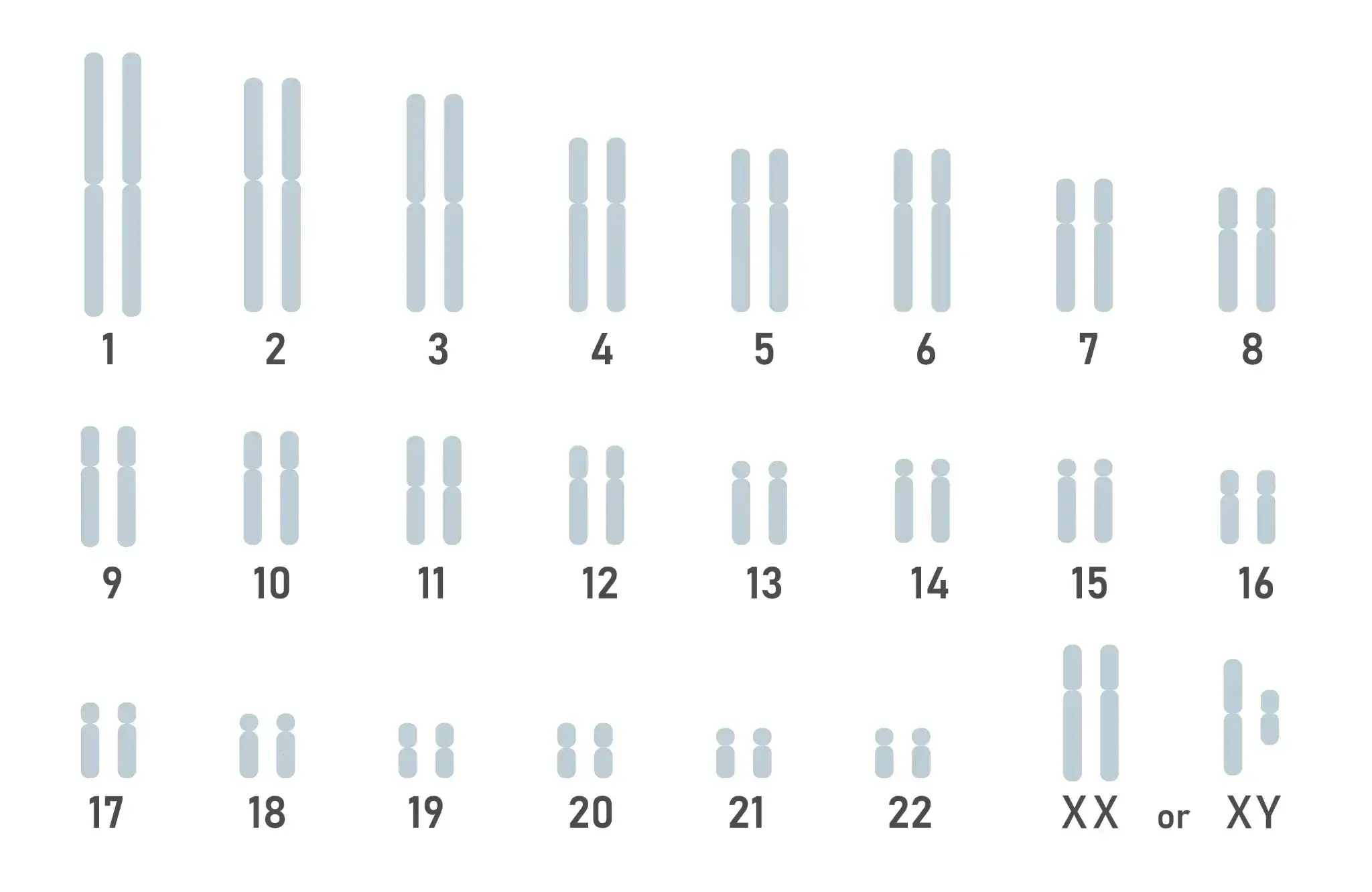
- ■
- ■
- ■
- ■
- ■
- ■
- ■
- ■
- ■
Related genes
| Related genes | TMEM241 |
|---|---|
| Related genes | MCF2L |
Frequently asked questions (FAQ)
Q1. What is osteoarthritis?
Osteoarthritis is a chronic joint disease in which the cartilage that protects joints gradually deteriorates and wears out, causing pain, stiffness, and swelling when bones come into direct contact with each other.It mainly affects the hands, knees, hip joints, and spine, and affects more than 300 million people worldwide. Approximately 50% of people over the age of 65 have some symptoms.
Q2. Is there a relationship between osteoarthritis and genes?
A study by Tachmazidou et al. at the GSK Pharmaceutical Research Center found that the DNA region rs10502437 is associated with the risk of developing osteoarthritis.There are three genotypes of rs10502437: GG, GA, and AA, and people with the G mutation (GG type and GA type) tend to be at higher risk.
Q3. What is the main cause of osteoarthritis?
The main cause isNatural deterioration of cartilage due to aging, excessive load on joints due to obesity, past joint damage/trauma, genetic predispositionThere are four. BMI If your score is 30 or higher, your risk of knee osteoarthritis increases by about 4 times.
Q4. Is there any way to lower the risk of osteoarthritis?
Maintaining a proper weight (BMI less than 25), moderate low-impact exercise (swimming/walking), and strength training for the muscles around the jointsis valid. Early detection and early intervention are important to control the progression of symptoms.
Q5. What is the distribution of the osteoarthritis-related genotype (rs10502437) in Japan?
The genotype distribution of rs10502437 in Japanese people isGG type 32.1%, GA type 49.0%, AA type 18.7%It is. The G mutation prevalence rate (GG+GA) is 81.1% in Japanese and the world average is 86.6%.
References
- Reference link 1: 2019 Feb., Ioanna Tachmazidou, Nat Genet
- Reference link 2: 2011 Sep., Aaron G Day-Williams, Am J Hum Genet