
 Primary open-angle glaucoma

- Primary open-angle glaucoma is a chronic eye disease in which the optic nerve is damaged due to increased intraocular pressure.and is the leading cause of irreversible blindness worldwide.
- G-type mutation in DNA region rs7126413A study by Choquet et al. found that people with the disease tend to have a higher risk of developing the disease.
- Regular eye examinationProgress of vision loss can be suppressed through early treatment (eye drops, laser, surgery)
Overview Open-angle glaucoma is a chronic eye disease characterized by a progressive, asymptomatic condition and is the leading cause of irreversible blindness worldwide. "Open angle" usually refers to the angle between the iris and cornea that allows the eye's aqueous humor to flow freely. However, in open-angle glaucoma, although the drainage angle appears normal, fluid flow is slowed and intraocular pressure (IOP) is high. If this high pressure continues, it can damage the optic nerve. Optic nerve damage begins with subtle loss of peripheral vision and can progress to loss of central vision. Early peripheral vision loss is often unnoticeable, so you may not notice symptoms until significant vision loss occurs. Open-angle glaucoma typically has no other symptoms, and regular eye exams are essential for early detection and care. Treatment strategies focus on lowering intraocular pressure to safe levels. This can be done using medication, laser therapy, or surgery. Early detection and treatment are critical to halting or slowing the progression of vision loss. A study by Choquet and colleagues at Kaiser Permanente Northern California revealed that the risk of developing primary open-angle glaucoma is associated with a DNA region called rs7126413. There are three genotypes in this DNA region: AA, AG, and GG, and it was found that people with the G genotype tend to have a higher risk of primary open-angle glaucoma.
What is primary open-angle glaucoma?
Primary open-angle glaucoma is an eye disease in which intraocular pressure (IOP) is chronically elevated due to impaired drainage of aqueous humor, causing irreversible damage to the optic nerve.It accounts for approximately 60–70% of all glaucoma patients and is the leading cause of irreversible blindness worldwide (1).
Causes and mechanisms of primary open-angle glaucoma
“Open angle” refers to a condition in which the drainage angle between the iris and cornea is physically open. Unlike angle-closure glaucoma, there is no structural obstruction of the drainage angle, but intraocular pressure increases through the following mechanisms:
- Increased outflow resistance of trabecular meshwork:Changes occur in the microstructure of the trabecular meshwork through which aqueous humor drains, reducing its drainage rate.
- Chronic increase in intraocular pressure:Aqueous humor accumulates in the eye due to decreased drainage, causing a persistent increase in intraocular pressure.
- Optic nerve compression damage:Elevated intraocular pressure presses on the optic disc, causing degeneration of nerve fibers.
The main risk factors are:
- Aging (prevalence increases after age 40)
- Family history (genetic predisposition)
- High intraocular pressure (21mmHg or higher)
- myopia
- African ethnic background
Main symptoms of primary open-angle glaucoma
In the early stagesProceeds asymptomaticallyIt is characterized by this. Visual field loss begins peripherally, so by the time symptoms appear, the optic nerve has already been damaged.
- Gradual loss of peripheral vision (early)
- Tunnel vision (middle to advanced stage)
- Loss of central vision (late stage)
- Risk of eventual blindness
Difference between primary open-angle glaucoma and angle-closure glaucoma
| Comparison items | open angle glaucoma | Angle-closure glaucoma |
|---|---|---|
| Drainage angle condition | Open (no structural blockage) | Occlusion (iris blocking the drainage angle) |
| Onset pattern | Progresses slowly (over several years) | Acute attack (several hours to several days) |
| Patient percentage | Approximately 60-70% of all glaucoma cases | Approximately 10-20% of all glaucoma cases |
| subjective symptoms | Asymptomatic at first | Eye pain, headache, and vomiting in acute cases |
| treatment | Eye drops/laser/surgery | Laser iridotomy is the first choice |
Treatment and prevention
The goal of treatment islowering intraocular pressure to a safe levelIt is. The following treatments are used:
- Drug treatment:Lowering intraocular pressure with prostaglandin eye drops, beta-blockers, carbonic anhydrase inhibitors, etc.
- Laser treatment:Accelerating aqueous humor drainage with selective laser trabeculoplasty (SLT)
- Surgery:Trabeculectomy and implant surgery
Diagnostic method
It is diagnosed by the following tests.
- Intraocular pressure measurement (tonometry)
- Observation of the optic disc (fundus examination)
- Visual field test (perimetry)
- Gonioscopy (gonioscopy)
- Evaluation of nerve fiber layer by optical coherence tomography (OCT)
Relationship between genes and primary open-angle glaucoma
Relationship between DNA region rs7126413 and onset risk
A study by Choquet et al. (1) from Kaiser Permanente Northern California found that the DNA region rs7126413 is associated with the risk of developing primary open-angle glaucoma.
- There are three genotypes of rs7126413: AA, AG, and GG.
- Genotype with type G mutationpeople tend to be at higher risk of primary open-angle glaucoma
Genotype distribution in Japanese (rs7126413)
| Genotype | Percentage of Japanese people | percentage of the world |
|---|---|---|
| AA type | 52.7% | 35.3% |
| AG type | 39.7% | 48.2% |
| GG type | 7.5% | 16.4% |
Rationale for testing
Superficial DNA region: primary open-angle glaucoma
The gene region that most strongly influences primary open-angle glaucoma is rs7126413. The distribution of isomorphic genotypes in Japan is as follows.
- AA
52.7 % - AG
39.7 % - GG
7.5 %
Basis for inspection
A study by Choquet and colleagues at Kaiser Permanente Northern California revealed that the risk of developing primary open-angle glaucoma is linked to genes. There is a region called rs7126413 in the human genome, and there are two types of mutations, A and G, in the gene in this region. It has been found that people with the G mutation tend to have an increased risk of primary open-angle glaucoma (1).
The DNA region investigated this time
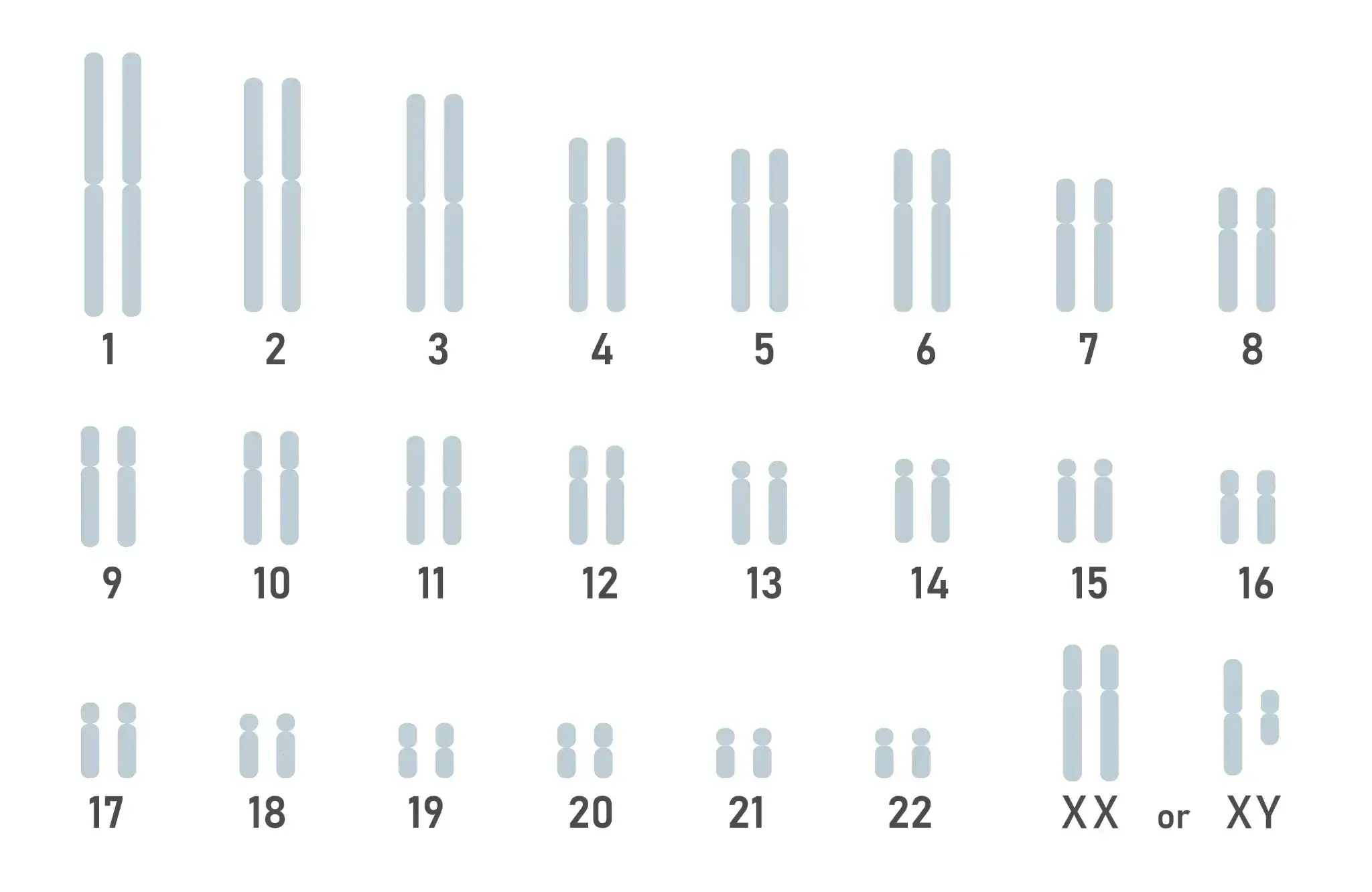
Schematic diagram of DNA map present in cells
- ■
- ■
- ■
- ■
- ■
- ■
- ■
- ■
- ■
Related genes
| Related genes | ARHGEF12 |
|---|
Frequently asked questions (FAQ)
Q1. What is primary open-angle glaucoma?
Primary open-angle glaucoma is an eye disease in which intraocular pressure chronically increases due to impaired aqueous humor drainage, causing irreversible damage to the optic nerve.It accounts for approximately 60-70% of all glaucoma cases and progresses without any symptoms in the early stages, so regular checkups are essential (1).
Q2. What is the cause of primary open-angle glaucoma?
The main cause isIncreased intraocular pressure due to increased resistance to aqueous humor outflow in the trabecular meshworkIt is. Age, family history, high intraocular pressure, and myopia are the main risk factors. Carriers of the G variant in the DNA region rs7126413 tend to be at increased risk (1).
Q3. What is the difference between primary open-angle glaucoma and angle-closure glaucoma?
Open corner typeAqueous humor outflow is reduced despite the drainage angle being structurally open.It progresses slowly. Closed angle typeThe iris physically blocks the drainage angle.This may cause an acute attack (eye pain, headache, vomiting).
Q4. Can genetic testing determine the risk of primary open-angle glaucoma?
By examining the genotype of DNA region rs7126413,Understanding the risk trends of primary open-angle glaucomaYou can. A study by Choquet et al. found that people with the G mutation genotype tend to be at increased risk (1).
References
- Reference link 1: 2018 Jun., Hélène Choquet, Nat Commun
- Reference link 2: 2021 Feb., Puya Gharahkhani, Nat Commun