
 Tendency to have a large number of sexual partners

- The number of sexual partners is associated with the DNA region rs72930774 near the gene TCF4People with type AA tend to secrete more gonadal hormones and have a strong sexual desire.
- 99.94% of Japanese people are type AA, with a higher proportion of type AA than the world average of 90.3%.
- The amount of gonadal hormones (testosterone and estrogen) secretedSexual desire strength and number of partnersResearch shows that
Overview Have you ever thought about the number of sexual partners you will have in your lifetime? Recent genetic research has elucidated various genetic mechanisms related to human personality and behavior. Among them, it became clear that a certain region near the gene "TCF4" is likely to influence "the number of sexual partners in a person's lifetime." This "number of sexual partners in a lifetime" is thought to be influenced by sexual desire, which is one of the three major desires, and the gonadal hormones testosterone and estrogen regulate sexual desire. The amount of these gonadal hormones secreted is related to the strength of sexual desire, and is said to also affect the number of sexual partners in a person's lifetime. By examining your own genetic type, you can not only predict the number of sexual partners you will have in your lifetime, but also find out the strength of your sexual desire. It is difficult to talk about and discuss concerns about sexuality easily, but through genetic testing you can understand your DNA type. Although the influence of genes is limited compared to other conditions such as environment and personality, learning about your genes is one way to better understand yourself. 2. Rationale A study conducted at a British biobank project revealed that certain types of genes near the TCF4 gene are more likely to have a greater number of sexual partners in a lifetime. This region is called the DNA region "rs72930774" and has three genotypes: "AA type," "AG type," and "GG type." The characteristics of each genotype are that ``AA type'' secretes a large amount of gonadal hormones and tends to have a strong sexual desire. The ``AG type'' has a slightly stronger sex drive, and the ``GG type'' tends to secrete the least amount of gonadal hormones. Globally, the percentage of genotypes is ``AA type'' is the highest at 90.3%, ``AG type'' is 9.5%, and ``GG type'' is the lowest at 0.2%. The percentage of Japanese genotypes is similar to the global genetic types, with "AA type" being the most common at 99.94%, "AG type" being the least common at 0.59%, and "GG type" being the least common at 0.01%. When the secretion of gonadal hormones is low, it not only reduces sexual desire but also increases the possibility of male menopause and ED (erectile dysfunction). 3. Mechanism of action The gene "TCF4" is located on chromosome 18 of the 24 human chromosomes, and has the role of binding to DNA and activating neural differentiation. This gene is known to generate nerves related to the reproductive crest, which is the source of the gonads, ovaries, and testes. The gonadal hormones that increase and suppress sexual desire are secreted by the ovaries and testes, so the gene "TCF4" is involved in sexual desire and is thought to influence the "number of sexual partners in a person's lifetime." As mentioned above, the DNA region "rs72930774" is one of the SNVs that is attracting attention because it is related to "the number of sexual partners in a person's lifetime."
What is the tendency to have a large number of sexual partners?
Sexual partner propensity is a trait in which a person is likely to have a higher than average number of sexual partners during their lifetime due to genetic factors.The DNA region rs72930774 near the gene TCF4 is affected and is closely related to the amount of gonadal hormone secretion.
Why do genes influence the number of sexual partners?
one of the three great desiressexual desiredirectly affects the number of sexual partners. The main factors that regulate sexual desire are:
- Testosterone:A gonadal hormone that primarily regulates male sexual desire. secreted by the testes
- Estrogen:A gonadal hormone that regulates female sexual desire. secreted by the ovaries
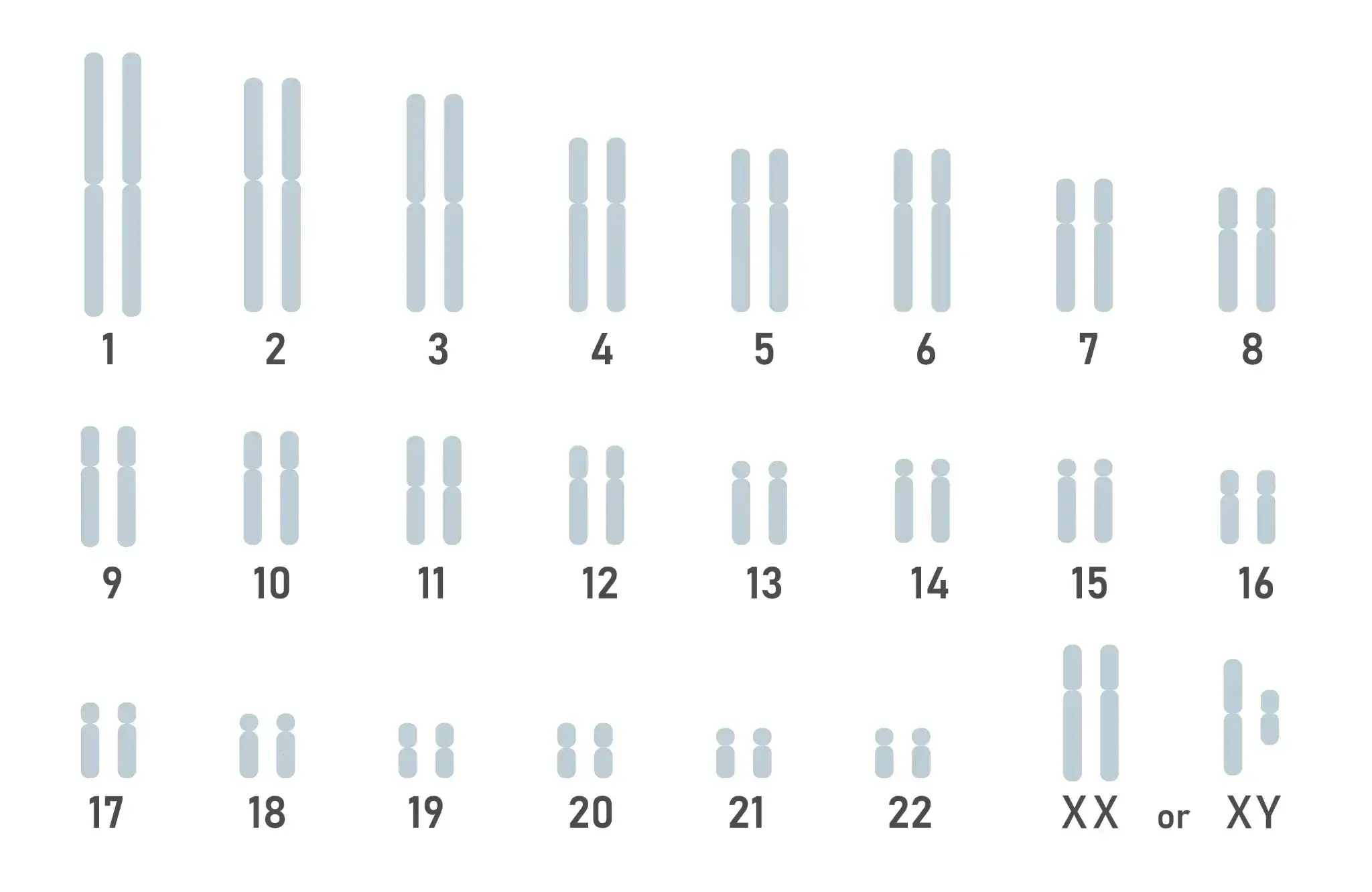
- TCF4 gene:Located on chromosome 18, activates neural differentiation involved in the development of gonads (ovaries and testes)
The amount of these gonadal hormones secreted differs depending on the genotype, resulting in differences in the strength of sexual desire and, by extension, the number of sexual partners in a person's lifetime.
Differences in the influence of genotype (rs72930774) on sexual desire
| Genotype | Gonadal hormone secretion level | Effect on sexual desire |
|---|---|---|
| AA type | many | tendency to have a strong sexual desire |
| AG type | medium | Tendency to have a slightly strong sexual desire |
| GG type | Few | Low gonadal hormone secretion and low sexual desire |
Risks associated with low gonadal hormone secretion
If the secretion of gonadal hormones is low (which tends to be more common in GG type), the following risks increase:
- Decreased sexual desire:Loss of sexual interest due to lack of testosterone and estrogen
- Male menopause:Fatigue and depression symptoms associated with decreased testosterone
- ED (erectile dysfunction):Increased risk of sexual dysfunction in men
Association between genes and number of sexual partners
Relationship between DNA region rs72930774 and number of sexual partners
A study conducted at the UK Biobank project found that the DNA region rs72930774 near the gene TCF4 was associated with the number of sexual partners in a person's lifetime.
- There are three genotypes of rs72930774: AA, AG, and GG.
- AA typePeople secrete more gonadal hormones and tend to have more sexual partners
- Although the influence of genes is limited compared to environment and personality, it is useful as a means of self-understanding.
Comparison of genotype distribution in Japanese and the world (rs72930774)
| Genotype | Percentage of Japanese people | percentage of the world |
|---|---|---|
| AA type | 99.94% | 90.3% |
| AG type | 0.06% | 9.5% |
| GG type | 0.01% | 0.2% |
The prevalence of type AA in Japanese people is99.94%This is approximately 9.6 points higher than the world average of 90.3%. This indicates that the AA type gene is widely distributed in the Japanese population.
Mechanism of action of TCF4 gene
How is the TCF4 gene involved in sexual desire?
The TCF4 gene is located on chromosome 18 and is a transcription factor that binds to DNA and activates neural differentiation.The mechanism by which this gene affects sexual desire is as follows.
- Activation of neural differentiation:TCF4 promotes the development of nerves related to the reproductive crest (tissue that forms the basis of ovaries and testes)
- Effects on gonadal hormone secretion:Involved in the production of testosterone and estrogen secreted by the ovaries and testes
- Regulating sexual desire:Indirectly controls the strength of sexual desire through the secretion of gonadal hormones
The DNA region rs72930774 is located near this TCF4 gene, and it is thought that differences in genotype affect the amount of hormone secretion, which is related to the number of sexual partners.
Rationale for testing
Superficial DNA region: Tendency to have a large number of sexual partners
The gene region that most strongly influences the tendency to have a large number of sexual partners is rs72930774. The distribution of isomorphic genotypes in Japan is as follows.
- AA
99.9 % - AG
0.1%以下 - GG
0.1%以下
Basis for inspection
Richard Karlsson from Vrije Universiteit Amsterdam A study by Linnér et al. found that the tendency to have a large number of sexual partners is linked to genes. There is a region called rs72930774 in the human genome, and there are two types of mutations, A and G, in the gene in this region. They found that people with the type A mutation tended to have more sexual partners.
The DNA region investigated this time
Schematic diagram of DNA map present in cells
- ■
- ■
- ■
- ■
- ■
- ■
- ■
- ■
- ■
Related genes
| Related genes | TCF4 |
|---|
Frequently asked questions (FAQ)
Q1. What is the trend of having a large number of sexual partners?
The tendency to have a large number of sexual partners is a trait that is characterized by a person's tendency to have a larger than average number of sexual partners during their lifetime, depending on the genotype of the rs72930774 DNA region near the TCF4 gene.People with type AA genotype secrete a large amount of gonadal hormones (testosterone and estrogen) and tend to have a strong sexual desire, so it is said that they are more likely to have an increased number of partners.
Q2. What are the differences depending on the genotype of DNA region rs72930774?
rs72930774 hasAA type/AG type/GG typeThere are three genotypes. AA types tend to secrete a lot of gonadal hormones and have a strong sexual desire, AG types tend to have a slightly strong sexual desire, and GG types tend to secrete less gonadal hormones. Among Japanese people, type AA is overwhelmingly prevalent at 99.94%.
Q3. How is the TCF4 gene involved in sexual desire?
The TCF4 gene is located on chromosome 18 and is a transcription factor that binds to DNA and activates neural differentiation.It generates nerves related to the reproductive crest, which is the source of the ovaries and testes, and is involved in the secretion of gonadal hormones, thus affecting sexual desire and the number of sexual partners.
Q4. What happens if the secretion of gonadal hormones is low?
If the secretion of gonadal hormones is low,In addition to a decrease in sexual desire, there is an increased risk of male menopause and ED (erectile dysfunction).People with the GG genotype tend to have low levels of gonadal hormone secretion, so they need to be careful about these symptoms.
References
- Reference link 1: 2019 Jan., Richard Karlsson Linnér, Nature Genetics.
- Reference link 2: DNA Information on region “rs72930774” NIH
- Reference link 3: 2016 Apr., Mitchell D'Rozario, Cell Reports.