
 non-small cell lung cancer

- Non-small cell lung cancer (NSCLC) is a malignant tumor that accounts for approximately 85% of lung cancers.It is classified into three types: adenocarcinoma, squamous cell carcinoma, and large cell carcinoma.
- Type A mutation in DNA region rs751402Research shows that people with the disease tend to be at higher risk of developing
- The prevalence of type AA among Japanese people is 14.0%, compared to the world average of 4.0%.Approximately 3.5 times higher
Overview Non-small cell lung cancer (NSCLC) is a type of lung cancer and accounts for approximately 85% of lung cancer cases. Depending on the location and appearance (microscopic observation), it is classified into adenocarcinoma, squamous cell carcinoma, and large cell carcinoma. Adenocarcinoma is the most common type of NSCLC and occurs outside or in the periphery of the lungs. In the early stages, there may be no symptoms, but as the disease progresses, symptoms such as coughing, chest pain, and shortness of breath appear. Squamous cell carcinoma begins in the central part of the lungs, near the main airways (bronchial tubes). Symptoms include vomiting blood, continuous coughing, difficulty breathing, and chest pain. Large cell carcinoma can develop in any part of the lung, is highly malignant, and the disease progresses quickly. Therefore, it is more likely to metastasize and be more serious than adenocarcinoma or squamous cell carcinoma. In addition to the symptoms listed above, you may also have common cancer symptoms such as fatigue, weight loss, loss of appetite, and weakness. NSCLC is influenced by smoking, living environment, genetic factors, etc. Identifying the type of NSCLC is important in determining treatment strategies, and accurate diagnosis requires imaging tests and biopsy tests. Treatment methods include surgery, chemotherapy, radiation therapy, molecular target therapy, and immunotherapy. A study by Bhat et al. of Sri Mata Vaishno Devi University revealed that the risk of developing non-small cell lung cancer is associated with a DNA region called rs751402. There are three genotypes in this DNA region: AA, AG, and GG, and it has been found that people with the A genotype tend to have a higher risk of non-small cell lung cancer.
What is non-small cell lung cancer (NSCLC)?
Non-Small Cell Lung Cancer (NSCLC) is a malignant tumor that accounts for approximately 85% of lung cancers and is classified into three types: adenocarcinoma, squamous cell carcinoma, and large cell carcinoma.The remaining approximately 15% is classified as small cell lung cancer, which differs in treatment methods and progression rate from NSCLC.
According to statistics from the National Cancer Center, lung cancer is the leading cause of cancer death in Japan.1st placeapproximately 75,000 people are newly diagnosed each year. NSCLC accounts for the highest proportion of these, and early detection and appropriate treatment are directly linked to survival rates.
Three classifications of non-small cell lung cancer and their differences
NSCLC is classified into the following three types depending on the location of occurrence and cell characteristics.
| classification | Occurrence site | percentage | Features |
|---|---|---|---|
| adenocarcinoma | Outside/periphery of the lungs | Approximately 40% | It has the highest incidence in NSCLC. Often asymptomatic in the early stages |
| squamous cell carcinoma | Near the main airway (bronchus) | Approximately 25-30% | Strongly associated with smoking. Characterized by blood vomit and continuous cough |
| large cell carcinoma | every part of the lungs | Approximately 10-15% | It is highly malignant and progresses rapidly. High risk of metastasis |
Causes and risk factors of non-small cell lung cancer
The following factors are involved in the development of NSCLC:
- Smoking:This is the biggest risk factor, and the risk of developing the disease in smokers is approximately 15 to 30 times that of non-smokers.
- Passive smoking:Even for non-smokers, passive smoking increases the risk of developing the disease by approximately 1.3 times.
- Environmental factors:Asbestos exposure, air pollution, and radon gas exposure
- Genetic factors:Type A mutation in the DNA region rs751402 is involved in the risk of developing the disease.
- Medical history:Increased risk if you have a history of chronic obstructive pulmonary disease (COPD) or pulmonary fibrosis
Main symptoms of non-small cell lung cancer
In the early stagesAsymptomaticThe following symptoms often appear as the disease progresses:
- Persistent cough (be careful if it lasts for more than 2 weeks)
- Chest pain/difficulty breathing
- Hematemesis (bloody sputum)
- Unexplained weight loss
- Chronic fatigue/loss of appetite
- Hoarseness (hoarseness of voice)
By the time symptoms appear, many cases have progressed to stage III to IV.Early detection through regular checkupsdirectly leads to improved survival rate.
Treatment for non-small cell lung cancer
The following treatment methods are selected depending on the disease stage and the presence or absence of genetic mutations.
| treatment method | Applicable stage | Features |
|---|---|---|
| surgery | I-II stage | Surgical removal of the tumor. Treatment methods aiming for a complete cure |
| chemotherapy | Stage II-IV | Anticancer drug administration. Also used as adjuvant therapy after surgery |
| radiation therapy | Stage II-III | Destroy tumors with high-energy radiation |
| Molecular targeted therapy | Stage III-IV | EGFR inhibitors, ALK inhibitors, etc. Effective for tumors with specific genetic mutations |
| immunotherapy | Stage III-IV | Treatment with immune checkpoint inhibitors (PD-1/PD-L1 antibodies) |
How to diagnose non-small cell lung cancer
The following tests are required for accurate diagnosis of NSCLC:
- Image examination:Chest X-ray, CT examination, PET-CT
- Biopsy:Bronchoscopy, percutaneous needle biopsy
- Genetic testing:Testing for EGFR mutations, ALK fusion genes, and ROS1 fusion genes
- Tumor marker:CEA, CYFRA21-1, SCC antigen
Relationship between genes and non-small cell lung cancer
What is the relationship between the DNA region rs751402 and the risk of developing the disease?
A study by Gh Rasool Bhat and colleagues from Sri Mata Vaishno Devi University found that the DNA region rs751402 is associated with the risk of developing non-small cell lung cancer.
- There are three genotypes of rs751402: AA, AG, and GG.
- AA type with type A mutationhave the highest risk of developing non-small cell lung cancer
- AG typetend to have a slightly higher risk of developing
- GG type has relatively low risk
However, people with type AA or AG type do not necessarily develop non-small cell lung cancer.Smoking and environmental factors combine to increase the risk of developing the disease.
Genotype distribution in Japanese (rs751402)
| Genotype | Percentage of Japanese people | percentage of the world |
|---|---|---|
| AA type | 14.0% | 4.0% |
| AG type | 46.8% | 32.0% |
| GG type | 39.0% | 63.9% |
Japanese people have a high prevalence of type AA, about 3.5 times the world average.Populations genetically at higher risk of NSCLCIt is suggested that.
Role of related gene ERCC5
ERCC5(Excision Repair Cross-Complementing group 5)is a gene involved in the nucleotide excision repair (NER) pathway, which repairs DNA damage. It is believed that functional abnormalities in ERCC5 lead to a decline in DNA repair ability, leading to cancerous development of cells.
- ERCC5 encodes an enzyme that recognizes and cleaves damaged sites in DNA double strands.
- rs751402 is located in the ERCC5 gene region and affects its function
- Type A mutation may reduce DNA repair ability and increase cancer risk
Rationale for testing
Superficial DNA region: non-small cell lung cancer
The gene region that most strongly affects non-small cell lung cancer is rs751402. The distribution of isomorphic genotypes in Japan is as follows.
- AA
14.0 % - AG
46.8 % - GG
39.0 %
Basis for inspection
A study by Bhat et al. of Sri Mata Vaishno Devi University revealed that the risk of developing non-small cell lung cancer is linked to genes. There is a region called rs751402 in the human genome, and there are two types of mutations, A and G, in the gene in this region. It was found that people with the type A mutation tend to have a higher risk of developing non-small cell lung cancer. Among Japanese people, 14.0% are type AA, 46.8% are type AG, and 39.0% are type GG, and the prevalence of type A is higher than the world average.
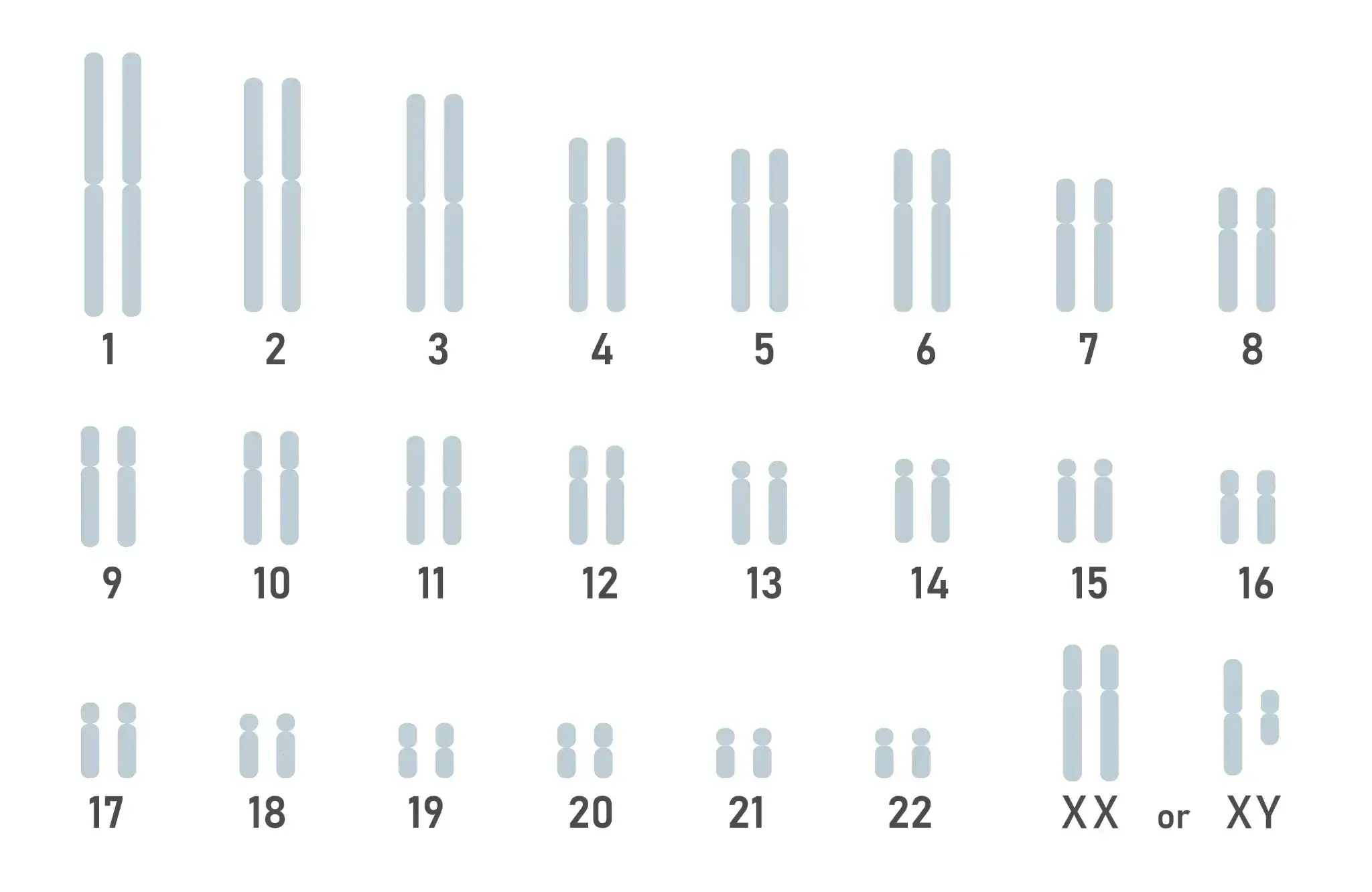
The DNA region investigated this time
Schematic diagram of DNA map present in cells
- ■
- ■
- ■
- ■
- ■
- ■
- ■
- ■
- ■
Related genes
| Related genes | ERCC5 |
|---|
Frequently asked questions (FAQ)
Q1. What is non-small cell lung cancer (NSCLC)?
Non-small cell lung cancer (NSCLC) is a malignant tumor that accounts for approximately 85% of lung cancers.It is classified into three types: adenocarcinoma, squamous cell carcinoma, and large cell carcinoma. It accounts for the highest proportion of all lung cancers, and smoking is the biggest risk factor.
Q2. What are the differences between the three classifications of non-small cell lung cancer?
adenocarcinomaApproximately 40% of NSCLC cases occur outside the lungs and are asymptomatic in the early stages.squamous cell carcinomaIt occurs in the central region near the bronchi and is strongly associated with smoking.large cell carcinomacan develop in any part of the lungs, and is highly malignant and prone to metastasis.
Q3. What is the cause of non-small cell lung cancer?
The biggest risk factor issmokingThe risk of developing the disease in smokers is approximately 15 to 30 times that of non-smokers. OthersSecond-hand smoke, asbestos exposure, air pollution, genetic factors (type A mutation in DNA region rs751402) are involved in the onset.
Q4. Can genetic testing determine the risk of non-small cell lung cancer?
By examining the genotype of DNA region rs751402,Understanding trends in the risk of developing non-small cell lung cancerYou can. A study by Bhat et al. found that people with type A mutations (AA and AG) tend to be at higher risk.
Q5. What treatments are available for non-small cell lung cancer?
The main treatment method isSurgery, chemotherapy, radiotherapy, molecular target therapy, immunotherapyThere are 5 types. Molecular target therapy uses EGFR inhibitors and ALK inhibitors, and immunotherapy uses immune checkpoint inhibitors using PD-1/PD-L1 antibodies. The most appropriate treatment is selected depending on the stage of the disease and the presence or absence of a genetic mutation.
References
- Reference link 1: 2021 May., Gh Rasool Bhat, Sci Rep