
 non-alcoholic fatty liver

- Nonalcoholic fatty liver disease (NAFLD) is a disease in which fat accumulates in liver cells in people who do not consume alcohol.Approximately 25-30% of Japanese adults are affected.
- T-type mutation in DNA region rs1260326A Kyoto University study found that people with the disease tend to have a higher risk of developing the disease.
- Approximately 82.4% of Japanese people have the risk type (TT type 33.8% + TC type 48.6%),Prevention by improving lifestyle habitsis important
Overview Non-alcoholic fatty liver disease (NAFLD) is a condition in which excess fat accumulates within liver cells, but is not caused by alcohol consumption. NAFLD ranges from simple fatty liver, which is mild intrahepatic fat accumulation, to more advanced non-alcoholic steatosis hepatitis (NASH). In NASH, hepatitis progresses and can lead to fibrosis and liver scarring. In the early stages of NAFLD, there are usually no symptoms. Even if symptoms do occur, the main ones are fatigue, decreased physical strength, discomfort and mild pain in the upper right abdomen. In advanced NAFLD, more severe symptoms may occur, including jaundice, swelling of the abdomen and legs, and severe pain and discomfort. The liver may be enlarged to palpation, but diagnostic imaging and biopsy are required to confirm internal inflammation and fibrosis. NAFLD is closely associated with metabolic syndromes such as obesity, type 2 diabetes, hypertension, and hyperlipidemia. People with these conditions are at increased risk of developing NAFLD. A study by Kawaguchi et al. from Kyoto University revealed that the risk of non-alcoholic fatty liver disease is associated with a DNA region called rs1260326. There are three genotypes in this DNA region: TT, TC, and CC, and it was found that people with the T genotype tend to have a higher risk of non-alcoholic fatty liver disease.
What is non-alcoholic fatty liver (NAFLD)?
Non-alcoholic fatty liver disease (NAFLD) is a condition in which excess fat accumulates in the liver cells of people who do not consume excessive amounts of alcohol.According to the guidelines of the Japanese Society of Gastroenterology, it is estimated that approximately 25-30% of Japanese adults have NAFLD.
NAFLD is mild fat accumulationsimple fatty liverHepatitis progresses fromNonalcoholic steatohepatitis (NASH)It includes a wide range of pathologies. If NASH progresses, there is a risk of developing liver fibrosis, cirrhosis, and liver cancer.
Causes and risk factors for NAFLD
NAFLD ismetabolic syndromeIt is a disease closely related to The main risk factors are:
- Obesity (BMI 25 or higher):The biggest risk factor that directly promotes fat accumulation in the liver
- Type 2 diabetes:Insulin resistance inhibits liver fat metabolism
- High blood pressure:Increases liver blood flow disorder and metabolic stress on liver cells
- Hyperlipidemia (dyslipidemia):Excess blood lipids accelerate fat accumulation in the liver
- Genetic predisposition:DNA region rs1260326 of gene GCKR is involved in risk
Main symptoms of NAFLD
In the early stages of NAFLDThere are no symptomsIt is characterized by this. The main signs of symptoms are shown in stages.
| stage | symptoms | Features |
|---|---|---|
| early stage | Asymptomatic | Often discovered incidentally during a health checkup |
| middle period | Fatigue/discomfort in the upper right abdomen | Chronic fatigue and dull abdominal pain |
| advanced stage | Jaundice, ascites, edema | Serious symptoms due to decreased liver function |
Difference between NAFLD and NASH
NAFLD is a broad disease concept, and NASH is its progressive form. The differences between the two are summarized below.
| Comparison items | NAFLD (simple fatty liver) | NASH |
|---|---|---|
| Fat accumulation in the liver | Yes | Yes |
| hepatitis | None or mild | Yes (high inflammatory activity) |
| liver fibrosis | None | Yes (progressive) |
| progression risk | low | Progression to liver cirrhosis/liver cancer |
| Patient percentage | Approximately 80-90% of total NAFLD | Approximately 10-20% of total NAFLD |
How to diagnose NAFLD
NAFLD is diagnosed using the following tests:
- Blood test:Confirmed increase in AST, ALT, and γ-GTP
- Abdominal ultrasound:Check images of fat accumulation in the liver (bright liver)
- CT/MRI examination:Quantitative evaluation of the degree of fat accumulation
- Liver biopsy:The most reliable test to differentiate from NASH
- FIB-4 index:Estimating liver fibrosis from age, AST, ALT, and platelet count
Prevention and countermeasures for NAFLD
The following lifestyle changes are effective for preventing and improving NAFLD.
- Weight management:Aim for a BMI of less than 25 and reduce liver fat by 7-10% of your body weight.
- Aerobic exercise:Walking/jogging for at least 150 minutes a week is recommended.
- Meal improvement:Limit excessive intake of carbohydrates and saturated fatty acids, and actively intake dietary fiber
- Regular inspection:Early detection through annual liver function tests (AST, ALT, γ-GTP)
Relationship between genes and non-alcoholic fatty liver
Relationship between DNA region rs1260326 and onset risk
Research by Kawaguchi et al. at Kyoto University revealed that the DNA region rs1260326 near the gene GCKR is associated with the risk of non-alcoholic fatty liver disease.
- There are three genotypes of rs1260326: TT, TC, and CC.
- TT type with T mutationare more likely to develop non-alcoholic fatty liver disease
- TC typeThere is a tendency to develop haze
- CC type is relatively low risk
However, people with type TT or type TC do not necessarily develop NAFLD.The incidence increases due to the combination of metabolic risks such as obesity, diabetes, and hyperlipidemia.
Genotype distribution in Japanese (rs1260326)
| Genotype | Percentage of Japanese people | percentage of the world |
|---|---|---|
| TT type | 33.8% | 16.7% |
| TC type | 48.6% | 48.3% |
| CC type | 17.4% | 34.8% |
The proportion of Japanese people with type TT is approximately twice the world average (16.7%) (33.8%).Populations genetically at high risk for NAFLDIt is suggested that.
Mechanism of action: Relationship between the gene GCKR and NAFLD
The gene GCKR ischromosome 2It encodes a glucokinase regulatory protein. This protein plays an important role in regulating glucose and lipid metabolism in the liver.
The mechanism of T-type mutation in DNA region rs1260326 is as follows.
- Functional changes in GCKR → constitutive activation of glucokinase
- Increased glucose uptake in the liver → promotion of fatty acid synthesis
- Triglyceride accumulation in the liver → development of fatty liver
- Increased blood triglyceride levels → increased risk of metabolic syndrome
Rationale for testing
Superficial DNA region: non-alcoholic fatty liver
The gene region that most strongly influences non-alcoholic fatty liver disease is rs1260326. The distribution of isomorphic genotypes in Japan is as follows.
- TT
33.8 % - TC
48.6 % - CC
17.4 %
Basis for inspection
A study by Kawaguchi et al. at Kyoto University revealed that the risk of developing non-alcoholic fatty liver disease is related to genes. There is a region called rs1260326 in the human genome, and there are two types of mutations, T and C, in the gene in this region. It was found that people with the T-type mutation tend to have a higher risk of non-alcoholic fatty liver disease. Among Japanese people, 33.8% have type TT, 48.6% have type TC, and 17.4% have type CC, which is characterized by a higher prevalence of type T than the world average.
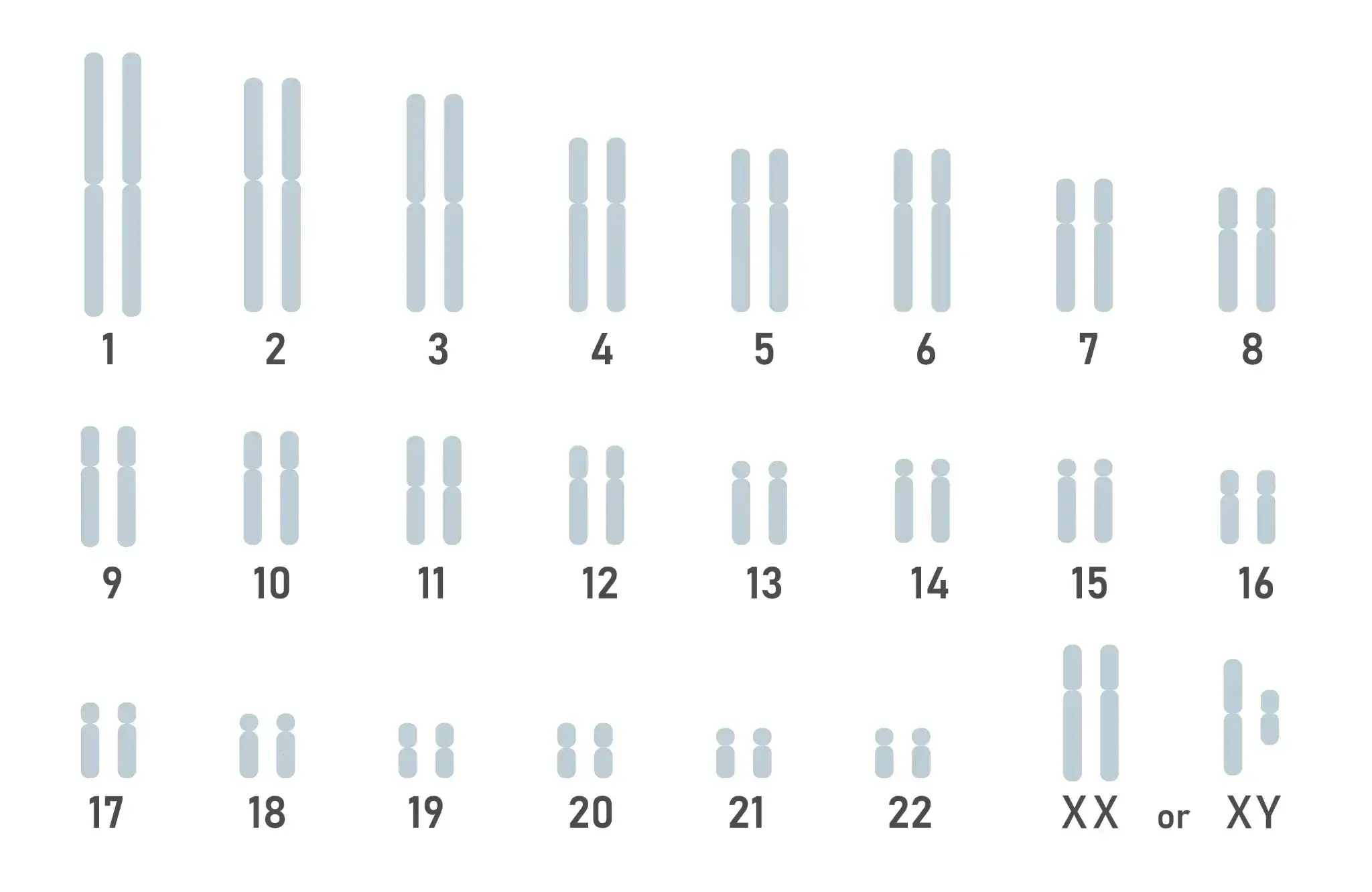
The DNA region investigated this time
Schematic diagram of DNA map present in cells
- ■
- ■
- ■
- ■
- ■
- ■
- ■
- ■
- ■
Related genes
| Related genes | GCKR |
|---|
Frequently asked questions (FAQ)
Q1. What is nonalcoholic fatty liver disease (NAFLD)?
Nonalcoholic fatty liver disease (NAFLD) is a disease in which excess fat accumulates in liver cells in people who do not consume excessive alcohol.Approximately 25-30% of Japanese adults are affected, and the disease includes a wide range of conditions, from simple fatty liver to NASH. In the early stages, there are no symptoms, so early detection through health checkups is important.
Q2. What is the cause of NAFLD?
The main cause isFactors related to metabolic syndrome such as obesity, type 2 diabetes, hypertension, and hyperlipidemiaIt is. Furthermore, research at Kyoto University has revealed that the T-type mutation in the rs1260326 DNA region of the gene GCKR increases the risk.
Q3. What is the difference between NAFLD and NASH?
NAFLD isGeneral fat accumulation in the liverIt is a broad concept that refers to NASH is a progressive form of NAFLD, in which fat accumulation andHepatitis/fibrosisThis is a situation where this occurs. Approximately 10-20% of NAFLD patients progress to NASH, which increases the risk of liver cirrhosis and liver cancer.
Q4. Can genetic testing determine the risk of NAFLD?
By examining the genotype of the DNA region rs1260326,Understand the risk trend of developing NAFLDYou can. People with the T mutation (TT type/TC type) tend to be at high risk, and approximately 82.4% of Japanese people carry the risk type.
Q5. What are the prevention methods for NAFLD?
To prevent NAFLDWeight management (BMI less than 25), aerobic exercise of at least 150 minutes per week, restriction of carbohydrates and fats, and regular liver function testsis valid. There are reports that liver fat can be improved by reducing body weight by 7 to 10%.
References
- Reference link 1: 2018 Jan., Takahisa Kawaguchi, PLoS One