
 Neurodevelopmental disorders (developmental disorders)

- Neurodevelopmental disorders (developmental disorders) are a group of diseases that affect the development and function of the brain's nervous system during the developmental period.and includes six or more disabilities such as ASD, ADHD, and intellectual disabilities.
- C-type mutation in DNA region rs3777544Research from the University of Oslo finds that people with ADHD tend to be at higher risk of developing neurodevelopmental disorders.
- The prevalence of type C mutation (TC+CC) in Japanese people is71.0%This is a high percentage compared to the world average of 56.7%.
Overview Measuring the depth of cerebral sulci in the cerebral cortical fold is a promising method to assess neurodevelopmental disorders. The folding pattern of the cortex, including the depth of the sulci and the height of the gyri, is important in brain development and organization. Neurodevelopmental disorders are a group of disorders that affect the development and function of the brain's nervous system during development. These disorders begin early in life and affect cognitive, social, emotional, and physical development. Typical neurodevelopmental disorders include autism spectrum disorder (ASD), attention deficit hyperactivity disorder (ADHD), intellectual disability (ID), specific learning disabilities, communication disorders, and movement disorders. These disorders often coexist and involve a complex interplay of genetic, environmental, and biological factors. Early detection and early treatment are important to improve prognosis and promote personal development. Treatment requires a multifaceted approach, including educational support, behavioral therapy, various therapies, and, in some cases, drug therapy. A study by van der Meer et al. at the University of Oslo revealed that the risk of developing neurodevelopmental disorders (developmental disorders) is associated with a DNA region called rs3777544. There are three genotypes in this DNA region: TT, TC, and CC, and it was found that people with the C genotype tend to have a higher risk of neurodevelopmental disorders.
What is neurodevelopmental disorder (developmental disorder)?
Neurodevelopmental disorders (developmental disorders) are a group of disorders that affect the development and function of the brain's nervous system during development.It begins early in life and affects cognitive, social, emotional, and physical development. Measuring the depth of cerebral sulci in the folded structure of the cerebral cortex has emerged as a promising method for assessing neurodevelopmental disorders.
What are the typical types of neurodevelopmental disorders?
Neurodevelopmental disorders include the following six typical disorders: These conditions frequently coexist, and genetic, environmental, and biological factors are intricately involved.
| Failure name | Main features |
|---|---|
| Autism Spectrum Disorder (ASD) | Difficulties with social communication, limited and repetitive behavior patterns |
| Attention Deficit Hyperactivity Disorder (ADHD) | Behavioral characteristics of persistent inattention, hyperactivity, and impulsivity |
| Intellectual disability (ID) | A condition in which there are limitations in both intellectual function and adaptive behavior. |
| specific learning disability | A condition in which there is significant difficulty in specific learning areas such as reading, writing, and arithmetic. |
| communication disorder | A condition in which there is difficulty in understanding, expressing, and producing speech. |
| movement disorders | Difficulty in coordination, fine movement, and gross movement |
Why early detection and early treatment are important
Early detection and early treatment are essential to improving prognosis and promoting individual development.Treatment approaches are divided into four categories:
- Educational support:Developing a learning environment based on the Individual Education Plan (IEP)
- Behavioral therapy:Evidence-based interventions such as applied behavior analysis (ABA)
- Various therapies:Implementation of speech therapy, occupational therapy, and sensory integration therapy
- Drug therapy:Symptom management with drugs as necessary for ADHD, etc.
Relationship between cerebral sulcus depth and neurodevelopmental disorders
Including the depth of the sulci and the height of the gyri.Cortical folding patterns play an important role in brain development and organization.Measuring the folded structure of the cerebral cortex makes it possible to evaluate neurodevelopmental disorders, and is expected to be applied to early diagnosis.
Relationship between genes and neurodevelopmental disorders (developmental disorders)
Relationship between DNA region rs3777544 and neurodevelopmental disorders
Research by van der Meer et al., University of Oslo (2021, Science Advances) revealed that the risk of developing neurodevelopmental disorders (developmental disorders) is associated with the DNA region rs3777544.
- There are three genotypes of rs3777544: TT, TC, and CC.
- Genotype with type C mutation(TC type/CC type) people tend to have a higher risk of neurodevelopmental disorders
- This gene region is related to CLIC5 and FAM178B genes
Comparison of genotype distribution in Japanese and the world (rs3777544)
| Genotype | Percentage of Japanese people | percentage of the world |
|---|---|---|
| TT type | 28.9% | 43.2% |
| TC type | 49.7% | 45.0% |
| CC type | 21.3% | 11.7% |
The prevalence of type C mutation in Japanese people (TC+CC) is71.0%, which is higher than the global average of 56.7%. The percentage of Japanese people with type CC is21.3%This is approximately 1.8 times higher than the world average of 11.7%, reflecting the genetic characteristics of the Japanese population.
Comparison of genotype distribution in Japanese and the world (rs78783493)
| Genotype | Percentage of Japanese people | percentage of the world |
|---|---|---|
| CC type | 99.9% | 88.0% |
| CT type | 0.1%以下 | 11.5% |
| TT type | 0.1%以下 | 0.3% |
For rs78783493, the prevalence of CC type among Japanese people is99.9%This is extremely high, significantly exceeding the world average of 88.0%. CT and TT mutations are almost never confirmed in the Japanese population.
Rationale for testing
Surface DNA region: Neurodevelopmental disorders (developmental disorders)
The gene region that most strongly affects neurodevelopmental disorders (developmental disorders) is rs3777544. The distribution of isomorphic genotypes in Japan is as follows.
- TT
28.9 % - TC
49.7 % - CC
21.3 %
Another gene region associated with neurodevelopmental disorders (developmental disorders) is rs78783493. The distribution of isomorphic genotypes in Japan is as follows
- CC
99.9 % - CT
0.1%以下 - TT
0.1%以下
Basis for inspection
van der of the university of oslo Research by Meer et al. revealed that the risk of developing neurodevelopmental disorders (developmental disorders) is related to genes. There is a region called rs3777544 in the human genome, and there are two types of mutations, T and C, in the gene in this region. It was found that people with T-type mutations tend to have a higher risk of neurodevelopmental disorders.
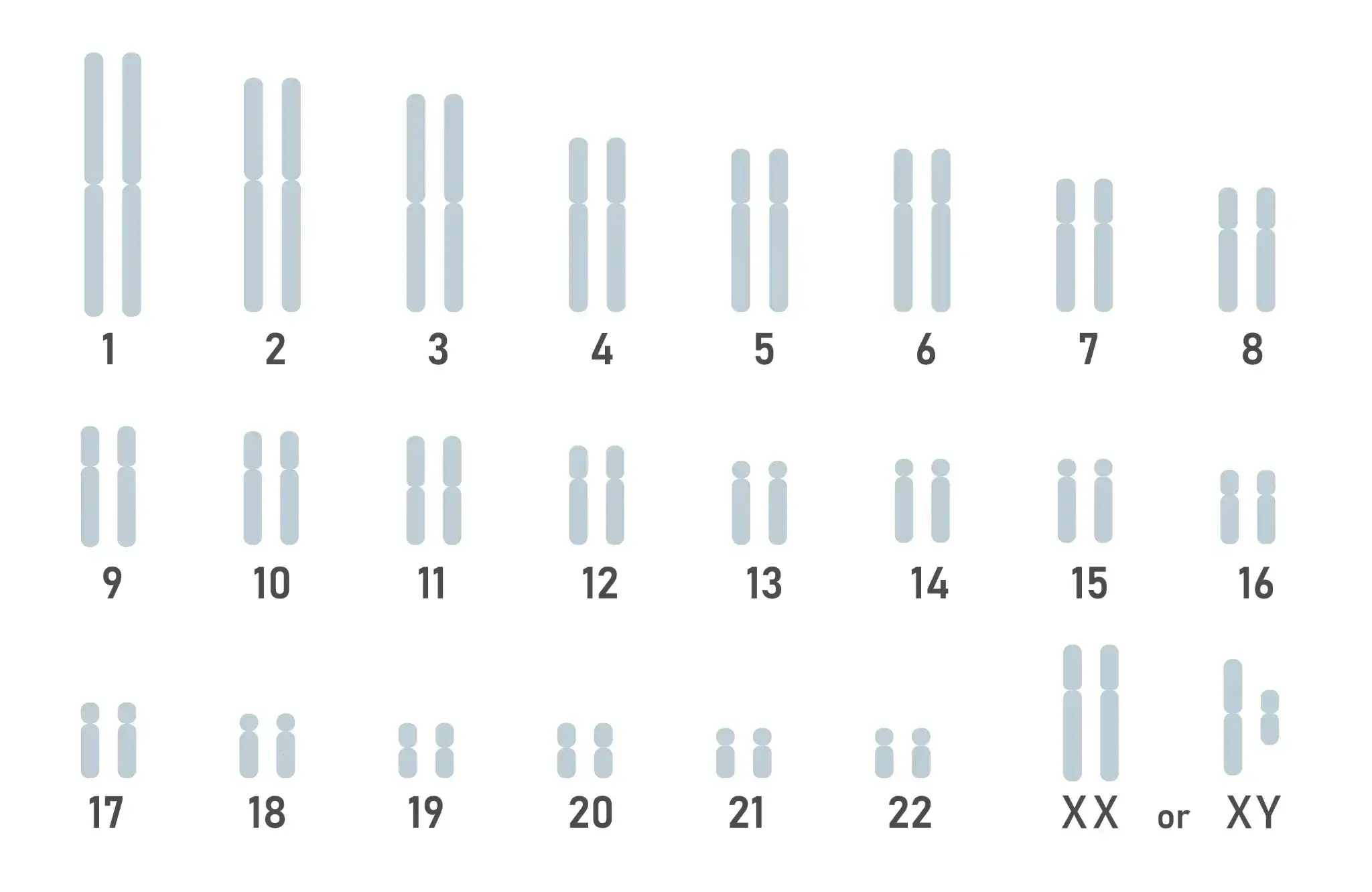
The DNA region investigated this time
Schematic diagram of DNA map present in cells
- ■
- ■
- ■
- ■
- ■
- ■
- ■
- ■
- ■
Related genes
| Related genes | CLIC5 |
|---|---|
| Related genes | FAM178B |
Frequently asked questions (FAQ)
Q1. What is neurodevelopmental disorder (developmental disorder)?
Neurodevelopmental disorders (developmental disorders) are a group of disorders that affect the development and function of the brain's nervous system during development.The six most common types are autism spectrum disorder (ASD), attention deficit hyperactivity disorder (ADHD), intellectual disability (ID), specific learning disability, communication disorder, and movement disorder. It begins early in life and affects cognitive, social, emotional, and physical development.
Q2. Are neurodevelopmental disorders (developmental disorders) related to genes?
Yes.Research by van der Meer et al., University of Oslo (2021, Science Advances) found that the DNA region rs3777544 is associated with the risk of neurodevelopmental disorders.There are three genotypes of rs3777544: TT, TC, and CC, and people with the genotype C mutation tend to have a higher risk of neurodevelopmental disorders.
Q3. What is the distribution of the genotype (rs3777544) associated with neurodevelopmental disorders in Japanese people?
The genotype distribution of rs3777544 in Japanese people isTT type 28.9%, TC type 49.7%, CC type 21.3%It is. Worldwide, 43.2% are TT type, 45.0% are TC type, and 11.7% are CC type, and Japanese people have a characteristic that the proportion of CC type is about 1.8 times higher than the world average.
Q4. Why is early detection of neurodevelopmental disorders important?
Early detection allows appropriate educational support, behavioral therapy, and various therapies to be started early, leading to improved prognosis and promotion of individual development.Because genetic, environmental, and biological factors are intricately intertwined, early intervention using a multifaceted approach is essential. Medication may be necessary.
References
- Reference link 1: 2021 Dec., Dennis van der Meer, Sci Adv