
 neuroblastoma

- Neuroblastoma is a childhood cancer that develops in the adrenal glands and nervous tissue.The course varies from spontaneous regression to rapid progression depending on the malignancy of the tumor, location, and age of onset.
- T-type mutation in DNA region rs3176752A study at Nanjing Medical University found that people with cancer tend to have a higher risk of developing neuroblastoma.
- The prevalence of type T mutation (GT+TT) in Japanese people is16.5%This is approximately 3.7 times higher than the world average of 4.5%.
Overview Neuroblastoma is a cancer that starts in nerve tissue associated with the adrenal glands, especially near the kidneys, but can also develop in nerve tissue along the spine, chest, abdomen, or pelvis. The characteristics of neuroblastoma vary widely depending on the tumor's grade, location, and age at onset. When neuroblastoma develops, the tumor affects various functions of the body, causing a variety of symptoms such as changes in bowel habits, persistent pain, fatigue, loss of appetite, and weight loss. When a tumor forms near the surface of the body, a lump appears in the abdomen or other parts of the body, putting pressure on the nerves and spinal cord, causing symptoms such as numbness or paralysis. Neuroblastoma also causes symptoms called paraneoplastic syndrome, which include rapid or uncontrolled eye movements, high blood pressure, and may cause pale skin and small blue bumps. The progression of neuroblastoma varies; the cancer may shrink on its own without treatment or transform into a harmless tumor in young children, but care must be taken because the disease can progress very quickly and require intensive treatment. A study by Zhou et al. from Nanjing Medical University revealed that the risk of developing neuroblastoma is associated with a DNA region called rs3176752. There are three genotypes in this DNA region: GG, GT, and TT, and it has been found that people with the T genotype tend to have a higher risk of developing neuroblastoma.
What is neuroblastoma?
Neuroblastoma is a cancer that primarily forms in the nerve tissue associated with the adrenal glands near the kidneys.In some cases, the disease progresses in the nerve tissue along the spine, chest, abdomen, and pelvis. Characteristics vary depending on the malignancy of the tumor, site of occurrence, and age at onset.
What are the main symptoms of neuroblastoma?
Symptoms of neuroblastoma are classified according to the location and size of the tumor as follows:
Systemic symptoms
- Changes in bowel habits:Occurs when a tumor presses on a nerve in the abdomen
- Persistent pain:Continues as tumor grows
- Fatigue, loss of appetite, weight loss:Caused by metabolic abnormalities caused by cancer
local symptoms
- Abdominal lump:Palpable if tumor occurs near the surface of the body
- Numbness/paralysis:Occurs when a tumor presses on nerves or spinal cord
special symptoms
- Paraneoplastic syndrome:Cause rapid eye movements, uncontrollable movements, and high blood pressure
- Skin changes:The skin becomes pale or small blue bumps appear
Classification of neuroblastoma progression patterns
| progression pattern | Features | Need for treatment |
|---|---|---|
| Natural regression type | Tumor shrinks without treatment | Follow-up only |
| Benign conversion type | Transforms into a harmless tumor in young children | Focus on progress observation |
| rapidly progressing type | The condition worsens quickly | requires intensive treatment |
Relationship between genes and neuroblastoma
Relationship between DNA region rs3176752 and neuroblastoma
A study by Zhou et al. from Nanjing Medical University (2020, Mol Ther Oncolytics) revealed that the risk of developing neuroblastoma is associated with the DNA region rs3176752.
- There are three genotypes of rs3176752: GG, GT, and TT.
- Genotype with T-type mutation(GT type/TT type) people tend to have a higher risk of neuroblastoma
- This gene region is related to the XPA gene
Comparison of genotype distribution in Japanese and the world (rs3176752)
| Genotype | Percentage of Japanese people | percentage of the world |
|---|---|---|
| GG type | 83.4% | 95.3% |
| GT type | 15.8% | 4.5% |
| TT type | 0.7% | 0.1%以下 |
The T mutation prevalence rate (GT+TT) in Japanese people is16.5%This is approximately 3.7 times higher than the global average of 4.5%. On the other hand, the percentage of Japanese people with type GG is83.4%This is lower than the world average of 95.3% and reflects the genetic characteristics of the Japanese population.
Rationale for testing
Superficial DNA region: neuroblastoma
The gene region that most strongly affects neuroblastoma is rs3176752. The distribution of isomorphic genotypes in Japan is as follows.
- GG
83.4 % - GT
15.8 % - TT
0.7 %
Basis for inspection
A study by Zhou et al. of Nanjing Medical University revealed that the risk of developing neuroblastoma is related to genes. There is a region called rs3176752 in the human genome, and there are two types of mutations, G and T, in the gene in this region. It was found that people with T-type mutations tend to have a higher risk of developing neuroblastoma.
The DNA region investigated this time
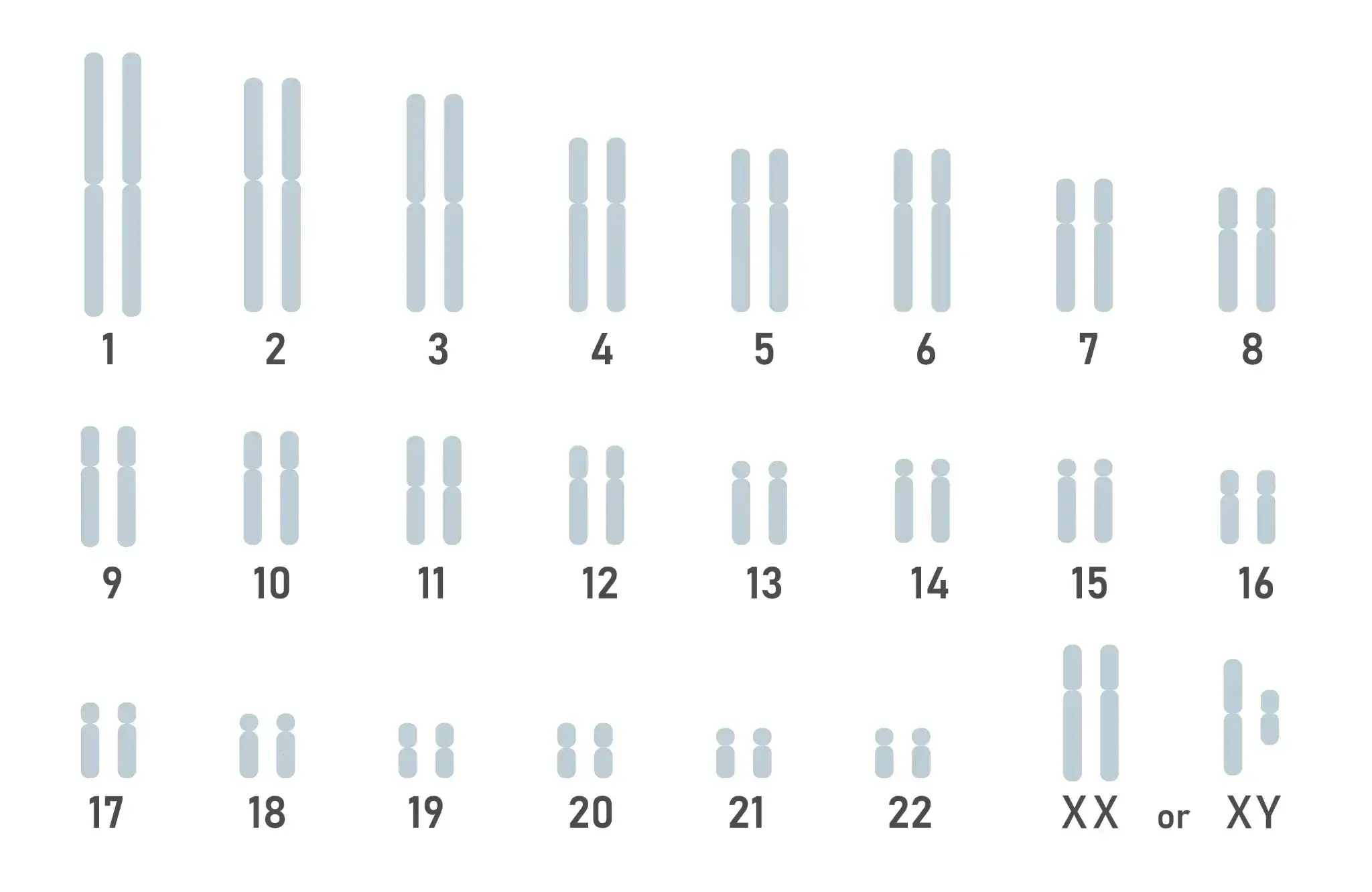
Schematic diagram of DNA map present in cells
- ■
- ■
- ■
- ■
- ■
- ■
- ■
- ■
- ■
Related genes
| Related genes | XPA |
|---|
Frequently asked questions (FAQ)
Q1. What is neuroblastoma?
Neuroblastoma is a childhood cancer that primarily occurs in the adrenal glands and nerve tissue along the spine, chest, abdomen, and pelvis.Symptoms and progression vary depending on the malignancy of the tumor, site of occurrence, and age of onset. It follows a wide range of progressions, from cases that regress spontaneously to cases that progress rapidly and require intensive treatment.
Q2. Is neuroblastoma genetically related?
Yes.A study by Zhou et al. from Nanjing Medical University (2020, Mol Ther Oncolytics) found that the DNA region rs3176752 is associated with the risk of developing neuroblastoma.There are three genotypes of rs3176752: GG, GT, and TT, and people with the T-type mutation tend to have a higher risk of developing neuroblastoma.
Q3. What is the distribution of the neuroblastoma genotype (rs3176752) in Japanese people?
The genotype distribution of rs3176752 in Japanese people isGG type 83.4%, GT type 15.8%, TT type 0.7%It is. Globally, 95.3% are GG type, 4.5% are GT type, and 0.1%以下 are TT type, and Japanese people have a T mutation prevalence rate (GT+TT) of 16.5%, which is about 3.7 times higher than the world average of 4.5%.
Q4. What are the main symptoms of neuroblastoma?
Symptoms of neuroblastoma vary depending on the location and size of the tumor. The main symptoms areAbdominal lump, change in bowel habits, persistent pain, fatigue, loss of appetite, weight lossThere is. When the tumor presses on the nerves or spinal cord, numbness and paralysis occur, which can also cause rapid eye movements and uncontrollable movements due to paraneoplastic syndrome.
References
- Reference link 1: 2020 Dec., Chunlei Zhou, Mol Ther Oncolytics