
 Nephroblastoma (Wilms tumor)
- Nephroblastoma (Wilms tumor) is a malignant tumor that accounts for 90% of childhood kidney cancers.In Japan, 70 to 100 cases occur annually, and the incidence is 1 in 12,000 to 15,000 people.
- Genotype differences in DNA region rs5955543A study by the British Cancer Research Institute found that cancer affects the risk of developing Wilms tumor.
- The cure rate if the tumor has not metastasized to areas other than the kidneys is60〜90%Early detection through genetic testing is the key to successful treatment.
Overview Wilms tumor (nephroblastoma) is one of the three major solid malignant tumors in children, and is said to account for 90% of kidney cancers that occur in children. It is estimated that 70 to 100 cases occur annually in Japan, and the incidence is said to be 1 in 12,000 to 15,000 people. Although it can occur in adults, it is more common in children under 3 years of age, and symptoms such as limb deformities, undescended testicles (testicles not in the scrotum), abdominal pain, and hematuria may appear. Although the onset mechanism is not clear, genetic abnormalities are thought to be involved as it is likely to occur in families. According to a recent research report, it has become clear that a certain region near the gene "NHS" is likely to influence the risk of developing "Wilms tumor." The cure rate is estimated to be 60-90% if the tumor has not spread to areas other than the kidneys. (Reference link 1) Early detection of tumors in children is said to be difficult, but early detection is important. For this reason, genetic testing is expected to be useful for early detection and early treatment by determining your own genetic type and knowing your risk of developing Wilms tumor. 2. Rationale A study by the British Cancer Research Institute found that some people are more likely to develop Wilms tumor depending on a specific type of gene around the NHS gene. This site is a DNA region called "rs5955543" and has three genotypes: "AA type", "AG type", and "GG type". Among East Asians, the most common genetic type is ``AA type'' at 49.8%, followed by ``AG type'' at 41.5%, and ``GG type'' the lowest at 8.7%. (Reference link 2) However, people with type GG or type AG do not necessarily develop Wilms tumor. However, the causes of childhood cancer are rarely caused by environmental factors, and prevention methods are unclear, so it is important to strive for early detection. Examples include regular screening diagnostic imaging tests such as an abdominal ultrasound and blood tests. 3. Mechanism of action The gene "NHS" associated with the onset of "Wilms tumor" is located on the X chromosome of the 24 chromosomes common to humans. This gene is present in large numbers in tissues such as the kidney and adrenal gland, and is expressed during the development of these tissues. (Reference links 3 and 4) However, there are still some things that are unclear about the biological functions of "NHS". However, it is speculated that the pathogenic mechanism associated with "NHS" and "Wilms tumor" is that, depending on the genotype of the DNA region "rs5955543," "NHS" expressed in the immature kidneys of children causes some kind of error, causing tumor formation. As a result, the DNA region "rs5955543" is closely related to the onset of "Wilms tumor" and is one of the single nucleotide polymorphisms that is attracting attention.
What is nephroblastoma (Wilms tumor)?
Nephroblastoma (Wilms tumor) is one of the three major solid malignant tumors in children, and accounts for 90% of kidney cancers that occur in children.It is estimated that 70-100 cases occur annually in Japan, and the incidence is 1 in 12,000 to 15,000 people. Although it can occur in adults, it is more likely to occur in children under 3 years of age.
What are the main symptoms of nephroblastoma?
Symptoms of nephroblastoma are classified as follows:
Main clinical symptoms
- Abdominal pain:Pain in the abdomen as the tumor grows
- Blood in urine:Bleeding caused by a kidney tumor is detected in the urine
- Abdominal mass:A palpable mass is confirmed on the body surface.
Complications/related symptoms
- Limb deformity:Appears as a congenital combined malformation
- Undescended testis:Complicated by a condition where the testicles are not in the scrotum
Why are genetic factors attracting attention in nephroblastoma?
Although the mechanism of development of nephroblastoma is not completely understood,High incidence in familiesThis suggests that genetic abnormalities are involved. Determining your own genetic type through genetic testing is expected to be useful in understanding the risk of developing the disease and in early detection and treatment.
Cure rate of nephroblastoma and the importance of early detection
| Metastasis status | cure rate | Screening method |
|---|---|---|
| No metastasis to areas other than the kidneys | 60〜90% | Abdominal echo/blood test |
| With metastasis | Treatment may be difficult | Image diagnosis/regular medical examination |
Childhood cancer has little involvement in environmental factors, and no clear prevention methods have been established.Screening with regular abdominal ultrasound and blood testsEarly detection using this is important. (Reference link 1)
Relationship between genes and nephroblastoma
Relationship between DNA region rs5955543 and Wilms tumor
A study by the British Cancer Research Institute revealed that the DNA region rs5955543 near the gene "NHS" influences the risk of developing Wilms tumor.(Reference link 5)
- There are three genotypes of rs5955543: AA, AG, and GG.
- GG type/AG type peopletend to have a higher risk of developing Wilms tumor
- East Asian genotype distribution: AA type 49.8%, AG type 41.5%, GG type 8.7% (Reference link 2)
Comparison of genotype distribution in Japanese and the world (rs5955543)
| Genotype | Percentage of Japanese people | percentage of the world |
|---|---|---|
| AA type | 45.9% | 89.8% |
| AG type | 43.6% | 9.8% |
| GG type | 10.3% | 0.2% |
The prevalence of type GG among Japanese people is10.3%This is approximately 51.5 times higher than the global average of 0.2%. Including the AG type, the Japanese53.9%have risk-related genotypes, and early detection of risk through genetic testing is recommended.
Developmental mechanism of nephroblastoma (mechanism of action)
How is the gene “NHS” involved in tumorigenesis?
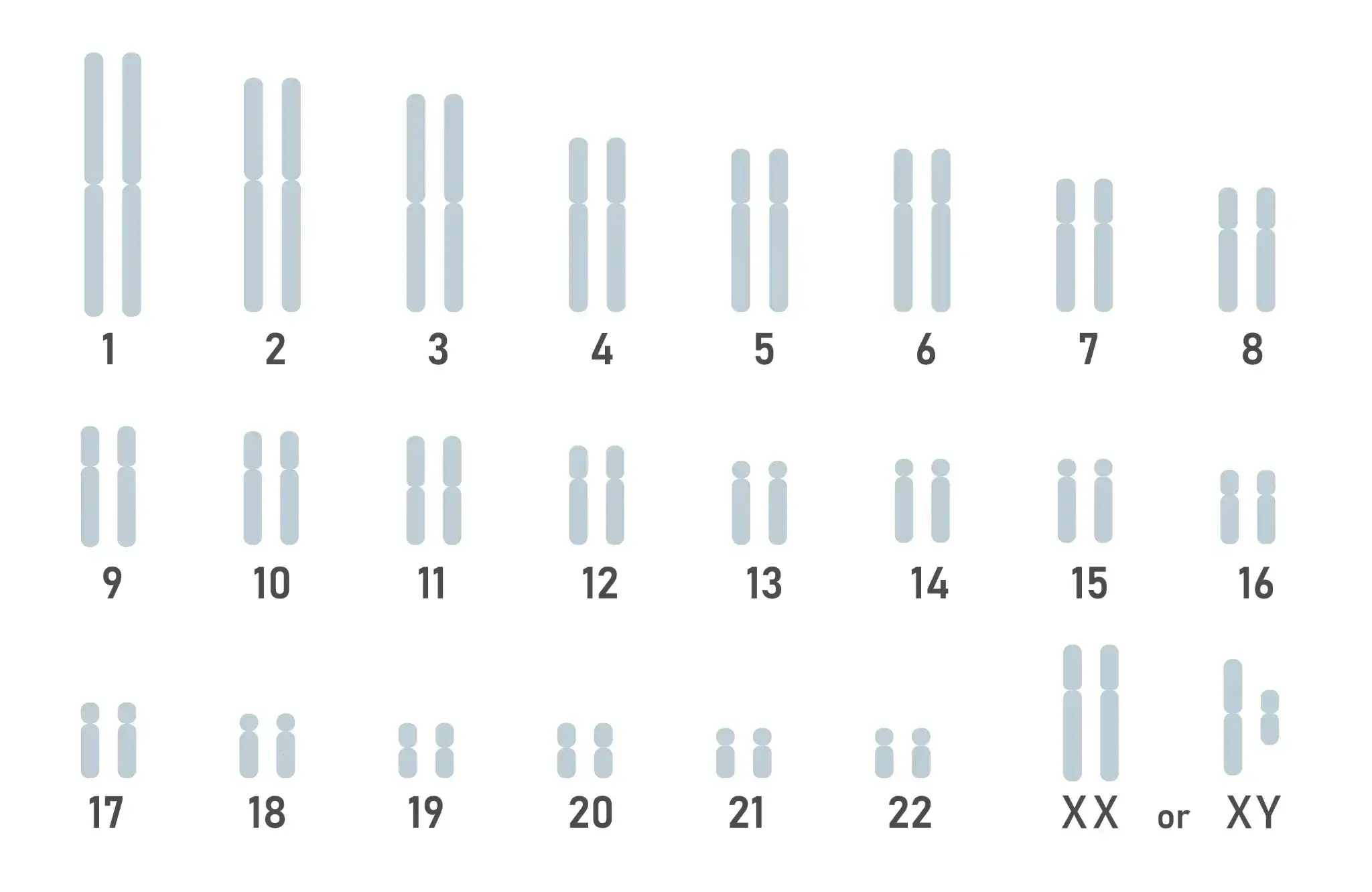
The gene "NHS" associated with the development of Wilms tumor is located on the X chromosome of the 24 chromosomes common to humans.NHS is expressed in kidney and adrenal gland tissues and becomes activated during the development of these organs. (Reference links 3 and 4)
Possible onset mechanism
- Genotype differences:NHS expression pattern changes depending on the rs5955543 genotype
- Expression error:NHS expressed in children's immature kidneys becomes abnormal and induces tumorigenesis
- Notable SNPs:rs5955543 is attracting attention as a single nucleotide polymorphism (SNP) that is closely related to the development of Wilms tumor.
Stages of onset mechanism
| stage | process | influence |
|---|---|---|
| 1st stage | Genotype of rs5955543 determined | The foundation of risk is formed |
| 2nd stage | NHS gene is expressed in kidney and adrenal gland | Involved in tissue development |
| 3rd stage | NHS expression error occurred | induces tumor formation |
Rationale for testing
Superficial DNA region: Nephroblastoma (Wilms tumor)
The gene region that most strongly affects nephroblastoma (Wilms tumor) is rs5955543. The distribution of isomorphic genotypes in Japan is as follows.
- AA
45.9 % - AG
43.6 % - GG
10.3 %
Basis for inspection
Research from the UK's Institute of Cancer Research has revealed that the risk of developing nephroblastoma (Wilms tumor) is linked to genes. The DNA region rs5955543 has three genotypes: AA, AG, and GG, and it has been found that people with GG and AG mutations tend to have a higher risk of Wilms tumor.
The DNA region investigated this time
Schematic diagram of DNA map present in cells
- ■
- ■
- ■
- ■
- ■
- ■
- ■
- ■
- ■
Related genes
| Related genes | NHS |
|---|
Frequently asked questions (FAQ)
Q1. What is nephroblastoma (Wilms tumor)?
Nephroblastoma (Wilms tumor) is one of the three major solid malignant tumors in children, and accounts for 90% of kidney cancers that occur in children.In Japan, 70 to 100 cases occur annually, and the incidence is 1 in 12,000 to 15,000 people. It tends to occur in children under 3 years of age, and symptoms include abdominal pain, hematuria, limb deformities, and undescended testicles.
Q2. Is nephroblastoma genetically related?
Yes.Research by the UK Cancer Research Institute has revealed that the DNA region rs5955543 near the gene "NHS" is associated with the risk of developing Wilms tumor.There are three genotypes of rs5955543: AA, AG, and GG, and people with GG and AG types tend to have a higher risk of developing the disease.
Q3. What is the distribution of the genotype (rs5955543) related to nephroblastoma in Japanese people?
The genotype distribution of rs5955543 in Japanese people isAA type 45.9%, AG type 43.6%, GG type 10.3%It is. Worldwide, 89.8% are type AA, 9.8% are type AG, and 0.2% are type GG, and the proportion of Japanese people with type GG is approximately 51.5 times higher than the world average of 0.2%.
Q4. What is the cure rate for nephroblastoma?
If it has not spread to areas other than the kidneys,Cure rate is 60-90%It is. Early detection of childhood cancer is considered difficult, but understanding one's own risk through genetic testing and screening through regular abdominal ultrasound and blood tests are effective for early detection and early treatment.
Q5. What is the onset mechanism of nephroblastoma?
On onsetGene “NHS” on the X chromosomeis involved. NHS is expressed in kidney and adrenal gland tissues, and it is speculated that differences in the genotype of the DNA region rs5955543 cause errors in NHS expression in the immature kidneys of children, leading to tumorigenesis. Although the biological function of NHS remains unclear, rs5955543 is a notable single nucleotide polymorphism that is closely associated with Wilms tumor.
References
- Reference link 1: About “Wilms Tumor” MSD Manual
- Reference link 2: Information on DNA region “rs5955543” NIH
- Reference link 3: Information on the gene “NHS” NIH
- Reference link 4: 2022 Jun., Hong-Yan Sun, IJO.
- Reference link 5: 2012 Apr., Clare Turnbull, Nat Genet