
 myelodysplastic syndrome

- Myelodysplastic syndrome (MDS) is a blood disease in which blood-forming stem cells in the bone marrow become abnormal and cannot produce normal blood cells.The main symptoms are anemia, infection, and bleeding tendency.
- G-type mutation in DNA region rs11872481A study by the National Heart, Lung, and Blood Institute found that people with
- Increased red blood cell distribution width (RDW)is an early detection indicator for MDS, and a definitive diagnosis can be made by bone marrow examination and cytogenetic testing.
Overview Red blood cell distribution width (RDW) is a blood test number that shows the variation in the size of red blood cells. Normally, red blood cells are relatively uniform in size and have low RDW values. However, if you have anemia, nutritional deficiencies, or blood disorders, the size of your red blood cells will vary and your RDW value will increase. MDS patients exhibit symptoms such as anemia, granulocytopenia, and thrombocytopenia, which greatly impact patients' lives. There is a correlation between RDW and MDS, and in MDS patients, the size of red blood cells varies due to impaired bone marrow hematopoietic function. Therefore, increased RDW values suggest the possibility of MDS. However, elevated RDW can also be seen for causes other than MDS. For example, iron deficiency anemia, vitamin B12 deficiency, and other chronic conditions can also increase RDW. Also, not all MDS patients exhibit elevated RDW. Therefore, abnormalities in RDW must be determined in conjunction with clinical findings such as complete blood count, bone marrow morphology, and cytogenetics. RDW is one of the blood test items, and understanding the increase in RDW may lead to early detection of MDS, but it is also necessary to be careful of bone marrow failure diseases other than MDS. A study by Chen et al. from the National Heart, Lung, and Blood Institute in the United States revealed that the risk of myelodysplastic syndrome is associated with a DNA region called rs11872481. There are three genotypes in this DNA region: GG, AG, and AA, and it was found that people with the G genotype tend to have a higher risk of myelodysplastic syndrome.
What is myelodysplastic syndrome?
Myelodysplastic syndromes (MDS) are a group of blood disorders in which abnormalities occur in hematopoietic stem cells in the bone marrow, making it impossible to produce enough normal blood cells such as red blood cells, white blood cells, and platelets.Early detection is important because there is a risk of progression to acute myeloid leukemia (AML) (1).
Causes and mechanisms of myelodysplastic syndromes
Genetic mutations in hematopoietic stem cells are deeply involved in the onset of MDS.
- Abnormalities in hematopoietic stem cells:Genetic mutations accumulate in hematopoietic stem cells in the bone marrow, impairing normal blood cell differentiation and maturation.
- Ineffective hematopoiesis:Although blood cells are produced in the bone marrow, they do not function normally due to dysplasia (abnormal morphology), and the number of mature cells in the blood decreases.
- Aging:It often occurs in people over 60 years old, and the accumulation of genetic mutations associated with aging increases the risk.
- Secondary MDS:In some cases, it may be caused by past chemotherapy/radiotherapy or exposure to chemicals such as benzene.
Main symptoms of myelodysplastic syndrome
Symptoms of MDS areType and degree of cytopeniaIt depends.
- Anemia symptoms:Fatigue, shortness of breath, pale face (due to decreased red blood cells)
- Increase in infections:Fever/recurrent infections (due to decreased white blood cells = granulocytopenia)
- Bleeding tendency:Purpura, gum bleeding, epistaxis (due to thrombocytopenia)
Differences between myelodysplastic syndrome and similar diseases
| Comparison items | Myelodysplastic syndrome (MDS) | aplastic anemia |
|---|---|---|
| Pathological condition | Clonal abnormalities of hematopoietic stem cells | Decrease in hematopoietic stem cells |
| bone marrow | Orthoplasia to hyperplasia (with dysplasia) | Hypoplasia (fatty myelination) |
| Leukemia transition | Risk of transition to AML | Rare |
| Age of onset | Elderly people over 60 years old | Also occurs in young people |
| genetic abnormality | rs11872481 G-type mutation is involved | HLA-related immune abnormalities |
Relationship between red blood cell distribution width (RDW) and MDS
Red blood cell distribution width (RDW) is a blood test value that shows the variation in red blood cell size.It is. Normally, red blood cells are relatively uniform in size and have low RDW values.
- In MDS patients, the size of red blood cells varies due to impaired bone marrow hematopoietic function.RDW value increasesdo
- Elevated RDW is an indicator for early detection of MDS, but it can also be increased due to other causes such as iron deficiency anemia and vitamin B12 deficiency.
- For a definitive diagnosisComplete blood count/bone marrow morphology/cytogenetic testingIt is necessary to make a comprehensive judgment that combines
Treatment for myelodysplastic syndrome
Treatment of MDSRisk classificationselected based on.
- Low risk MDS:Supportive care (blood transfusion/erythropoietin preparations), lenalidomide
- High risk MDS:Demethylating drugs such as azacytidine and decitabine
- Hematopoietic stem cell transplant:The only treatment that can be expected to be completely cured (applications depend on age and general condition)
Relationship between genes and myelodysplastic syndromes
Relationship between DNA region rs11872481 and onset risk
A study by Chen et al. (1) from the National Heart, Lung, and Blood Institute in the United States revealed that the DNA region rs11872481 is associated with the risk of developing myelodysplastic syndrome.
- There are three genotypes of rs11872481: GG, GA, and AA.
- Genotype with type G mutation(GG type/GA type) people tend to have a higher risk of myelodysplastic syndrome
Genotype distribution in Japanese (rs11872481)
| Genotype | Percentage of Japanese people | percentage of the world |
|---|---|---|
| GG type | 99.9% | 79.4% |
| GA type | 0.1%以下 | 19.3% |
| AA type | 0.1%以下 | 1.1% |
Rationale for testing
Superficial DNA region: myelodysplastic syndrome
The gene region most strongly associated with myelodysplastic syndromes is rs11872481. The distribution of isomorphic genotypes in Japan is as follows.
- GG
99.9 % - GA
0.1%以下 - AA
0.1%以下
Basis for inspection
Research by Chen et al. from the National Heart, Lung, and Blood Institute in the United States revealed that the risk of developing myelodysplastic syndromes is related to genes. There is a region called rs11872481 in the human genome, and there are two types of mutations, G and A, in the gene in this region. It was found that people with type G mutations tend to have a higher risk of myelodysplastic syndrome.
The DNA region investigated this time
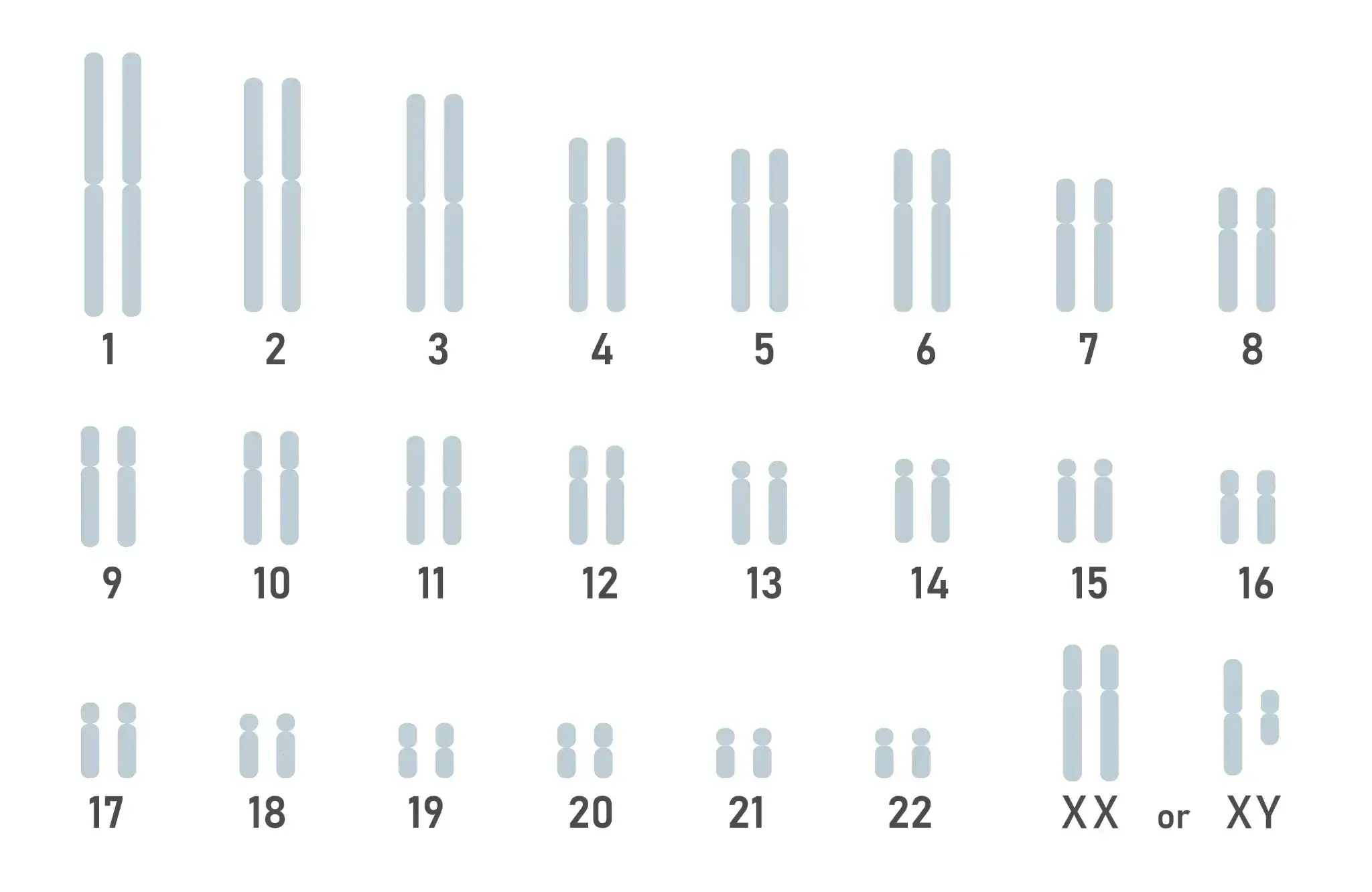
Schematic diagram of DNA map present in cells
- ■
- ■
- ■
- ■
- ■
- ■
- ■
- ■
- ■
Related genes
| Related genes | NDUFV2-AS1 |
|---|
Frequently asked questions (FAQ)
Q1. What is myelodysplastic syndrome (MDS)?
Myelodysplastic syndromes (MDS) are a group of blood disorders in which abnormalities occur in hematopoietic stem cells in the bone marrow, making it impossible to produce enough normal blood cells such as red blood cells, white blood cells, and platelets.The main symptoms are anemia, infection, and bleeding tendency, and there is a risk of progression to acute myeloid leukemia (AML) (1).
Q2. What is the cause of myelodysplastic syndrome?
The main cause isGenetic mutations in hematopoietic stem cellsIt is. Risk factors include increasing age, a history of chemotherapy or radiation therapy, and exposure to chemicals such as benzene. The G-type mutation in the DNA region rs11872481 has also been found to be associated with the risk of developing the disease (1).
Q3. Can genetic testing determine the risk of myelodysplastic syndrome?
By examining the genotype of the DNA region rs11872481,Understand the risk trends for developing myelodysplastic syndromesYou can. A study by the U.S. National Heart, Lung, and Blood Institute found that people with the G mutation (GG and GA) tend to be at higher risk (1).
Q4. What is the relationship between red blood cell distribution width (RDW) and MDS?
RDW is a blood test value that shows the variation in red blood cell size.It is. In MDS patients, impaired bone marrow hematopoietic function causes variations in red blood cell size and increases RDW values. Elevated RDW is an indicator for early detection of MDS, but a bone marrow examination is required for a definitive diagnosis.
References
- Reference link 1: 2020 Sep., Ming-Huei Chen, Cell