
 muscular strength

- Muscular strength is classified into “instantaneous force type” and “endurance type” according to the gene ACTN3 (rs1815739)directly linked to sports aptitude and training effectiveness.
- The CC type has high explosive power and is advantageous for short distance events., TT type has excellent endurance and is suitable for long distance events.
- The prevalence of TT type (endurance type) among Japanese people is23.5%This is a slightly higher percentage than the world average of 18.5%.
Overview Muscle strength greatly affects performance in sports and training. Muscle strength is influenced by two types of muscles: explosive and endurance types, and which type is dominant is determined by genes. For example, people with explosive strength are suited for short-distance events because their muscles contract quickly and with great power. Examples include swimming, sprinting, and martial arts. On the other hand, endurance type athletes have slower muscle contractions and less power, but are better suited for long-distance events because they have a high ability to use oxygen to efficiently generate energy. Marathons and triathlons are examples. Knowing whether you're an explosive, endurance type, or a balance of both can help you choose an efficient training method and what type of sport is best for you. We recommend that you take a genetic test to find out your genetic type and check your muscle strength trends. Rationale The specific region (SNP) of the α-actinin 3 gene, rs1815739, affects the production of α-actinin 3, which is involved in muscle metabolism that produces explosive force. There are three types depending on the genotype: CC, CT, and TT. According to a study by Yang et al. in Australia, all male Olympic-level athletes in sprinting or power events had the (C) genotype. On the other hand, we know that endurance athletes tend to have TT in their genotype. (Reference link 1) The percentage of Japanese genotypes is 20% CC, 54% CT, and 26% TT. (Reference link 2) It is unique in that it only exists in explosive force type muscles, and is attracting attention for its relationship with age-related muscle weakness. According to a study conducted by Nippon Sport Science University, people with the R(C) genotype who have high explosive strength performed better on muscle strength tests than those without the R(C) genotype, and the difference was more pronounced in people over 60 years old. (Reference link 3) People who are born with a tendency to develop explosive force-type muscles whose loss of explosive force-type muscles is slow may be better able to maintain the explosive force required in an emergency. By understanding the genetic factors related to talent and considering the type and time of training to compensate for weaknesses, you may be able to turn them into strengths. Mechanism of action Regarding the mechanism of action, ACTN3, a gene involved in muscular strength and explosive muscle metabolism, is located on chromosome 11 of the 24 human chromosomes. This gene produces a protein called alpha-actinin-3. There are three genotypes: CC, CT, and TT, and each type corresponds to the RR, RX, and XX types of α-actinin 3. R indicates that amino acids composed of the component arginine have gathered, and X indicates the termination of protein synthesis. Therefore, when the amino acid that makes up α-actinin 3 changes from R to X, it affects the development of explosive force-type muscles. (Reference link 4) There is research that shows that depending on your genotype, you are more likely to have thicker muscles, stronger strength and faster speed, and are less likely to suffer injuries related to sports or training. (Reference link 5) However, even if your genotype is TT, you will not get sick because α-actinin 2 works instead. Also, just because you have the TT genotype doesn't mean you're bad at sprinting. As mentioned above, "rs1815739" is attracting attention as one of the SNPs involved in muscle strength and the development of explosive force type muscles.
What is muscle strength?
Muscle strength is the amount of force a muscle can exert, and it is classified into instantaneous force type and endurance type depending on the type of gene ACTN3 (rs1815739).This genetic characteristic influences sports performance, training effectiveness, and age-related changes in muscle strength.
Difference between explosive strength type and endurance type
For the musclesFast-twitch fibers (instantaneous force type)andSlow twitch fibers (endurance type)There are two types, and which one is dominant is determined by genes. The characteristics of each are as follows.
- Instant force type (CC type/CT type):Muscle contraction speed is fast and power is large. Suitable for sprinting, swimming, and martial arts
- Endurance type (TT type):Muscle contraction speed is slow, but energy production using oxygen is highly efficient. Suitable for marathons and triathlons
Comparison of explosive power type and endurance type
| Comparison items | Instant force type (CC/CT type) | Endurance type (TT type) |
|---|---|---|
| muscle contraction speed | fast | slow |
| power | big | small |
| energy production | Anaerobic system (glycolytic system) is dominant | Aerobic system (oxidative phosphorylation) is dominant |
| suitable sports | Sprinting, swimming, martial arts, weightlifting | Marathon/Triathlon/Long distance swimming |
| Maintaining muscle strength as you age | Fast-twitch muscles develop easily and muscle weakness slows down | Fast-twitch fibers tend to decrease rapidly |
Benefits of knowing muscle strength
By knowing whether you are an explosive type, an endurance type, or a balanced type, you can get the following benefits.
- Optimal sports selection:You can choose an event that matches your genetic predisposition.
- Efficient training design:You can create a program that compensates for your weaknesses and maximizes your strengths.
- Anti-aging measures:It is possible to predict trends in muscle weakness and provide appropriate care from an early stage.
The relationship between genes and muscle strength
What is the relationship between ACTN3 gene (rs1815739) and muscle strength?
The SNP ``rs1815739'' in the α-actinin 3 gene (ACTN3) affects the production of α-actinin 3 protein, which is involved in the metabolism of explosive force muscle.
- There are three genotypes of rs1815739: CC, CT, and TT.
- CC type (RR type):Produces sufficient α-actinin 3 and has high explosive power
- CT type (RX type):The production amount of α-actinin 3 is intermediate. A balance of explosive power and endurance
- TT type (XX type):No α-actinin 3 is produced, resulting in excellent endurance.
Comparison of genotype distribution in Japanese and the world (rs1815739)
| Genotype | Percentage of Japanese people | percentage of the world |
|---|---|---|
| TT type (endurance type) | 23.5% | 18.5% |
| TC type (balanced type) | 49.9% | 49.0% |
| CC type (instantaneous force type) | 26.4% | 32.3% |
The prevalence of TT type (endurance type) among Japanese people is23.5%This is approximately 1.3 times higher than the global average of 18.5%. On the other hand, 26.4% of people with the CC type (explosive strength type) were slightly lower than the world average of 32.3%, indicating that genetic predisposition to the endurance type is more widely distributed in the Japanese population.
Research-proven association between genotype and sports performance
In an Australian study by Yang et al.All male athletes who have reached the Olympic level in sprinting and power events carry the C mutation (CC or CT).I was doing it. On the other hand, it has been confirmed that endurance athletes tend to have the TT type (Reference link 1).
Relationship between aging and muscle decline
According to a study by Nippon Sport Science University,People with type C (type R) who have explosive strength type had better performance on muscle strength tests than people without type C.This difference was more pronounced in elderly people over 60 years old (Reference link 3). People who tend to develop explosive force-type muscles have a slower decline in fast-twitch muscle fibers as they age, and may be able to maintain the explosive force required in emergencies for a longer period of time.
Rationale for testing
Body surface DNA region: muscle strength
The gene region that most strongly influences muscle strength is rs1815739. The distribution of isomorphic genotypes in Japan is as follows.
- TT
23.5 % - TC
49.9 % - CC
26.4 %
Basis for inspection
The SNP "rs1815739" in the α-actinin 3 gene (ACTN3) controls the production of α-actinin 3 protein, which is specifically expressed in explosive-type muscles (fast-twitch muscle fibers). There are three genotypes: CC (RR type), CT (RX type), and TT (XX type), and the R→X mutation stops the synthesis of α-actinin 3. In a study by Yang et al., all Olympic short-distance and power athletes had blood type C, demonstrating a strong relationship with sports performance.
Mechanism of action
Mechanism of action of ACTN3 gene
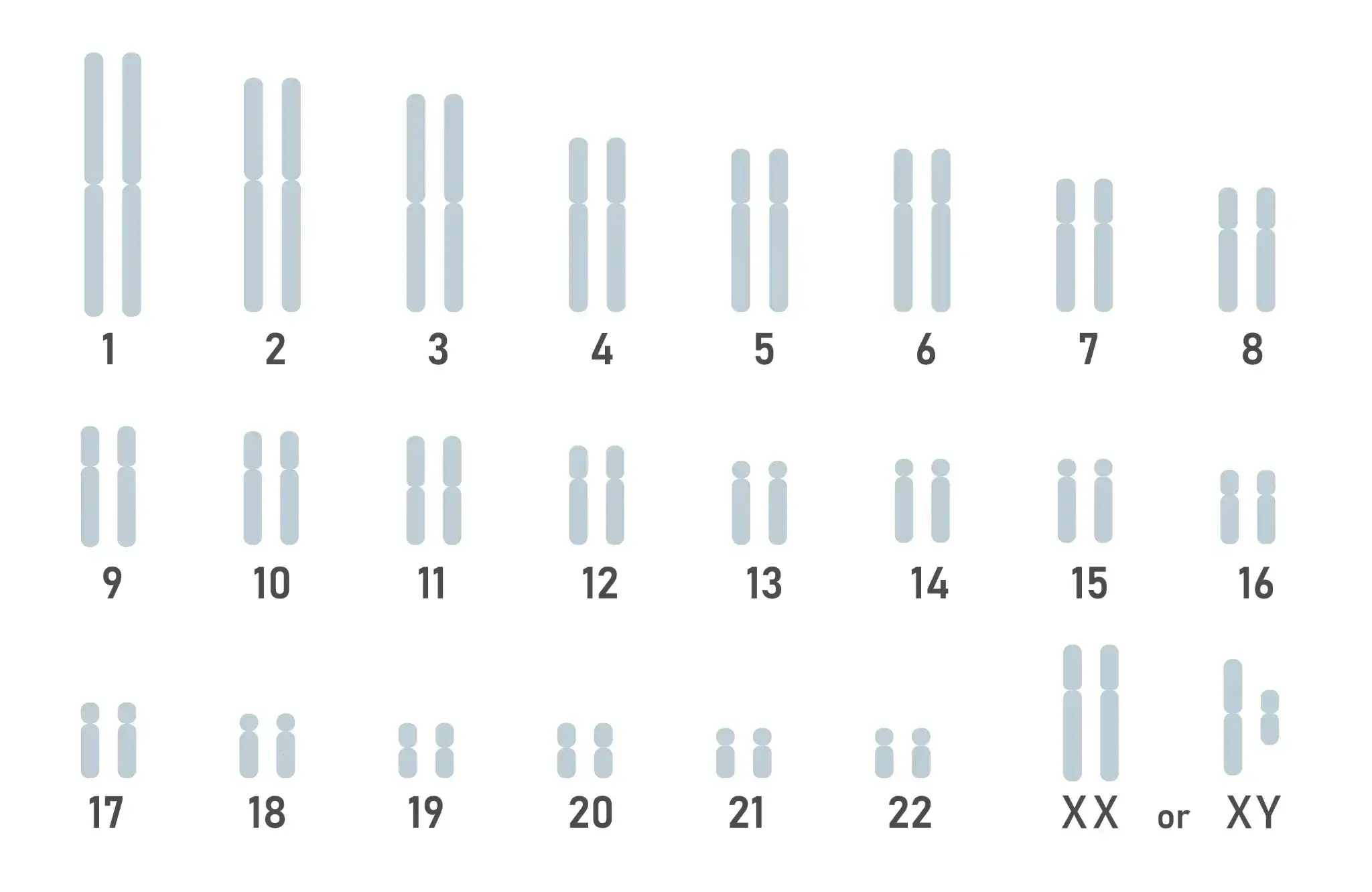
The ACTN3 gene is located on human chromosome 11 and produces α-actinin 3 protein.The mechanism of this gene is as follows.
- CC type (RR type):Amino acids composed of arginine (R) are assembled normally and enough α-actinin 3 is produced. Promotes the development of fast-twitch muscle fibers
- CT type (RX type):Synthesis stops at one allele. α-actinin 3 production is at an intermediate level
- TT type (XX type):Protein synthesis is stopped in both alleles (nonsense mutation). Instead, α-actinin 2 complements the function, so you will not get sick.
In a study by Pickering et al. (2017),People with blood type C tend to have thicker muscles, have better strength and speed, and are less prone to sports-related injuries.It has been reported (Reference link 5).
Being a TT type does not make you bad at sprinting, and it is possible to compensate for your weaknesses through training. Understanding genetic predisposition and optimizing the type and duration of training is the key to improving performance.
The DNA region investigated this time
Schematic diagram of DNA map present in cells
- ■
- ■
- ■
- ■
- ■
- ■
- ■
- ■
- ■
Related genes
| Related genes | ACTN3 |
|---|
Frequently asked questions (FAQ)
Q1. What is muscle strength?
Muscle strength is the amount of force a muscle can exert.Depending on the type of gene ACTN3 (rs1815739), it is classified into "instantaneous strength type (fast-twitch dominant)" and "endurance type (slow-twitch dominant)". The explosive type is suitable for sprinting and martial arts, and the endurance type is suitable for marathons and triathlons.
Q2. What is the relationship between the ACTN3 gene and muscle strength?
The ACTN3 gene produces a protein called α-actinin 3, which is involved in the metabolism of explosive-type muscles (fast-twitch fibers).The CC type produces sufficient α-actinin 3 and has high explosive power, while the TT type does not produce α-actinin 3 and tends to have excellent endurance. Research has shown that all Olympic short-distance and power athletes had type C blood.
Q3. What is the difference between explosive strength type and endurance type?
Instantaneous force types (CC type/CT type) have fast muscle contraction speed and large power.Therefore, it is suitable for sprinting, swimming, and martial arts.Endurance type (TT type) has high energy production efficiency using oxygen.Therefore, it is suitable for long-distance events such as marathons and triathlons.
Q4. What is the distribution of muscle strength-related genotypes (rs1815739) in Japanese people?
Japanese rs1815739 genotype distribution isCC type 26.4%, TC type 49.9%, TT type 23.5%It is. Worldwide, 32.3% are CC type, 49.0% are TC type, and 18.5% are TT type, and Japanese people have a characteristic that the proportion of TT type (endurance type) is about 1.3 times higher than the world average.
Q5. Is strength training effective for TT type (endurance type) people?
Yes, strength training is effective even for TT types.In type TT, α-actinin 2 supplements the function of α-actinin 3, so there are no health problems. By understanding your genetic predisposition and optimizing the type, duration, and intensity of your training, you can compensate for your weaknesses and develop your strengths.
References
- Reference link 1: 2003 Sep., Nan Yang, The American Journal of human genetics
- Reference link 2: Information on gene “tgv165466322” NIH
- Reference link 3: 2012 Jul., Takashi Miura, Japanese Society of Physical Fitness Medicine
- Reference link 4: 2014 Feb., E. Mikami, International journal of sports medicine
- Reference link 5: 2017 Dec., Craig Pickering, Frontiers in physiology